Okinawa Institute of Science and Technology
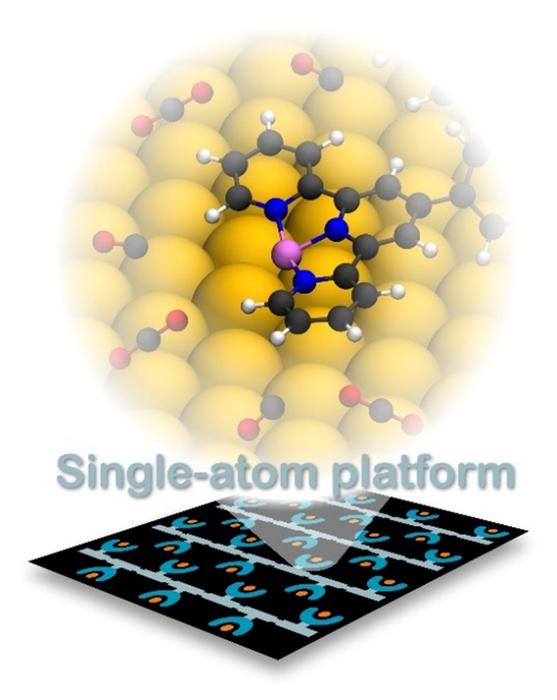
Catalysts play a vital role in modern society, supporting processes from metallurgy to pharmaceutical production. To reduce environmental impact and maximize efficiency, science has pushed the boundaries between homogeneous and heterogeneous catalysis toward single-atom catalysts. However, working with individual atoms poses enormous challenges: it is difficult to overcome their tendency to aggregate into clusters, especially at temperatures above cryogenic levels, and it is complex to arrange them precisely in specific chemical environments.
An international team of researchers from Istituto di Struttura della Materia, National Research Council (CNR-ISM, Italy), the Okinawa Institute of Science and Technology (OIST, Japan), Empa (Switzerland), and University of Rome Tor Vergata (Italy) has developed an innovative approach to overcome these limitations. Through on-surface synthesis (OSS) enabled by atomic-resolution scanning probe microscopy techniques, the scientists fabricated one-dimensional organic polymers capable of selectively binding metal atoms at well-defined coordination sites. It is the first time that such a polymer-based architecture has been achieved, using periodic side extensions that are carefully designed to provide tunable active sites. The platform marks a major advance in single atom catalysis, paving the way towards more efficient and sustainable next-generation catalysts.
“To achieve maximum catalytic efficiency, we must ensure each atom of our catalyst is accessible to reagents – this isn’t possible in bulk materials or clusters, where inner atoms are hidden. But it’s something nature does extremely well, with enzymes showing extraordinary efficiency and selectivity based off single metal atoms or small clusters within tailored molecular environments,” explains lead author Dr. Marco Di Giovannantonio, head of the ONSET Lab at CNR-ISM and Visiting Researcher at OIST. “Our method opens up a new avenue toward near-enzymatic catalysts, by isolating metal atoms in uniform sites along polymer chains with remarkable stability, even above room temperature. The design is adaptable too, and will work with a range of metals and ligands, bringing about new possibilities in catalysis.”
Theoretical study found that the unique structure of these single-atom platforms enabled significantly stronger binding of gases such as CO, O2, and H2, compared with other commonly investigated structures. This shows the promise of such platforms for obtaining deeper understanding of industrially important catalytic reactions that require selective stabilization of intermediates, such as the conversion of CO2 into valuable products.
“This work not only introduces a new strategy for constructing single-atom catalysts with atomically defined reaction centers, but also lays the foundation for the rational design of organometallic nanomaterials for various future applications,” says Professor Akimitsu Narita, head of the Organic and Carbon Nanomaterials Unit at OIST.
Reference
On-surface synthesis of tailored organic platforms for single metal atoms
Amogh Kinikar, Xiushang Xu, Takatsugu Onishi, Andres Ortega-Guerrero, Roland Widmer, Nicola Zema, Conor Hogan, Luca Camilli, Luca Persichetti, Carlo A. Pignedoli, Roman Fasel, Akimitsu Narita & Marco Di Giovannantonio
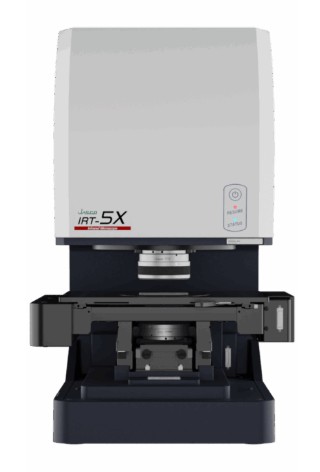
JASCO Corporation Introduces the Advanced IRT-5X Infrared Microscope Tokyo, Japan – JASCO Corporation is proud to announce the launch of its latest innovation in analytical instrumentation: the IRT-5X Infrared (IR) Microscope . Designed to deliver exceptional optical and spatial resolution, the IRT-5X is a powerful tool for materials identification, microanalysis, and imaging of complex samples. IRT-5X FTIR Microscope The IRT-5X combines versatility, performance, and accessibility in a...
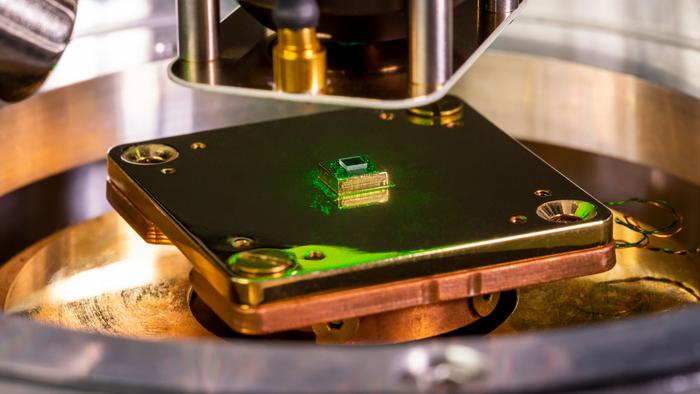
Princeton researchers have developed a diamond-based quantum sensor that reveals rich new information about magnetic phenomena at this minute scale. The technique uncovers fluctuations that are beyond the reach of existing instruments and provides key insight into materials such as graphene and superconductors. Superconductors have enabled today’s most advanced medical imaging tools and form the basis of hoped-for technologies like lossless powerlines and levitating trains. The underlying dia...
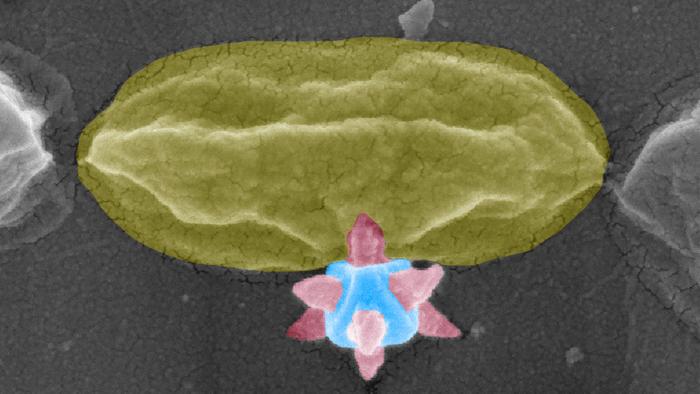
Bacteria that multiply on surfaces are a major headache in healthcare when they gain a foothold on, for example, implants or in catheters. Researchers at Chalmers University of Technology in Sweden have found a new weapon to fight these hotbeds of bacterial growth – one that does not rely on antibiotics or toxic metals. The key lies in a completely new application of this year's Nobel Prize-winning material: metal-organic frameworks. These materials can physically impale, puncture and kill ba...
