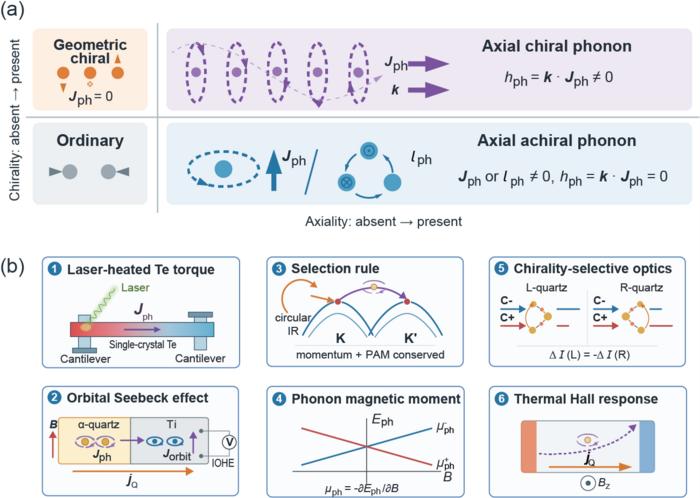
Phonons are often introduced as the quanta of lattice vibrations that carry energy and crystal momentum. However, when atoms move along circular or elliptical paths, their collective motion can also carry angular momentum. Crystal symmetry may further give phonons a crystal-specific form of angular momentum called pseudo-angular momentum. Vibrations with these rotational or handed properties are commonly known as chiral phonons.
A perspective article published online in National Science Review by Hao Xu, Song Bao and Jinsheng Wen of Nanjing University briefly reviews the development of chiral phonon research and summarizes a symmetry-based classification proposed in recent studies. The classification distinguishes axiality, which is related to real or pseudo-angular momentum, from chirality, which is related to the breaking of improper rotational symmetry. This overview provides a framework for discussing the different phenomena associated with chiral phonons.
The main focus of the article is the future of the field. The authors highlight three priorities: coupling to other degrees of freedom, transport, and the development of practical applications.
The first priority is to understand how chiral phonons interact with spin, charge, orbital and crystal-field degrees of freedom. Such coupling may be especially important in magnetic, strongly correlated and topological materials, and identifying the underlying mechanisms will require combining microscopic theory with measurements that resolve polarization, momentum, magnetic field and time.
The second priority is transport. Researchers need to determine how phonon angular momentum is transferred or converted across material interfaces, including the relevant timescales and efficiencies. They also need to clarify how phonons contribute to thermal Hall effects reported in systems such as quantum spin liquids, high-temperature superconductors and nonmagnetic insulators.
The third priority is application. Future devices will require reliable methods to generate, manipulate and detect chiral phonons using light, magnetic fields, strain or thermal gradients. Key challenges include selective excitation, long-range propagation, efficient interfacial conversion and high-fidelity readout.
Chiral phonon research remains at an early stage, but it is changing the way lattice vibrations are understood. Phonons may serve not only as carriers of heat and crystal momentum, but also as active carriers and intermediaries of angular momentum, handedness and information. Progress in these three directions could connect lattice dynamics with magnetism, electronics and future information technologies.
Reference
Chiral phonons: lattice angular momentum and beyond
Hao Xu, Song Bao, and Jinsheng Wen
Cornell researchers combined density functional theory with nonequilibrium Green's function methods to show that an applied electric field can raise or lower the cross-plane thermal conductivity of aluminum nitride depending on field direction relative to crystal polarity, predicting about 334 watts per meter-kelvin at zero field. Complementary experiments on hexagonal boron nitride measured thermal resistance drops of up to 25 percent under strong fields.
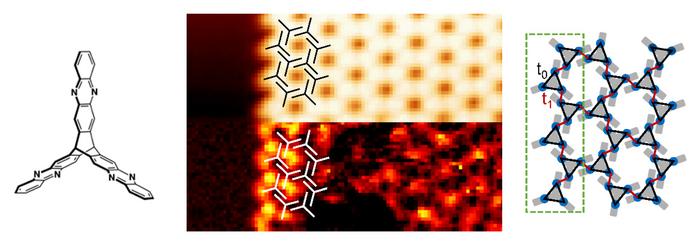
Researchers have assembled a triptycene-derived organic molecule into a two-dimensional diatomic Kagome lattice, a hybrid of honeycomb and Kagome geometries, and observed topological edge states confined to its boundaries. Strong electronic coupling between the propeller-shaped molecules, confirmed by scanning tunneling microscopy and theoretical analysis, shows that supramolecular assemblies can host quantum behavior once thought to require inorganic crystals.
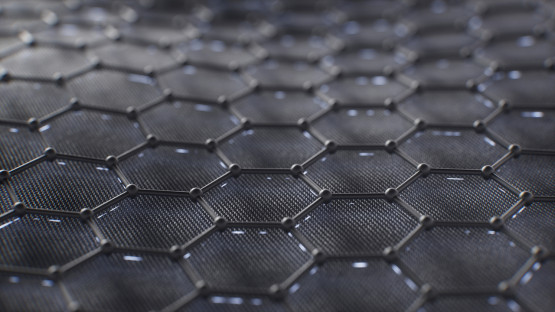
Cornell researchers found that applying voltage to a four-layer graphene stack slides the layers between atomic stacking arrangements, reversibly switching the material between nonmagnetic and magnetic states. The effect, reported in Nature Nanotechnology, exploits weak van der Waals bonds rather than breaking chemical bonds, and the resulting state persists after voltage is removed.
This week in nanotech
$129.9M raised
6 funding rounds · 39 deals tracked
New products
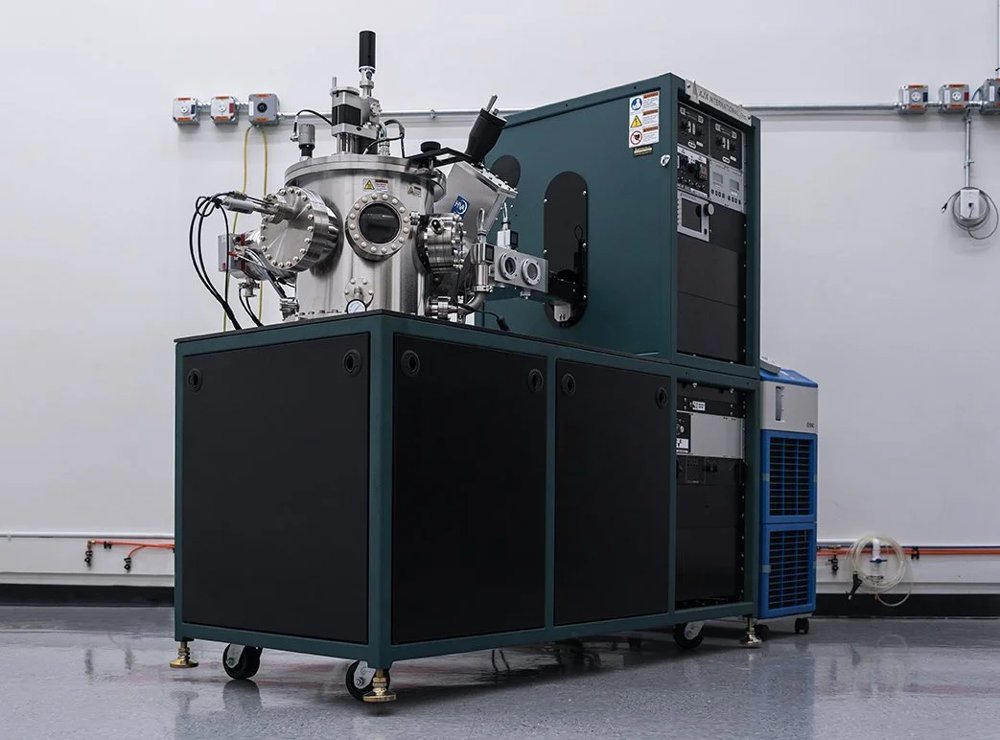 Orion Sputtering Deposition SystemsAJA International Featured
 Ti-WCMBN Nanomaterialia Featured
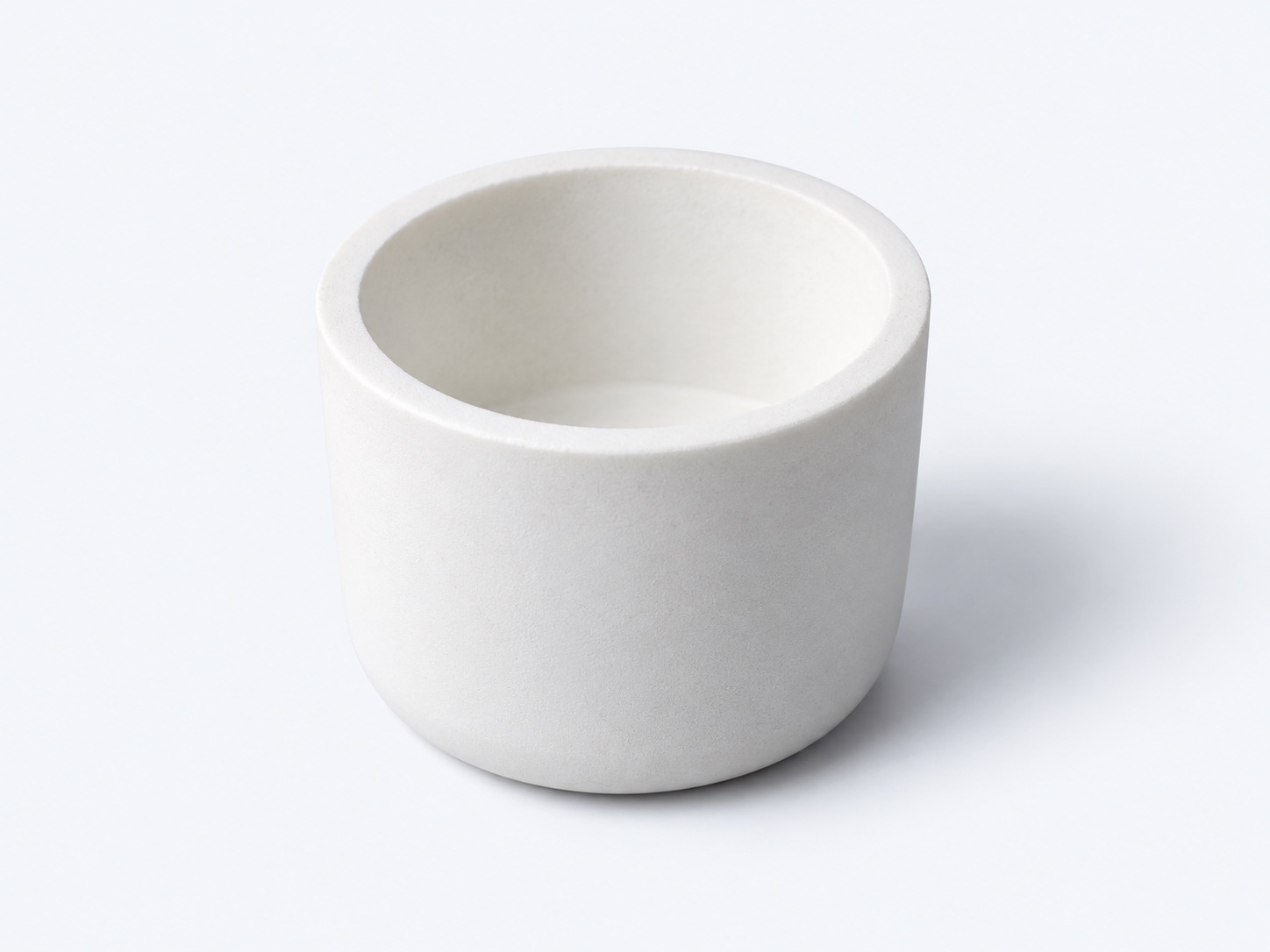 CruciblesBasis Materials
Market insights
Last 30 days: Semiconductors & Electronics drew the most money: $547.7M.
Money raised per month