National Institutes of Natural Sciences
Research Background
The size of a nucleus (nuclear charge radius) is an important physical quantity that reflects the arrangement of protons and neutrons within the nucleus. Particularly in deformed nuclei, such as those of rare earth elements, examining changes in the charge radius can deepen our understanding of nuclear structure and nuclear deformation.
Until now, electron scattering experiments, muon atomic spectroscopy, and laser spectroscopy of neutral atoms and singly charged ions have been used to measure nuclear radii; however, it has not been easy to directly compare different elements.
For lutetium (Lu) and ytterbium (Yb), evaluations based on past experiments had presented an anomalous trend not observed in other rare-earth elements: the nucleus of lutetium, which has an odd number of protons, is larger than that of the adjacent even-proton nucleus. This had remained an unsolved problem for many years.
Research Findings
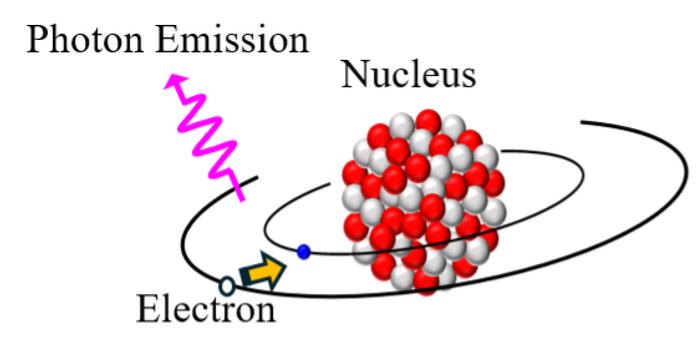
To evaluate nuclear radii, the international collaborative research group focused on the effect in which the size of the nucleus causes a shift in the atom’s energy levels (volume shift). Normally, this energy shift is extremely small. This is because the size of the nucleus is so tiny relative to the bound electrons in the atom that the relationship is virtually imperceptible. Therefore, the international collaborative research group adopted highly charged ions (HCIs) as the spectroscopic target to amplify this shift and accurately evaluate the nuclear radius. Since the bound electrons in HCIs are located in the vicinity of the nucleus, the volume shift is strongly reflected in the energy levels (Figure 1).
In the experiment, we generated HCIs of lutetium (Lu) and ytterbium (Yb) using Tokyo-EBIT (Fig. 2) at the University of Electro-Communications. We alternately measured high-resolution extreme ultraviolet emission spectra and compared the emission line energies of Lu59+, Lu60+, Yb58+, and Yb59+ (Fig. 3). Using the latest high-precision atomic structure calculations, we converted the observed differences in emission line energies into differences in nuclear radii, which revealed that the nucleus of lutetium (atomic number 71) is slightly smaller than that of ytterbium (atomic number 70) (Fig. 4). This result suggests that the expected odd-even staggering in the atomic-number dependence of nuclear radii in the rare-earth region holds for Yb-Lu, implying that the long-debated “reversal problem” regarding the lutetium nuclear radius has been resolved.
Significance of the Research Findings and Future Directions
In this study, we demonstrated that the nuclear radii of heavy elements can be evaluated using extreme ultraviolet spectroscopy of HCIs. In particular, this method enables “direct comparisons between different elements”—which was difficult to achieve using conventional techniques such as laser spectroscopy of neutral atoms or singly charged ions—and provides a new approach to nuclear structure research in the heavy-element region.
Furthermore, the nuclear radii of rare-earth elements obtained in this study not only call into question the picture based on conventional experimental data but also suggest the existence of significant even-odd effects that cannot be fully explained by current nuclear structure theories, thereby highlighting new challenges in the study of heavy deformed nuclei.
Going forward, we will expand our research scope beyond the elements studied in this work—lutetium and ytterbium—to include neighboring rare-earth elements and radioactive nuclides, in order to determine whether this phenomenon is general or specific to certain nuclides. Systematic measurements using HCI spectroscopy are expected to lead to new insights into nuclear structure.
Furthermore, this research applies HCI spectroscopy—a technique cultivated to date for advancing our understanding of relativistic atomic physics and the development of nuclear fusion science—to nuclear research. Through this study, we were able to further refine related HCI spectroscopy techniques, such as high-precision wavelength analysis, rare-earth element injection methods into the experimental apparatus, and high-precision atomic structure calculations. Going forward, we will vigorously pursue HCI spectroscopy research using these techniques, aiming to contribute to a wide range of interdisciplinary research fields, including fusion plasma diagnostics, astrophysics, and the development of short-wavelength light sources.
Reference
Puzzling Isotonic Odd-Even Staggering of Charge-radii in Deformed Rare Earth Nuclei
E. Takacs, H. Staiger, S. A. Blundell, N. Kimura, H. A. Sakaue, R. F. Garcia Ruiz, W. Nazarewicz, P.-G. Reinhard, C. A. Faiyaz, C. Suzuki, Dipti, I. Angeli, Y. Ralchenko, I. Murakami, D. Kato, Y. Nagai, R. Takaoka, Y. Miya, and N. Nakamura

Physicists at Auburn University used laser pulses to bring order to polar nanoregions in a modified strontium titanate crystal, resolving a decades-old debate over whether these charged islands pre-exist or form as atoms shift together. Sensitive optical measurements show the regions are already present before aligning on cooling. Brief light pulses aligned them for about a picosecond, showing light can both create and read the pattern.
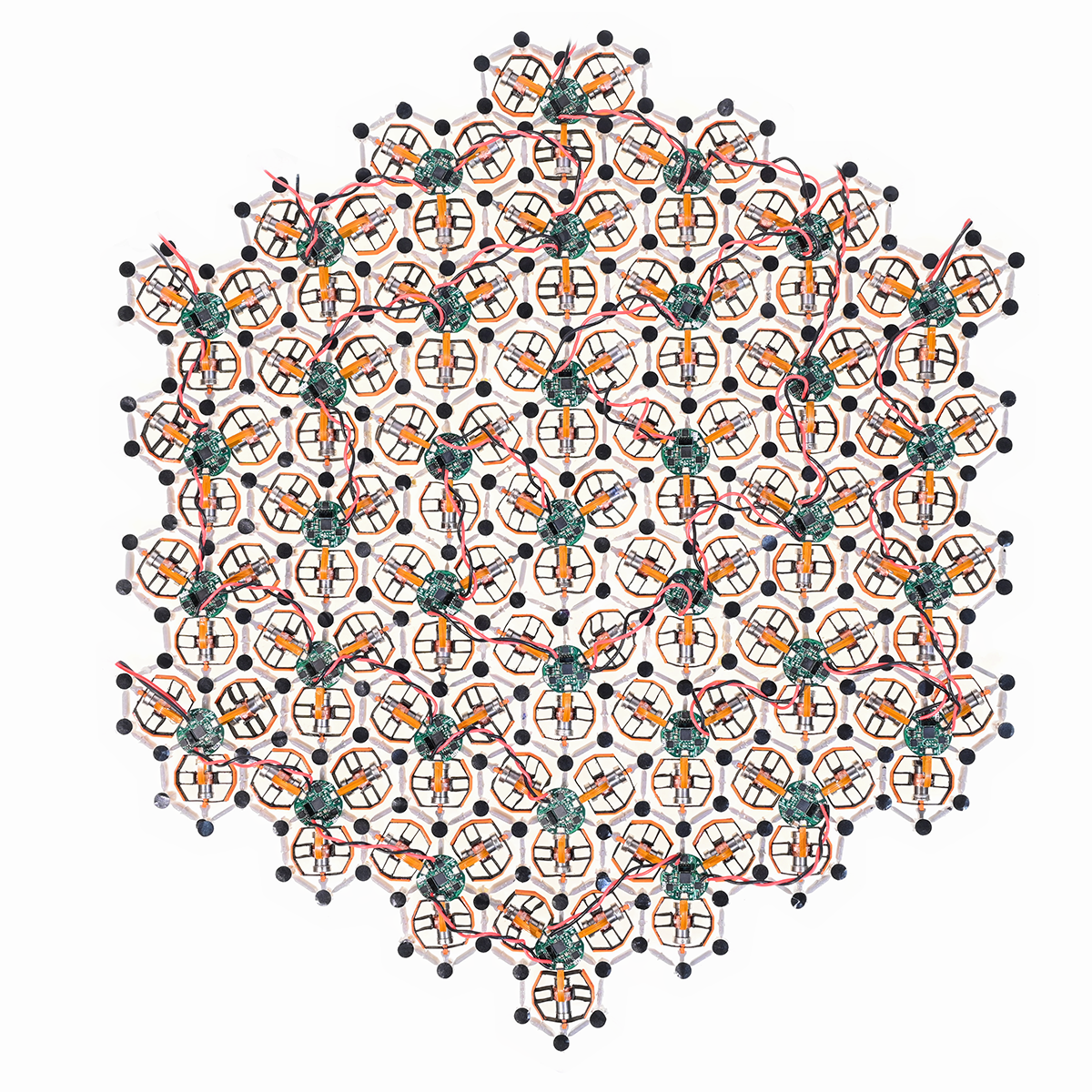
Physicists have built mechatronic metamaterials whose connected robotic elements oscillate autonomously, forming time crystals that repeat patterns in both space and time. Fabricated as a one-dimensional ring and a two-dimensional surface, the active elastic structures show wave coarsening that drives spontaneous time-crystallization, and their order survives small random perturbations.
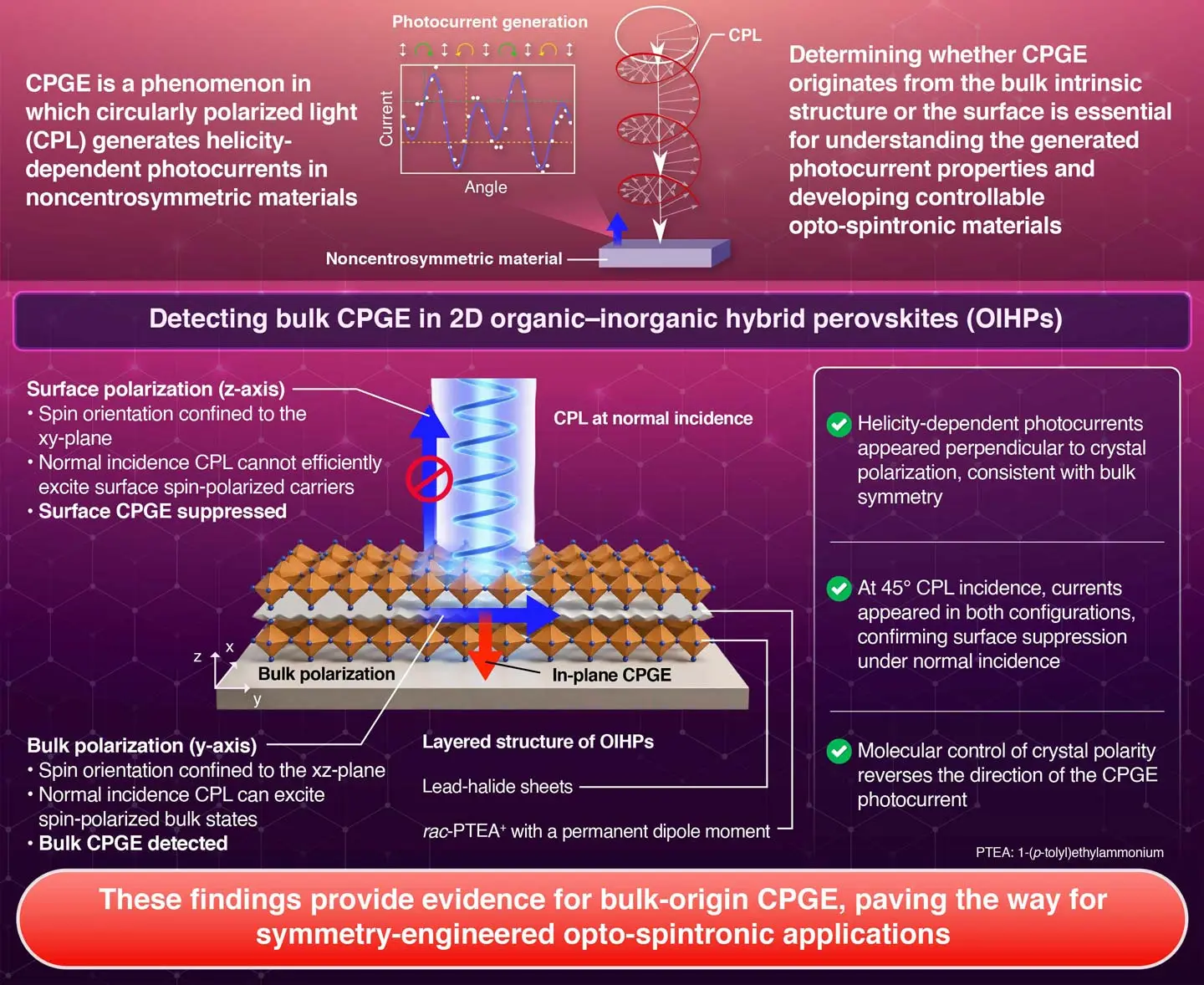
Researchers at Science Tokyo have shown that the circular photogalvanic effect in two-dimensional organic-inorganic hybrid perovskites arises from the crystal bulk rather than its surface. Using circularly polarized light at normal incidence, they found helicity-dependent photocurrents that reversed with light handedness and with crystal polarity in chiral enantiomers. The lead iodide layers provide strong spin-orbit coupling while molecular cations set bulk polarity.






