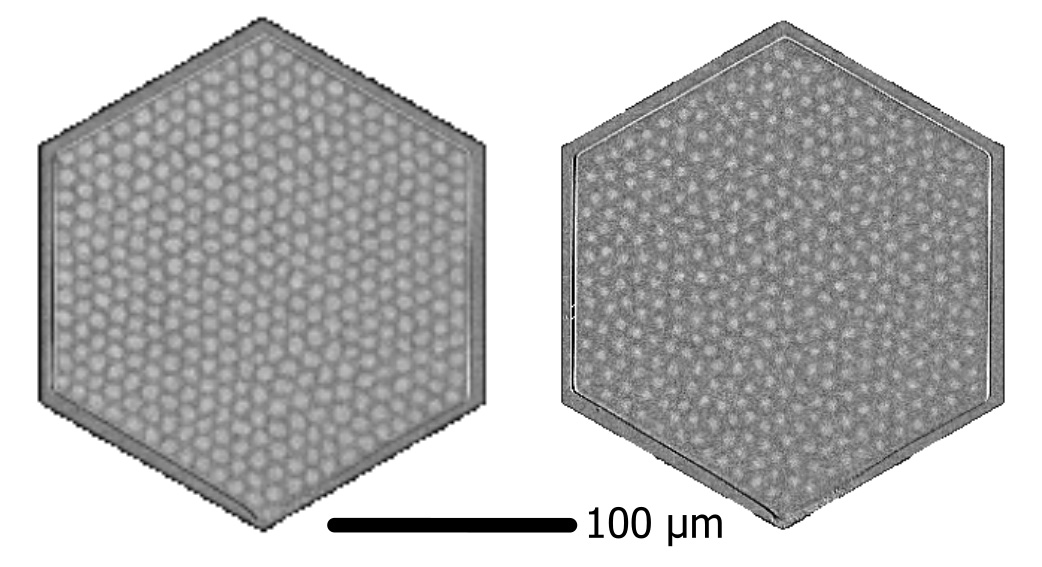
What occurs during the melting process in two-dimensional systems at the microscopic level? Researchers at Johannes Gutenberg University Mainz (JGU) have explored this phenomenon in thin magnetic layers. "By utilizing skyrmions, i.e., miniature magnetic vortices, we were able to directly observe, for the first time, the transition of a two-dimensional ordered lattice structure into a disordered state at the microscopic level in real time," explained Raphael Gruber, who conducted the research within the working group of Professor Mathias Kläui at the JGU Institute of Physics. The findings, published in Nature Nanotechnology, are fundamental to a deeper understanding of melting processes in two dimensions and the behavior of skyrmions, which may revolutionize future data storage technologies.
Two-step melting of skyrmion lattices
While the concept of ice melting into water is familiar to most from a macroscopic perspective, the microscopic aspects of melting processes remain surprisingly poorly understood. "This phase transition is particularly intriguing in two-dimensional systems, where distinct phenomena emerge, differing from those observed in three-dimensional counterparts," elaborated Gruber. Initially, the researchers generated skyrmions, which are magnetic vortex structures analogous to microscopic hurricanes, by precisely calibrating temperature and magnetic fields. Owing to their remarkable stability, skyrmions can be regarded as individual entities. When densely packed, these magnetic vortices self-organize into a regular lattice structure. "Our primary question was: What happens when we revert this ordered state to a disordered one – in effect, when we melt the system?," said Gruber.
Employing a magneto-optical Kerr microscope, the researchers observed this process in real time for the first time. In contrast to three-dimensional lattice structures, such as ice, the two-dimensional skyrmion lattice melts in a distinctive two-step process. During the initial step, translational order is lost, with individual skyrmions remaining within a lattice, yet exhibiting irregular distances to their nearest neighbors. Only in the subsequent step is the orientation also compromised, culminating in the complete dissolution of the lattice – a melting process. "The elucidation of this melting transition was greatly facilitated by our collaboration with colleagues from the Center for Quantum Spintronics at the Norwegian University of Science and Technology," noted Professor Mathias Kläui.
Magnetic-field-induced melting: a novel approach
A distinctive aspect of this experimental design lies in the method used to induce melting. Typically, one would increase temperature. However, this approach is suboptimal in this context, as it would alter the conditions giving rise to the magnetic vortices. "Instead, we reduced the size of the skyrmions by modulating the magnetic field. This approach afforded the skyrmions greater mobility within the lattice, enabling movement," explained Gruber. "This strategy, akin to increasing temperature, leads to the lattice structure becoming progressively disordered, ultimately resulting in its complete dissolution." These findings pave the way for the potential application of skyrmions in future data storage technologies, offering significantly enhanced data density, rapid read/write access, and exceptional energy efficiency.
"This groundbreaking work was supported by the ERC Synergy Grant 3D MAGiC and, notably, by the TopDyn – Center for Dynamics and Topology research initiative, funded by the Rhineland-Palatinate Research Initiative. Topology and the dynamics of topological properties represent a central research focus for numerous scientists in Mainz, with this study contributing to a growing body of exciting publications in this field," said Kläui, Director of TopDyn.
Reference
Real-time observation of topological defect dynamics mediating two-dimensional skyrmion lattice melting
Raphael Gruber, Jan Rothörl, Simon M. Fröhlich, Maarten A. Brems, Fabian Kammerbauer, Maria-Andromachi Syskaki, Elizabeth M. Jefremovas, Sachin Krishnia, Asle Sudbø, Peter Virnau & Mathias Kläui
https://www.nature.com/articles/s41565-025-01977-2
Johannes Gutenberg University Mainz (JGU)
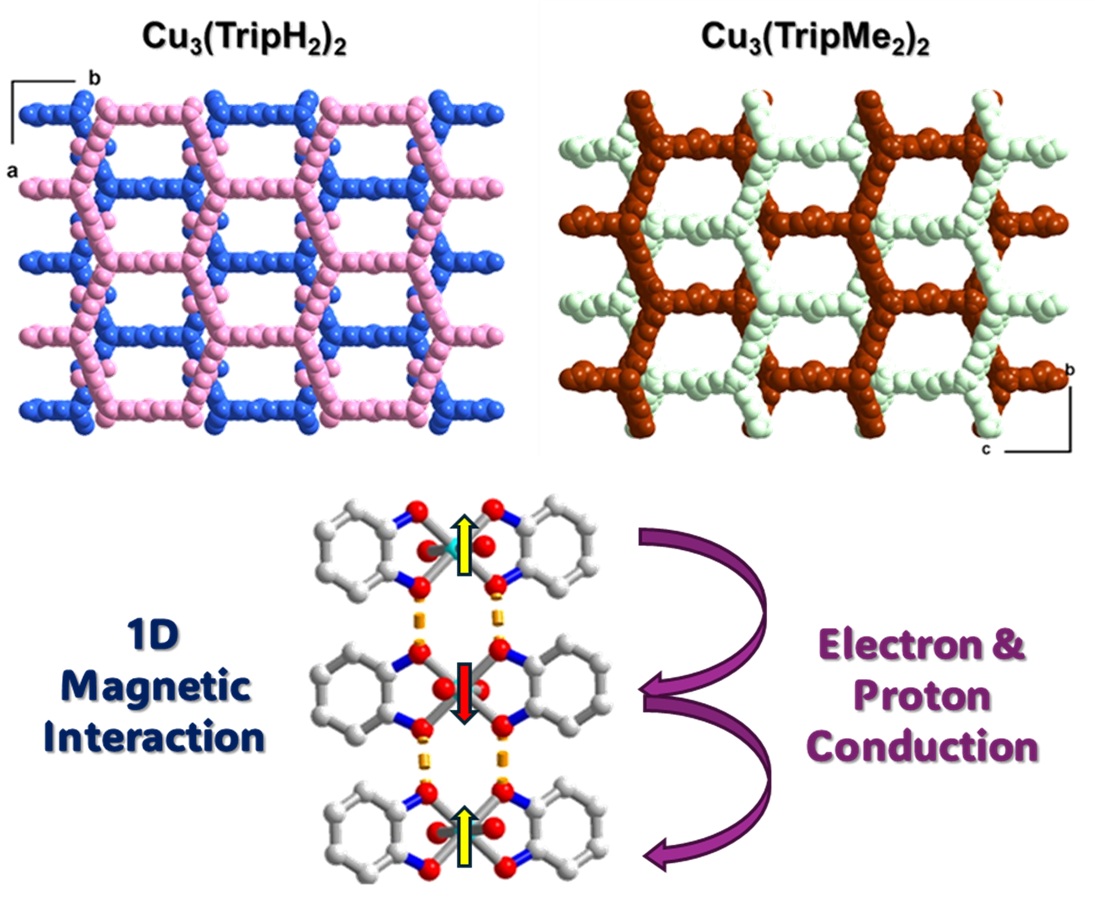
Researchers at Kumamoto University and Nagoya University have developed a new class of two-dimensional (2D) metal-organic frameworks (MOFs) using triptycene-based molecules, marking a breakthrough in the quest to understand and enhance the physical properties of these promising materials. This innovation opens new possibilities for multifunctional applications in gas/molecular sensors, electrochemical energy storage, and spintronic devices. Two-dimensional (2D) conductive metal-organic framew...
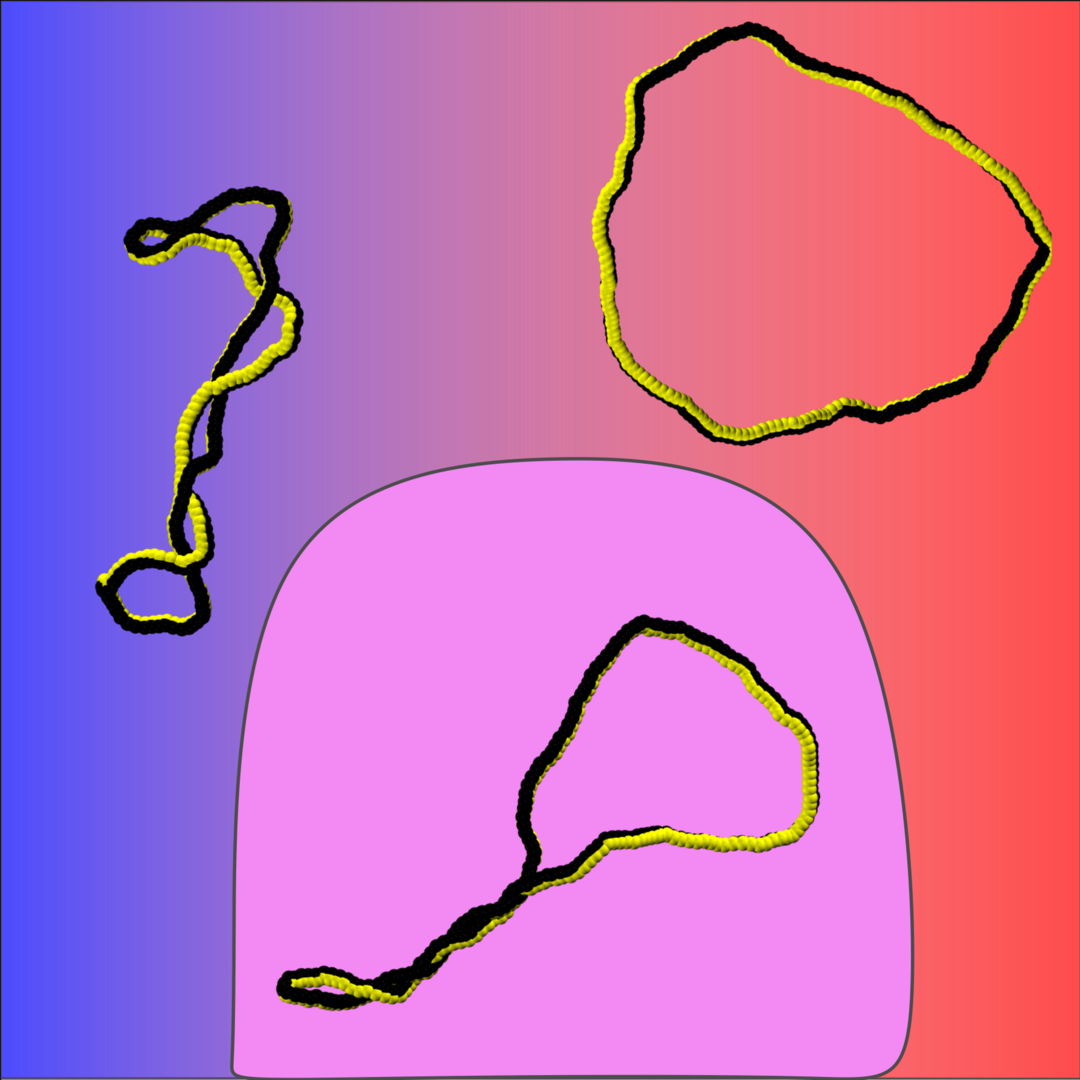
What if a complex material could reshape itself in response to a simple chemical signal? A team of physicists from the University of Vienna and the University of Edinburgh has shown that even small changes in pH value and thus in electric charge can shift the spatial arrangement of closed ring-shaped polymers (molecular chains) – by altering the balance between twist and writhe, two distinct modes of spatial deformation. Their findings, published in Physical Review Letters, demonstrate how el...
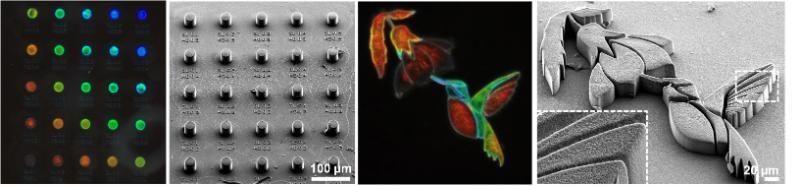
Half a billion years ago nature evolved a remarkable trick: generating vibrant, shimmering colours via intricate, microscopic structures in feathers, wings and shells that reflect light in precise ways. Now, researchers from Trinity have taken a major step forward in harnessing it for advanced materials science. A team, led by Professor Colm Delaney from Trinity’s School of Chemistry and AMBER, the Research Ireland Centre for Advanced Materials and BioEngineering Research, has developed a pio...