Yorktown Heights, 16 November 2026. IBM announced plans to collaborate with NVIDIA and Fermi National Accelerator Laboratory (Fermilab) to advance the integration of quantum and classical computing and explore how these technologies can scale together in modular architectures for fault-tolerant quantum computers. The work will span developing new scientific applications, integrating supercomputing and quantum resources, and designing components of future quantum computers.
IBM and NVIDIA, together with Fermilab, intend to launch a modular quantum computing co-design platform that co-locates NVIDIA DGX B200 systems with IBM quantum computers. These include systems powered by IBM Quantum Nighthawk, which IBM describes as the most powerful quantum processor it has ever built, running circuits of up to 7500 two-qubit operations on 120 qubits with speeds up to 100,000 samples per second.
Using Fermilab's Superconducting Quantum Materials and Systems (SQMS) Center, the SI-enabled co-design platform will help researchers test the innovations needed for multiple quantum processors to work together and to scale classical compute alongside them. Fermilab and IBM will also research what is needed to execute complex calculations in high-energy and nuclear physics beyond the reach of classical systems alone, such as lattice gauge theories, neutrino interactions and nuclear simulations.
"Some of the most fundamental problems in science remain out of reach for classical computers alone. Scaling quantum and classical together will open new frontiers in high-energy and nuclear physics and beyond," said Jerry Chow, IBM Fellow and Chief Technology Officer of Quantum-Centric Computing.
IBM and NVIDIA, along with Pasqal, worked with the open-source community to integrate quantum computers into supercomputing workflows through the Quantum Resource Management Interface (QRMI). QRMI is an open-source, vendor-agnostic layer that integrates with Slurm Hierarchical Resources (HRES) scheduling, allowing QPU time to be allocated, reserved and accounted for under the same policies used for CPUs and GPUs.
IBM also reported research with RIKEN and NVIDIA on sample-based quantum diagonalization (SQD) applied to an iron-sulfur cluster, Fe 4 S 4. The researchers ran circuits of up to 4,000 two-qubit operations on 72 qubits, collected 5 million samples and reported a 79-fold improvement in accuracy over earlier runs, coming within 4.3 millihartree of density-matrix renormalization group (DMRG) accuracy. The research is supported by Japan's New Energy and Industrial Technology Development Organization (NEDO).
Source: IBM news
Alice & Bob has updated its modular roadmap to target 200 logical qubits by 2030, built from 3,600 physical cat qubits, double its previous goal. The plan sets milestones up to 2034.
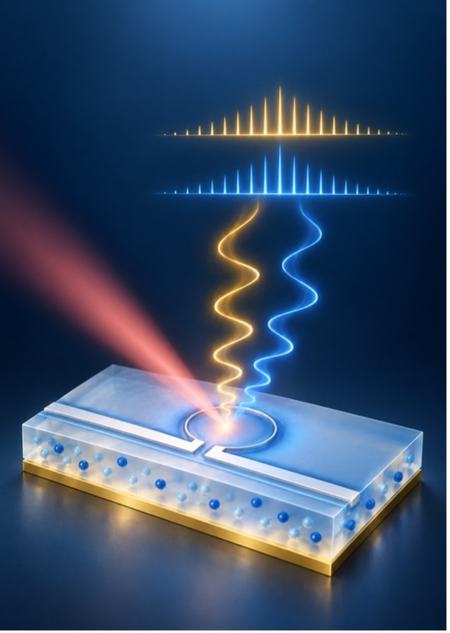
Billions of ytterbium ions in a yttrium orthovanadate crystal, coupled to a superconducting microwave resonator, synchronize through superradiance and pulse in a regular rhythm, forming a superradiant frequency comb. Unlike mirror-based combs, the spacing comes from atom-to-atom interference and the emission pairs microwaves with infrared light in step. The scheme could yield more stable combs and a microwave-optical link for connecting superconducting quantum circuits to fiber networks.
Planckian has been selected for the EIC Accelerator, comprising a €2.5M grant and €7.5M of equity from the EIC Fund, €10M in total, to scale superconducting quantum processors.
This week in nanotech
$129.9M raised
6 funding rounds · 39 deals tracked
New products
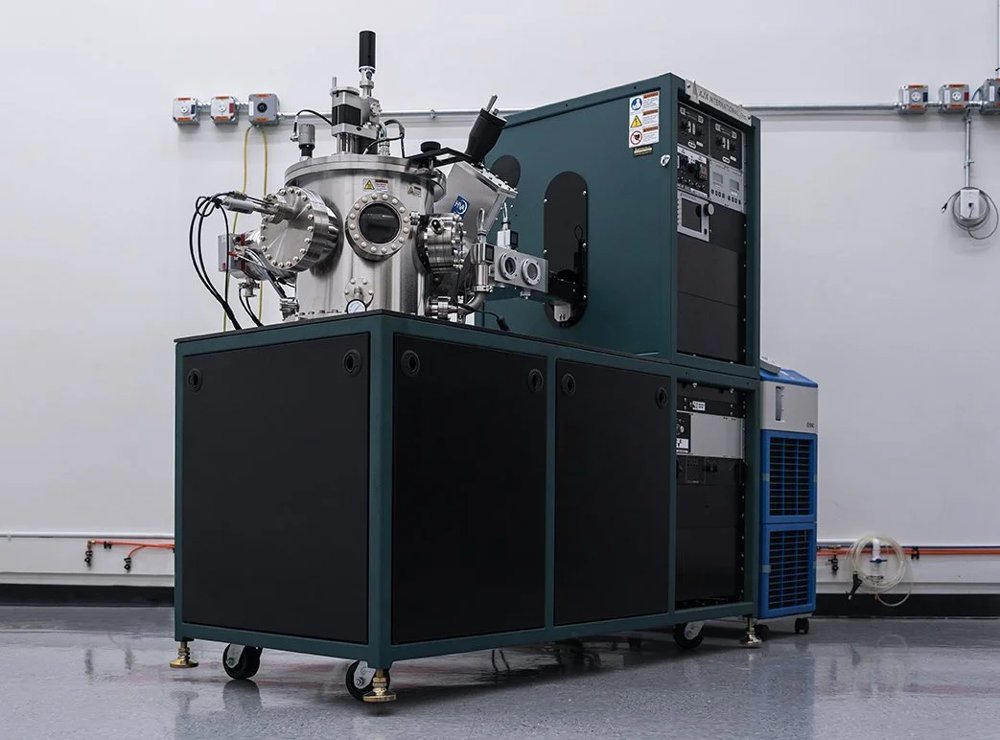 Orion Sputtering Deposition SystemsAJA International Featured
 Nion-compatible In Situ STEM Holders for Electrical BiasingHummingbird Scientific Featured
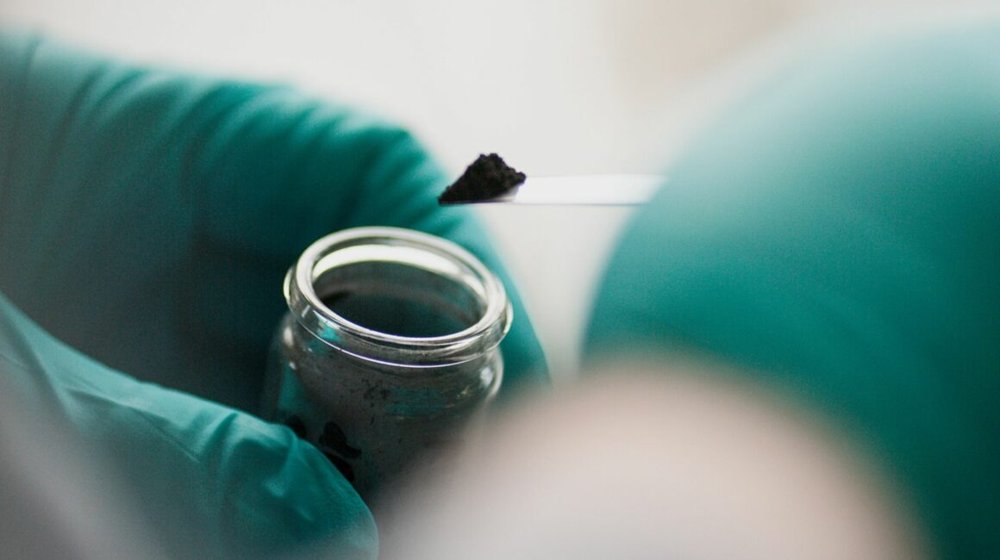 Talphene™ Graphene AdditivesTalga Group
Market insights
Last 30 days: Semiconductors & Electronics drew the most money: $547.7M.
Money raised per month