
A research group led by Prof. WU Kaifeng from the Dalian Institute of Chemical Physics (DICP) of the Chinese Academy of Sciences (CAS), in collaboration with Dr. Peter C. Sercel from the Center for Hybrid Organic Inorganic Semiconductors for Energy, recently reported the utilization of lattice distortion in lead halide perovskite quantum dots (QDs) to control their exciton fine structure.
The study was published in Nature Materials on Sept. 8.
It is well known that shape or crystal anisotropy in QDs, which are tiny semiconductor nanoparticles, results in energy splitting of their optically bright excitons (bound electron-hole pairs), known as fine structure splitting (FSS). These excitons form an important playground for quantum information science. For example, the excitons' FSS can be exploited for coherent control of quantum states for quantum computing, or for polarization-entangled photon-pairs in quantum optics, although for the latter it is important to suppress the magnitude of splitting.
Traditionally, studying FSS usually requires single or just a few QDs at liquid-helium temperature, because of its sensitivity to QD size and shape. Measuring FSS at an ensemble-level, let alone controlling it, seems impossible unless all the dots are made to be nearly identical.
In this study, by using ensemble-level femtosecond polarized transient absorption, the researchers observed clear bright-exciton FSS in solution-processed CsPbI3 perovskite QDs, which is manifested as exciton quantum beats (periodic oscillations of kinetic traces).
"Even more amazingly, the beat frequency, as determined by the FSS energy, of a given sample can be continuously controlled by changing the temperature. This is an unprecedented result, meaning that now scientists can facilely control FSS through temperature," said Prof. WU.
The researchers also found that the temperature-dependent FSS was related to the interesting, highly-dynamic lattice of lead halide perovskites. Lowering the temperature led to a more distorted lead-iodide octahedral framework.
Calculations indicated that, because these orthorhombic-phase QDs were actually still bounded by the pseudocubic family of crystal planes, the lattice distortion results in an avoided crossing fine-structure gap between bright exciton. This gap was responsible for the observed FSS, and it could be detected in spite of QD size and shape heterogeneity across an ensemble sample.
"Lattice distortion in CsPbI3 perovskites is well known in the photovoltaic community, as it is connected to the issue of phase stability of perovskite solar cells, but nobody has previously connected it experimentally to the exciton fine structure" said Prof. WU. "Our study demonstrates that this material property can actually be harnessed to control the bright-exciton splitting in quantum dots for quantum information technologies."
Reference
Lattice distortion inducing exciton splitting and coherent quantum beating in CsPbI3 perovskite quantum dots
Yaoyao Han, Wenfei Liang, Xuyang Lin, Yulu Li, Fengke Sun, Fan Zhang, Peter C. Sercel & Kaifeng Wu
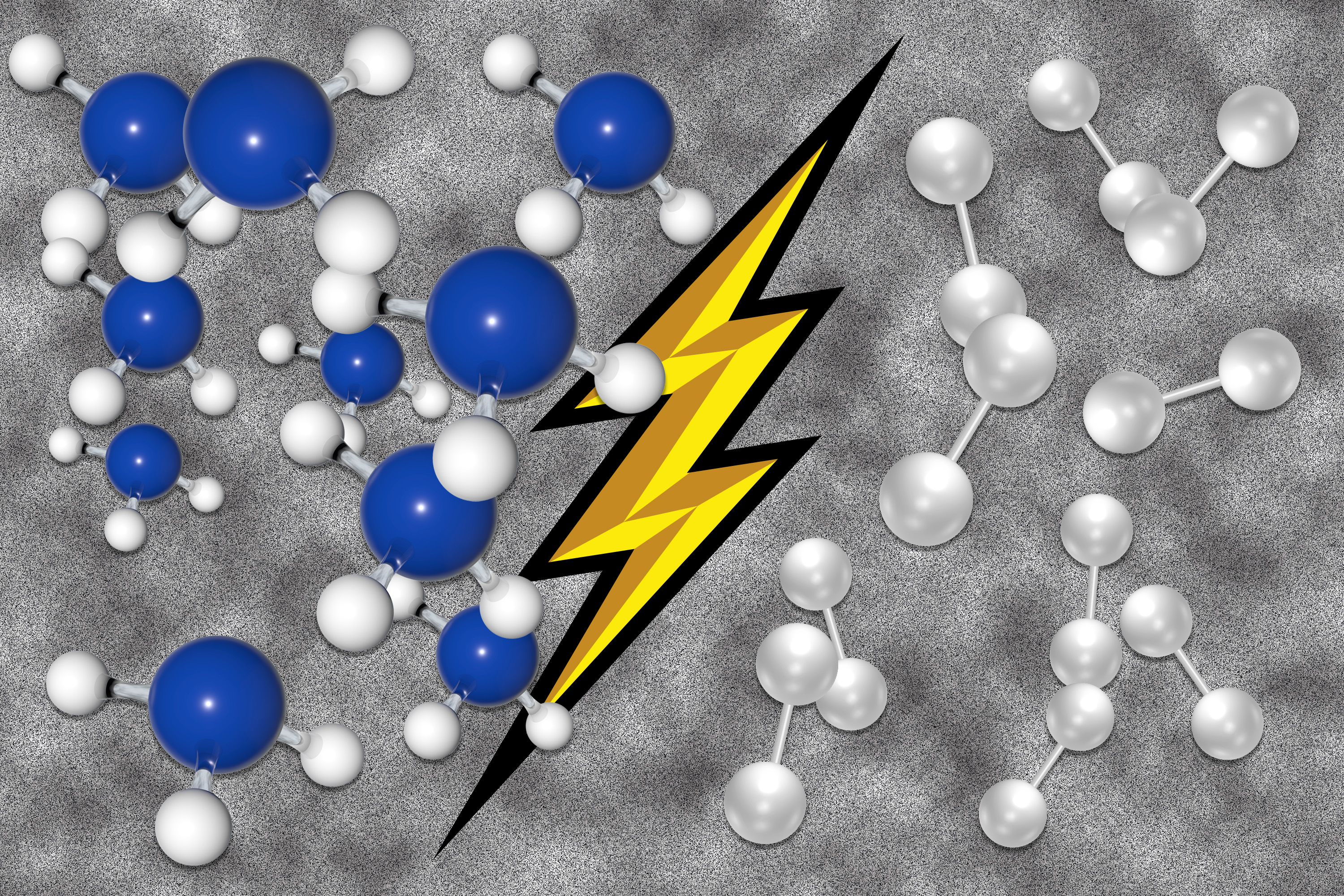
MIT researchers have developed a new way to extract pure hydrogen gas from ammonia and other hydrogen carrier molecules. Their strategy, which uses electricity to speed up the extraction, reduces the temperature and energy required to recover hydrogen from these molecules. As a liquid that is easily stored and transported, ammonia (NH3) is an attractive carrier for hydrogen, which is used in fuel cells, semiconductor manufacturing, chemical processing, and other applications. However,...
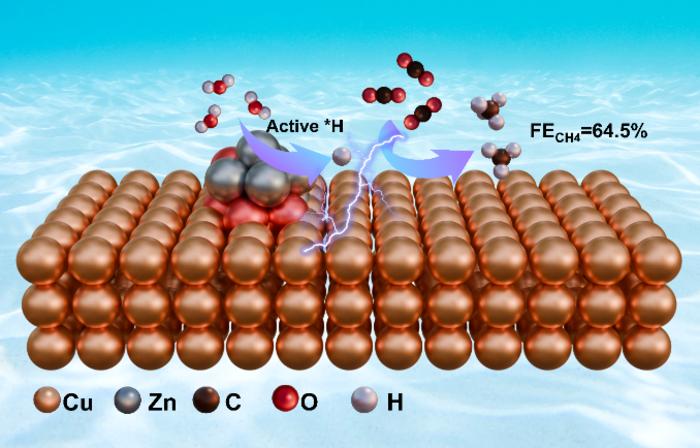
image: CuZn800@C was constructed via solvothermal method and utilizes the high-temperature volatility of zinc to prepare through calcination at different temperatures, which displays a high methane Faradaic efficiency of 64.5% and a remarkable partial current density of -551.3 mA/cm2 at -1.7 V vs. RHE, along with excellent stability. Zn and Cu form a tandem reaction system. Zn sites promote water splitting to provide protons, while Cu sites reduce the energy barrier for *CO hydrogenation....
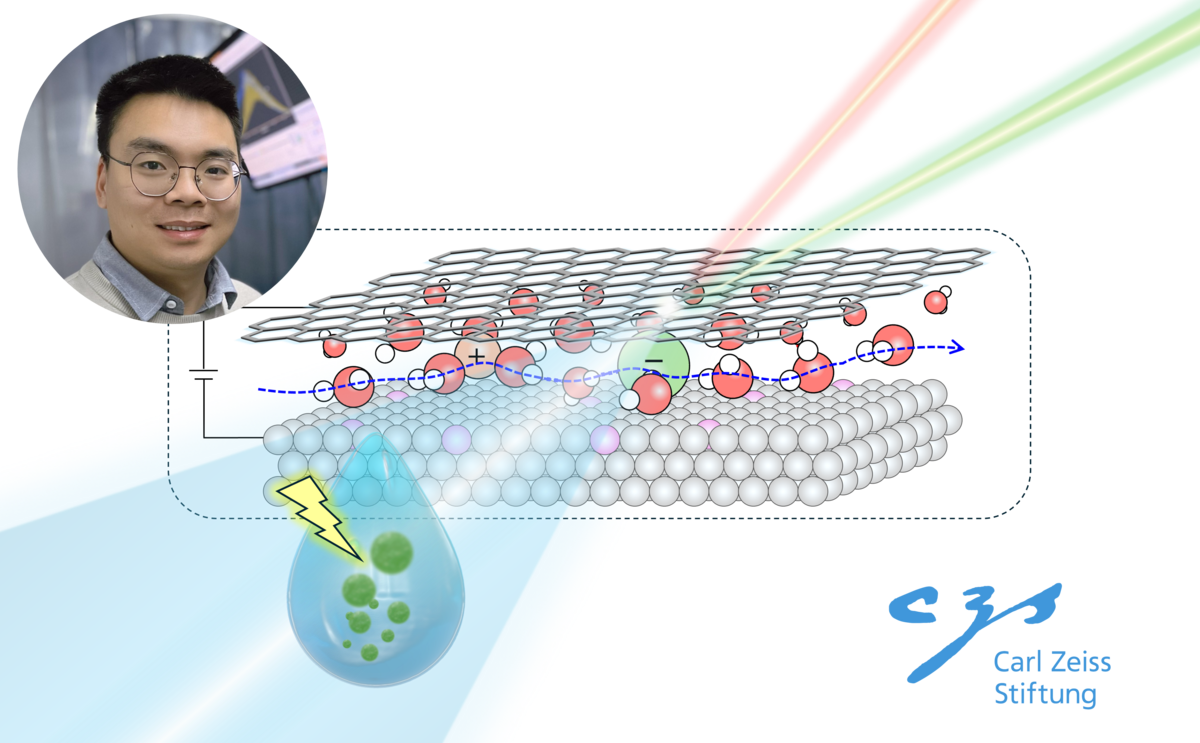
Electrochemical water splitting powered by renewable electricity is a promising pathway to sustainable hydrogen production, but its efficiency and scalability remain limited by costly catalysts and slow reaction kinetics. With €1.5 million in funding from the Carl-Zeiss-Stiftung for five years, Dr. Yongkang Wang and his team will pursue a new approach by visualizing and controlling water at the molecular level, using nanoscale confinement to shape its structure and dynamics at catalytic...






