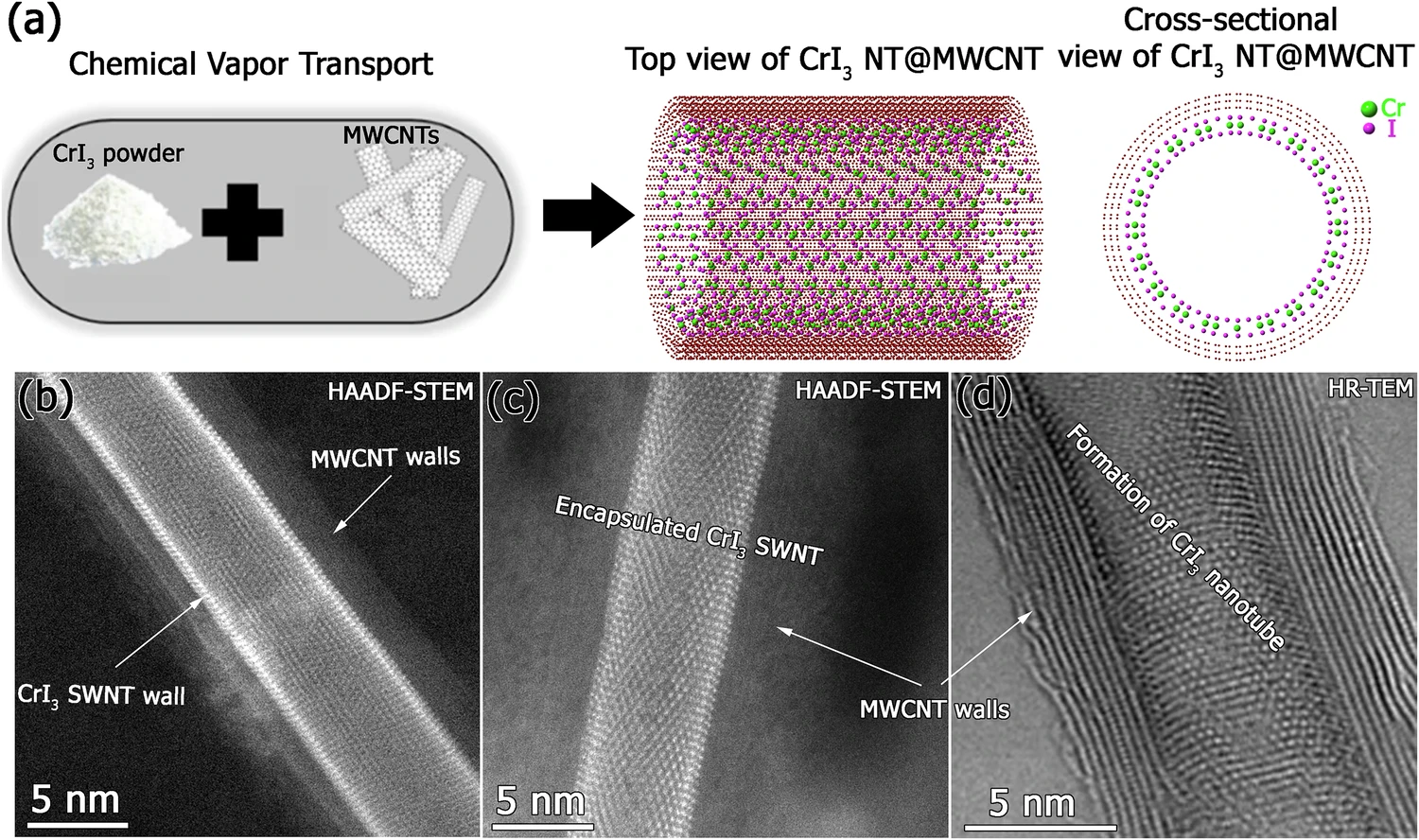
Researchers at the International Iberian Nanotechnology Laboratory (INL) in Braga, Portugal, have achieved a major breakthrough at the intersection of quantum materials and nanotechnology. In a new study published in Communications Chemistry, they report the synthesis and atomic-scale characterisation of high-quality, single-walled hollow magnetic CrI₃ nanotubes – a landmark advance in the control of low-dimensional magnetism.
What distinguishes this work is the confinement of the iconic layered ferromagnet CrI₃ within the innermost cavities of multiwall carbon nanotubes (MWCNTs). This structural innovation yields truly 1D magnetic heterostructures with unprecedented aspect ratios.
“This is not just a structural feat, it’s a conceptual leap forward to develop a fully isolated, truly 1D magnetic heterostructure.”, says the first author Ihsan Çaha.
Exploring magnetic states
This study raises new questions about magnetism at the nanoscale. Using X-ray magnetic circular dichroism (XMCD) at the ALBA Synchrotron in Spain, the researchers observed unusual magnetic behavior in the CrI₃ nanotubes.
“Our XMCD results carried out at ALBA synchrotron show that chromium atoms retain magnetism, but act like paramagnets with minimal remanence,” explains Aqrab ul Ahmad. “This behaviour hints at an intriguing suppression of long-range magnetic order, until now, unexplored.”
Theoretical insight
Beyond experimental observations, the team’s theoretical analysis predicts an exotic new magnetic state that challenges conventional understanding.
“Our calculations predict an exotic radial magnetic state, driven by off-plane magnetic anisotropy,” says Fernández-Rossier. “To our knowledge, no other material system exhibits this radial spin texture, a potential game-changer for quantum spintronics.”
Decoding the interface
Probing the fine details of the system, researchers turned to advanced 4D scanning transmission electron microscopy (4D-STEM) to map local charge distributions with high spatial precision.
“Local charge mapping using 4D-STEM was critical,” remarked Ihsan Çaha. “Traditional tools like Raman spectroscopy, though powerful, are limited in their ability to study intricate systems with multiple carbon layers. In contrast, 4D-STEM uncovered a striking detail: charge transfer is not widespread but rather confined to the interface between the innermost carbon shell and the CrI₃ core. This precision is essential for decoding the interfacial interactions in complex van der Waals heterostructures.”
Toward next-generation devices
Interestingly, while the CrI₃ nanotubes are predicted to be insulating, the surrounding carbon nanotube shells remain conductive, forming a unique hybrid architecture. The CrI₃ nanotubes are predicted to be insulating, while the surrounding MWCNTs act as conductive channels, a hybrid platform ideal for magneto-resistive and spintronic applications. This work not only pushes the boundaries of nanomaterials synthesis but also lays the groundwork for emerging applications in magnetic sensing, quantum logic, and spintronic technologies.
“This work breaks traditional boundaries, merging 1D confinement with 2D magnetism, integrating semiconducting behavior with quantum magnetism, and pioneering a hybrid architecture that could power next-generation magnetic sensors, quantum logic elements, and spin-based devices.”
Reference
One-dimensional CrI3 encapsulated within multi-walled carbon nanotubes
Ihsan Çaha, Aqrab ul Ahmad, Loukya Boddapatti, Manuel Bañobre-López, António T. Costa, Andrey N. Enyashin, Weibin Li, Pierluigi Gargiani, Manuel Valvidares, Joaquín Fernández-Rossier & Francis Leonard Deepak
https://www.nature.com/articles/s42004-025-01550-x
International Iberian Nanotechnology Laboratory (INL)
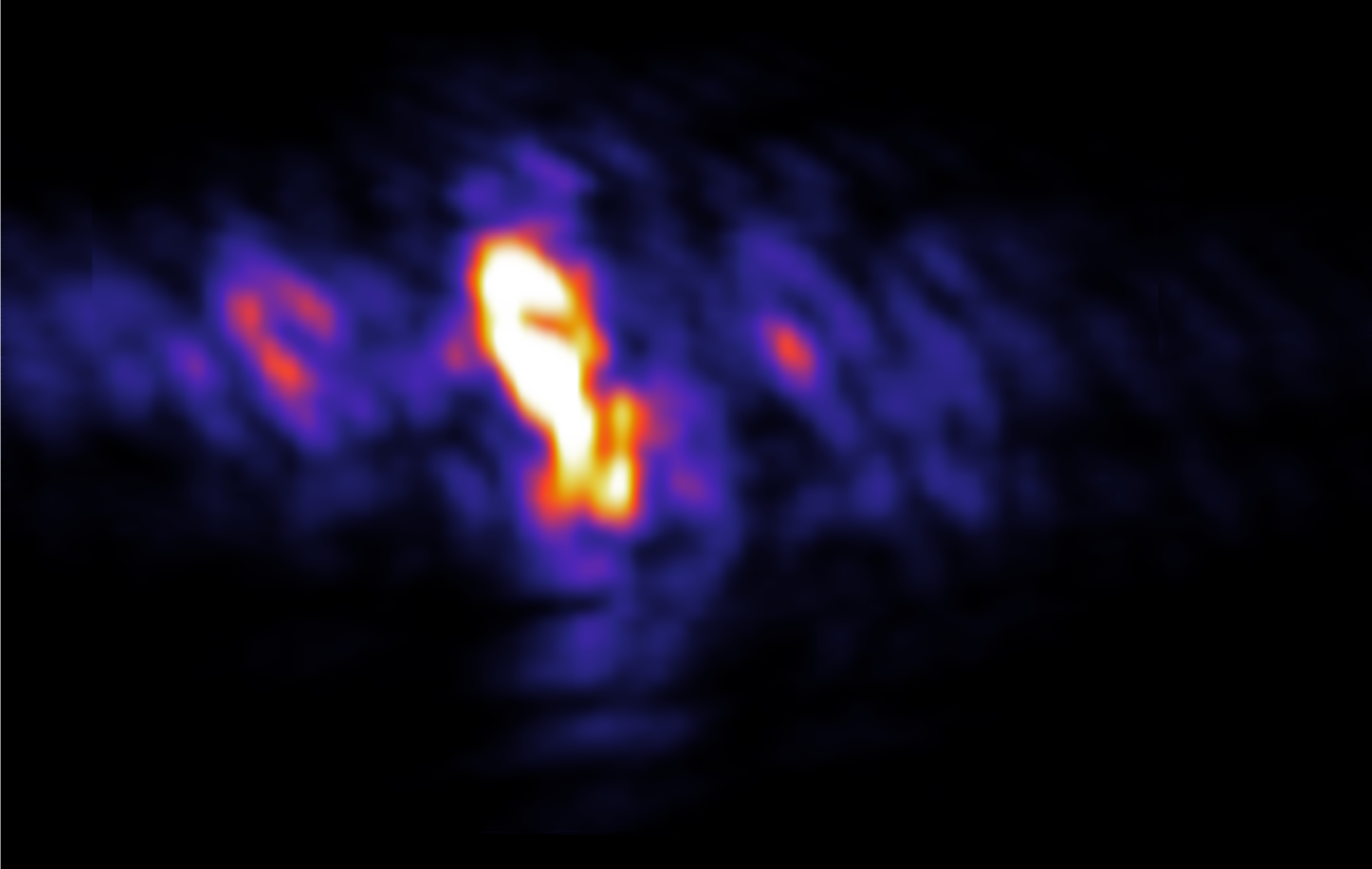
Scientists have developed a new X-ray laser approach that generates the shortest pulses of high-energy X-rays to date, clocking in at 60-100 attoseconds (quintillionths of a second). By using a powerful laser to stimulate inner shell electrons—those closest to an atomic nucleus—this fast and powerful technique captures detailed movements of electrons, enabling the study of quantum-scale phenomena previously thought unobservable.
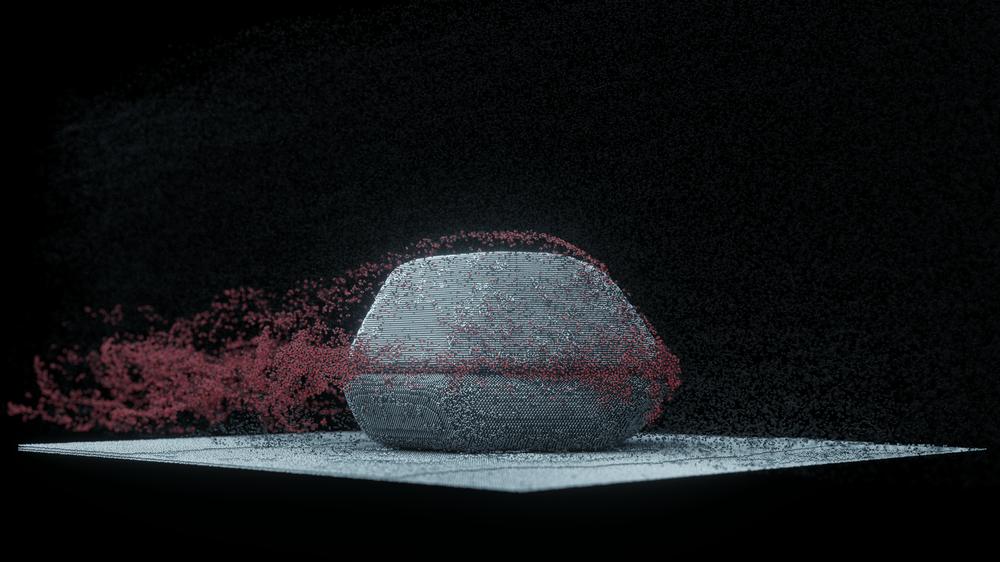
DESY team finds surprising defects in tiny metal particles, which could stimulate the development of more efficient catalysts

Engineers have harnessed quantum physics to detect the presence of biomolecules without the need for an external light source, overcoming a significant obstacle to the use of optical biosensors in healthcare and environmental monitoring settings.
This week in nanotech
$751.8M raised
5 funding rounds · 32 deals tracked
New products
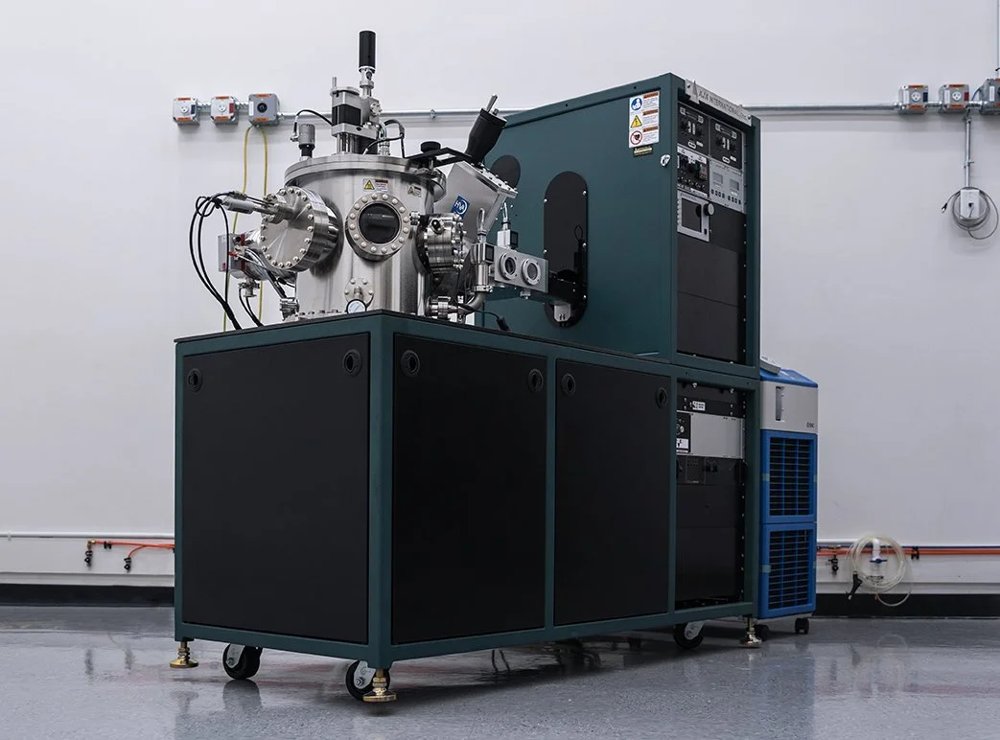 Orion Sputtering Deposition SystemsAJA International Featured
 Nion-compatible In Situ STEM Holders for Electrical BiasingHummingbird Scientific Featured
 SunscreenUnchained Labs
Market insights
Last 30 days: Quantum Technologies drew the most money: $3.18B.
Money raised per month
Behind the deal
Who led Xanadu Quantum Technologies Limited’s $10M Grant?
See the investors with Insights Pro →