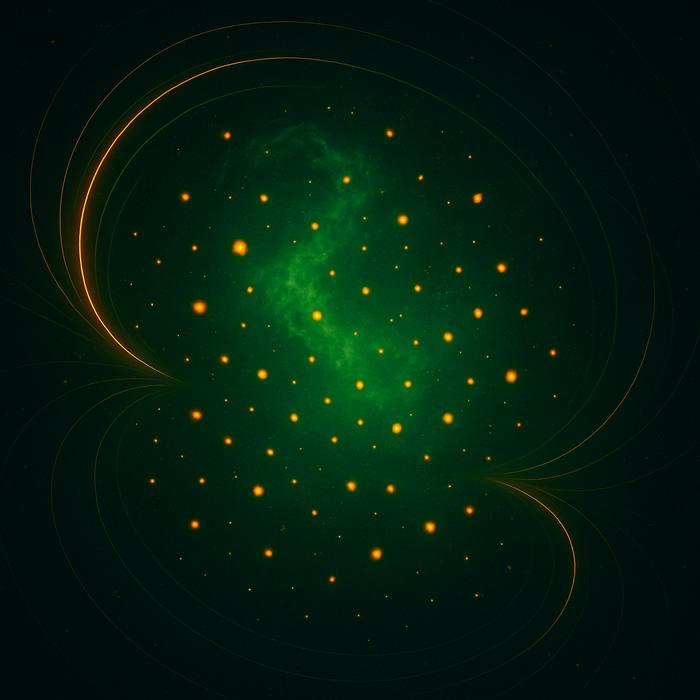
Imagine a cloud that shines like a neon sign, but instead of raindrops it contains countless microscopic dust grains floating in midair. This is a dusty plasma, a bizarre state of matter found both in deep space and in the laboratory.
In a new study, published this week in Physical Review E, Auburn University physicists report that even weak magnetic fields can reshape how these dusty plasmas behave—slowing down or speeding up the growth of nanoparticles suspended inside. Their experiments show that when a magnetic field nudges electrons into spiraling paths, the entire plasma reorganizes, changing how particles charge and grow.
“Dusty plasmas are like tiny particles in a vacuum box,” said Bhavesh Ramkorun, lead author of the study. “We found that by introducing magnetic fields, we could make these particles grow faster or slower, and the dust particles ended up with very different sizes and lifetimes.”
The researchers grew carbon nanoparticles by igniting a mix of argon and acetylene gas. Normally, particles grew steadily for about two minutes before drifting away. With magnetic fields, the cycle shortened dramatically—sometimes to under a minute—and the particles stayed smaller.
“It’s remarkable how sensitive the system is,” explained Saikat Thakur, co-author. “Electrons are the lightest players in the plasma, but when they become magnetized, they dictate the rules. That simple change can completely alter how nanomaterials form.”
The results could help scientists design new plasma-based techniques for creating nanoparticles with tailored properties for electronics, coatings, and quantum devices. At the same time, they offer fresh insight into natural plasmas in space, from planetary rings to the solar atmosphere, where dust and magnetic fields are constantly interacting.
“Plasma makes up most of the visible universe, and dust is everywhere,” added Ramkorun. “By studying how the smallest forces shape these systems, we’re uncovering patterns that connect the lab to the cosmos.”
Reference
Electron magnetization effects on carbonaceous dusty nanoparticles grown in Ar−C2H2 capacitively coupled nonthermal plasma
Bhavesh Ramkorun, Saikat C. Thakur, Ryan B. Comes, and Edward Thomas, Jr.
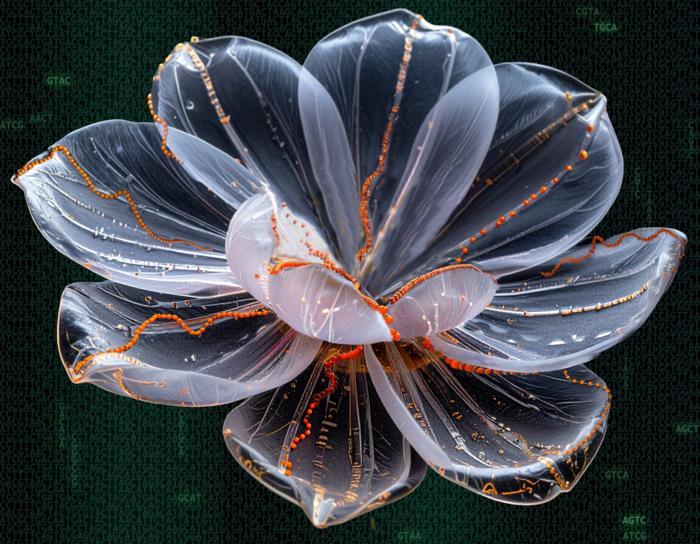
Researchers at the University of North Carolina have created microscopic soft robots shaped like flowers that can change shape and behavior in response to their surroundings, just like living organisms do. These tiny “DNA flowers” are made from special crystals formed by combining DNA and inorganic materials. They can reversibly fold and unfold in seconds, making them among the most dynamic materials ever developed on such a small scale. Each flower’s DNA acts like a tiny computer program, te...
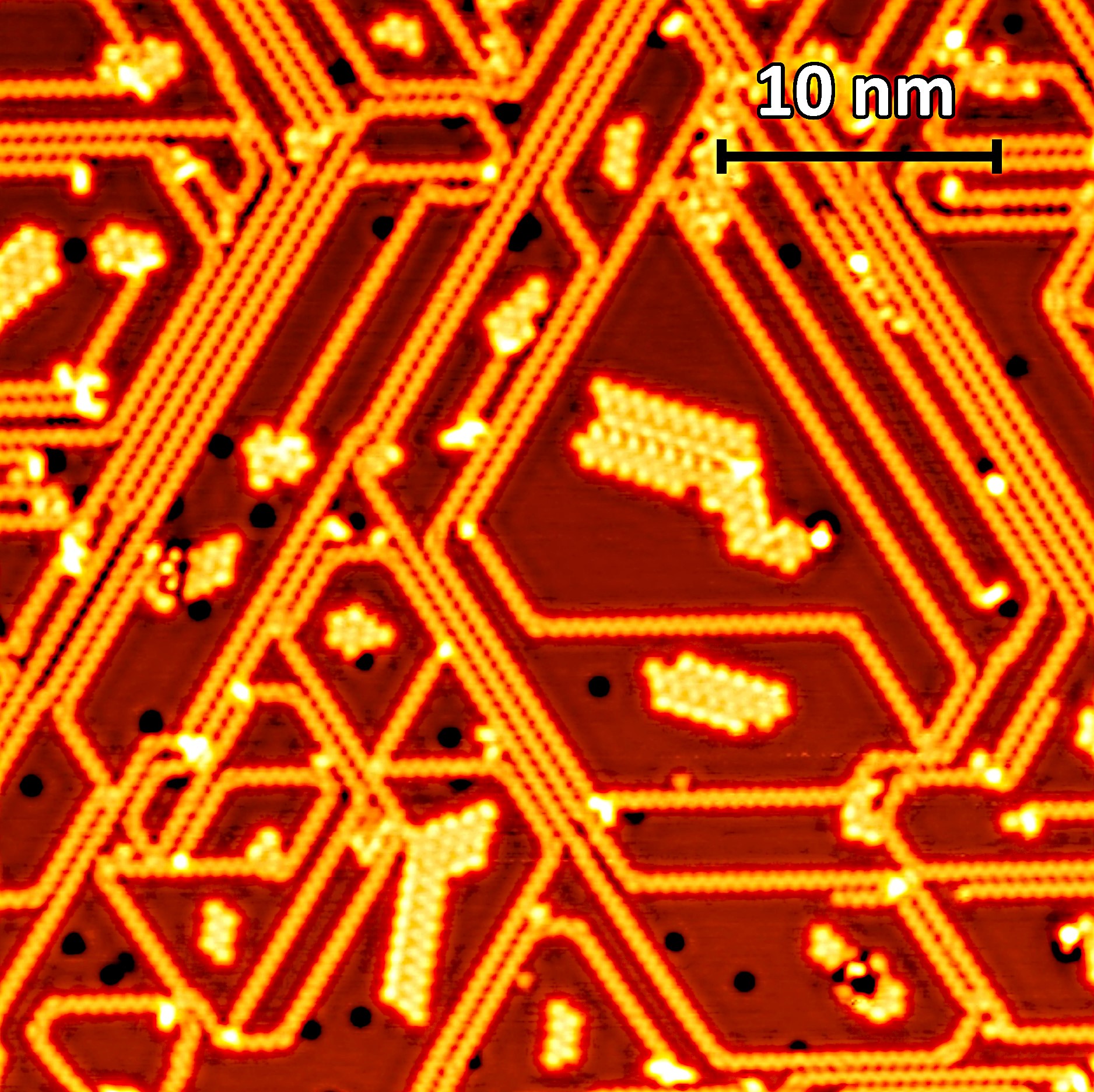
For the first time, a team at BESSY II has succeeded in demonstrating the one-dimensional electronic properties of a material through a highly refined experimental process. The samples consisted of short chains of phosphorus atoms that self-organise at specific angles on a silver substrate. Through sophisticated analysis, the team was able to disentangle the contributions of these differently aligned chains. This revealed that the electronic properties of each chain are indeed one-dimensional.
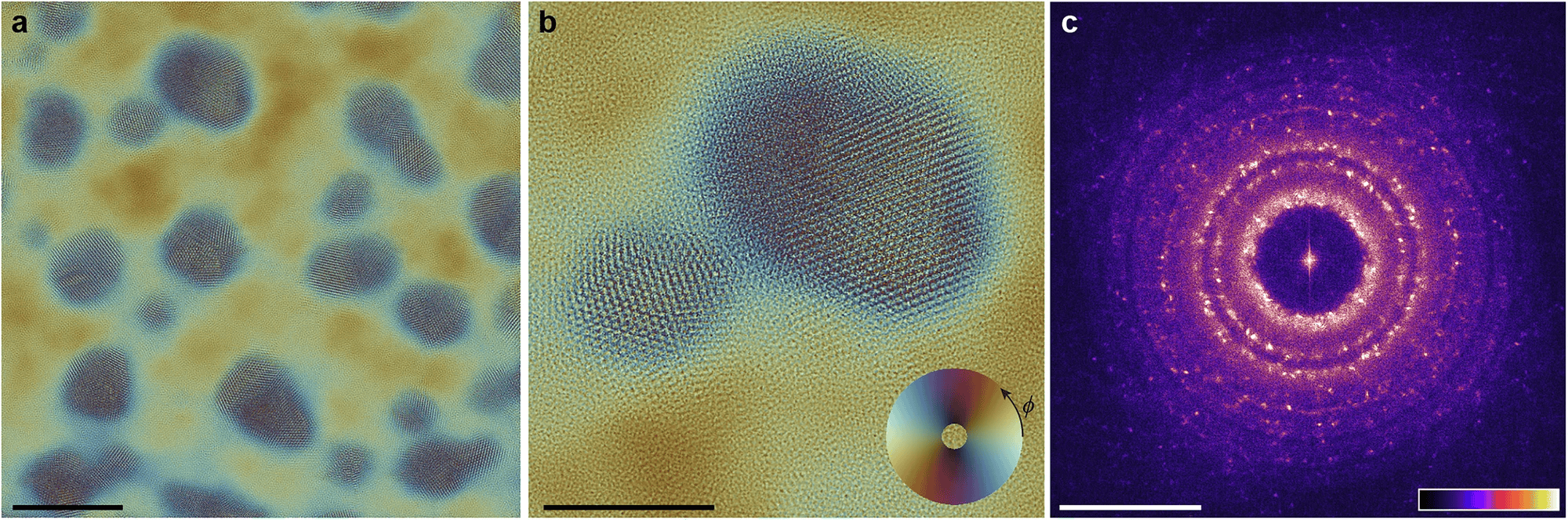
A team of researchers at the University of Victoria (UVic) have achieved a major breakthrough in electron microscopy that will allow scientists to visualize atomic-scale structures with unprecedented clarity using lower-cost and lower-energy microscopes than ever before. Led by Arthur Blackburn, co-director of UVic’s Advanced Microscopy Facility, the team developed a novel imaging technique that allowed them to achieve sub-Ångström resolution (less than one ten-billionth of a meter) using a c...
This week in nanotech
$18.9M raised
4 funding rounds · 36 deals tracked
New products
 Nion-compatible In Situ STEM Holders for Electrical BiasingHummingbird Scientific Featured
 Ti-WCMBN Nanomaterialia Featured
 PDK (Process Design Kit)DB HiTek
Market insights
Last 30 days: Semiconductors & Electronics was the busiest vertical: 52 of 170 events (31%).
Money raised per month