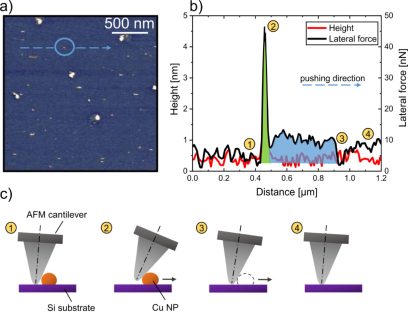
Çiçek and colleagues investigated copper (Cu) nanoparticle adhesion on silicon (Si) using AFM imaging, controlled nanoparticle manipulation and force measurement. The work used NANOSENSORS Uniqprobe qp-CONT AFM probes to locate and push individual Cu nanoparticles.
The experiments followed an established AFM nanomanipulation approach. Areas with sufficiently low nanoparticle coverage were selected so that individual particles could be manipulated independently. The cantilevers were calibrated for quantitative lateral-force measurements.
As the AFM tip encountered a nanoparticle, the lateral-force signal increased as the particle was displaced. The subsequent response also contained contributions associated with friction and other dissipative processes. By considering both force and displacement, the researchers determined the total work of manipulation and used it to estimate the work of separation.
Lateral force alone did not show a simple trend with substrate bias. The measurements showed a non-monotonic dependence on nanoparticle size. Under the conditions investigated, the strongest adhesion-related behaviour was typically reported for particles between 6 and 12 nm rather than increasing continuously with particle size. The reported size dependence is specific to the system and conditions studied and does not establish a universal optimum particle size.
The work-of-separation values remain estimates within the experimental and analytical framework used by the researchers. The study was published in the Beilstein Journal of Nanotechnology 17, 1–14 (2026).
Source: Nanosensors news
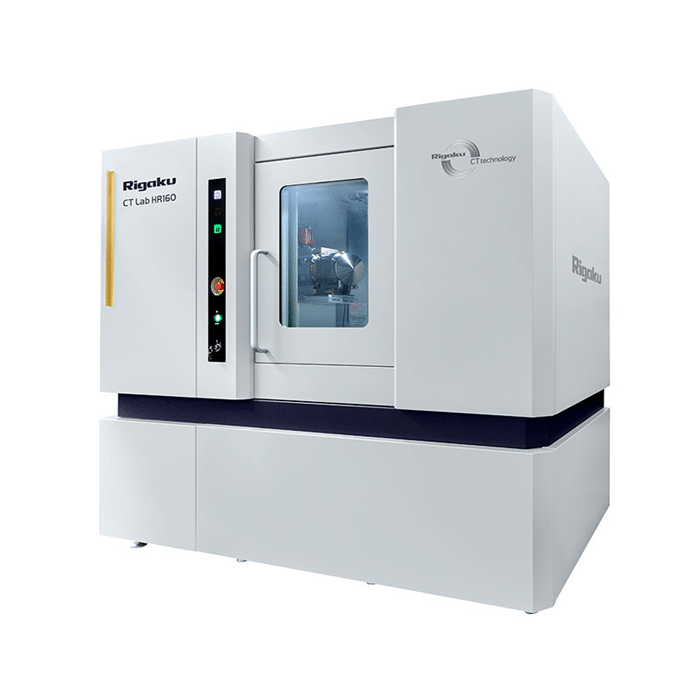
Rigaku has launched the CT Lab HR160, an X-ray CT system combining its imaging expertise with Excillum's NanoTube N3 X-ray source. It operates at up to 160 kV and achieves true 250 nm spatial resolution.
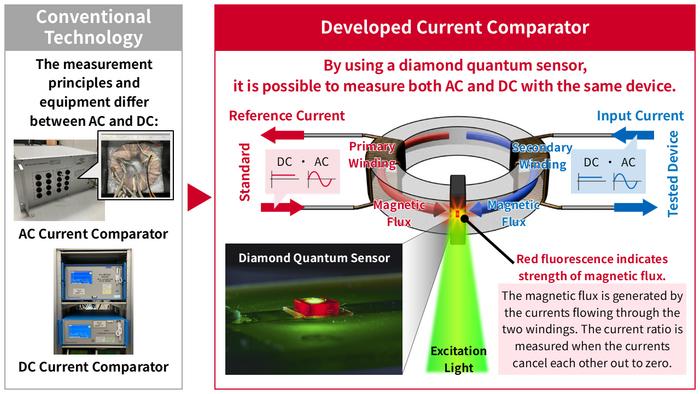
Compact current comparator based on diamond quantum sensing for the unified calibration of AC and DC current measurement instruments Researchers at AIST, in collaboration with the Institute of Science Tokyo and the National Institutes for Quantum Science and Technology, have developed a “current comparator” that uses diamond quantum sensors to accurately evaluate both AC and DC current ratios using the same device setup. A current comparator is a device for the calibration of current...
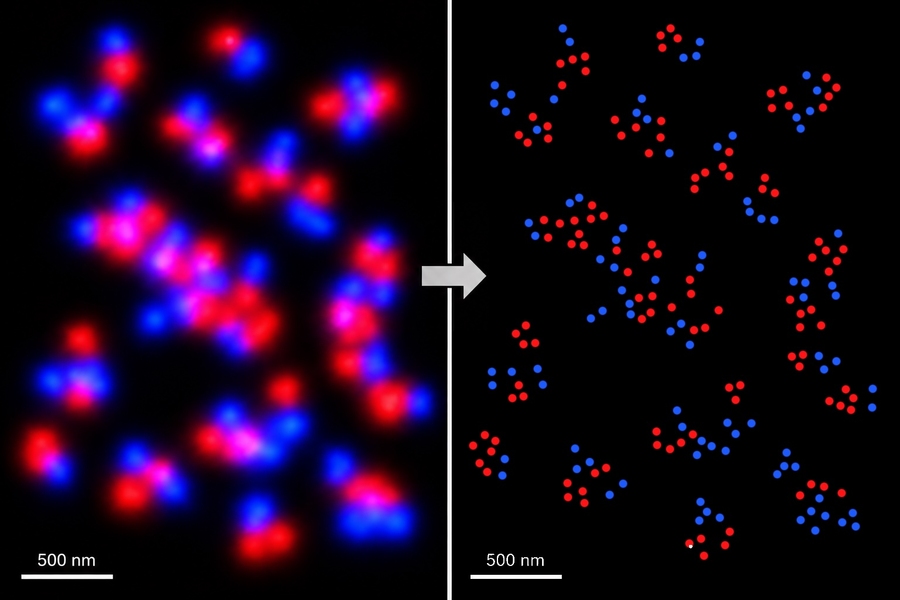
MIT and Broad Institute researchers have developed U-STORM, a super-resolution microscopy platform using engineered upconverting nanoparticles that blink spontaneously and indefinitely. The method achieves 0.6-angstrom localization precision with a single near-infrared laser, enabling multicolor imaging without complex buffers or multiple lasers. This simplifies high-precision molecular imaging for biological applications. Published in Nature Nanotechnology.






