NTT DOCOMO has expanded its use of D-Wave quantum technology to a second hybrid-quantum application that minimizes paging and location-registration signals at the same time. The application has been deployed and is now in operation nationwide.
The carrier serves more than 93 million subscriptions across a national network of roughly 250,000 base stations. For a segment of 333 base stations, three TA-Lists and nine TAs, the solver completed the optimization in approximately five minutes. That segment has 2 8991 possible configurations.
Across the 333 base station segment, the application reduced the daily peak volume of location-registration signals by 65.3% and paging signals by 7%. DOCOMO's previous classical methods could not solve this problem within the time required for production use.
DOCOMO has used D-Wave's constrained quadratic model (CQM) hybrid solver in production since 2024 to optimize paging-signal traffic within individual TAs. Using mobile traffic data from three regions, that application reorganized 270 base stations into 21 TA-Lists, a problem that took 27 hours with classical methods compared with 40 seconds using D-Wave's platform. Once deployed, it reduced peak-period paging signals by roughly 15%, giving an estimated 20% more capacity for connected devices.
The new application uses D-Wave's CQM hybrid solver, which combines classical computing with the Advantage2 annealing quantum computer, through the Leap quantum cloud service. DOCOMO also built a map-based visualization tool that converts the output into a base-station reassignment plan for review by regional branch offices.
Source: D-Wave news
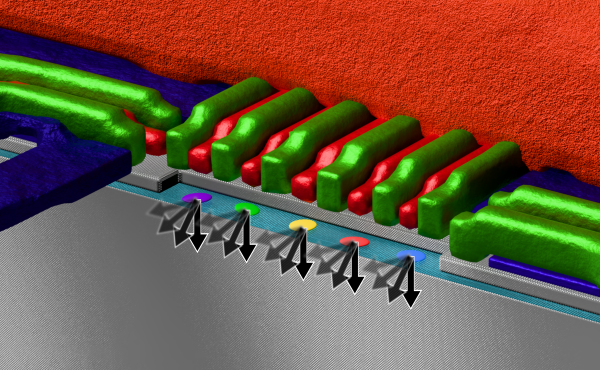
Silicon spin qubits usually lose accuracy when many qubits are driven in parallel, a barrier to scalable quantum processors. Writing in Nature Physics, RIKEN researchers traced the main error source to AC Stark shifts from shared microwave control signals. Their pairwise phase calibration protocol restored gate fidelities above 99.99% for up to three simultaneous qubits, and about 99.9% across all five, near fault-tolerant requirements.
Qilimanjaro Quantum Tech has completed a €19.6 million first close of its Series A round, led by Indra Group through IndraMind. SETT renewed its support with €9.6 million.
IonQ announced the pricing of a $2.0 billion equity offering. The offering consists of 20,500,000 shares at $40.00 per share, pre-funded warrants for 29,500,000 shares, and seven-year warrants for 100,000,000 shares at $69.46 per share.






