
Graphene, an extremely thin two-dimensional layer of the graphite used in pencils, buckles when cooled while attached to a flat surface, resulting in beautiful pucker patterns that could benefit the search for novel quantum materials and superconductors, according to Rutgers-led research in the journal Nature.
Quantum materials host strongly interacting electrons with special properties, such as entangled trajectories, that could provide building blocks for super-fast quantum computers. They also can become superconductors that could slash energy consumption by making power transmission and electronic devices more efficient.
"The buckling we discovered in graphene mimics the effect of colossally large magnetic fields that are unattainable with today's magnet technologies, leading to dramatic changes in the material's electronic properties," said lead author Eva Y. Andrei, Board of Governors professor in the Department of Physics and Astronomy in the School of Arts and Sciences at Rutgers University-New Brunswick. "Buckling of stiff thin films like graphene laminated on flexible materials is gaining ground as a platform for stretchable electronics with many important applications, including eye-like digital cameras, energy harvesting, skin sensors, health monitoring devices like tiny robots and intelligent surgical gloves. Our discovery opens the way to the development of devices for controlling nano-robots that may one day play a role in biological diagnostics and tissue repair."
The scientists studied buckled graphene crystals whose properties change radically when they're cooled, creating essentially new materials with electrons that slow down, become aware of each other and interact strongly, enabling the emergence of fascinating phenomena such as superconductivity and magnetism, according to Andrei.
Using high-tech imaging and computer simulations, the scientists showed that graphene placed on a flat surface made of niobium diselenide, buckles when cooled to 4 degrees above absolute zero. To the electrons in graphene, the mountain and valley landscape created by the buckling appears as gigantic magnetic fields. These pseudo-magnetic fields are an electronic illusion, but they act as real magnetic fields, according to Andrei.
"Our research demonstrates that buckling in 2D materials can dramatically alter their electronic properties," she said.
The next steps include developing ways to engineer buckled 2D materials with novel electronic and mechanical properties that could be beneficial in nano-robotics and quantum computing, according to Andrei.
Reference:
Evidence of flat bands and correlated states in buckled graphene superlattices
Jinhai Mao, Slaviša P. Milovanović, Miša Anđelković, Xinyuan Lai, Yang Cao, Kenji Watanabe, Takashi Taniguchi, Lucian Covaci, Francois M. Peeters, Andre K. Geim, Yuhang Jiang & Eva Y. Andrei
Nature volume 584, pages215–220(2020)
https://www.nature.com/articles/s41586-020-2567-3
Contact:
Eva Y. Andrei
Department of Physics and Astronomy
Rutgers University
Phone: (848) 445-8748
Email: eandrei-at-physics.rutgers.edu
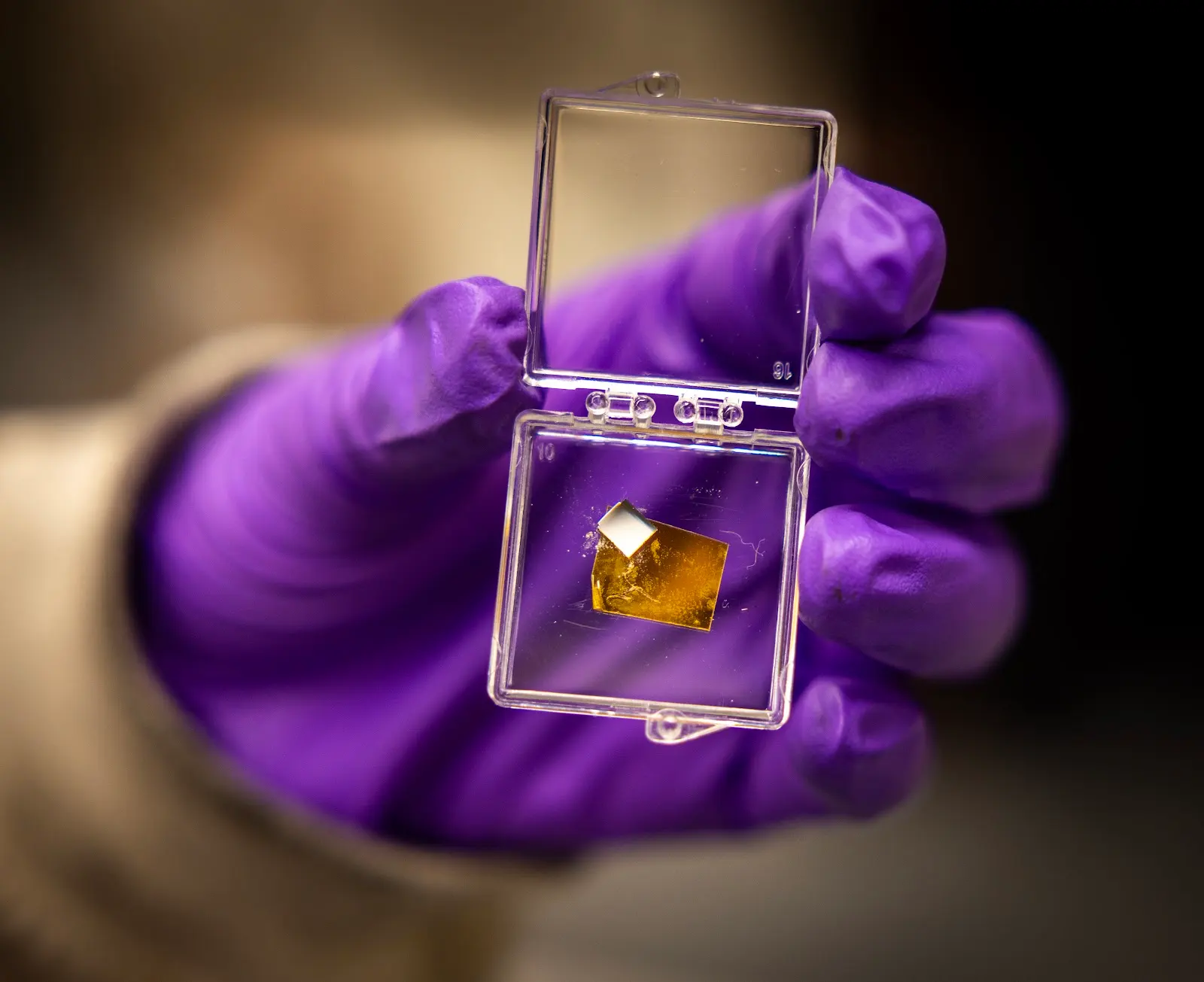
University of Michigan and University of Wisconsin researchers, backed by up to $6M from DARPA, propose an alternative to the transistor that could make computing 100 to 1,000 times faster and more energy efficient. The M3BOLT device pairs ferroelectric PMN-PT with a magnetic iron-gallium alloy, using magnons and sound waves instead of moving electrons as bits. Magnetic states also persist without power, adding memory.
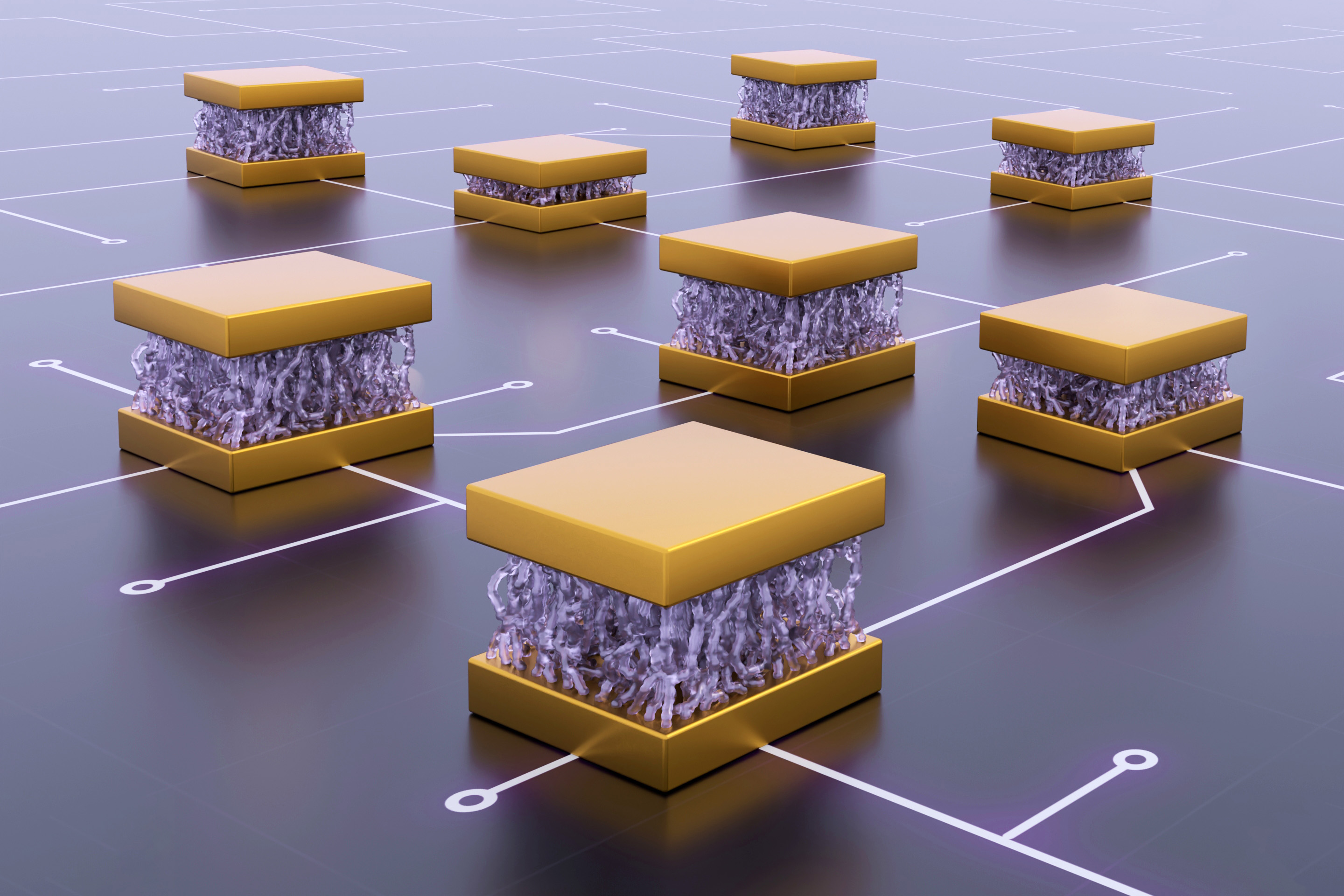
This illustration shows the nano-mechanical devices the researchers developed. Inspired by neurons, they can perform computing tasks with high energy efficiency. Image: Emily Theobald MIT researchers have created a new computing platform that could be used to develop intelligent and adaptive next-generation electronics that can simultaneously perform multiple functions, like computing and memory, all within one extremely compact, energy-efficient device. Such a platform opens opportunities...
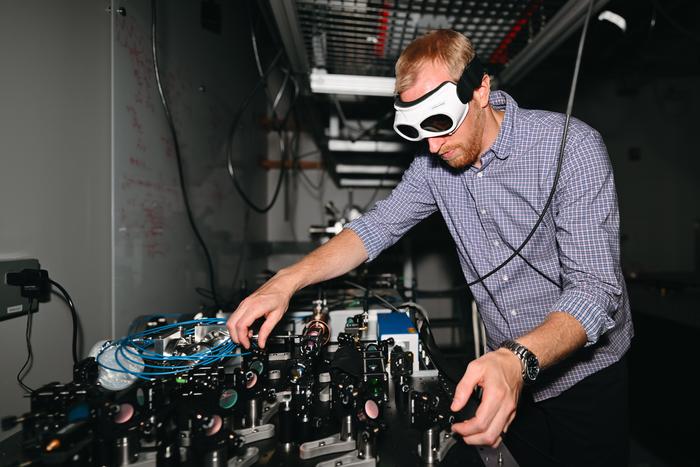
Breakthrough from a team led by Jacob Covey, associate professor in the University of Chicago’s Pritzker School of Molecular Engineering and Department of Physics, turns helium-3’s low mass into a quantum resource
This week in nanotech
$13.6M raised
2 funding rounds · 22 deals tracked
New products
 Nion-compatible In Situ STEM Holders for Electrical BiasingHummingbird Scientific Featured
 Ti-WCMBN Nanomaterialia Featured
 GHK-CuPeoples Peps
Market insights
Last 30 days: Quantum Technologies was the busiest vertical: 63 of 197 events (32%).
Money raised per month