Bristol, 14 October 2026. Bristol-based Siloton has been awarded an £8.4 million contract from Innovate UK, part of UK Research and Innovation (UKRI), through its Contracts for Innovation: Quantum Missions Primer initiative. The funding will accelerate development of the company's handheld eye imaging system.
The contract, delivered over two years, will support design of the in-clinic and at-home versions of Siloton's GiraffeOCT optical coherence tomography (OCT) device, and complete trials on both systems. Siloton expects the funding could cut the development process by up to two years.
Siloton will work with Sunderland Specialist Eye Hospital on clinical trials for its in-clinic device, giving patients across the North East and North Cumbria access to the technology during its development. York Health Economics Consortium will use this data to refine their cost-saving estimates for the NHS.
The project will create high-skilled jobs, with the Siloton team expected to grow to 16 by August 2028. The company plans to raise further investment to support development of its second-generation CheetahOCT device, designed to measure different layers of the retina.
Alasdair Price, CEO of Siloton, said: “Winning this Innovate UK contract allows us to accelerate the development of our systems, explore manufacturing and assembly in the UK, and help a groundbreaking new technology be adopted by the NHS more quickly.”
Source: Siloton news
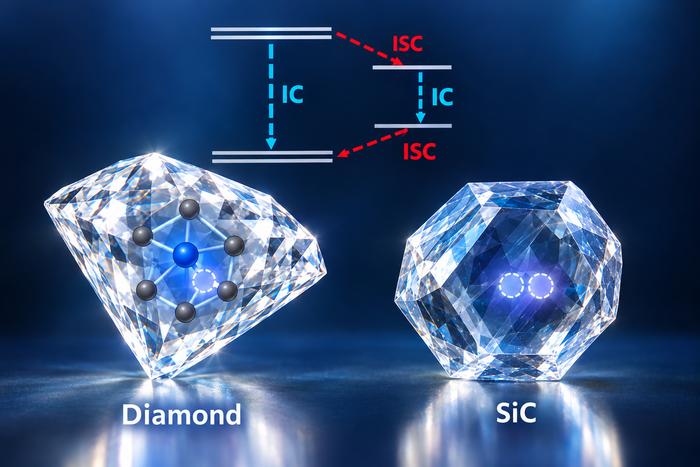
Researchers at UChicago PME developed a computational framework that models the full optical cycle of spin defects in solids, including internal conversion, the energy-loss pathway that has resisted accurate prediction. Applied to nitrogen-vacancy centers in diamond, it matched spectroscopy data; in silicon carbide divacancies, it revealed internal conversion strongly limits triplet excited-state lifetimes, resolving a long-standing theory-experiment discrepancy.
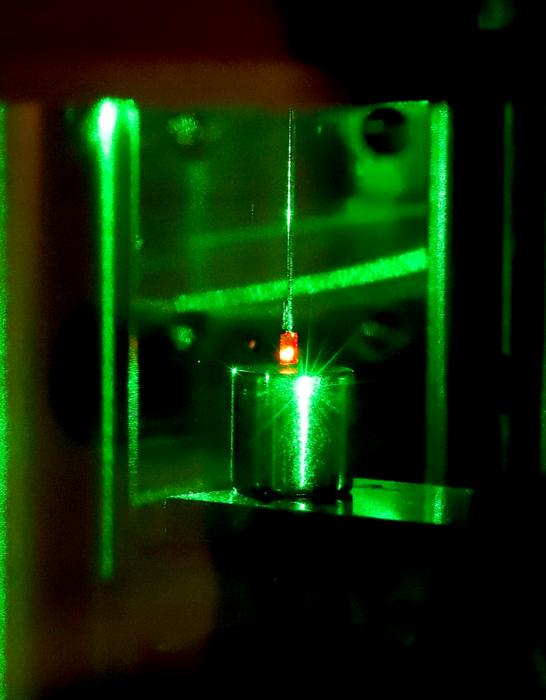
Researchers at OIST have for the first time used electron spin alone to move a levitating centimeter-scale diamond, a quantum effect acting on an object massive enough to feel gravity. Nitrogen-vacancy centers in the diamond generate spin forces detected by a picometer-precision interferometer. The platform opens routes to testing quantum gravity and building ultrasensitive sensors for dark matter and gravitational waves.
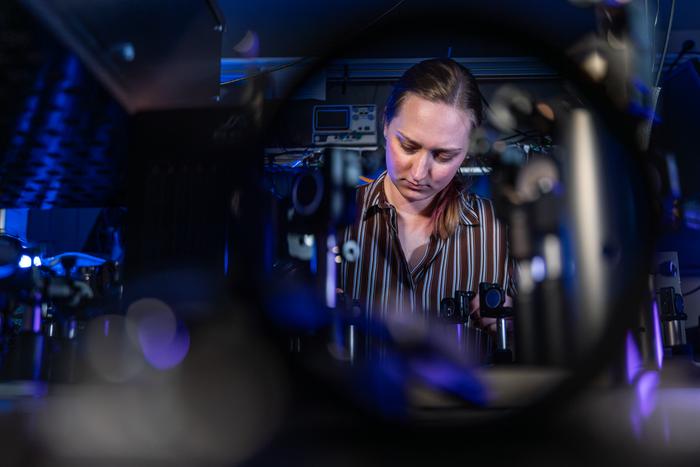
Researchers at Jena and Regensburg have demonstrated a new optical method to quantitatively determine the Berry curvature of tungsten diselenide, an atomically thin semiconductor. By firing two ultrashort laser pulses at the sample and analysing the polarisation of the emitted second-harmonic light, they extracted the local Berry curvature within hundreds of femtoseconds, matching theoretical predictions.






