Technical University of Munich
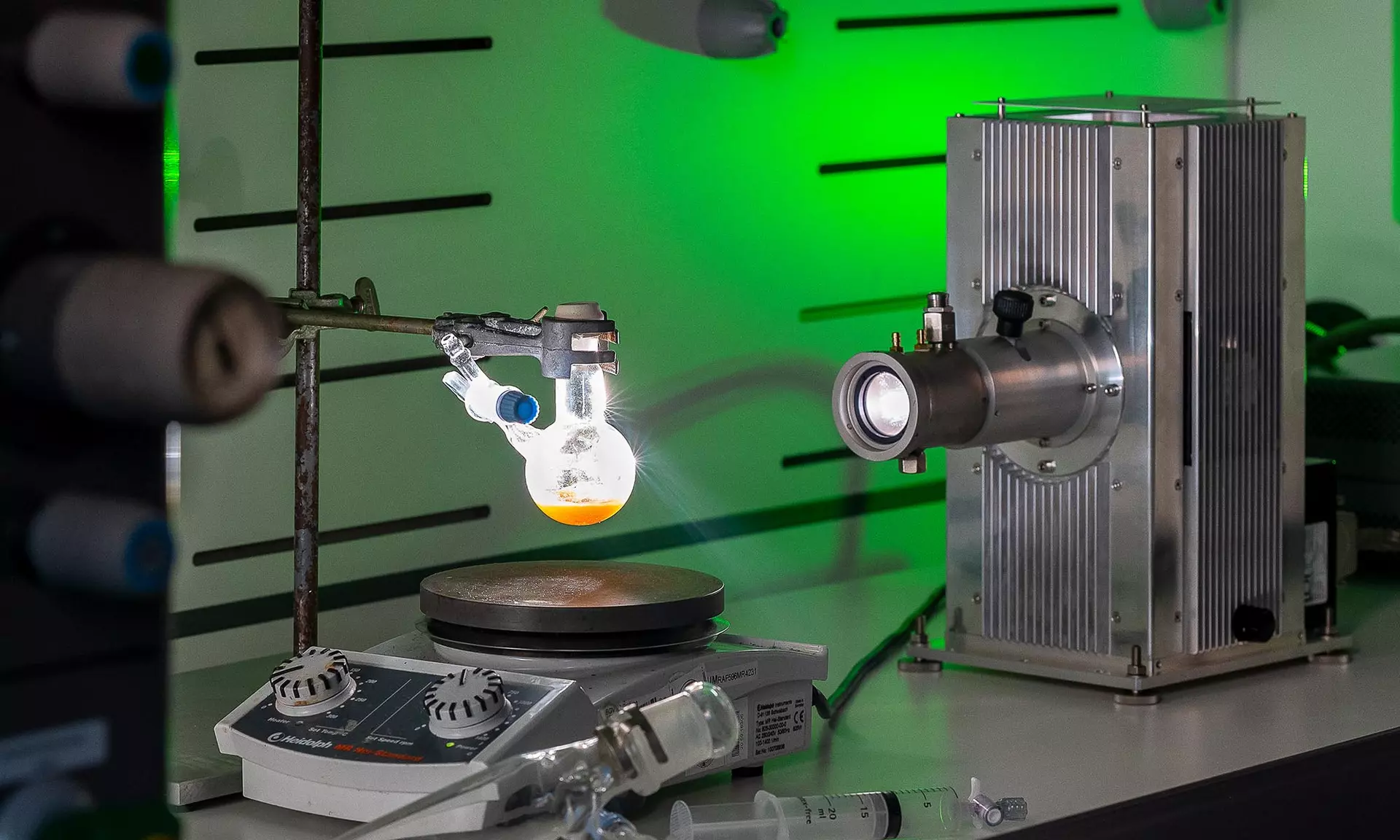
Syngas, a mixture of carbon monoxide and hydrogen, is an important intermediate product in the manufacture of many chemical starter materials such as ammonia, methanol and synthetic hydrocarbon fuels. "Syngas is currently made almost exclusively using fossil raw materials," says Prof. Roland Fischer from the Chair of Inorganic and Organometallic Chemistry.
A yellow powder, developed by a research team led by Fischer, is to change all that. The scientists were inspired by photosynthesis, the process plants use to produce chemical energy from light. "Nature needs carbon dioxide and water for photosynthesis," says Fischer. The nanomaterial developed by the researchers imitates the properties of the enzymes involved in photosynthesis. The "nanozyme" produces syngas using carbon dioxide, water and light in a similar manner.
Record values for efficiency
Dr. Philip Stanley, who addressed the topic as part of his doctoral thesis, explains: "A molecule takes over the task of an energy antenna, analogous to a chlorophyll molecule in plants. Light is received and the electrons are passed on to a reaction center, the catalyst." The innovative aspect of the researchers' system: There are now two reaction centers which are linked to the antenna. One of these centers converts carbon dioxide into carbon monoxide, while the other turns water into hydrogen. The major design challenge was to arrange the antenna, the mechanism for passing on the electrons and the two catalysts, in such a way that the highest possible yield is achieved from the light.
And the team accomplished this. "At 36 percent, our energy yield from light is spectacularly high," says Stanley. "We succeed in converting as much as one third of the photons into chemical energy. Previous systems often attained every tenth photon at best. This result raises hopes that the technical realization could make industrial chemical processes more sustainable."
Photo accumulator to store charges
In a separate project the researchers are working on another material which uses light energy from the sun – but in this case stores it as electric energy. "One possible future application could be batteries which are charged by sunlight, without the detour through the wall socket," says Fischer.
The researchers used components similar to those in the nanozyme when developing these photo accumulators. Here too the material itself absorbs photons from the incident light. But instead of then serving as a catalyst for a chemical reaction, the energy receiver is so tightly integrated in the structure that it remains in this state, making storage of the electrons over a longer period of time possible. The researchers have demonstrated the feasibility of the system in the lab.
"There are two ways to make direct use of solar energy," summarizes Dr. Julien Warnan, group leader for photocatalysis. "Either we harvest electric energy from it or we use the energy to push chemical reactions. And these two systems, both based on the same principle, show that we've succeeded experimentally."
Reference
Photocatalytic CO2-to-Syngas Evolution with Molecular Catalyst Metal-Organic Framework Nanozymes
Philip M. Stanley, Alice Y. Su, Vanessa Ramm, Pascal Fink, Ceren Kimna, Oliver Lieleg, Martin Elsner, Johannes A. Lercher, Bernhard Rieger, Julien Warnan, Roland A. Fischer
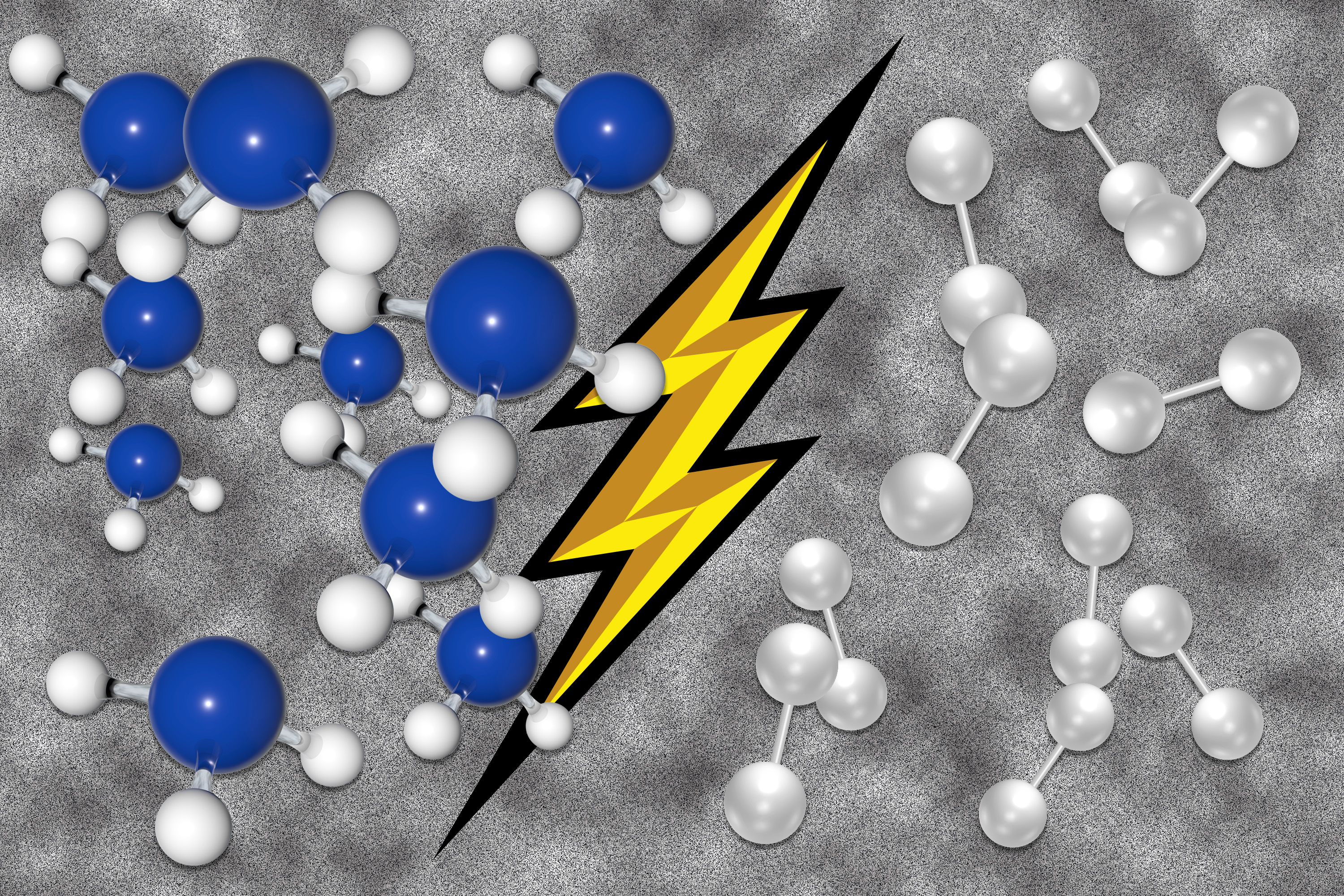
MIT researchers have developed a new way to extract pure hydrogen gas from ammonia and other hydrogen carrier molecules. Their strategy, which uses electricity to speed up the extraction, reduces the temperature and energy required to recover hydrogen from these molecules. As a liquid that is easily stored and transported, ammonia (NH3) is an attractive carrier for hydrogen, which is used in fuel cells, semiconductor manufacturing, chemical processing, and other applications. However,...
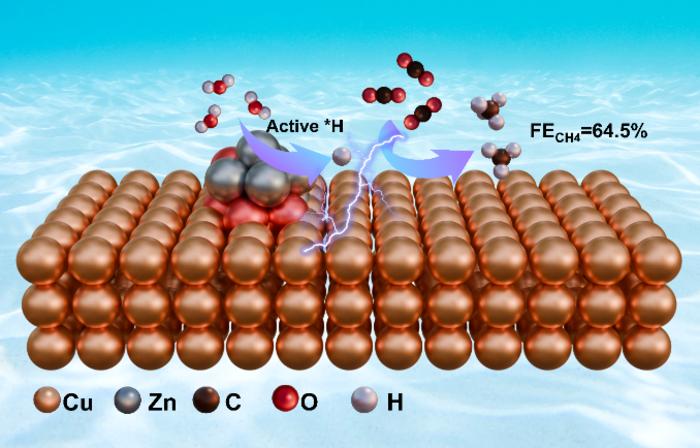
image: CuZn800@C was constructed via solvothermal method and utilizes the high-temperature volatility of zinc to prepare through calcination at different temperatures, which displays a high methane Faradaic efficiency of 64.5% and a remarkable partial current density of -551.3 mA/cm2 at -1.7 V vs. RHE, along with excellent stability. Zn and Cu form a tandem reaction system. Zn sites promote water splitting to provide protons, while Cu sites reduce the energy barrier for *CO hydrogenation....
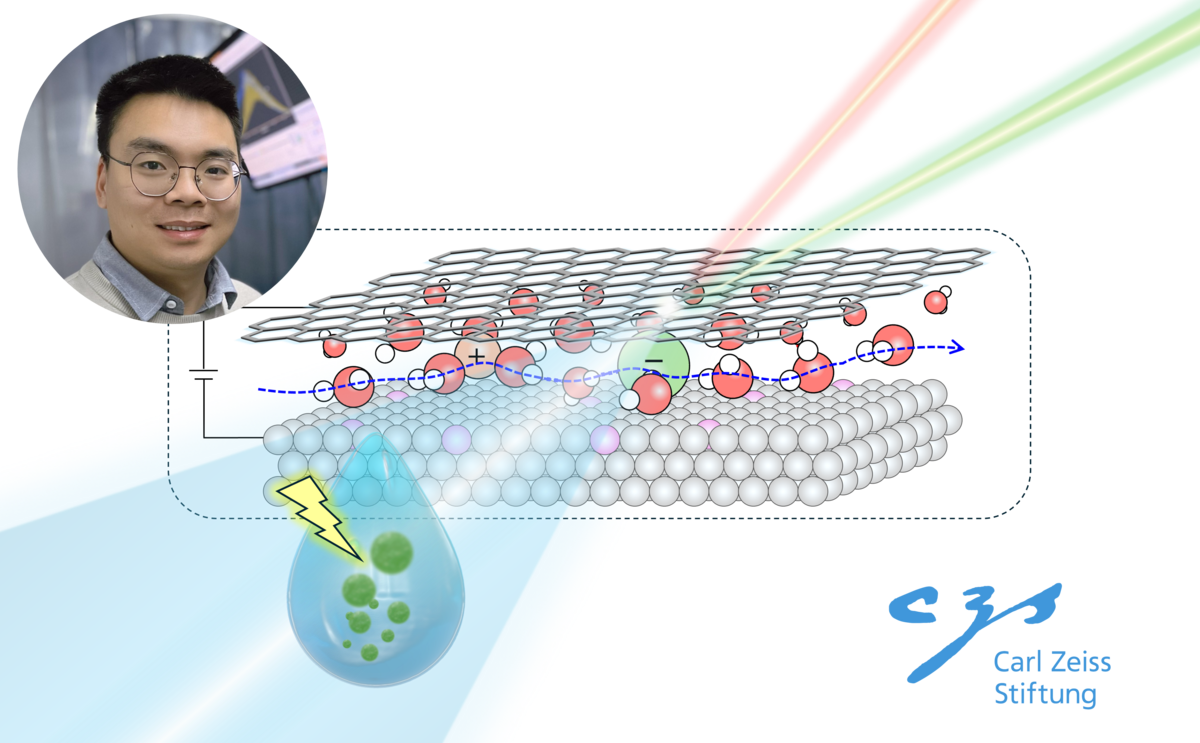
Electrochemical water splitting powered by renewable electricity is a promising pathway to sustainable hydrogen production, but its efficiency and scalability remain limited by costly catalysts and slow reaction kinetics. With €1.5 million in funding from the Carl-Zeiss-Stiftung for five years, Dr. Yongkang Wang and his team will pursue a new approach by visualizing and controlling water at the molecular level, using nanoscale confinement to shape its structure and dynamics at catalytic...
