Delft University of Technology
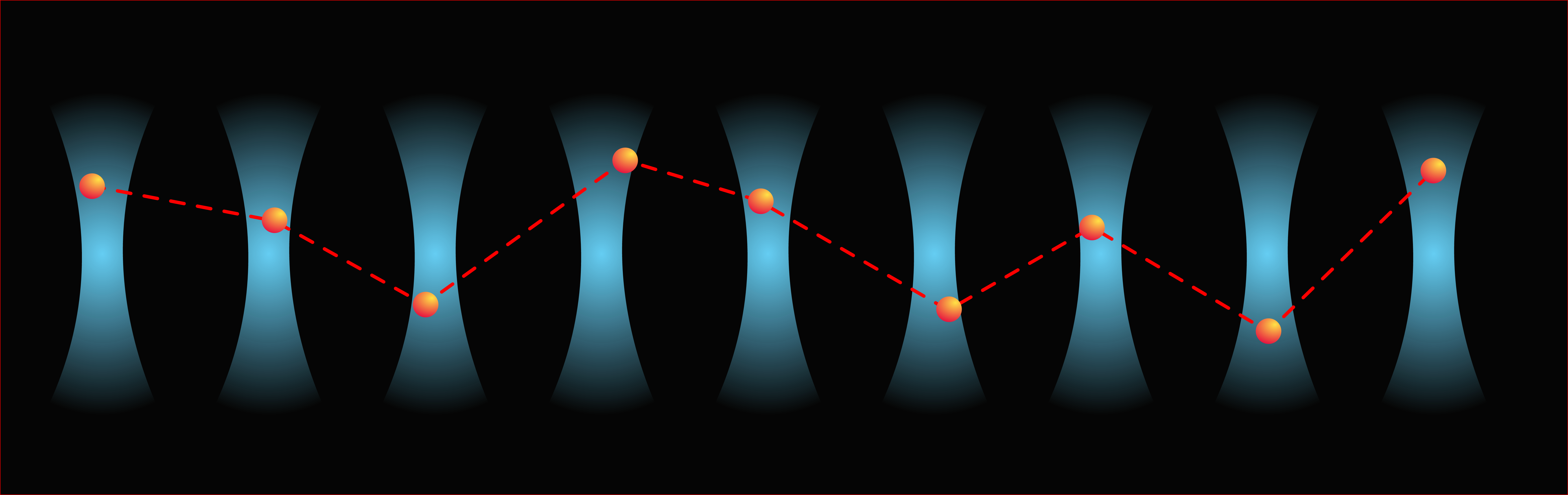
Researchers at Delft University of Technology have demonstrated for the first time that even realistic, small amounts of disorder in modern quantum simulators can cause the system to exhibit completely different physical behaviour. Quantum simulators play a central role in the development of future quantum technologies, including quantum computers and advanced materials design. For these technologies to work reliably, we must understand how sensitive they are to imperfections. The reseachers Jose Soto-Garcia and Natalia Chepiga show that very small positional errors can have dramatic consequences. This insight is crucial for designing more robust quantum devices. More broadly, this work contributes to the fundamental understanding of how complex quantum systems behave in realistic conditions. The research is published in Physical Review Letters (PRL).
Quantum simulators based on chains of laser-trapped Rydberg atoms are widely used to explore quantum phase transitions and exotic states of matter. The researchers show that unavoidable tiny imperfections in these experiments, specifically small variations in atomic positions caused by optical tweezers, can fundamentally change the physics that quantum simulators are meant to reproduce.
Large-scale numerical simulations
Using large-scale numerical simulations, two key results are demonstrated. First, a well-known type of quantum phase transition, the Ising transition, does not behave as previously expected when these small imperfections are present. Instead, it crosses over into a regime dominated by extreme randomness, where the standard theoretical rules no longer apply. Second, an exotic state of matter called a floating phase, which is characterized by the absence of long-range order and long-range correlations, is destroyed by disorder. Although some of its features remain, the long-range correlations become localized.
Compare it to an orchestra
For a better understanding: think of an orchestra preparing to perform a masterpiece. If every musician begins at exactly the right moment, following the conductor’s cue with perfect timing, the result is a wonderful masterpiece. Every instrument blend into the collective rhythm. The composition emerges exactly as intended. But now imagine that each musician starts playing just a fraction of a second too early or too late. This will cause small, almost invisible timing errors. Those tiny shifts make the entire performance collapse and instead of music the audience will hear noise. Even tiny deviations can completely change what the orchestra produces.
Importance
Rydberg atom arrays in optical tweezers are considered one of the most promising platforms for quantum simulation. They are designed to emulate complex quantum many-body systems with high precision.
Rather than being a setback, this work helps the field mature. It clarifies what current quantum simulators are realising in practice and highlights what must be improved, such as trapping precision or interaction control, to reach the intended regimes. In addition, the findings open a new research direction: instead of avoiding disorder, experiments could deliberately explore these randomness-dominated quantum regimes, which are fascinating and not yet fully understood.

A new study by NYU chemists finds that DNA tiles can assemble into 3D structures without the sticky cohesion of hydrogen bonding. This finding, published in Nature Communications, turns a fundamental paradigm in the field of DNA self-assembly on its head.
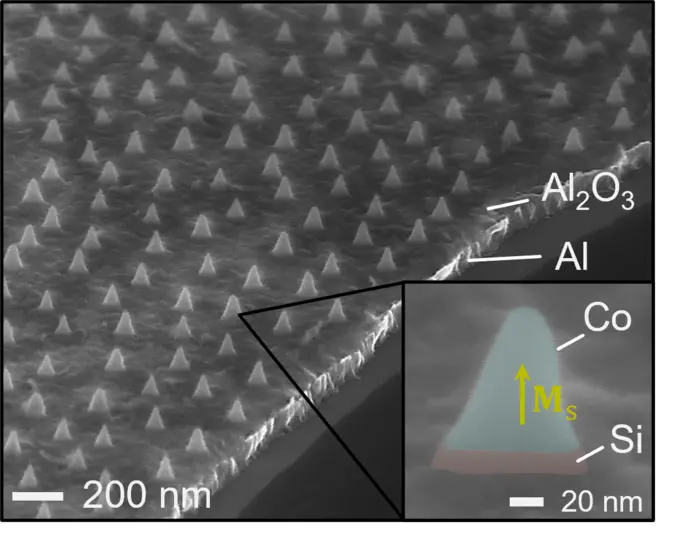
Nonreciprocal interactions between light and matter lie at the heart of many exotic physical phenomena, from magnet-free optical isolation to axion-inspired electrodynamics. One particularly intriguing example is the Tellegen effect, a nonreciprocal magnetoelectric coupling predicted more than 75 years ago but long considered weak and negligible at optical frequencies. “In natural materials, the optical Tellegen effect is extraordinarily weak, making it challenging to observe experimentally,”...

Strange things happen to materials when you peel them down, layer by layer, from thick chunks all the way to sheets just an atom thick. Reporting in the journal Nature Materials, a team led by physicists at The University of Texas at Austin has experimentally demonstrated a sequence of exotic magnetic phases in an ultrathin material that for the first time fully realize a theoretical model of two-dimensional magnetism first proposed in the 1970s. The researchers say the advance might inspire...
This week in nanotech
$271M raised
6 funding rounds · 27 deals tracked
New products
 Nion-compatible In Situ STEM Holders for Electrical BiasingHummingbird Scientific Featured
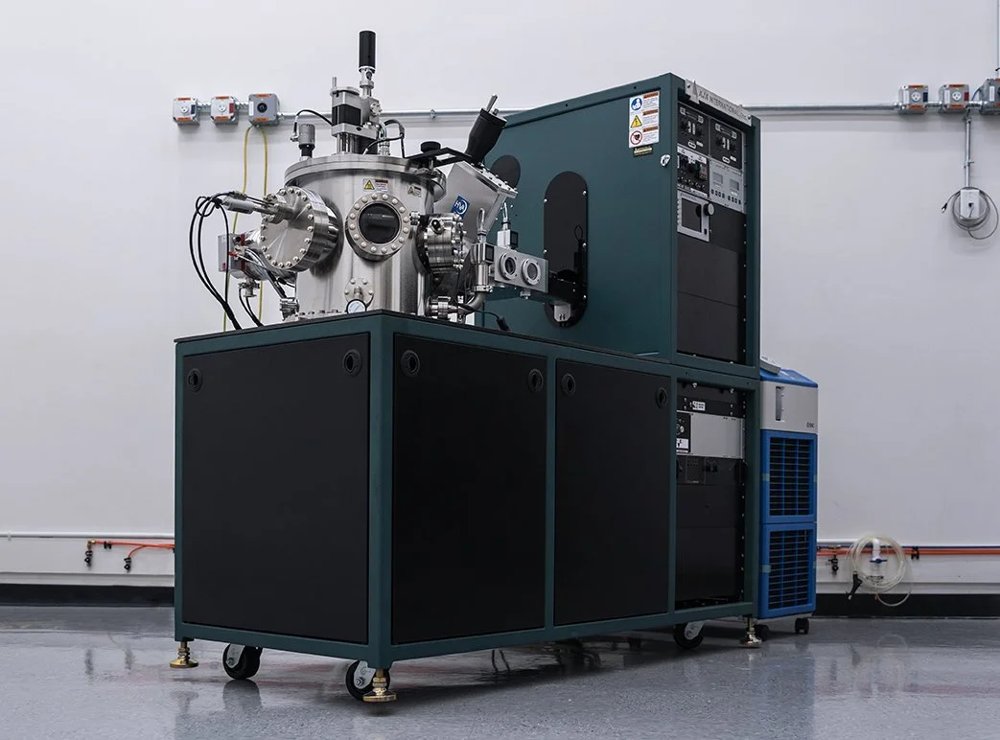 Orion Sputtering Deposition SystemsAJA International Featured
 Hold Down & Release Mechanisms (HDRM) REACT – 5KN, 15KN and 35KN space qualified resettable mechanismsARQUIMEA
Market insights
Last 30 days: Quantum Technologies drew the most money: $3.17B.
Money raised per month
Behind the deal
Who led Xanadu Quantum Technologies Limited’s $10M Grant?
See the investors with Insights Pro →