Most space missions rely on chemical rockets for propulsion. Rockets must carry fuel, which increases spacecraft mass and limits their speed and travel distance. For decades, researchers have explored light sails as an alternative. These devices use radiation pressure—the force exerted when light reflects from a surface—to generate thrust. When driven by a powerful laser, a light sail can accelerate continuously without onboard propellant, enabling faster travel across the solar system.
Conventional light sails typically use metal-coated polymer films. While these films reflect light efficiently, they also absorb part of the incoming energy and convert it into heat. Improving reflectivity often requires adding material, which increases weight and reduces propulsion efficiency. This tradeoff has slowed the development of practical light sail systems.
In the Journal of Nanophotonics, researchers reported that they developed a photonic crystal light sail designed to address these limitations. The proposed structure consists of a nanoscale pattern formed from three dielectric components: germanium pillars, air holes, and a polymer matrix. Unlike conventional two-material photonic structures, the proposed architecture integrates three dielectric regions—high-index germanium nanopillars, low-index air voids, and a polymer host matrix—forming a wavelength-selective photonic bandgap structure optimized for propulsion-specific reflectivity.
This configuration establishes a narrow photonic band gap centered at the propulsion wavelength, resulting in high reflectivity within that spectral window while remaining largely transparent outside the designed band.
Photonic crystals are composite materials with repeating nanoscale patterns that control how light propagates through them. By arranging materials with different refractive indices, researchers can create a photonic band gap—a range of wavelengths that cannot pass through the structure and are instead reflected. In this design, the researchers tuned the band gap to match the propulsion laser wavelength. “By designing a narrow photonic band gap aligned with the propulsion laser frequency, the proposed sail can stay mostly transparent to ambient solar radiation while maintaining high reflectivity in the specific operating band,” said Dimitar Dimitrov, an assistant professor at Tuskegee University.
The researchers designed the photonic crystal structure using plane-wave expansion and finite-difference time-domain simulations. The final design achieves approximately 90% reflectivity at a wavelength of 1.2 micrometers. The team then fabricated proof-of-concept membranes using electron-beam lithography and vacuum deposition.
The membranes were fabricated using a sequential nanolithography and material infill process involving patterned polymer templating, selective germanium deposition, lift-off processing, and secondary electron-beam structuring. This multi-step strategy enabled precise realization of three-dielectric photonic crystal architectures at the sub-200-nanometer scale.
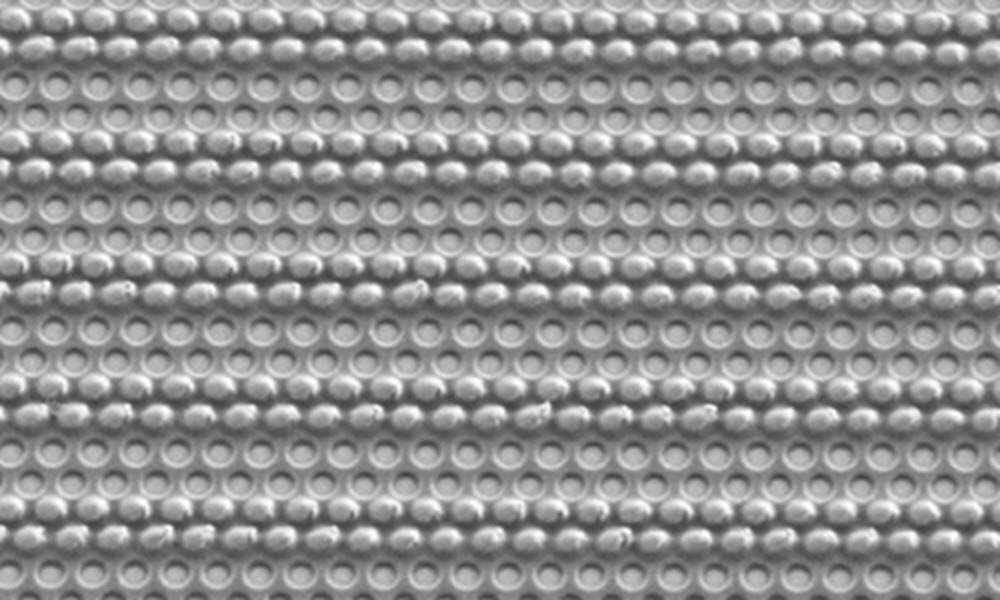
The fabricated structures contain germanium pillars approximately 100 nanometers wide and air holes roughly 400 nanometers in diameter, embedded in a 200-nanometer-thick polymer layer. Electron microscopy confirmed the accuracy of the nanoscale patterning. “A key contribution of this work is demonstrating the feasibility of constructing multi-dielectric photonic crystal structures with controlled nanoscale features. The results show that these can be engineered to combine low mass, strong wavelength selectivity, and scalable fabrication potential,” Dimitrov said.
To evaluate propulsion performance, the researchers modeled a one-square-meter sail illuminated by a 100-kW laser. Simulations indicate that the predicted reflectivity could generate continuous thrust, potentially accelerating the sail to speeds of several hundred meters per second within one hour under idealized conditions. While this performance level is not sufficient for interstellar missions, it could support lightweight probes for interplanetary exploration.
Although researchers must conduct further work before deploying photonic crystal light sails in operational missions, the study demonstrates a possible pathway from theoretical design to fabrication. “Despite current limitations, our research could serve as a foundation for the design and fabrication of multi-dielectric photonic crystal sails. It may provide a pathway to experimentally validated, scalable, lightweight devices for laser-driven propulsion, enabling future interplanetary exploration with minimal onboard mass,” Dimitrov said.
Reference
Design and manufacture of a photonic crystal light sail
Dimitar Dimitrov, Elijah Taylor Harris
Published recently in Science, it is the first experimental observation of a half-Möbius electronic topology in a single molecule. To the scientists’ knowledge, a molecule with such topology has never before been synthesized, observed, or even formally predicted. Understanding this molecule’s behavior at the electronic structure level required something equally fundamental: a high fidelity quantum computing simulation. The discovery advances science on two fronts. For chemistry, it demonstrat...
Every chemical reaction faces a barrier: for substances to react with one another, it is first necessary to supply energy. In many cases, this energy barrier is low – such as when striking a match. For many key reactions in industry, however, it is much larger – and increased energy requirements drive up production costs. To lower this barrier, chemists use “reaction helpers” known as catalysts. The best of these substances contain metals – including, in some cases, rare metals.
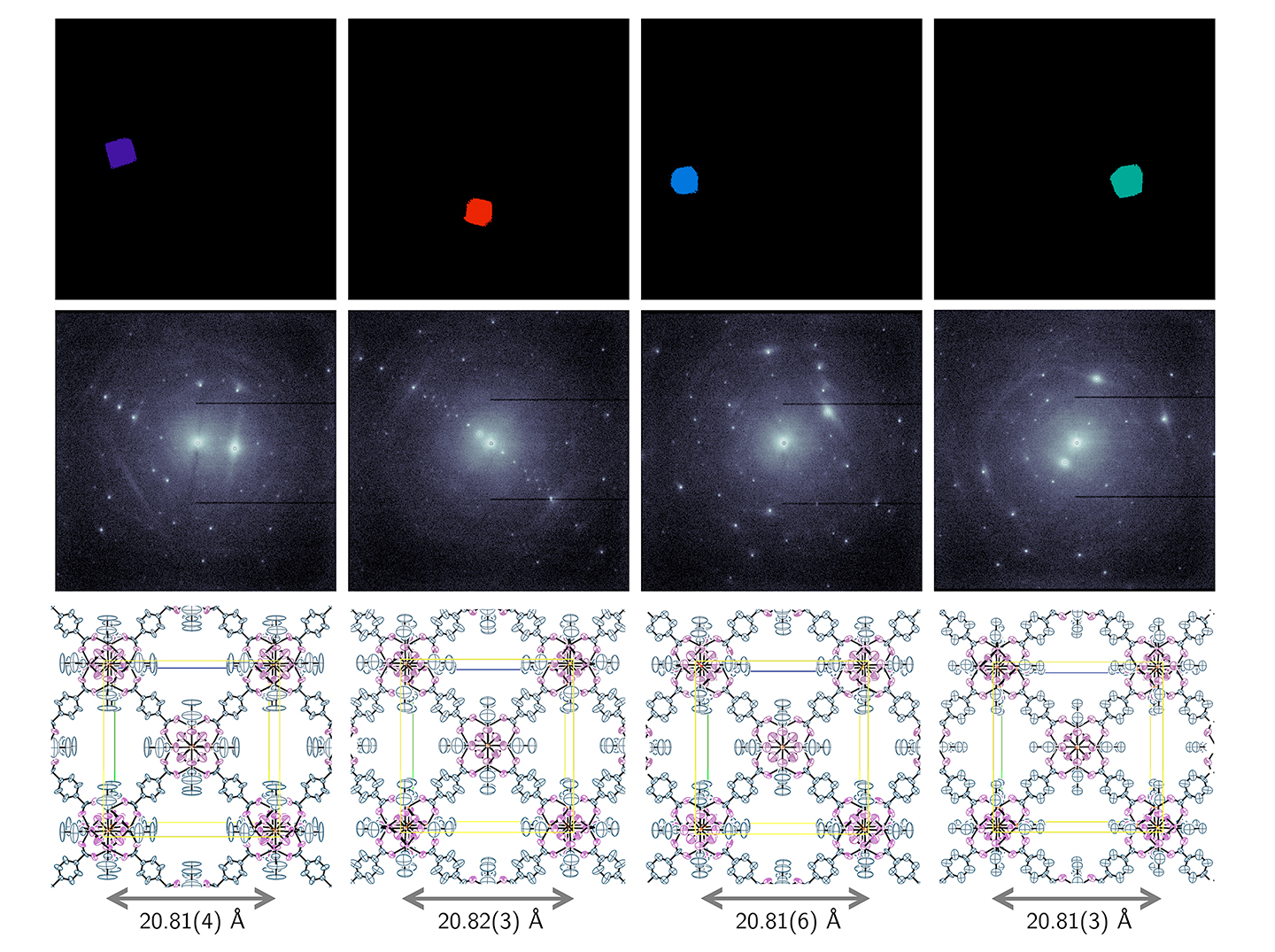
Scientists at the Department of Energy’s Lawrence Berkeley National Laboratory (Berkeley Lab) have developed a new way to determine atomic structures from nanocrystals previously considered unusable, a breakthrough that could transform how researchers study materials too small or imperfect for conventional crystallography. Crystalline materials have enabled advances in computing, communications, energy technologies, and pharmaceuticals. Many of these materials’ unique properties arise from...
This week in nanotech
$271M raised
6 funding rounds · 27 deals tracked
New products
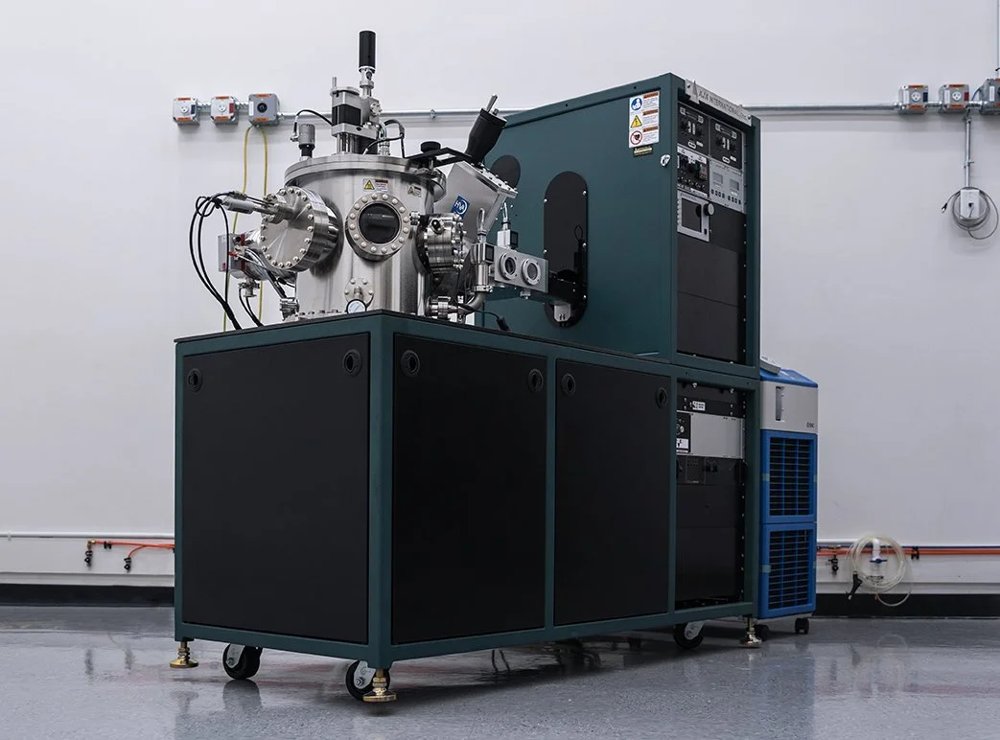 Orion Sputtering Deposition SystemsAJA International Featured
 Ti-WCMBN Nanomaterialia Featured
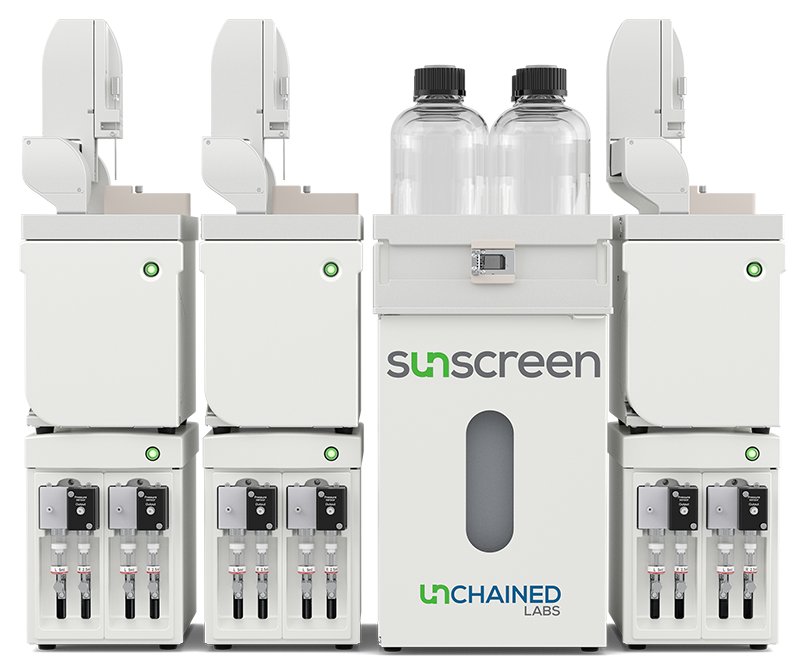 SunscreenUnchained Labs
Market insights
Last 30 days: Quantum Technologies drew the most money: $3.17B.
Money raised per month
Behind the deal
Who led Institut de Microelectronica de Barcelona (IMB-CNM, CSIC)’s $185.7M Grant?
See the investors with Insights Pro →