Eindhoven University of Technology (TU/e), TUM Venture Labs and Startup Factory boOst signed a Memorandum of Understanding on 12 November 2026 at SEMICON Europa 2026 in Munich to establish the European Future Chips Launchpad (EFCL). The initiative is intended to accelerate the formation of semiconductor, photonics and quantum technology ventures in Europe.
The network has identified 14 potential startup and spin-off cases, covering technologies from high-tech systems to quantum and semiconductor applications. The partners aim to develop EFCL into a pan-European venture engine starting in 2027.
EFCL will connect founders with industrial partners, launching customers, investors and mentors. Its activities include technology scouting, founder matchmaking, cross-border mentoring, investor engagement and community development. The initiative is intended to operate as a commercialisation layer rather than as an additional research programme or funding mechanism.
The founding network connects Eindhoven in the Netherlands with Munich and Dresden in Germany, and is open to additional European innovation ecosystems. The partners name Grenoble, Leuven, Cambridge, Zurich, Copenhagen and Helsinki as examples of ecosystems that could participate.
At TU/e, the Knowledge Transfer Office supports around 200 young companies each year, and the portfolio of TU/e Participations includes approximately seventy spin-offs. Silvia Lenaerts, Rector Magnificus of TU/e, said: “Europe’s strength lies not only in investment, but also in how effectively we connect our innovation ecosystems in order to identify launching customers for our promising ventures.”
Source: EuropaWire
Forge Nano reported third quarter 2026 results and reiterated its 2026 guidance. The company raised more than $130 million in gross proceeds in connection with its Nasdaq listing under the ticker NANO.
Imec is expanding its activities in Hokkaido, Japan, with backing from METI and in collaboration with LSTC. It plans a local R&D team of approximately 15 researchers and engineers over the next five years, based at Hokkaido University in Sapporo.
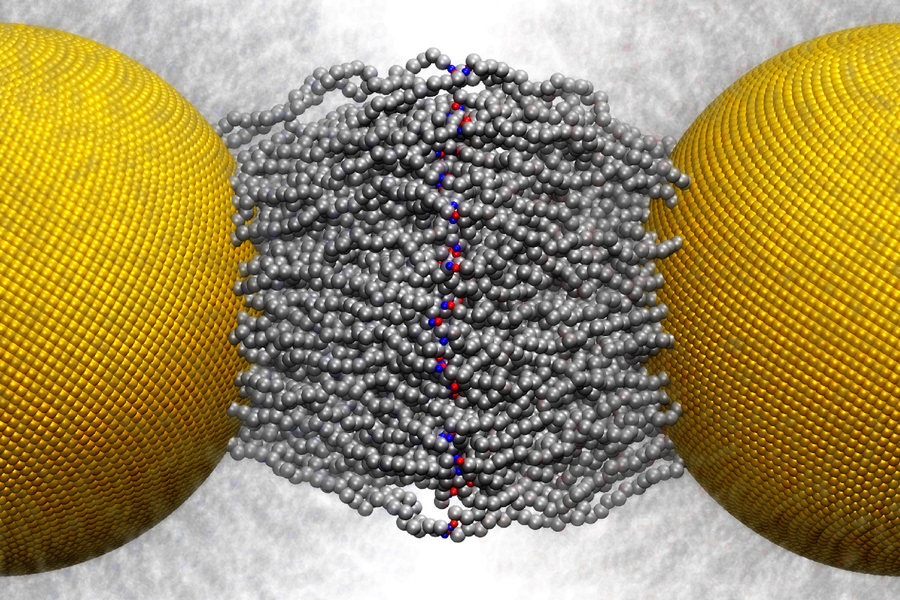
Researchers have shown that super-flexible connector molecules, rather than rigid ones, can tune how nanoparticles pack into larger structures. By varying ligand chain length, particle size and electric charge, the team assembled nanoparticles into crystal lattices never seen before and controlled the number of bonds each particle forms.
This week in nanotech
$18.9M raised
4 funding rounds · 36 deals tracked
New products
 Ti-WCMBN Nanomaterialia Featured
 Nion-compatible In Situ STEM Holders for Electrical BiasingHummingbird Scientific Featured
 Talphene™ Graphene AdditivesTalga Group
Market insights
Last 30 days: Semiconductors & Electronics was the busiest vertical: 52 of 170 events (31%).
Money raised per month