Helmholtz-Zentrum Berlin für Materialien und Energie
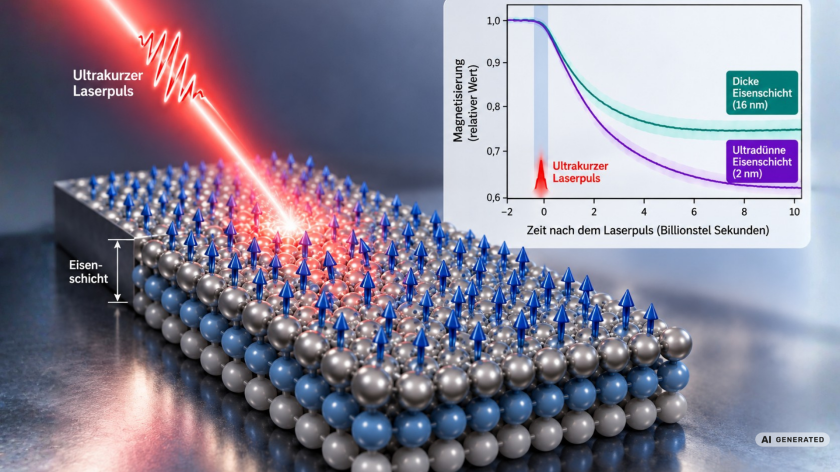
The thinner an iron film, the more easily it can be demagnetised by a laser pulse. Researchers at the University of Duisburg-Essen, working with Helmholtz-Zentrum Berlin and other partners, have discovered why: the key lies in the magnetic order at the material's interfaces. In the long term, these findings could contribute to the development of new technologies for magnetic data storage. The results have been published in the scientific journal Advanced Science.
From photos and videos to documents, vast amounts of data are stored on hard drives in large data centres. These devices use tiny magnetic regions whose orientation determines the information stored. But how could data be stored even faster in the future? One possible approach involves ultrashort laser pulses, which can alter the magnetic order of materials in an extremely short time. A team from Collaborative Research Centre 1242 at the University of Duisburg-Essen (UDE), working with Helmholtz-Zentrum Berlin, has therefore investigated how the thickness of an iron film affects its so-called ultrafast demagnetisation. During this process, a laser pulse causes the material to lose part of its magnetic order within an extremely short period of time.
The result: The thinner the iron layer, the stronger the effect. At a thickness of just two nanometres – equivalent to two millionths of a millimetre – demagnetisation was approximately 75 per cent stronger than in a 16-nanometre-thick layer, even though the intensity of the laser excitation remained the same.
But why do thinner layers respond more strongly? The key lies in electron spins, whose collective alignment is responsible for the magnetism of iron. “In particularly thin iron layers, a larger proportion of these spins are located at the material’s interfaces. There, they have fewer neighbouring spins with which they can interact magnetically,” explains Dr Andrea Eschenlohr from the Faculty of Physics. “Put simply, the spins have fewer neighbours to hold on to. This makes it easier for a laser pulse to disrupt their magnetic order.”
Researchers had already suspected that the thickness of an iron layer could influence demagnetisation. What came as a surprise, however, was the magnitude of the effect and the fact that it stems from the material’s magnetic properties – rather than differences in light absorption or vibrations of the atomic lattice.
In the long term, the findings could contribute to the development of magnetic storage media in which information is written using ultrashort laser pulses. However, several challenges still need to be overcome before the technology can be put into practice. For example, suitable laser sources would need to be integrated into electronic devices, and it would have to be possible to target extremely small areas precisely in order to achieve high storage densities.
For their investigations, the researchers used the specialised FemtoSpeX X-ray source at the BESSY II electron storage ring at Helmholtz-Zentrum Berlin. This facility enables researchers to observe extremely rapid magnetic changes using ultrashort X-ray pulses. The study concept, sample preparation, data analysis and theoretical investigations into magnetic order at the interfaces were carried out by the University of Duisburg-Essen (UDE), in collaboration with partners from the Fritz Haber Institute in Berlin, the University of Konstanz, TH Wildau University of Applied Sciences and SLAC National Accelerator Laboratory.
Reference
Nanoscale Confinement Enhances Ultrafast Demagnetization
Yoav William Windsor, Tobias Lojewski, Moumita Kundu, Klaus Sokolowski-Tinten, Nico Rothenbach, Andrea Eschenlohr, Markus Ernst Gruner, Katharina Ollefs, Carolin Schmitz-Antoniak, Soma Salamon, Daniela Zahn, Laurenz Rettig, Christian Schüßler-Langeheine, Niko Pontius, Renkai Li, Mianzhen Mo, Suji Park, Xiaoshe Shen, Stephen Weathersby, Xijie Wang, Rossitza Pentcheva, Heiko Wende, Ulrich Nowak, Uwe Bovensiepen
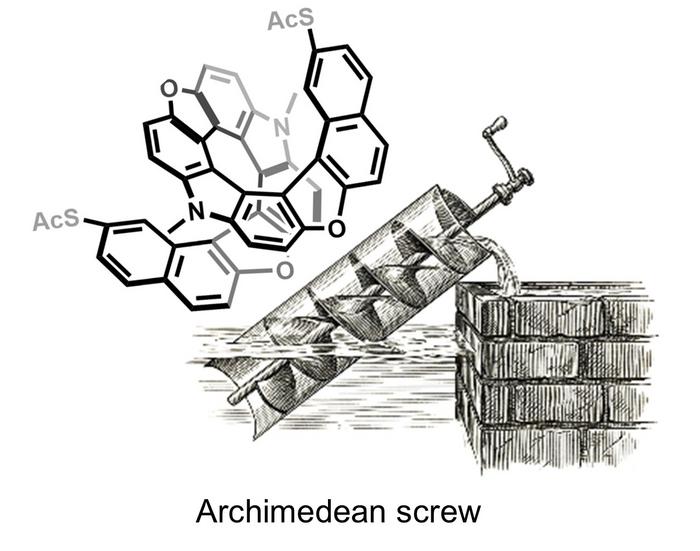
Researchers have built the first current-driven molecular motor with a controllable direction of rotation, firmly attached to two atomically fine gold electrodes. Inspired by the Archimedes screw, a helical molecule synthesized at the University of Copenhagen was stretched between gold tips and shown to rotate as electrons flow through it, transferring angular momentum; reversing the voltage polarity reverses the rotation.
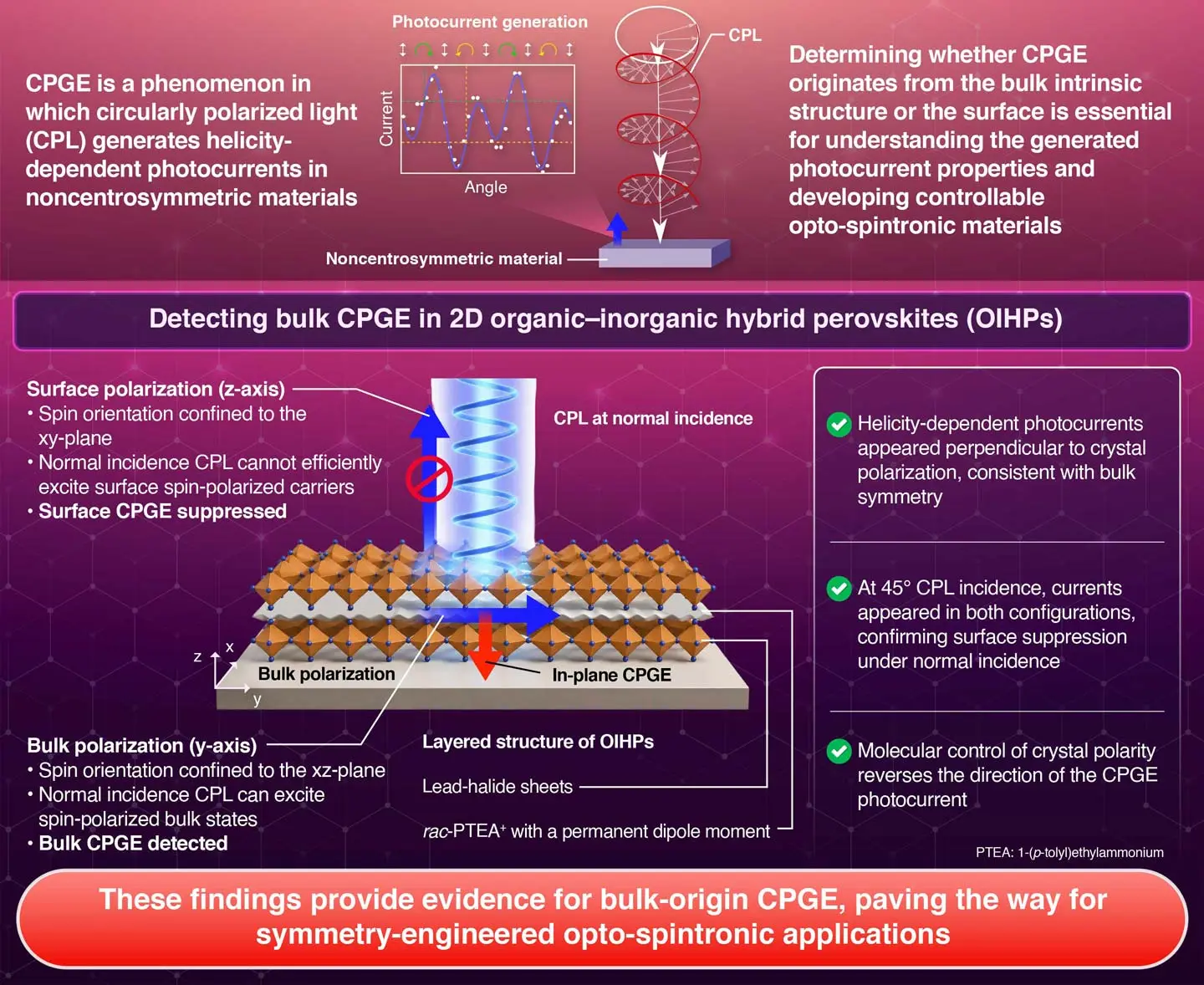
Researchers at Science Tokyo have shown that the circular photogalvanic effect in two-dimensional organic-inorganic hybrid perovskites arises from the crystal bulk rather than its surface. Using circularly polarized light at normal incidence, they found helicity-dependent photocurrents that reversed with light handedness and with crystal polarity in chiral enantiomers. The lead iodide layers provide strong spin-orbit coupling while molecular cations set bulk polarity.
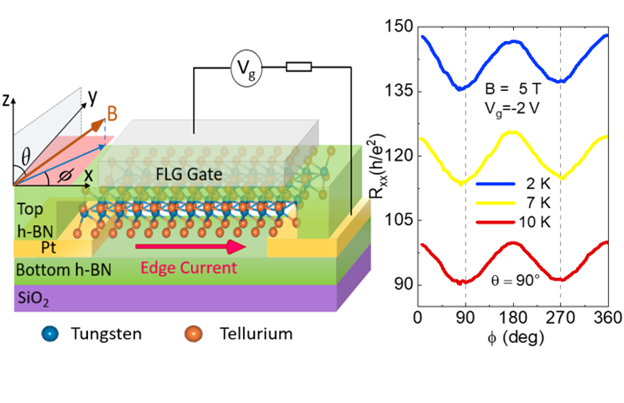
A RMIT-led, international collaboration published this week has observed large in-plane anisotropic magnetoresistance (AMR) in a quantum...
This week in nanotech
$108.5M raised
8 funding rounds · 46 deals tracked
New products
 Nion-compatible In Situ STEM Holders for Electrical BiasingHummingbird Scientific Featured
 Ti-WCMBN Nanomaterialia Featured
 Talphene™ Graphene AdditivesTalga Group
Market insights
Last 30 days: Quantum Technologies drew the most money: $3.17B.
Money raised per month