By NanoE
Trade name: Y2O3 Chemical Name: Yttrium Oxide Chemical formula: Y2O3 Cas number: 1314-36-9 Identified use: Laboratory chemicals, Manufacture of substances Manufacturer/Supplier: Nanoe SAS 6 rue des Frênes 91160 Ballainvilliers France +33 9 81 98 33 64 Hazards identification Classification Directives 67/548/CEE or 1999/45/CE: Irritating to eyes, respiratory system and skin Regulation CLP EC 1272/2008: Skin irritation (Category 2), H315 Specific target organ toxicity – single exposure (Category 3), Respiratory system, H335 Label elements Labelling according Regulation (EC) No 1272/2008 [CLP] Pictogram Hazard statement(s) H315 Causes skin irritation H335 May cause respiratory irritation Precautionary statement(s) P261 Avoid breathing dust P264 Wash skin thoroughly after handling P271 Use only in a well-ventilated area P280 Wear protective gloves P312 Call a poison center or doctor if you feel unwell P321 Specific treatment (see supplemental first aid instructions on this label) P362 Take off contaminated clothing and wash before reuse P403 + P233 Store in a well-ventilated place. Keep container tightly closed P501 Dispose of contents/container to an approved waste disposal plant Supplement hazard statement None According to European Directive 67/548/EEC as amended R-phrase(s) R36/37/38 Irritating to eyes, respiratory system and skin S-phrase(s) S26 In case of contact with eyes, rinse immediately with plenty of water and seek medical advice Other hazards None Composition/Data on components Cas number 1314-36-9 EC number 215-233-5 Substances Yttrium oxide Classification according 67/548/CEE directive: Irritating R36/37/38 Classification according 1272/2008 regulation: Irritating H315, H335 Percentage % ≥ 99 Organic additives < 1 Loss of Ignition < 2.5 First aid measures After inhalation: Supply fresh air. If required, provide artificial respiration. Call immediately a doctor while keeping patient warm After skin contact: Immediately wash with water and soap and rinse thoroughly. After swallowing: Consult immediately a doctor. After eye contact: Rinse opened eye for at least 15 minutes under running water. Seek immediate medical advice. Principal symptoms: No data available Indication of any immediate medical attention and special treatment needed: Treat symptomatically. Fire Fighting Measures Suitable extinguishing agents: All firefighting measures could be used with that product Special hazards arising from the substance or mixture: Non-combustible, non-explosive. Advice for firefighters: Wear self-contained breathing apparatus for firefighting if necessary Accidental release measures Personal precautions, protective equipment and emergency procedures: Use personal protective equipment. Avoid dust formation. Avoid breathing vapors, mist or gas. Ensure adequate ventilation. Evacuate personnel to safe areas. Avoid breathing dust. Environmental precautions: Do not let product enter drains Methods and materials for containment and cleaning up: Pick up and arrange disposal without creating dust. Sweep up and shovel. Keep in suitable, closed containers for disposal. Reference to other sections: For personal protection see section 8. For disposal see section 13 Handling and storage Handling precautions: Avoid contact with skin and eyes. Avoid formation of dust and aerosols. Provide appropriate exhaust ventilation of places where dust is formed. For precautions see sections 2.2 Conditions for safe storage, including any incompatibilities: Keep containers tightly closed in a dry and well-ventilated place. Keep in dry place. Specific end use(s): Apart from the uses mentioned in section 1.2, no other specific uses are stipulated Exposure controls and personal protection Control parameters: Yttrium oxide 1314-36-9 TWA 1 mg/m3 USA. ACGIH Threshold Limit Values (TLV) Exposure controls: Appropriate engineering controls - Handle in accordance with good industrial hygiene and safety practice. Wash hands before breaks and at the end of workday Personal protective equipment Eye/Face protection: Safety glasses with side-shields conforming to EN166 Skin protection: Handle with gloves. Gloves must be inspected prior to use. Use proper glove removal technique (without touching glove’s outer surface) to avoid skin contact with this product. Dispose of contaminated gloves after use in accordance with applicable laws and good laboratory practices. Wash and dry hands. Body protection: Impervious clothing. The type of protective equipment must be selected according to the concentration and amount of the dangerous substance at the specific workplace. Respiratory protection: Use suitable breathing equipment (FFP3 masks) Control of environmental exposure: Do not led product enter drains Properties of the product Physical state: Powder Color: White to yellowish Odor: Odorless Odor threshold: no data available pH: no data available Melting point: 2410°C Boiling point: 4300°C Flash point: not applicable Evaporation rate: no data available Flammability: no data available Upper/lower flammability or explosive limits: no data available Vapor pressure: no data available Vapor density: no data available Theoretical Density: 5,03 g/cm3 Water solubility: Insoluble in water Partition coefficient: n-octanol/water: no data available Auto-ignition temperature: no data available Decomposition temperature: no data available Viscosity: no data available Explosive properties: no data available Oxidizing properties: no data available Stability and reactivity Reactivity: No data available Chemical stability: Stable under recommended storage conditions Possibility of hazardous reactions: No data available Conditions to avoid: No data available Incompatible materials: Strong acids, Carbon dioxide (CO2), Ammonium salts Hazardous decomposition products: Other decomposition products: no data available. In the event of fire: see section 5 Toxicological information Acute toxicity: no data available Inhalation: no data available Dermal: no data available LD50 Intraperitoneal rat- 230mg/kg Skin corrosion/irritation: no data available Serious eyes damage/eye irritation: no data available Respiratory of skin sensitization: no data available Germ cell mutagenicity: no data available Carcinogenicity: IARC - no component of this product present at levels greater than or equal to 0,1% is identified as probable, possible or confirmed human carcinogen by IARC; ACGIH - no component of this product present at levels greater than or equal to 0,1% is identified as probable, possible or confirmed human carcinogen by ACGIH; NTP - no component of this product present at levels greater than or equal to 0,1% is identified as probable, possible or confirmed human carcinogen by NTP; OSHA - no component of this product present at levels greater than or equal to 0,1% is identified as probable, possible or confirmed human carcinogen by OSHA Reproductive toxicity: no data available Specific target organ toxicity - single exposure: Inhalation - May cause respiratory irritation Specific target organ toxicity -repeated exposure: no data available Aspiration hazard: no data available Additional information: Rare earth compounds may cause delayed blood clotting leading to hemorrhages. Inhalation of rare earths may cause sensitivity to heat, itching and increased awareness of odor and taste. Coagulation abnormalities. Gastrointestinal disturbance. Skin contact or inhalation may result in: asthma, cough, muscles, damage to the lungs. To the best of our knowledge, the chemical, physical and toxicological properties have not been thoroughly investigated. Ecological information Toxicity: no data available Persistence and degradability: no data available Bio accumulative potential: no data available Mobility in soil: no data available Results of PBT and vPvB assessment: PBT/vPvB assessment not available as chemical safety assessment not required /not conducted Other adverse effects: no data available Disposal considerations Waste treatment methods Product: Offer surplus and non-recyclable solutions to a licensed disposal company. Contact a licensed professional waste disposal service to dispose of this material. Contaminated packaging: Dispose of as unused product. Transportation information DOT (US) / IMDG / IATA / ADR / RID: not dangerous goods Regulatory Information This safety datasheet complies with the requirements of Regulation (EC) No. 1907/2006. Safety, health and environmental regulations/legislation specific for the substance or mixture: No data available Chemical Safety Assessment: No data available Other Information Full text of H-statements referred to under sections 2 and 3. H315 Causes skin irritation H335 May cause respiratory irritation NFPA Rating Health hazard: 2 Fire hazard: 0 Reactivity hazard: 1. Further information: The above information is believed to be correct but does not purport to be all inclusive and shall be used only as a guide. The information in this document is based on the present state of our knowledge and is applicable to the product with regard to appropriate safety precautions. It does not represent any guarantee of the properties of the product. Nanoe shall not be held liable for any damage resulting from handling or from contact with the above product.
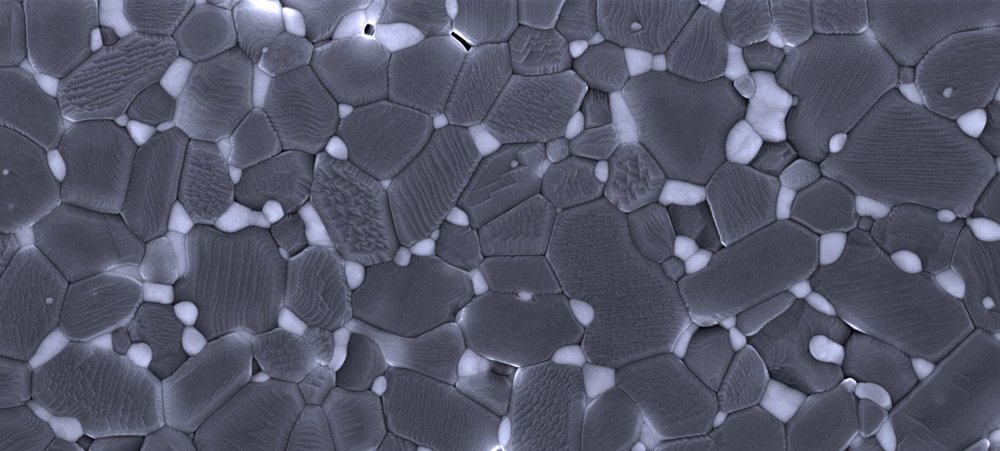
High wear resistance | Impact resistant | Recommended for wear parts ZTA's our core activity ZTA (Zirconia Toughened Alumina) is an alumina and zirconia composite material mix: this helps to get the properties from both material in a single ceramic powder. The ZTA then inherits of high temperature and wear resistance from the alumina but also the impact resistance from zirconia. The different alumina-zirconia ratios offered by Nanoe enables the client to pick a product best suited to his needs. Thanks to our unique know-how on powder synthesis, the parts made with our ZTA have a very fine microstructure with a high homogeneity, resulting in higher mechanical properties. ZTA12 ZTA12 is a 88% Alumina and 12% Yttriated zirconia mix. This composition, the result of extensive research carried out by our R&D department, ensures an optimal level of hardness, electrical resistivity and hydrothermal ageing resistance. Like for the ZTA25 powder, our ZTA12 powder has a high wear resistance, we can also offer chrome-doped ZTA12 to have an even better wear resistance. Applications ZTA12 makes it possible to make wear parts with a longer service life and therefore lower maintenance and replacement costs. It is used in various industries: semiconductors, wood cutting, etc. Semiconductor: In the semiconductor sector, ZTA makes it possible to make parts with a longer service life … Wear parts and tools: For the manufacture of wear parts such as wire guides or cutting tools, ZTA makes tools that are both abrasion and impact resistant… A product adapted to your process In order to best meet your needs, Nanoe delivers ZTA12 in the form that best fits your process. We are thus able to supply our materials in the form of ready-to-press granules, redispersible powders or feedstocks for ceramic injection. Nanoe is able to adapt the ZTA to your request so that it meets your specific constraints, for example by adapting the alumina/zirconia ratio or by adding dopants.
CATEGORY
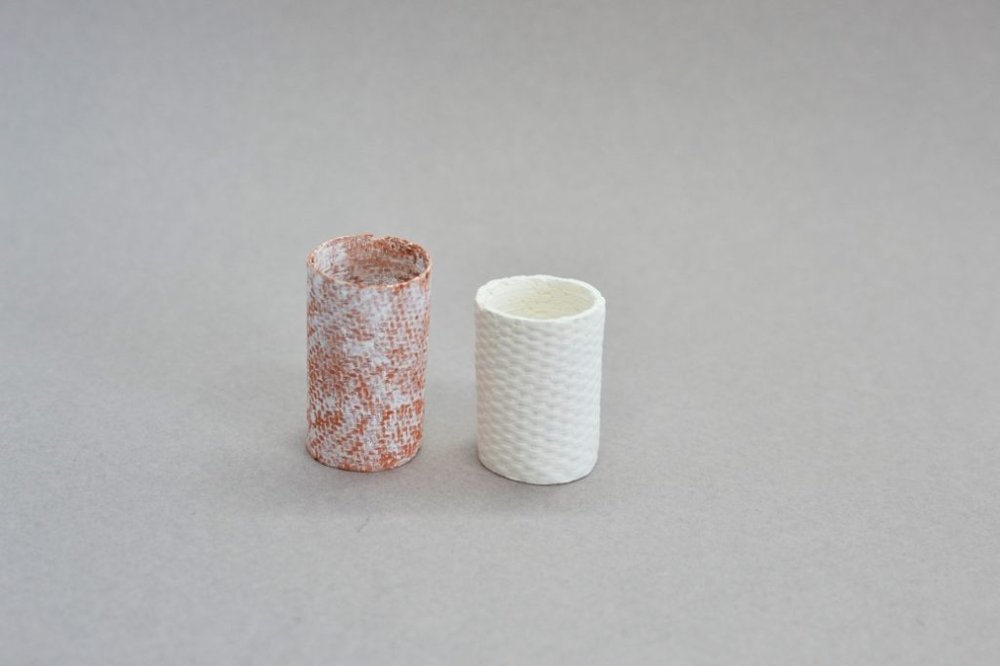
Thermal barrier Engines with higher efficiency are synonymous with engines rising to higher temperatures, this leads to undeniable technical challenges.The protection of hot parts of aircraft engines is the sine qua non for their proper operation.The yttria-sabilized zirconia, used as a coating, is ideal for insulating the hot turbine floors.Its low thermal conductivity, structural stability at temperatures up to 1600 degrees celsius and corrosion resistance to the combustion gases make it an ideal material. We offer powders for... high-purity yttria-stabilized Zirconia for the insulation of hot engine parts.
CATEGORY
Ceramic Matrix Composite (CMC) The CMC is one of the future solutions to meet the challenges of aeronautics, and will soon replace metal parts such as engine backends and engine mast thermal protections in future aircraft generations. Made of a ceramic fiber impregnated with alumina, they are very light and more tenacious than traditional ceramics.Thanks to our unique know-how in powder synthesis, the AL100 alumina from Nanoe used for CMC is extremely thin and thus allows to obtain a final part resistant to thermal shock and fractures. We offer powders for CMC (ceramic matrix composites) that are both lightweight and resistant to high temperatures
CATEGORY
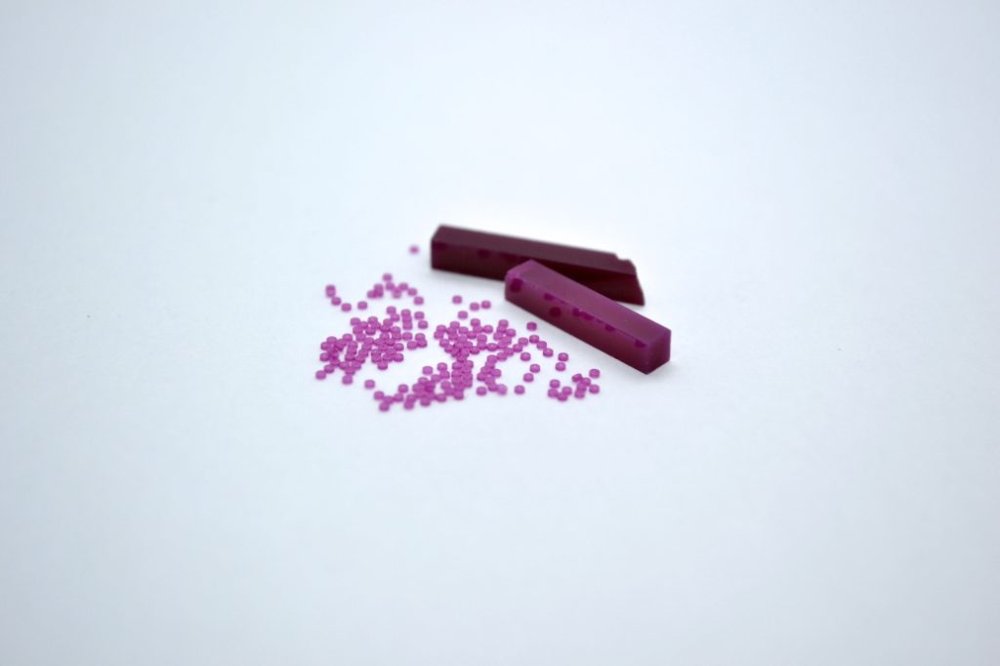
Nanoe offers coloured zirconia and chrome alumina, also known as polycrystalline rubies, to meet the needs of the luxury industry. Our powders are very thin, they ensure optimal mechanical properties and a very beautiful appearance. Watch bearing For watchmaking stones, our chrome alumina is a material of choice. Our powders are very thin, they allow to produce dense bearings and have a very low friction coefficient. Thus, by making the movement of the needles smoother, the mechanisms consume less energy and gains in autonomy.
CATEGORY
