Natural Rubber Masterbatch Ultra-clean, super-reinforcing PG additive. Enhances abrasion resistance, stiffness retention, and heat dissipation in severe-wear TBR and OTR tread compounds.
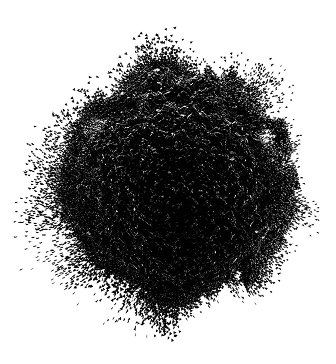
Drop-in ready solutions that improve products. Carbon elements reform into turbostratic graphene — loosely stacked layers with superior dispersibility vs. graphite-derived graphene. The result is 99% pure carbon with low defects, ready for downstream functionalization into Genable™ products.
CATEGORY
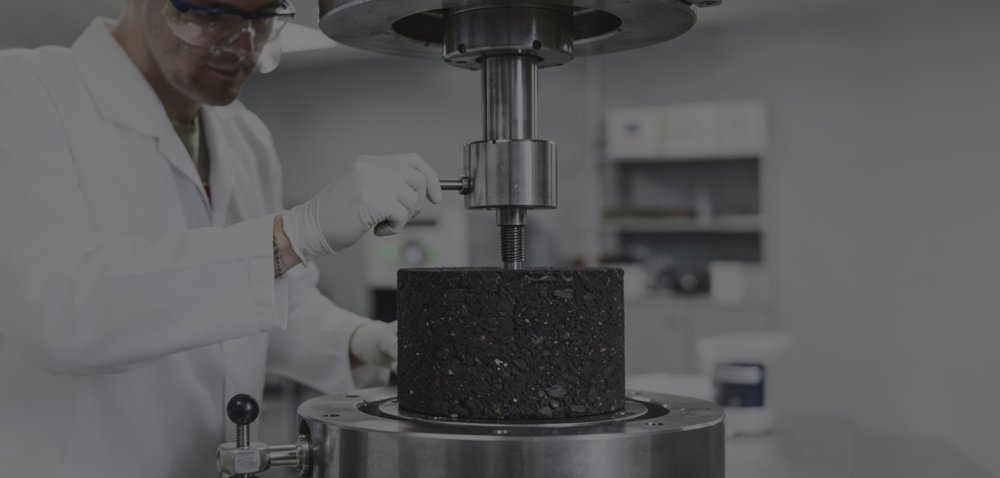
A graphene-enabled pavement modifier that makes roads last longer, perform better, and cost less over time. G enable ™ Pavement delivers measurable gains in cracking resistance, rutting resistance, and long-term aging performance – without changing plant processes. G enable ™ Pavement Performance Benefits Resist Rutting +50% Improves high-temperature deformation resistance under heavy traffic loads. Reduce Cracking +50% Improves fatigue resistance and helps slow crack initiation and propagation. Improve Moisture Resistance +75% Supports stronger binder-aggregate interaction and improved water sensitivity performance. Slow Aging +20 Years Designed to improve long-term elasticity retention and reduce oxidative hardening. Lower Cost Over the Life of the Road Longer-lasting pavement means fewer repairs, fewer resurfacing cycles, and lower lifecycle cost. A new way to build Learn what sets G enable ™ apart Externally Validated Test Results G enable ™ Pavement is being validated at Auburn University’s NCAT Test Track, one of North America’s leading pavement performance testing facilities. Since traffic began in October 2024, G enable ™ has undergone accelerated real-world loading designed to simulate years of road use — with strong early results in rutting, smoothness, and cracking performance. Improved Rutting (HWTT) Improved Aging Cracking Performance Improved Smoothness Results after 6 Million ESALs Value Proposition How does the graphene work? EXAMPLE PROJECTS Proven in Real-World Projects example 01 G enable ™ Pavement Public Road Trial Flatts Lane Country Park — Redcar & Cleveland, United Kingdom example 02 G enable ™ Pavement U.S. DOT Field Testing Maryland, Minnesota, and Tennessee IMPACT 50-YEAR Road Lifecycle Comparison Longer Service Life Longer lasting roads. Fewer resurfacings. Lower emissions. Conventional Pavement 12-15 Years 5 Resurfacing Events 150 TONS CO₂ per km paved Polymer-Modified Pavement 15-20 Years 3-4 Resurfacing Events 100 TONS CO₂ per km paved Modified Pavement 20-30 Years 2 Resurfacing Events 60 TONS CO₂ per km paved RESOURCES G enable ™ Pavement Resources At Universal Matter, we deliver advanced materials that outperform—stronger, more efficient, and engineered to redefine performance while minimizing environmental impact. North America Europe Environmental Product Declaration Cradle-to-Gate Brochure Dry Mix Addition White Paper Industry Associations Graphene Effect: Longer Lasting (Aging) Pavement Oxidation-stable polymer chemistry Genable avoids oxidation-sensitive unsaturation common in leading elastomeric PMB polymers, reducing reactive sites for oxygen attack and chain scission. Graphene-enabled radical control Graphene provides free-radical scavenging / antioxidant behavior that suppresses radical propagation pathways that drive oxidative hardening in asphalt. Slower oxidation kinetics, longer elasticity retention Slower oxidation kinetics, longer elasticity retention G enable ™ Pavement Public Road Trial Flatts Lane Country Park — Redcar & Cleveland, United Kingdom Universal Matter’s G enable ™ Pavement was used in the first UK public road trial of graphene-enhanced pavement, marking an important milestone for the commercialization of advanced, lower-impact pavement technologies. The project was delivered in collaboration with Tarmac and Redcar & Cleveland Borough Council. More than 150 tonnes of graphene-enhanced pavement were produced at Tarmac’s Coxhoe pavement plant in Durham and transported to Flatts Lane Country Park, near Middlesbrough, where the material was used to construct a new entrance road. The Flatts Lane project represented the first public road application of G enable ™ Pavement, following earlier testing in car parks in North America and accelerated pavement testing at the National Center for Pavement Technology test track. The successful placement demonstrated that G enable ™ Pavement can be incorporated into standard pavement production and paving operations using existing industry infrastructure. Tarmac’s participation reflected the industry’s growing focus on durability, sustainability, and next-generation road materials. By combining Universal Matter’s graphene technology with Tarmac’s pavement production and paving expertise, the project demonstrated how advanced materials can be deployed to support longer-lasting and more sustainable infrastructure. The Flatts Lane trial highlights G enable ™ Pavement’s potential to help build roads that perform better, last longer, and reduce environmental impact over their service life. G enable ™ Pavement U.S. DOT Field Testing Maryland, Minnesota, and Tennessee Universal Matter’s G enable ™ Pavement has been placed in multiple U.S. Department of Transportation field trials, demonstrating its ability to integrate into standard pavement production and paving operations across different geographies, climates, and project conditions. The first official state DOT field trial was completed with Maryland DOT and Pleasant’s Paving, where 260 tonnes of G enable ™ Pavement mix were produced and applied across residential and commercial projects. The trial confirmed the product’s scalability in standard pavement production, achieving strong compaction, excellent workability, and reduced tackiness compared with traditional polymer-modified pavement. In Minnesota, 175 tonnes of G enable ™ Pavement mix were produced using dry-addition at a Martin Marietta plant and placed by Caterpillar on MnROAD’s Low Volume Road test section under MnDOT supervision. The project will evaluate long-term durability and cold-climate performance through continued testing, coring, and monitoring. In Tennessee, Rogers Group produced 300 tonnes of G enable ™ Pavement mix at its Lewisburg plant for a TDOT field trial on Highway 50 in Maury County. The mix incorporated 25% reclaimed pavement pavement and G enable ™ Pavement, marking the first Tennessee state project to use Universal Matter’s graphene-enhanced pavement technology. Together, these DOT projects show that G enable ™ Pavement can be deployed using existing pavement plants, standard paving equipment, and conventional construction practices. They also build a strong foundation for broader state-level adoption and future infrastructure deployment.
CATEGORY

A graphene-based admixture that enhances concrete performance at low dosages. By improving cement hydration and microstructure, it delivers measurable gains in strength, durability, and long-term lifecycle performance — without changing mix designs or workflows. G enable ™ Concrete Performance Benefits Early Strength Enhancement Accelerates early strength development, improving construction productivity, enabling faster stripping and cycling, and mitigating early strength limitations associated with SCM-rich mixes. Cement Reduction Reduces dependence on cement—the primary cost and carbon driver—while supporting low-carbon concrete objectives. Enhanced Durability Creates a denser, more resilient concrete matrix with improved resistance to moisture ingress, chemical attack and freeze–thaw damage—helping structures perform longer in demanding environments. Mix Optimization Improves overall mix efficiency by enabling higher SCM utilization and reducing conservative overdesign practices. Carbon Reduction Reduces embodied carbon per unit of concrete, strengthening environmental positioning and increasing relevance for customers with Scope 3 reduction objectives. Externally Validated Test Results Standard Concrete (OPC) +20% 28-day compression strength Standard Concrete (OPC) +15% Cementitious Reduction Low Carbon Concrete (LCC) +60% 1-Day Early Compression Strength Increase Low Carbon Concrete (LCC) +20% Cementitious Reduction Low Dosage · High Impact Recommended dosage 325 ml per 100 kg of cementious material 5 oz per 100 lbs of cementious material Liquid admixture — no changes to existing batching infrastructure or workflow. No Workability Impacts - No water / slump impact - Compatible with additional admixtures - Consistent across diverse mix designs - Confirmed by independent partners G enable ™ Concrete: Early-Strength Enhancer Designed for SCM and Low-Clinker Systems Dispersed Surface Enhanced Graphene Surface Enhanced graphene nanoparticles disperse throughout the cement paste, providing a high-surface-area, well-distributed platform that interacts with pore solution and cement grains. Active Seeding & Nucleation These particles act as “active seeds,” increasing nucleation sites for hydration products (e.g., C-S-H), which accelerates early hydration kinetics and increases early strength gain. Refined Microstructure Faster, more uniform hydrate growth refines pore structure and the ITZ, producing a denser, better-connected microstructure that translates into higher early-age compressive strength. One North Quay Canary Wharf, London A major real-world application for G enable ™ Concrete in one of London’s most visible commercial development districts. High-profile commercial development district Application in permanent construction works Evaluated for low-carbon concrete performance Demonstrated suitability for demanding, specification-driven construction Supports pathway toward broader adoption in major urban projects The project is part of a broader industry effort to advance low-carbon and next-generation concrete technologies for permanent construction works. G enable ™ Concrete was evaluated as a solution to help reduce embodied carbon while maintaining the strength, durability, and workability required for major urban construction. Canary Wharf is a demanding environment for construction innovation. Materials must meet strict performance standards, integrate with established supply chains, and satisfy the expectations of developers, engineers, contractors, and concrete producers. G enable ™ Concrete’s role in this project demonstrates its ability to perform in a highly specified, real-world setting. By supporting lower-carbon concrete without sacrificing performance, G enable ™ Concrete helps address one of the construction industry’s biggest challenges: reducing the environmental impact of concrete while preserving the reliability that modern infrastructure requires. One North Quay highlights the potential for G enable ™ Concrete to move from individual project validation into broader adoption across large-scale commercial construction. O'Halloran & O'Brien Building United Kingdom This project provided a high-profile demonstration of G enable ™ Concrete in structural concrete. Structural concrete building application Second floor: 24% increase in 28-day compressive strength vs. control mix Third floor: 14% reduction in cementitious material Third floor: 2% increase in 28-day compressive strength despite cementitious reduction Demonstrated both strength enhancement and lower-carbon concrete performance The project was designed to showcase how graphene-enhanced concrete can support stronger and lower-carbon construction without compromising structural performance. Different floors of the building used different concrete approaches, creating a real-world comparison between conventional concrete, G enable ™-enhanced concrete, and lower-carbon concrete incorporating G enable ™ technology. The ground floor was constructed using a standard control mix. On the second floor, G enable ™ Concrete was added to the control mix and delivered a 24% increase in 28-day compressive strength. On the third floor, the mix design reduced cementitious material by 14%, incorporated G enable ™ Concrete, and still achieved a 2% increase in 28-day compressive strength. These results demonstrated two important benefits. First, G enable ™ Concrete can materially improve strength in a standard concrete mix. Second, it can enable meaningful reductions in cementitious material while maintaining – and even modestly improving – 28-day strength performance. The project showed how G enable ™ Concrete can help the construction industry reduce embodied carbon while continuing to meet demanding engineering requirements. It also served as an important proof point for the use of graphene-enhanced materials in structural building applications. Silage Bunkers Burgessville, Ontario Universal Matter’s G enable ™ Concrete was used in the construction of 15 silage bunkers in Burgessville, Ontario, marking one of the company’s first commercial concrete deployments. 15 silage bunkers constructed Approximately 4,500 m³ of concrete placed 15% cement reduction in floors and walls 30 MPa floor concrete and 25 MPa wall concrete Designed to improve durability and acid resistance Agricultural concrete structures face demanding service conditions. Silage bunkers are exposed to heavy equipment loads, continuous use, moisture, and acidic environments created by stored feed. These conditions can accelerate concrete degradation, making durability and long-term performance essential. For this project, G enable ™Concrete was incorporated into approximately 4,500 m³ of concrete across both floors and walls. The mix design enabled a 15% reduction in cement while maintaining the required strength targets for the structure, including 30 MPa concrete for floors and 25 MPa concrete for walls. The result was a lower-carbon concrete solution designed to improve durability in a challenging agricultural environment. By reducing cement content while enhancing resistance to acid exposure, G enable ™ Concrete demonstrated its ability to deliver practical performance benefits in real-world construction. This project highlights G enable ™ Concrete’s value in applications where durability, sustainability, and cost-effective performance all matter.
CATEGORY
Graphene-enhanced lubricants for automotive and specialty applications — leveraging graphene's unique thermal conductivity and friction-reduction properties. How graphene improves lubrication Graphene's makes a natural high-performance lubricant additive. Graphene's flat, layered structure allows sheets to slide over each other with minimal friction — making it one of the most effective solid lubricant materials known. When incorporated into oils and lubricant formulations as a Genable dispersion, these properties translate into measurable reductions in friction, heat generation, and component wear. Current applications Automotive Engine Lubricants Graphene additives in engine oils reduce friction between moving parts, potentially improving fuel efficiency and extending engine component life. Premium Consumer Lubricant Premium consumer lubricant demonstrating graphene's friction-reduction benefits. Flagship early-market product establishing brand presence in the specialty lubricants category. Thermal Management Fluids Graphene's exceptional thermal conductivity makes Genable dispersions effective additives for heat transfer fluids in cooling and thermal management applications. Industrial Lubricants — Pipeline High-load industrial lubricants for heavy machinery, bearings, and gearboxes. Content in development — contact us to discuss your application. Key benefits - Friction reduction — graphene enables low-friction sliding - Thermal conductivity — enhanced heat dissipation in high-load applications - Extended component life — less wear means longer maintenance intervals - Versatile — applicable to automotive, industrial, and specialty markets
CATEGORY
