Thin-film composites. Many UF, RO, and NF membranes are produced with the support of a porous material as a backer; the result is a thin-film composite with superior performance. Our wetlaids, meltblowns, and Trupor® are suitable for these applications.
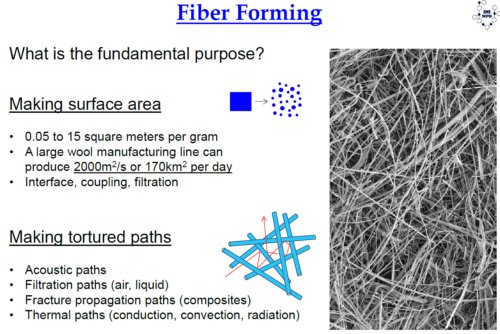
At Hollingsworth & Vose (H&V), we are a leader in high-efficiency filtration. Our glass fiber filter media is among the most widely used filter media for high-efficiency filtration applications. This versatile, proven material is employed in many different air and liquid filtration systems. While many types of filtration media meet ISO 29463 and EN 1822 standards, most have poor performance and reliability. Glass microfiber filter media products from H&V are ideal for high-efficiency filtration needs. They deliver even airflow distribution and can even reduce operating costs. Our micro glass fiber filter media is ideal for HEPA and ULPA filters in sensitive production environments like cleanrooms. As your one-stop shop for filtration solutions, H&V offers an extensive product range in grades that meet your industry's efficiency standards. A glass fiber filter is a filtration product designed to trap particles and contaminants while allowing air or liquid to pass through. Glass fiber filter paper is manufactured using a wetlaid process similar to traditional papermaking. The filter media is typically composed of micro-fine borosilicate glass fibers and resin binders for highly efficient filtration. At H&V, our glass fiber filter media features a unique matrix with best-in-class uniformity. They maximize internal surface area and create tortured paths to trap particles effectively while allowing high air permeability. We offer several fiber sizes to meet application-specific filtration requirements. With glass filtration products, production quality has a dramatic impact on performance. Glass microfiber filter media products from Hollingsworth & Vose are categorized into different grades and meet strict CTQ requirements for the following features. Superior Mechanical Filtration Efficiency: The more uniform the filter media is, the more evenly air can flow through it. Our highly uniform filter media performs more efficiently than our competitors, with reduced drop-outs during filter production and validation testing. Lower Pressure Drop: Compared to other glass fiber filter media, our products exhibit lower pressure drops at equivalent efficiency. This results in up to 14% lower electricity consumption and a reduced carbon footprint. Best-in-Class Formation: Our filter media features sharp, evenly-spaced pleats with reduced pleat tip penetration. This high-quality formation improves airflow uniformity and contributes to energy efficiency. Tensile Strength: Compared to lower-cost microfiber filter media, our products feature greater tensile strength for lasting durability. The improved tensile strength greatly reduces the risk of failure during transportation, product installation, and normal operation. Other key benefits of H&V micro glass fiber filter media include: - High flux and air permeability - Processability/Pleatability - Dirt- and dust-holding capacity - Antimicrobial properties - Chemical resistance - Reduced total cost of ownership - Temperature stability As global leaders in HEPA and ULPA filtration, our glass fiber filter media is used throughout many challenging applications. The most common use for these products is within cleanrooms, where they reliably control gas-phase particulates. Our glass fiber filter media is also used in respiratory protection, particularly full- and half-face powered air purifying respirators (PAPRs). With a mini-pleat configuration, glass fiber media can achieve up to P100 and high-efficiency (HE) filtration in the final filter. H&V glass fiber filter media can also be used in HVAC mini-pleat panels and V-bank filters. Available in durable and high-performance platforms, our micro glass fiber filter media is part of H&V's ASHRAE 52.2 MERV 11-16 portfolio range. H&V glass microfiber filter media is suitable for a multitude of other needs, such as: - Hydraulic filters - Coalescing filters - Fuel and oil filtration systems - Engine air intake filters - Room air purifier filters - Vacuum cleaner filters - Process liquid filters - Water filtration systems - Food and beverage filters - Analytical systems - Collecting suspended solids - Contamination analysis - Liquid clarification - Specialty liquid filters - Low-boron micro glass fiber media for semiconductor fabrication
CATEGORY

NanoWave® filter media provides an ideal solution for use in HVAC filters to mitigate the effects of air pollution and provide enhanced indoor air quality (IAQ). NanoWave® is a patented extended-surface synthetic filter media that protects environments from hazardous levels of air pollution while significantly reducing energy consumption in commercial, industrial, and residential facilities. This allows for increased efficiency and effectiveness of HVAC systems in all types of locations. NanoWave® empowers optimal filtration performance, offering extremely low pressure drop to high dust-holding capacity and consistent efficiency compared to conventional synthetic and glass mat media. When fabricated into finished filters, NanoWave technology allows our customers to meet and exceed international filter performance standards ISO 16890 and ASHRAE 52.2. Featuring mechanical filtration that ensures consistent filtering efficiency, NanoWave's patented design reduces pressure drop by as much as 40% compared to other types of premium filtration media. This allows for NanoWave-equipped filters to achieve the highest energy ratings of A and A+ in accordance with the new 2019 Eurovent Energy Efficiency Rating for the European market. Using NanoWave filter media in HVAC systems dramatically improves air quality through the reduction of exposure to fine particles, dust, and allergens. This solution also cuts down on energy costs without negatively impacting the environment. Energy used in the building sector accounts for more than 20% of total energy consumption globally, and HVAC equipment contributes 40% of that energy usage in commercial buildings. By implementing NanoWave, you can decrease energy burdens and gain carbon savings to support not only healthier buildings but a healthier planet. NanoWave® filter media comes in three different performance levels across a range of filtration efficiencies based on the needs of each application. Connect with us to find the right solution for your products. We design our NanoWave® filter media products to increase the efficacy and efficiency of HVAC systems in the built environment. This media is easy to process, safe to install in any location, and results in no damage to manufacturing equipment. It also benefits the environment by using fully and safely disposable materials. Some specific applications for NanoWave® include: - Commercial and Residential Buildings: NanoWave® filter media works with various HVAC system filter configurations, whether installed in office buildings, hospitals, medical centers, data centers, schools and universities, restaurants, shopping malls, hotels, airports, retail outlets, warehouses, or apartment buildings and multifamily homes. - Industrial Applications: Our customers use NanoWave® filter media for many industrial facilities, including food and beverage production, pharmaceutical manufacturing, electronics production, cleanrooms, labs, steel mills, paint spray booths, warehouses, welding facilities, power plants, and other types of plants. Our NanoWave® synthetic filtration solution is a prime example of Hollingsworth & Vose's dedication to providing a cleaner and more sustainable environment for everyone. Filters that use NanoWave technology can remove air pollutants with more efficiency. This allows for cleaner and fresher air in all types of buildings while cutting down on energy consumption.
CATEGORY
Absorbent glass mat (AGM) batteries are advanced lead-acid batteries that use an absorbent glass mat separator between the positive and negative plates. This separator is made of a porous fiberglass material that absorbs the electrolyte, which allows for a fully sealed design, making the battery spill-proof and leak-proof. AGM batteries are maintenance-free and have a significantly higher charge acceptance than flooded lead-acid batteries, making them ideal for applications such as solar power systems and electric vehicles. Because of their superior performance, reliability, recyclability, and scalability, AGM batteries are the preferred choice for grid storage applications. They also have a lower upfront cost compared to lithium-ion and other recyclable battery options. EnergyGuard® AGM separators are designed to improve processability and battery assembly for UPS (uninterruptible power supply) applications like grid storage. EnergyGuard® increases battery performance and life by decreasing the possibility of short circuits and improving electrochemical properties. They are ideal for float and cyclic use in energy storage systems. Our AGM battery separators offer several other benefits that make them an ideal choice for energy storage systems, including: - Excellent charge/discharge efficiency: H&V EnergyGuard® AGM separators are designed to maximize charge/discharge efficiency, ensuring that the UPS system operates at peak efficiency. Its lower electrical resistance also enhances battery performance. - Long service life: H&V EnergyGuard® AGM separators are built to last, with a service life that is significantly longer than traditional separators. This is thanks to their excellent thickness retention and reinforced construction. - Low maintenance: H&V EnergyGuard® AGM separators require minimal maintenance, making them a cost-effective solution for UPS systems. - Customizable configuration: H&V EnergyGuard® AGM separators come in different configurations to match varying processability needs. They are available in various surface areas to optimize electrolyte filling. Reliable backup power is a key function of any storage system application. In a power outage, backup power can mean the difference between life and death for people who rely on electronic devices to manage chronic medical conditions or those in emergency situations. AGM separators are one of the most reliable types of separators available and can be used in all storage system applications. AGM separators can withstand the rigors of extended use and have a track record of delivering reliable performance. AGM separators are the perfect solution for your battery and energy storage system needs. H&V is a global leader in manufacturing and supplying reliable battery solutions to industrial markets around the world. Our AGM battery separators offer the highest standards for performance and safety.
CATEGORY
At Hollingsworth & Vose (H&V), we are committed to providing advanced material solutions for filtration and energy storage applications that contribute to a cleaner world. One of our core product offerings is pasting paper, which is used as a processing aid in lead battery assembly and can also contribute to improving battery performance. Our PowerLock® pasting paper is a multifunctional material engineered to lock in the power of active mass electrodes. It offers excellent processability and extends thin plate pure lead (TPPL) battery life. Why Use PowerLock® Pasting Paper? PowerLock® is a novel product design containing soluble and glass fibers. The product’s composition provides it with a unique set of characteristics that allows it to serve as a replacement for cellulose pasting paper, glass mat, or scrim in battery assemblies. Before formation, PowerLock’s fiber mix contains soluble fibers and insoluble glass and synthetic fibers. It is excellent for pasting since its low permeability prevents paste mix mass bleeding better than non-woven glass and scrim pasting papers. After formation, the soluble fibers dissolve, leaving behind the glass and synthetic fibers. The result is a strong, open structure material layer with lower electrical resistance. Key advantages of PowerLock include: - It improves positive active mass processibility since it is a durable one-layer material. - It decreases the risk of paste mix bleeding during the pasting process due to its low pre-processing permeability. - It has demonstrated it can reduce airborne lead values. - It provides stiffness to TPPL plates improving handling during battery assembly. - It increases battery life by retaining positive active mass in-battery. - It offers reduced electrical resistance after formation due to its high post-formation permeability. - It prevents battery compression loss by maintaining its structural integrity. What Are Some Common Applications of PowerLock® Pasting Paper? PowerLock® is an ideal pasting paper solution for thin plate pure lead (TPPL) batteries. It offers easier use requirements and better battery performance than many of the alternatives. PowerLock® Pasting Paper From H&V At H&V, we design and manufacture our battery separators to meet or exceed our customers’ highest standards for performance and battery assembly. They are available in a range of variants to suit different applications. To learn more about our advanced material offerings and how they are used in lead batteries, contact us today. We can be your trusted partner and expert for your lead battery solution needs.
CATEGORY
