Advanced steel powders developed and manufactured specifically for the laser deposition process
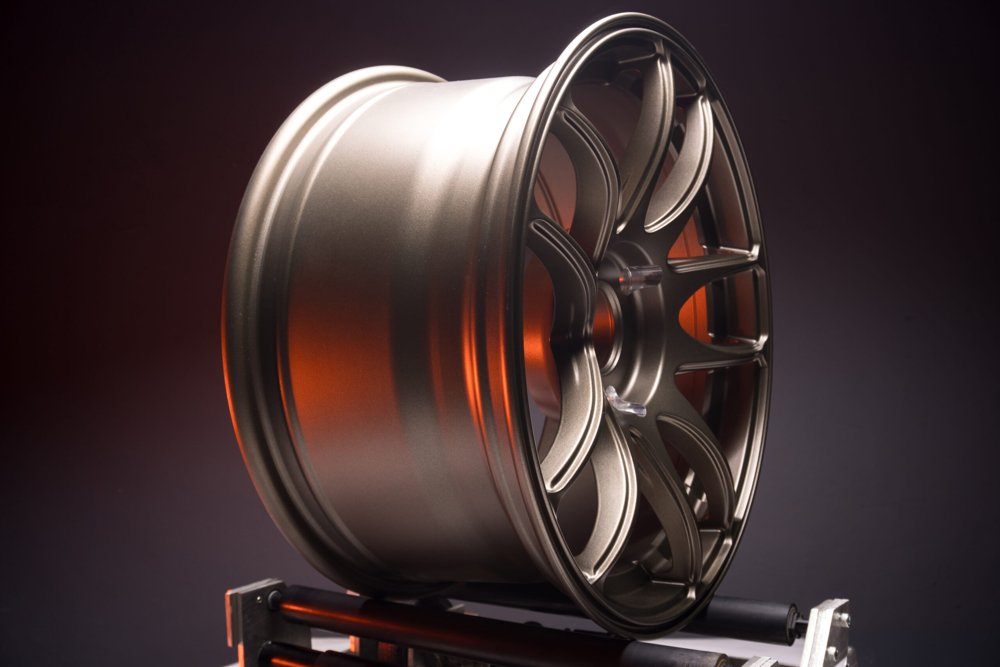
Cobalt-Free Cermet for Wear-Resistant Applications Ti-WC cermet is an advanced composite developed by MBN ensuring an homogeneous microstructure with strong carbide-matrix interfacial bonding. By replacing cobalt binder with titanium matrix, this eco-friendly cermet material retains the hardness of conventional WC based systems delivering both wear performance and environmental sustainability. Ti-WC composite powders are processable through cold spray coating deposition or powder metallurgy consolidation into dense bulk components. Using Cold Spray technology, the material produces thick, compact wear-resistant coatings with excellent coating-substrate adhesion. Spark Plasma Sintering (SPS) consolidation enables production of near-full density components with outstanding mechanical strength and fracture toughness. Applications include lightweight automotive racing components (magnesium alloy protection), extrusion dies, rolling mill tooling, forming dies, and high-wear industrial equipment where abrasion resistance is critical performance factors. COMPOSITION Ti 23% – WC: 77% PROPERTIES OF CGS COATING As-sprayed hardness 800-1000 HV Post-heat treatment hardness1000 HV Coating thickness capability 0.5-2 mm Cobalt-Free Cermet for Wear-Resistant Applications
CATEGORY
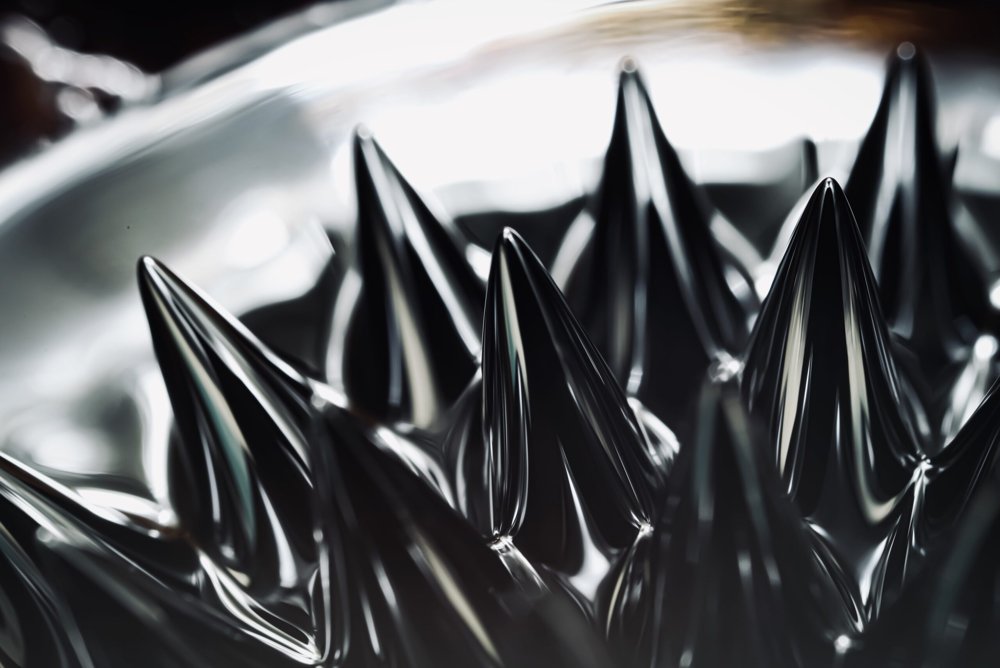
Magnetic Nanoparticles for Cancer Theranostics & Hyperthermia Treatment SelfMag® magnetic nanoparticles are doped ferrite nanoparticles for biomedical applications developed by MBN’s mechano-chemical synthesis process, integrating cancer therapy and diagnostic imaging in a single theranostic nanoplatform. The key feature of SelMag® nanoparticle is the tunable Curie temperature, which enables precise thermal dose control and intrinsic patient safety in magnetic hyperthermia therapy, with transition temperatures adjustable between 40 and 250 °C. The self-regulated heating prevents tissue overheating during alternating magnetic field (AMF) treatment. Surface functionalization options (glucose, PEG, chitosan) ensure colloidal stability in physiological media, controlled protein corona formation, and tailored biodistri bution and tumor targeting. Validated on MDA-MB-231 breast cancer cells, SelfMag® nanoparticles induce selective cancer cell necrosis under alternating magnetic fields with minimal off-target cytotoxicity to healthy tissues. Beyond magnetic hyperthermia applications, these multifunctional nanoparticles serve as temperature-sensitive MRI contrast agents and magnetic particle imaging (MPI) tracers with exceptional sensitivity. Available as aqueous dispersions or propan-2-ol suspensions, SelfMag® nanoparticles provide a patent-pending nanomedicine solution for precision cancer treatment and molecular imaging. Biomedical Applications: Magnetic hyperthermia therapy, MRI contrast enhancement, magnetic particle imaging, drug delivery carriers, cancer theranostics, thermal ablation, cell tracking. Key Advantages: Self-regulating temperature control, high heating efficiency, biocompatible composition, multimodal imaging capability, customizable surface chemistry. PROPERTIES Particle size 50-120 nm (hydrodynamic diameter) SAR values 20-30 W/g at clinical AMF conditions Tunable Curie temperature range 40-250 °C COMPOSITION Fe₂O₃ matrix 28-30% – MgO 32-36% – TiO₂ 26-30% – Other stabilizing phases 12-16% Surface coatings Glucose, PEG, chitosan (custom options available) Dispersion media Water, propan-2-ol REE-Free Gap Magnets Materials for Sustainable Motor Applications As part of the IT-funded FutureMag project, MBN has developed an innovative class of rare-earth-free permanent magnets based on the (Fe,Co)₂(P,Si) magnetic alloy system. These “gap magnets” are engineered to bridge the performance and cost gap between ferrite magnets and rare-earth-based NdFeB magnets, offering sustainable magnet solutions without critical raw material dependencies. The REE-free magnetic powder is produced via MBN’s proprietary Mechanomade®, followed by controlled annealing to crystallize the ferromagnetic hexagonal phase. Post-processing optimization ensures particle size distribution and powder morphology suitable for powder metallurgy consolidation techniques and net-shape manufacturing. Consolidation into sintered permanent magnets is achieved through current-assisted hot pressing, Spark Plasma Sintering (SPS), or cold compaction with sintering, yielding near-net-shape magnetic components with retained crystallographic texture and optimized magnetic properties including coercivity, remanence, and energy product. (Fe,Co)₂(P,Si) permanent magnets target applications in compact electric motors, linear actuators, electromagnetic devices, and sensor systems, delivering significantly improved magnetic performance over ceramic ferrites at moderate production costs. Their rare-earth-free composition and powder metallurgy compatibility make them ideal for sustainable magnet manufacturing in e-mobility, electric vehicle traction motors, industrial automation, and renewable energy systems. COMPOSITION Fe – Co 13% – P 14% – Si 8% PROPERTIES Curie temperature 290 °C Anisotropy field 2 T Saturation magnetization 110 emu/g
CATEGORY
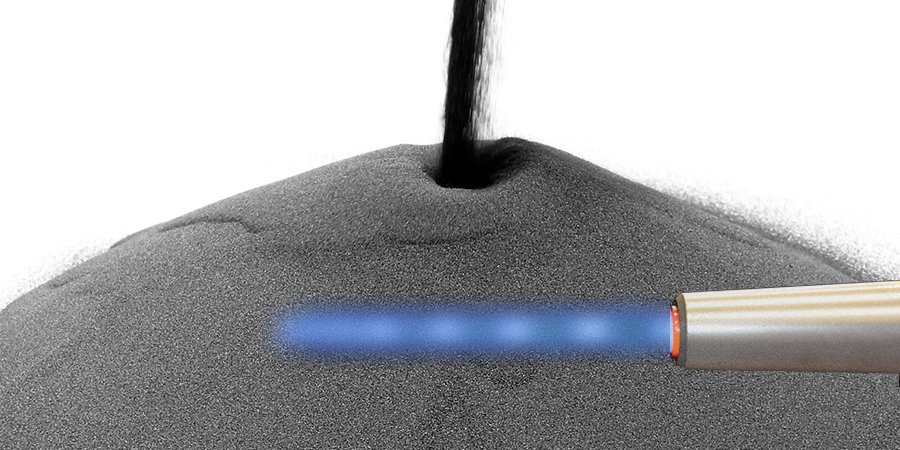
NbC Cermets Alternative carbides for Wear-Resistant Coatings The Nb C-FeCr and NbC-NiCr powders are alternative cermets developed for thermal spray and featuring in-situ synthesized Niobium Carbide (NbC) finely dispersed in metallic matrix alloys. The mechanical alloying process ensures superior carbide-matrix bonding compared to conventional agglomerated cermet powders. NbC-FeCr cermet coatings deliver exceptional hardness, outstanding wear resistance at elevated temperatures —optimized for HVOF (High Velocity Oxygen Fuel) and HVAF (High Velocity Air Fuel) thermal spray processes. This eco-friendly cermet delivers wear resistant performance between traditional WC-CoCr and Cr₃C₂-NiCr systems, with superior high-temperature sliding wear resistance. The NbC-NiCr variants exhibit exceptional corrosion resistance in aggressive environments, outperforming standard cermet references in electrochemical corrosion testing, making them ideal for applications requiring combined wear and corrosion protection across broad temperature ranges. Applications: Industrial rolls, valve components, marine equipment, petrochemical processing, aerospace tooling. PROPERTIES Maximum Hardness 1100 HV Typical Operating temperature 600°C Density ~7.5 g/cm³ Particle size distribution (HVOF) +10–45 µm Other PSD are available on request
CATEGORY
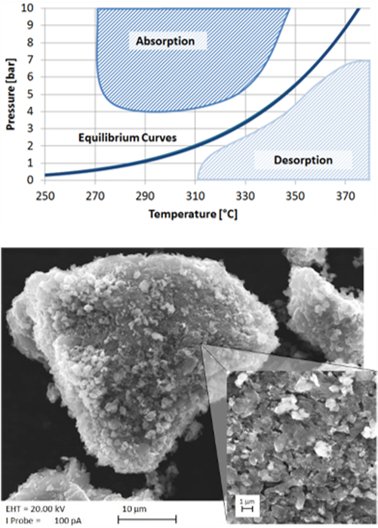
MBN has developed advanced magnesium-based metal hydride alloys and nanostructured hydrogen storage composites using its proprietary Mechanomade® high-energy ball milling process, successfully overcoming the significant processing challenges associated with highly reactive and ductile magnesium. Mg-based hydrogen storage materials are synthesized directly in powder form with refined nanocrystalline grain structure (grain size <100 nm) that dramatically accelerates hydrogen diffusion kinetics along grain boundary networks. Nano-scale catalytic additives (Nb₂O₅, TiO₂, V₂O₅) are homogeneously dispersed during the milling process, promoting efficient dissociation of H₂ molecule into atomic hydrogen at the powder surface—the rate-limiting step in hydrogen absorption. This catalytic enhancement strategy significantly improves: Gravimetric hydrogen storage capacity (up to 7 wt% H₂) Hydrogen absorption/desorption kinetics (fast cycling rates) Operating temperature reduction (150-300 °C vs. 350+ °C for pure Mg) Activation time minimization (first hydrogenation cycle) Cycle life stability (reversible hydrogen uptake/release) MBN’s magnesium enables safer solid-state hydrogen storage, lightweight tank systems, and more efficient energy density compared to compressed or liquefied hydrogen, supporting next-generation clean energy infrastructure, hydrogen fuel cell vehicles, renewable energy storage, and accelerating the adoption of hydrogen as a sustainable energy carrier for decarbonization. COMPOSITION Mg, Mg-Ni, Mg-Fe, Mg-Ti alloy systems PROPERTIES Hydrogen capacity 5-7 wt% (reversible) Operating pressure 1-10 bar H₂ Operating temperature 150-300 °C Absorption kinetics<5 min for 80% capacity (optimized formulations) Desorption kinetics<10 min at 250 °C Cycle life1000 absorption/desorption cycles Particle size 10-100 µm (application-specific) Catalyst loading 1-5 wt% transition metal oxides Development Services: Custom alloy composition design, kinetics optimization, catalyst screening, cycling stability testing, tank integration support.
CATEGORY
