By ARQUIMEA
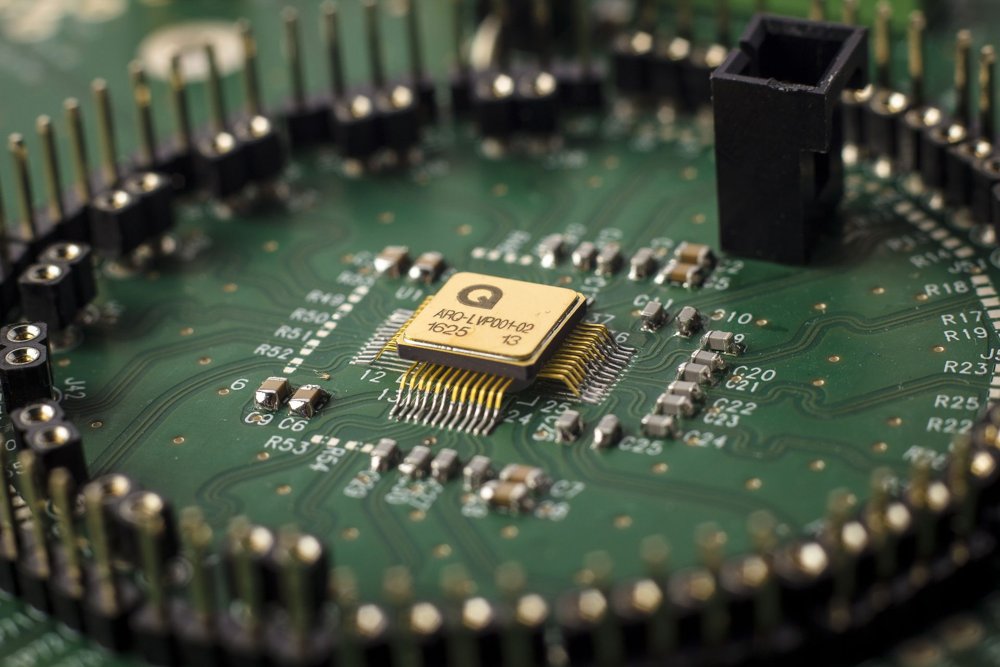
Our LVDS allows data transmission along twisted pair cables at very high data-rates. Some typical applications are SpaceWire and clock distribution networks. Our devices are available in soft IP core, space-grade ceramic and plastic package. Know more about: - Driver detailed specification - Receiver detailed specification
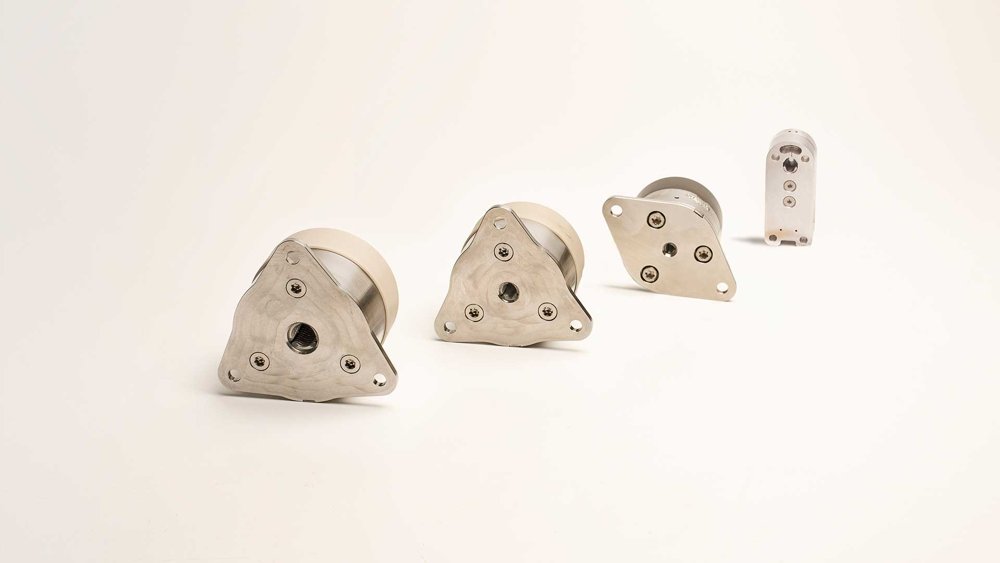
The resettable actuators and low-shock Hold-Down & Release Mechanisms are devices that firmly fix a payload in a satellite during transportation or launch. When the satellite reaches the desire position in orbit, the mechanism releases the payload by electrical activation. ARQUIMEA’s HDRM mechanims (REACT) are available in two different motorization options based either on TiNi or SMARQ® Shape Memory Alloys (SMA) technology. For a perfect performance and test, our mechanisms and actuators for space provide in-field manual reset capability to the end user and covers wide actuation temperature ranges. Typical applications for HDRM include hold-down and release of deployable solar arrays, antennas, booms and masts, reflectors, cover doors, scientific instruments, shutter mechanisms, large structures, launch locks for gimbals, thrusters, stage separation, caging mechanisms, etc. ARQUIMEA’s SMA actuators are based on a two-stage mechanism: structural and trigger. The Structural assembly is responsible of holding the high external loads in a safe and reliable way, while the trigger is responsible of transforming the system into a bistable structure that is self-motorized to effectively release the main bolt. The device is electrically activated with a customizable interface. The total amount of energy is effectively transformed into heat to induce the transformation of the Shape Memory Alloy thus motorizing the system with a redundant trigger. Key features Low-shock <1300 g’s at max load. Non explosive Field resettable mechanisms and actuators. Resettable Resettable in seconds, no need to dismount. Main features of our Hold Down & Release Mechanisms (HDRM) and actuators REACT Three sizes (max load retention) available (5kN, 15kN and 35kN) Manually in-field resettable by the end user. Neither dismounting nor refurbishment required Operation temperature from -90 up to +125ºC Low shock Space-qualified parts and materials Redundant SMA trigger (two independent initiators) Compatible with standard electrical interfaces Near simultaneous release of multiple hold-down points Three standard mechanical interfaces available Custom configurations available under request Full solar array deployment system available: HDRM + cup-cone + hinge Fully European technology ITAR/EAR free
CATEGORY
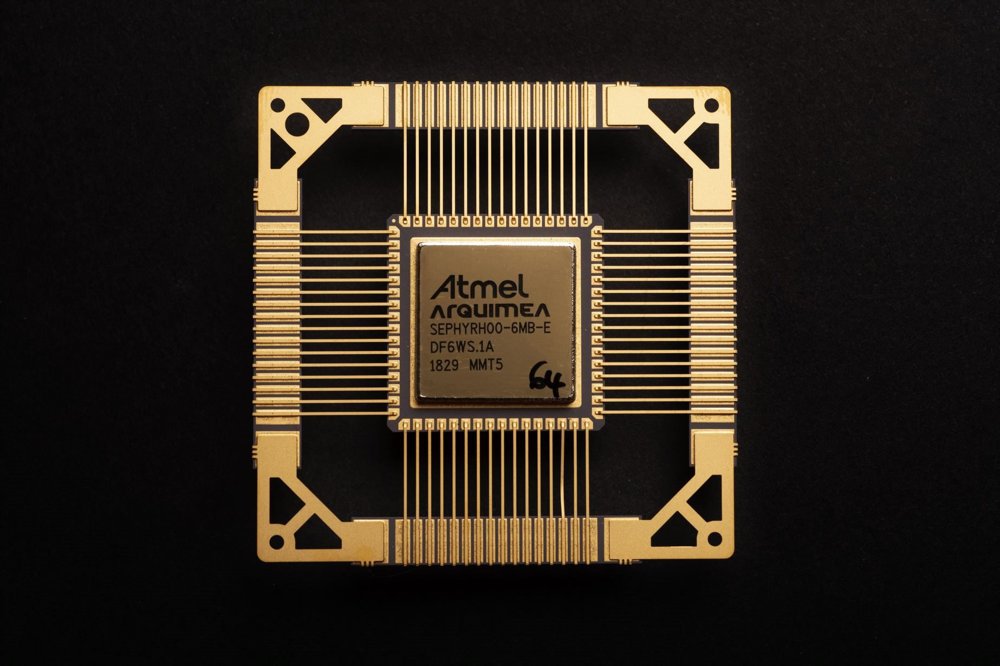
Space-graded 10BASE-T/100 Base-TX Ethernet PHY which allows full adoption in space of the most widely used network communication protocol while maintaining interoperability with the existing ground equipment. It is available as Soft IP Core, space-grade ceramic and plastic package.
CATEGORY
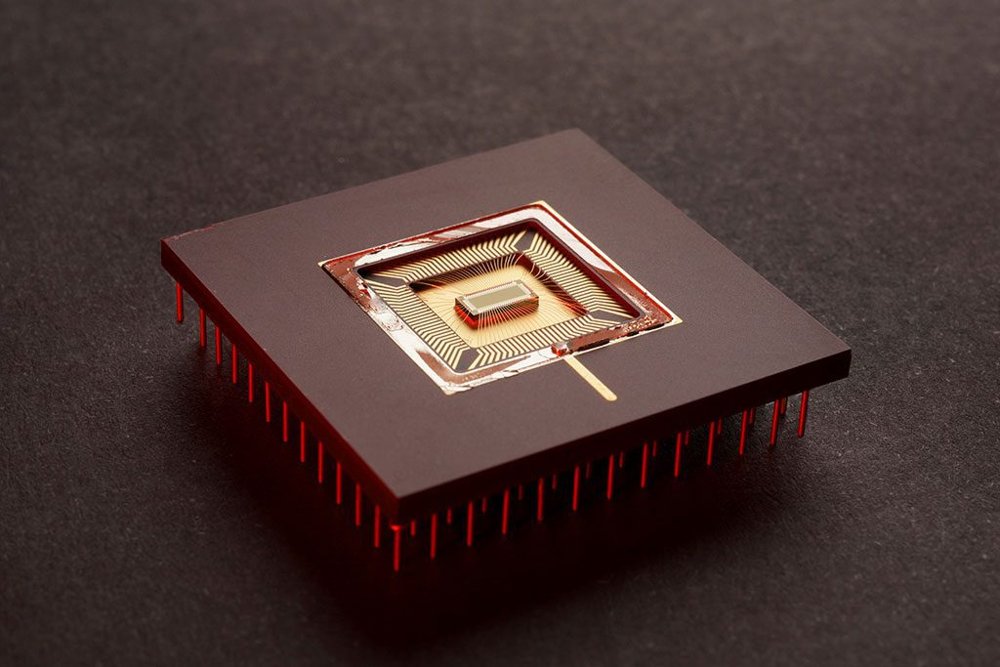
SERDES are commonly used in high-speed communications to compensate for limited input/output. The primary use is to provide data transmission over a single line or a differential pair to minimize the number of I/O pins and interconnects.
CATEGORY
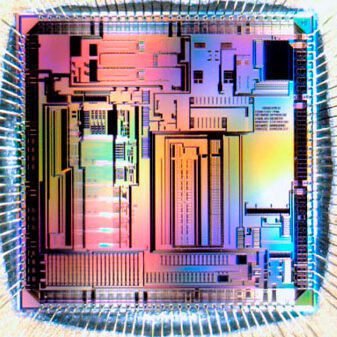
We provide analog, digital and mixed-signal microelectronics, including IP cores, ASIC, FPGA, ASSP and standard components. We deliver end-to-end solutions, from requirements definition, feasibility analysis and technology selection up to chip design, manufacturing and qualification as per the space standards. RAD-HARD MICROELECTRONICS Radiation-resistant ASICS and FPGA design We specialize in integrated circuits based on commercial technologies and hardened by design against the effects of cosmic and environmental radiation. We are fabless and we provide the most suitable technology for each application: high voltage, high speed, low power… Our expertise goes from mature nodes up to deep submicron (22nm and below). Our space microelectronics developers create systems capable of meeting the demanding needs and performance of space missions, so that they withstand complex conditions during the launch process and operate reliably in the adverse conditions of radiation in space. ASICS and FPGA design Main space missions - REDSAT ASIC set ELSA: Chip Set for reconfigurable active antenna control. Qualified for GEO telecommunications satellite. 1500+ flight units delivered since 2012 (customer: Airbus Defence & Space). - COSMIC VISION reconfigurable mixed-signal ASICs (customer European Space Agency – ESA). - Mixed-Signal ASIC for Avionics (OBC+PCDU) control in low-cost satellites (customer: IHP Microelectronics). - SWIPE ASIC for Radiometry (EU FP7 Program). - Design and integration of a RH ADC IP for a Scalable Sensor Data Processor ASIC (SSDP) (customer: Thales Alenia Space – ESA Project). - QUANTUM – Fast Beam Hopping Enabled Digital ASIC for GEO telecommunications satellite (customer: Airbus Defence & Space). - TMTC ASIC – Mixed-signal ASIC for telemetry and telecommand in PCDUs and ICUs (customer: Airbus Defence & Space). - QUANTUM – Space FPGA’s implementation and verification (customer: Airbus Defence & Space). - SPAINSAT NG – Chip Set for reconfigurable active antenna control in GEO telecommunications satellite (customer: Airbus Defence & Space). - Verification of SEU-Mitigation Techniques in 3rd/4th Generation Flash FPGAs (Customer: European Commission – ESA). - Evaluation of 22nm Fully-depleted Silicon-On-Insulator technology for Space (Customer: European Commission – H2020).
CATEGORY
