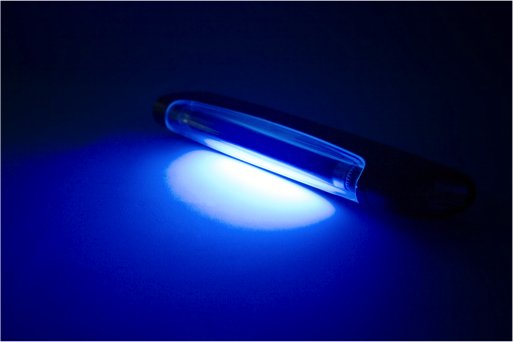
PDM-5005 is designed to be 100% reactive with no need for solvent. This one-part formulation is cured by brief exposure to UV light in the range of 365 to 405 nanometers (nm). A thermal cure is not required to obtain complete conversion. The dielectric constant is quite low, typically 2.3. The viscosity is less than 30 cP for inkjetting, but it can be tuned for other dispensing or coating techniques. Upon request, other properties may be tailored to meet your needs.
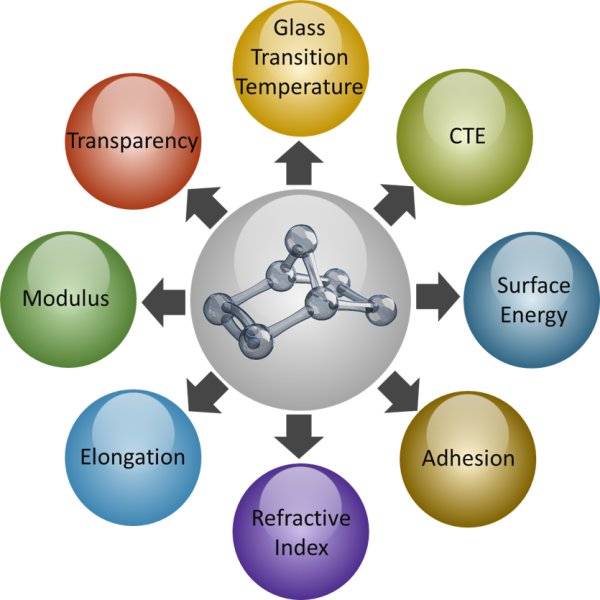
Polynorbornene (PNB) is a high-performance polymer derived from norbornene monomers. It belongs to the cyclic olefin polymer family and is known for its excellent thermal stability, low dielectric properties, optical clarity, and customizable chemistry. Polynorbornene is used in advanced energy, electrolyzers, rechargeable batteries, semiconductor packaging, electronic materials, optical materials, membranes, coatings, adhesives, dielectric materials, and advanced polymer formulations. Polynorbornene offers a unique combination of properties including high glass transition temperature (Tg), low moisture absorption, low dielectric constant, low dielectric loss, good chemical resistance, and excellent processability. These characteristics make it valuable in advanced technology applications. Polynorbornene materials are known for: - High glass transition temperatures (Tg) - Excellent thermal stability - Low dielectric constant - Low dielectric loss - Low moisture absorption - High optical clarity - Tunable refractive index - Tunable modulus - Good chemical resistance These materials offer: - High glass transition temperatures (Tg) - Low moisture absorption - Low dielectric constant - Low dielectric loss - High electrical breakdown voltage - Chemical resistance - Low birefringence The combination of a rigid polycyclic backbone and customizable functional groups enables the development of polymers with a rare combination of thermal, optical, electrical, and mechanical performance characteristics. Yes. Polymer properties can be tailored by incorporating different norbornene monomers and functional groups to achieve desired electrical, thermal, mechanical, or optical performance. Polymer properties can be tailored by changing the functional groups incorporated into the polymer structure. This allows optimization of: - Adhesion - Refractive index - Toughness - Crosslink density - Solubility - Modulus and elongation-to-break - Coefficient of thermal expansion (CTE) - Chemical resistance - Dimensional stability - Dielectric constant - Dielectric loss - Birefringence - Transparency Applications include: - Semiconductor packaging - Printed circuit materials - High-frequency communication systems - Optical components - Adhesives and coatings - Energy technologies - Membrane technologies Promerus materials can be processed using: - Spin coating - Solvent casting - Resin transfer molding (RTM) - Reaction injection molding (RIM) - Screen printing - Composite fabrication techniques
CATEGORY
This system is designed to be 100% reactive with no need for solvent. Our proprietary blend is <30 cP, but can also be tailored to a variety of viscosities for dispense techniques, including ink-jetting and jet-dispensing. After a brief thermal cure, it polymerizes and solidifies in place to a thermoset. When blended with additives, it can be designed to have excellent adhesion for mechanical durability and/or high refractive index for improved light extractability.
CATEGORY
The molding of polymers is a long-standing technology that involves heating a polymer above its crystallization temperature, while applying pressure in a cavity mold. PDM-5070 is an amorphous material, but its architecture can be modified to increase the melt flow rate (from 1 up to 40 grams/10 min) and decrease the melt viscosity (from 160 down to 40 cP at 200 ̊C). A molded part can maintain glass-like transparency with a Tg exceeding 200 ̊C.
CATEGORY
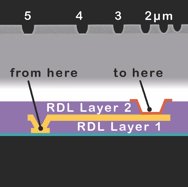
Redistribution is a process that utilizes photo-patternable dielectrics to encapsulate electrically conductive relocation traces. Polynorbornenes are finding their advantage in an industry moving toward smaller features and lower cure temperatures (170-200 ̊C). PDM-5013 has an inherently high Tg from its rigid polycyclic olefin backbone. Unlike its competition, it doesn’t need a high cure temperature to increase the Tg. This low cure temperature, balance of strength (100 MPa) and elongation beyond 40% makes it an attractive candidate for next-generation technologies.
CATEGORY
