"Chirascan is a cutting-edge instrument that will significantly boost our research capabilities to explore molecular properties with greater precision and depth. This new instrument offers higher sensitivity and an improved signal-to-noise ratio, enabling more detailed measurements of changes in secondary and tertiary structure, as well as structural changes upon heating." "The Chirascan system at the Manchester Institute of Biotechnology is used to advance biological, biochemical, and medical research. Our scientists use CD to gain an understanding of how mutations, buffer or stress conditions affect protein structure and to confirm the stereostructure of small molecules. The system is routinely used by more than 25 scientists and is typically in use 90% of the time. The system is intuitive making user training straightforward. Users return to the Chirascan because it is highly reproducible, has excellent signal:noise and delivers results quickly." "The Chirascan-plus (Chirascan V100) CD spectrometer is an important instrument of our biophysical core facility. The facility is a part of the Centre of Molecular Structure (CMS), of the Czech Infrastructure for Integrative Structural Biology (CIISB) and belongs to the Czech centre of the Instruct-ERIC European infrastructure for structural biology. The goal of CMS is to provide shared resources of instruments and technologies for a variety of users from both the academic and industrial communities and to offer the expertise on a wide range of topics in biophysics and structural biology. We use Chirascan-plus for the determination of the secondary structure of proteins, understanding of the impact of point mutations on protein structure and stability, as well as for studies of conformational diversity of oligonucleotides in temperature ramping experiments. Chirascan-plus is very reliable and can produce excellent results for both experienced and novice users." "Applied Photophysics provided us with prompt, high quality support during the relocation of the Chirascan system into our Biophysical Analysis core facility. The instrument offers excellent performance and the thorough training supplied has served as a solid foundation for our now established expertise in circular dichroism. At present, the user base (and publication list) is steadily growing as more and more researchers realise the value of a quick check for correct folding of their site directed mutant proteins. Other applications include analysis of nucleic acids and determining stereo chemistry of small chiral molecules." "The Chirascan CD spectrometer in the Imperial College London Molecular Science Research Hub is one of the most popular pieces of equipment on campus. We are a group of physicists, chemists and materials scientists who study the optical and electronic properties of conjugated chiral materials. The simple, rapid and reliable characterisation – in both the solution and solid state – afforded by the Chirascan is central to our optimisation of these materials for their application in devices. To date, our research has focussed on circularly polarised (CP) Organic Light Emitting Diodes and CP Organic Photodetectors, but thanks to the Chirascan, we can create and analyse materials with strong chiroptical effects for a range of novel applications. The ease of operation, high signal-to-noise and highly responsive customer support team make the Chirascan accessible to every member of our research team. Alongside the standard spectrometer, the low cost user-inspired accessories (for example, to measure circularly polarised photoluminescence or optical rotatory dispersion), which can be added on to the set-up at any time, set the Chirascan apart from other equipment on the market." "CD spectroscopy is an important tool for my research group enabling us to deepen our understanding of the rules which govern self-assembly of chiral molecules. We have used the Chirascan instrument to measure Absorbance, CD, LD, ORD, FDCD, Fluorescence (Emission & Excitation Scanning) data of organic compounds in the 200 to 800 nm wavelength region. We found that the instrument easy to use, reliable and to deliver excellent results regardless of the type of measurement. When time allows, the Chirascan is a favourite for researchers from other groups wishing to make isothermal and thermal denaturation measurements of protein and DNA – probing structure and stability. It is clear that the biochemists like the Chirascan because they have recently bought their own!" Dr Dan Pantos, a Senior Lecturer and Head of Organic Chemistry at the University of Bath, utilises the Chirascan CD instrument from Applied Photophysics for various research projects. His primary research involves studying the interactions between chiral small molecules and quadruplex DNA, with the goal of developing anti-cancer treatments. Dr Tonya Zeczycki, an associate professor at the Brody School of Medicine at ECU, studies Alzheimer's, Parkinson's, and other neurodegenerative diseases in her lab. She focuses on protein interactions, misfolding, and aggregation. Dr Nick Larson, a seasoned expert in protein and oligonucleotide therapeutics, leverages the Chirascan CD spectrometer in his work on a wide range of therapeutics, from protein-based drugs to advanced gene-silencing molecules. Dr Sanjib Banerjee, Head of Biopharma Business at Veeda Clinical Research, focuses on biosimilars, vaccines, and novel biologics. His team uses the Chirascan CD system for biosimilarity assessments, quality control, and molecular stability studies, ensuring precise structural analysis and reliable biopharma solutions. Dr Athi, a professor in the Department of Biotechnology at IIT Madras, leads the Protein Biophysics Lab, where he studies protein folding, stability, and interactions. His research utilises techniques such as Circular Dichroism spectroscopy to investigate protein-antibiotic interactions, bacterial chromatin organisation, and DNA binding kinetics, contributing to a deeper understanding of molecular mechanisms in health and disease. Dr Hema Chandra, an assistant professor in the Department of Chemistry at IIT Madras, explores the structural dynamics of proteins and enzymes using the Chirascan spectrometer. His research focuses on enzyme functionality, knotted protein structures, and drug discovery for tuberculosis, providing valuable insights into protein folding, ligand interactions, and potential therapeutic targets.
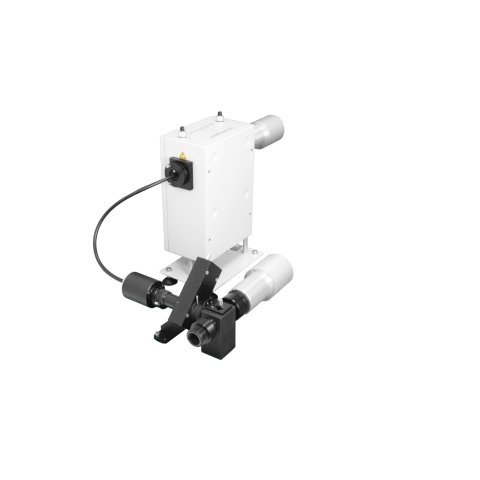
For information about the excited states of chiral molecules. Exclusively for Chirascan V100
CATEGORY
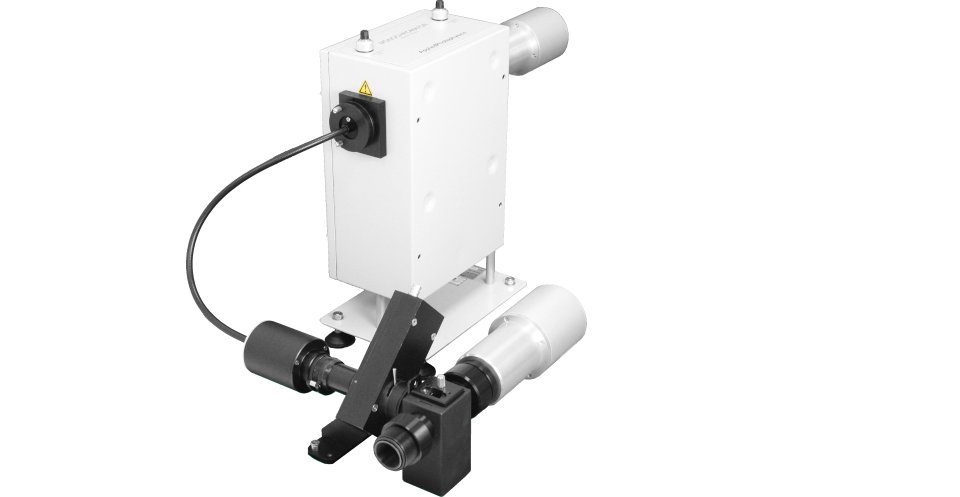
Chirascan Accessories Product details Chirascan Accessories Product details FULL FLEXIBILITY FOR FOCUSED RESEARCH Chirascan platform accessories provide dedicated tools for specialised applications—for orthogonal data beyond circular dichroism, less common sample types, and additional measurement modes. CCD Fluorometer—Fast Fluorescence For all Chirascan Systems The CCD Fluorometer allows obtaining fluorescence emission spectra within mere seconds, be it for measuring intrinsic tryptophan fluorescence to gain additional protein tertiary structure information, or recording the signal of fluorescent dyes. Go beyond circular dichroism and absorbance with orthogonal fluorescence data. Available for the Chirascan VX, Chirascan V100, and Chirascan Q100. For Chirascan VX & Chirascan V100 For increased throughput Chirascan 6-Cell Turret For automated titrations Chirascan Titrator For monitoring of in-sample pH Chirascan pH Probe For measurements of disc samples Chirascan Solid Sample Holder For measurements of powders and other opaque samples Chirascan Integrating Sphere For following fast kinetics by CD and other signal modes Chirascan Stopped-Flow For orthogonal fluorescence data Chirascan Total Fluorescence For investigation of relative molecular orientation Chirascan Couette Cell For measurements under limited absorbance conditions Chirascan Optical Rotary Dispersion For detection of additional transitions Chirascan Magnetic Circular Dichroism For high-quality fluorescence emission spectra Chirascan Scanning Emission Monochromator Exclusively for Chirascan V100 For an expanded CD scan range Chirascan Near Infrared Extension For investigating molecular mobility Chirascan Fluorescence Polarisation For information about the excited states of chiral molecules Chirascan Circularly Polarised Luminescence Fluorescence-Based Fast orthogonal fluorescence data Chirascan CCD Fluorometer For investigating molecular mobility Chirascan Fluorescence Polarisation For information about the excited states of chiral molecules Chirascan Circularly Polarised Luminescence For orthogonal fluorescence data Chirascan Total Fluorescence For high-quality fluorescence emission spectra Chirascan Scanning Emission Monochromator For Solid Samples For measurements of disc samples Chirascan Solid Sample Holder For measurements of powders and other opaque samples Chirascan Integrating Sphere For information about the excited states of chiral molecules Chirascan Circularly Polarised Luminescence
CATEGORY
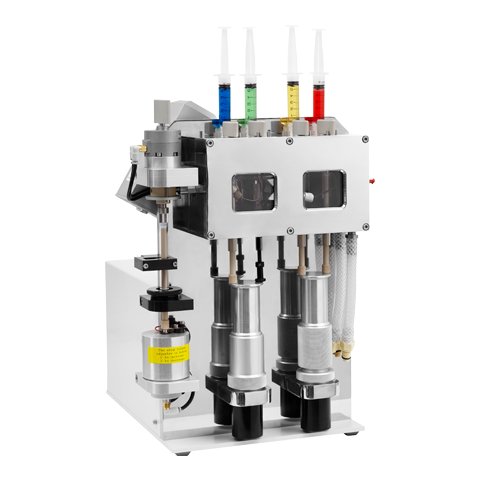
SX20 Accessories Discover the SX20 accessories lineup by Applied Photophysics. Elevate your spectroscopy experience with precision-designed add-ons tailored to enhance performance and versatility. Explore now for seamless integration and exceptional results Accessories Sequential Mixing Study the reactivity of intermediate and transient species Diode Array self-contained spectrograph Anaerobic Accessory high performance bench-top anaerobic capability Dual Fluorescence insight into protein-protein interactions, enzyme-substrate binding Fluorescence Polarisation easy-to-fit, dual channel, T-format fluorescence polarimeter
CATEGORY
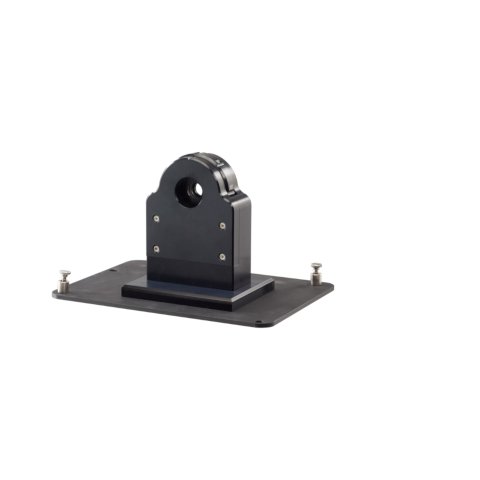
Measure discs and thin films With its simple design, this Chirascan accessory allows you to measure discs and other compatible solid samples. Available for manual Chirascan systems. An accessory to expand the capabilities of your manual Chirascan system - Measure solid samples prepared as potassium bromide discs (13 mm diameter), thin films, and other compatible sample types - Sample wheel with graduated 45° markings for measuring samples at different orientations - Easy installation
CATEGORY
