By NanoBrand
Citrate-coated or PEG5000-carboxylate, for passive adsorption or covalent EDC/NHS coupling. Size: 20-40-80-100nm. Suited to lateral flow assays and biosensors where the conjugate must stay stable. "IVD-READY" gold nanoparticles are designed for diagnostic assay workflows requiring consistent particle properties and lot-specific characterization. All three lines are dispersed in water, free of buffers and reactants. Every NanoBrand lot ships with its own characterization data, measured on the specific batch you receive to confirm its stated particle size, optical properties, and quality specifications. Standard lead time is 2 to 3 weeks. Custom diameters, concentrations and surface coatings are available on request, from research quantities to bulk manufacturing.
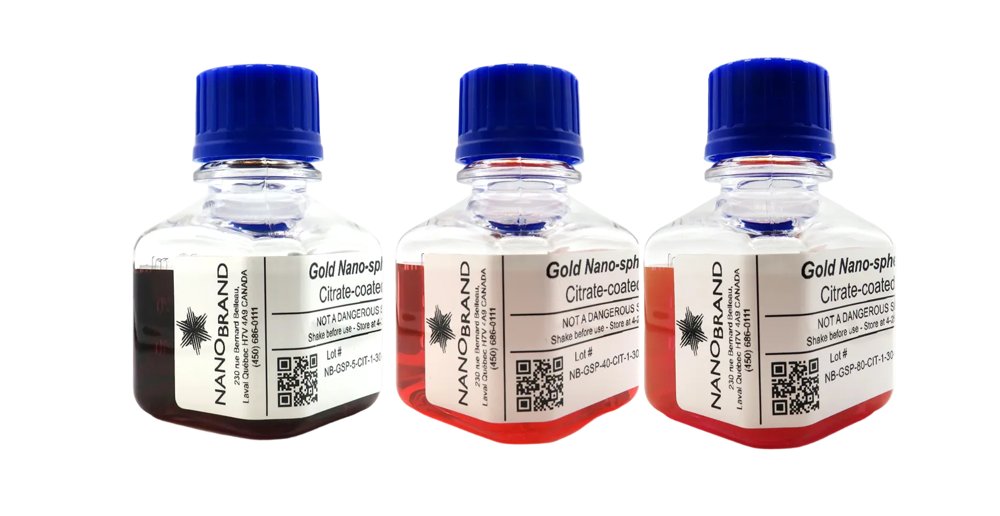
Citrate-capped gold nanoparticles (AuNPs) are spherical gold particles carrying a weakly bound, negatively charged citrate layer formed during synthesis. Citrate-capped, citrate-coated and citrate-stabilized all describe this same surface. NanoBrand offers them in 16 sizes from 5 to 200 nm, supplied in Milli-Q water with no reactants, buffers or added stabilizers, and characterized lot by lot. They are a common starting material for nanoparticle-based work in diagnostics, biosensing, imaging, drug delivery and cancer therapy research. The citrate surface holds the particles stable in dispersion. Particle size sets the optical response, the particle count per volume and how the particles move through a membrane in assays. Which size for your application Smaller spherical AuNPs may suit research applications where fast, uniform migration, efficient surface functionalisation, and reduced steric crowding are important. Larger particles provide stronger optical scattering and a higher visible signal at the same particle count, which can be useful in imaging, spectroscopy, colorimetric detection, and other optical applications. For lateral flow assays and other IVD uses, particle size should be confirmed by testing the complete conjugate and membrane system, and not the bare particle alone. The optimal AuNP size depends on the intended application, surface chemistry, formulation, optical requirements, and final assay performance. Citrate surface and dispersion medium Citrate-stabilized gold nanoparticles (AuNPs) provide a practical starting surface for protein, peptide, and oligonucleotide conjugation. Proteins and biomolecules can attach through passive adsorption, while thiol-containing ligands form strong Au–S bonds for more controlled surface functionalization. The citrate layer is negatively charged and supports colloidal stability. It can be partly displaced or over-coated during ligand exchange, allowing passive adsorption and covalent AuNPs conjugation strategies to be developed from the same particle surface. The dispersion medium can affect the nanoparticle surface as much as the capping agent. Surfactant or buffer residues may adsorb to gold nanoparticles and compete with ligands during conjugation. NanoBrand citrate gold nanoparticles are supplied without added surfactants or stabilizing agents, presenting a citrate-capped surface for protein, peptide, and oligonucleotide functionalization. Monodispersity and lot-to-lot consistency Gold nanoparticles from 7 to 200 nm are supplied with a coefficient of variation (CoV) of 5% or less and a polydispersity index (PdI) of 0.1 or less. The 5 nm product has a CoV of 10% or less. These specifications are measured for each lot supplied. A narrow particle-size distribution supports consistent optical properties, helping experimental results remain comparable between orders. Each NanoBrand lot is supplied with a Certificate of Analysis (CoA) and Safety Data Sheet (SDS). The CoA includes lot-specific TEM images, size data and distribution, UV-vis spectrum, hydrodynamic diameter, polydispersity index (PdI), and Zeta potential, supporting traceable nanoparticle characterization. Configurations, pricing and ordering Every size is listed at optical density 1, 10 and 20, in volumes from 10 ml to 1000 ml. Pricing depends on particle size, optical density and volume. The price for each configuration is shown on the product page and updates in the cart. - Universities: 10% discount applicable to the purchase order - Returning customers: 5% discount added to the cart automatically - Standard products are manufactured in Canada and ship in 2 to 3 weeks - Custom diameters and surface chemistries: please send us the diameter, surface coating, concentration as OD or particles per ml, and order volume - Bulk quantities: lead times are confirmed following review of the requested specifications, concentration, batch volume and characterization requirements
CATEGORY
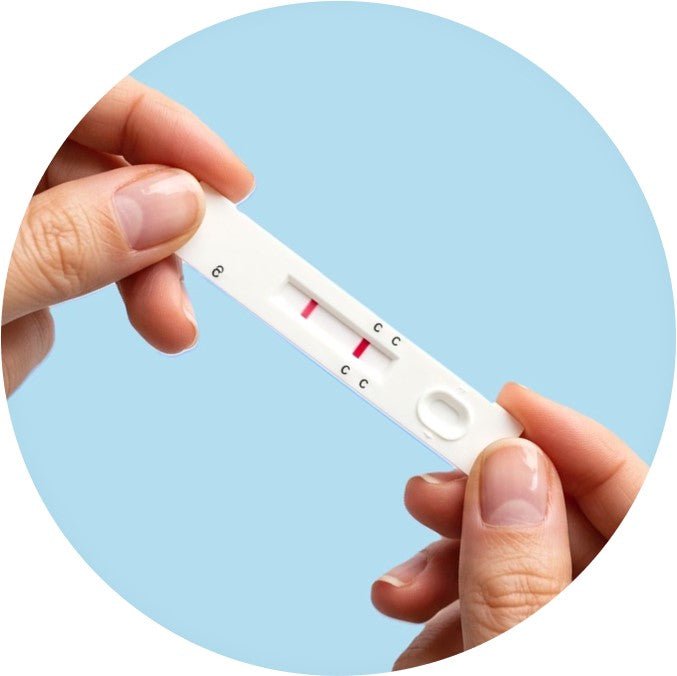
Biocompatible gold nanoparticles (AuNPs) are nanoscale gold particles manufactured so that synthesis carryover does not interfere with biological systems: no residual reactants, no stabilizing agents, base-metal impurities below detection limits, and defined surface chemistry. This level of cleanliness sets the starting point for any medical application. NanoBrand manufactures AuNPs to this standard, with lot-specific characterization. What makes a Gold Nanoparticle biocompatible? Biocompatibility is set less by the gold than by what is left on it after synthesis and by how uniform the batch is. The table lists the parameters NanoBrand controls on every lot, why each one matters, and the value supplied. - Residues from synthesis: Surfactants, buffers and leftover reactants are foreign materials at the particle surface. Free of reactants, buffers, proprietary stabilizing and dispersing agents, sodium azide, PBS, Tweens, BSA, glycerol, CTAB and CTAC residues. - Surface: The surface is what proteins and cells meet first, and what a ligand attaches to. True citrate surface formed during synthesis, no CTAB replacement. Custom surface chemistry available. - Metal purity: Base metal impurities travel with the gold into the biological system. Gold precursors produced and purified in-house. Base metal impurities controlled by ICP-MS and kept below detection limits. - Size uniformity: Mass per particle scales with diameter, so a wide distribution is an undefined dose. Coefficient of variation CoV under 5 % of target diameter for 10 to 200 nm nanoparticles. Polydispersity index under 0.100. - Lot-to-lot reproducibility: Results obtained on one lot must transfer to the next ones. Lot-specific characterization supplied with every order. Minimal variations between orders due to high monodispersity and quality control. - Manufacturing: Process control ensures that the specifications are consistently met for every lot. Following Good Manufacturing Practices guidelines, ISO applications ongoing. Manufactured in Canada. Applications: Drug Delivery Gold nanoparticles (AuNPs) are being studied as drug-delivery nanocarriers for poorly soluble anti-cancer drugs, proteins, vaccines, and nucleic acids. A single functionalized AuNP can be engineered to carry multiple therapeutic payloads, targeting ligands, and responsive components. By tuning particle size, surface chemistry, and bioconjugation strategy, researchers investigate AuNP platforms for high drug loading, prolonged circulation, targeted delivery to tissues such as tumours, and controlled drug release. NanoBrand supports gold nanoparticle design and surface functionalization for targeted drug-delivery and controlled-release research. Biosensing, Lateral Flow Assays and Personalized Medicine In biosensing, AuNPs detect disease biomarkers, bacteria, viruses, antibodies, drugs, and environmental pollutants. Surface, swab, and biological-fluid testing for bacteria and viruses remains one of their best-known applications. NanoBrand's ultra-monodisperse particles are designed for this work and can support development of your specific biosensing application, from assay design to particle selection. Because test sensitivity, reproducibility, and signal regularity depend on particle uniformity, monodispersity is a key specification. Consistent particle size can also support more reliable assay optimization, validation, and comparison across test batches. Gene Therapy Gold nanoparticles (AuNPs) are being investigated as versatile non-viral vectors for gene delivery and gene silencing. Their readily functionalized surfaces, high surface-area-to-volume ratio, and tunable optical properties support research into nucleic-acid loading, delivery, tracking, and light-triggered functions. Gold nanoparticles can be engineered to carry DNA, mRNA, siRNA, miRNA, and targeting ligands through multivalent surface attachment. For gene-delivery research, NanoBrand can prepare AuNPs with a positively charged surface stabilizer selected for your application, enabling electrostatic binding of nucleic acids. Photothermal Therapy NanoBrand offers gold nanoparticle products with absorbance peaks from 700 to 1000 nm, within the near-infrared range widely used for photothermal research, and can engineer particles for the wavelength required by your application. AuNPs absorb near-infrared light and convert it into localized heat through plasmonic photothermal effects. In photothermal therapy research, particles are designed to accumulate at a tumour and are then irradiated, concentrating heat near the particles rather than uniformly throughout surrounding tissue. AuNP surfaces can also carry therapeutic cargo, supporting combined photothermal drug-delivery approaches and light-responsive release strategies. Imaging-capable particles may further support image-guided treatment and monitoring in preclinical research platforms. Medical Imaging Gold attenuates X-rays more strongly than iodine, and AuNPs are studied as CT contrast agents that may provide high contrast at lower dose and remain in circulation longer. Beyond CT, AuNPs can support MRI, optical imaging, photoacoustic imaging, SERS, and emission tomography when combined with appropriate contrast components, radionuclide labels, fluorescent dyes, or magnetic materials. Their tunable optical properties and functionalizable surfaces make them useful research platforms for targeted and image-guided imaging approaches. NanoBrand can tune particle optical properties, develop stabilizing surface coatings, and functionalize particles with fluorescent dyes or other application-relevant labels for your imaging modality. Theranostics Theranostics combines diagnosis, treatment, and response monitoring within a single platform. AuNPs are promising building blocks for cancer and other disease applications because their surfaces can integrate targeting ligands, imaging agents, therapeutic cargo, and responsive components within one multifunctional particle design. These multifunctional AuNPs-based theranostic systems are of particular interest in personalized-medicine research, where diagnosis and treatment may be adapted to disease characteristics and treatment response. NanoBrand can support the design of multifunctional gold nanoparticles with the size, surface chemistry, and configuration required for a specific theranostic research platform.
CATEGORY
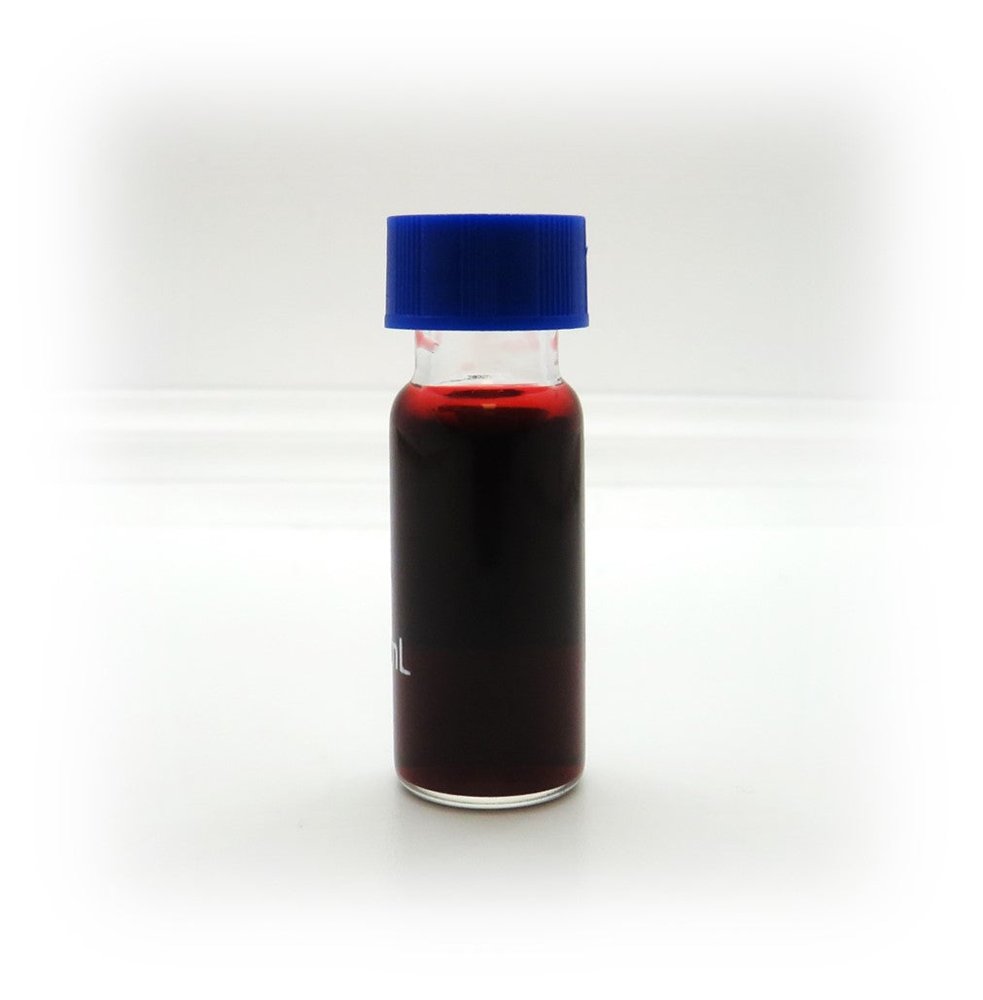
NanoBrand 20 nm "IVD‑READY" Gold Nanoparticles are optimized for IVD assays that require high surface‑area loading and excellent colloidal stability. 20 nm core size provides well‑defined plasmonic color with minimal steric hindrance, making them ideal for high‑specificity LFAs, sensitive ELISA‑type colorimetric IVD tests, and advanced biosensing platforms where precise biomolecule conjugation, low background, and reproducible analytical performance are critical for diagnostic accuracy and assay robustness. - Application focus: IVD biosensing, rapid tests, ELISA, microfluidics, biosensors, LFAs - Format: Aqueous colloidal suspension, ready for bioconjugation - Grade: Research and development, suitable for transition to commercial IVD use High Monodispersity for Reliable Diagnostics Core diameter: 20 nm, narrow size distribution CoV (coefficient of variation): ≤ 5% Polydispersity index: PdI ≤ 0.1 Tightly controlled monodispersity ensures uniform localized surface plasmon resonance, generating a strong, consistent red signal and predictable optical response in IVD biosensing assays. This uniformity improves lot‑to‑lot reproducibility and provides more reliable limits of detection than polydisperse gold nanoparticle colloids. Clean, reactant‑free surface chemistry support robust antibody and biomolecule conjugation, enabling sensitive, reproducible detection of proteins, antibodies, and nucleic acids in clinical diagnostics and research applications. Clean Surface and Reactant‑Free Matrix Morphology: spherical gold nanoparticles, no other shapes. Matrix: reactant‑free aqueous colloidal suspension, low ionic strength. The reactant‑free and stabilizer-free formulation minimizes interference with surface functionalization and reduces aggregation risk, helping maintain colloidal stability, signal intensity, and assay robustness over time. Surface Options for Flexible Conjugation - Citrate: for passive adsorption of antibodies and proteins, ideal for rapid screening and conjugation optimization. - PEG5000‑carboxylate (thiol‑PEG‑COOH): for covalent EDC/NHS coupling to amine‑containing biomolecules, with reduced non‑specific binding and enhanced stability in complex matrices. This flexibility lets align your conjugation strategy with assay format, stability requirements, and IVD regulatory needs. Optimized OD for Biosensing Optical density options: OD 20 and OD 50. These concentrations are tuned for robust conjugation performance and reliable signal generation in common biosensing formats. IVD‑oriented Quality Control and CoA Each lot includes a detailed CoA with lot‑specific TEM images, size distribution, UV‑Vis spectra, hydrodynamic diameter, PdI, zeta potential, and key QC parameters, supporting internal QC, method validation, and regulatory submissions for IVD and medical diagnostic products. Lot-specific Characterization 2 - 3 weeks lead time
CATEGORY

Antimicrobial silver nanoparticles (AgNPs) are nanoscale metallic silver particles, typically under 100 nm in diameter. They release silver ions (Ag⁺) and generate reactive oxygen species, disrupting bacterial membranes, respiratory enzymes and DNA. Because the mechanism acts on several targets at once, resistance develops more slowly than against conventional antibiotics. NanoBrand manufactures high-purity, stabilizer-free AgNPs in custom sizes and surface chemistries, with lot-specific characterization. Which particle size for your application? Smaller silver nanoparticles carry more antimicrobial activity per unit mass, because surface area and therefore Ag⁺ release rate scale inversely with diameter. Smaller particles release faster and deplete sooner. Larger particles release gradually and hold activity for longer. Size selection is a trade-off between initial activity and service life, not a single optimum. Smaller Silver Nanoparticles: Typical antimicrobial activity - Usually higher; Why - Greater surface area and typically faster Ag⁺ release; Activity onset - Often faster; Dose needed for inhibition - Often lower; Formulation stability - More prone to aggregation in salts or complex media; Safety consideration - Can produce greater antimicrobial potency but may also increase cytotoxicity; Best suited for - Rapid, high-efficiency antimicrobial applications. Larger Silver Nanoparticles: Typical antimicrobial activity - Usually lower at the same silver mass dose; Why - Lower surface area and generally slower Ag⁺ release; Activity onset - Often slower or more gradual; Dose needed for inhibition - May require a higher concentration; Formulation stability - Often more physically stable and easier to formulate; Safety consideration - May offer lower reactivity and a wider safety margin, depending on the formulation; Best suited for - Controlled-release, durable, or stability-focused antimicrobial systems. General tendency: Smaller AgNPs often exhibit greater antimicrobial efficacy because they provide a larger reactive surface area per unit mass of silver. Actual performance also depends on surface coating, particle shape, aggregation state, silver-ion release kinetics, the target microorganism, and the surrounding medium. Can NanoBrand supply AgNPs at production scale? Yes. NanoBrand produces from research quantities through to bulk manufacturing, and can develop the specification with you where it is not yet defined. What documentation is supplied with each lot? Every order ships with SDS and characterization data measured on the lot you receive, not carried over from a nominal specification or a previous batch. That is what keeps formulation results reproducible between orders.
CATEGORY
