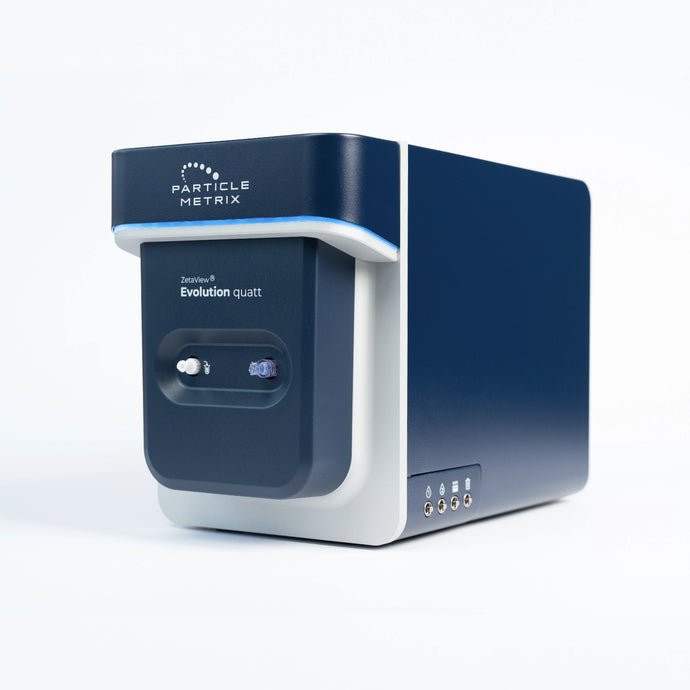
Particle Metrix’s ZetaView® systems are optimized for nanoparticle analysis in environmental research. Key features include: High-Resolution Size Measurement Concentration Analysis Zeta Potential Measurement These capabilities make ZetaView® systems an essential tool for researchers studying environmental nanoparticles.
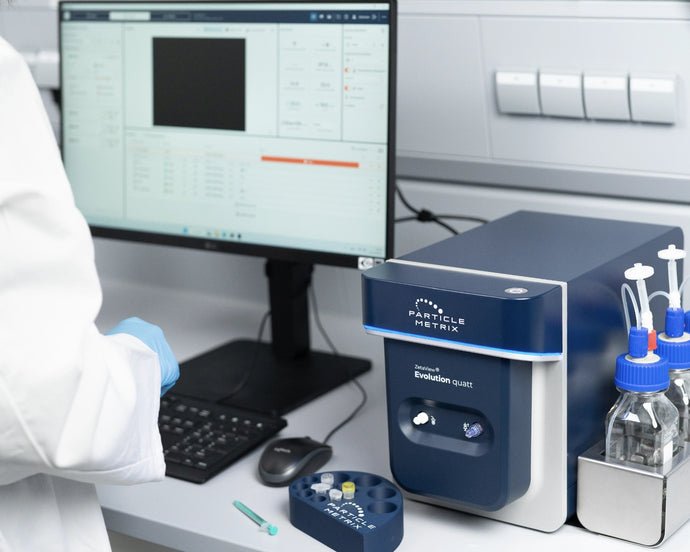
Explore the colorful nanocosmos with the new ZetaView® Evolution. Engineered for precision, it combines Size, Concentration, Zeta Potential and multi-channel fluorescence analysis in one powerful system. Sets new standards in Nanoparticle Analysis- with cutting-edge colocalization capabilities and unmatched sensitivity. Our ZetaView® Evolution Nanoparticle Tracking Analyzer defines a new standard in nanoparticle characterization. It features calibration-free Size and Concentration measurements, cutting-edge Concentration Scanning Technology, direct Zeta Potential analysis across up to 11 highly sensitive Fluorescence channels by the use of up to four different excitation lasers. Thereby our ZetaView® Evolution enables precise and detailed full sample characterization across a wide range of applications. The integrated Colocalization NTA (C-NTA) allows for simultaneous detection of biomarkers on individual particles - ideal for Extracellular Vesicle (EV) research, Virus characterization and targeted drug delivery studies. Discover the full power of multiparameter nanoparticle analysis with ZetaView® Evolution - engineered for high-performance analysis, proudly Made in Germany. - Scanning NTA for size determination via Brownian motion tracking - Calibration free size & concentration determination - Concentration Scanning Technology - Concentration range: 10^5 – 10^9 particles/ml - Zeta Potential measurement - Zeta potential working range: -500mV - +500mV - Sensitivity improved Fluorescence NTA (F-NTA) with up to 4 lasers and 11 fluorecence channels - Colocalization NTA (C-NTA): Colocalization of two fluorophores on one particle - Size range: 10 – 1000nm (sample and laser dependent) - Fluorescence sensitivity level: < 20AF488 molecules - Available lasers: 405nm, 488nm, 520nm, 640nm, 660nm - pH range: 1 - 13 New Concentration Scanning Technology: Our new innovative Concentration Scanning Technology revolutionizes nanoparticle concentration measurements. The advanced technology captures all particles by scanning the entire measurement volume. This enables: - Calibration free measurements - Direct comparability between different sample types - Direct comparability between fluorescence and scatter channels - Precise, reproducible results across a wide concentration range: 10^5 – 10^9 particles/ml Zeta Potential: Zeta Potential is the electrical potential at the slipping plane of a particle suspended in a fluid. It indicates the degree of electrostatic repulsion or attraction between particles and is a key parameter for predicting the stability of colloidal dispersions. A high absolute zeta potential (either positive or negative) suggests strong repulsive forces, which helps prevent particle aggregation. The ZetaView® Evolution can measure Zeta potential directly inside its quartz glass measurement cell – no need for disposables. F-NTA: measure up to 11 subpopulations in your sample: By using the fluorescence mode (F-NTA), more specific results can be obtained, since impurities like salt precipitates or protein aggregates do not impact the measurement result. Our ZetaView® Evolution features: - Up to 4 lasers: 405nm, 488nm, 520nm and 640nm or 660nm - Up to 11 fluorescence channels with customized filters - Improved sensitivity level: <20AF488 molecules (<10 binding sites) The ZetaView® Evolution offers flexible system configurations - mono, twin and quatt - designed to meet the diverse demands of nanoparticle research. Each configuration delivers core capabilities such as size and concentration measurement with optional enhanced features like fluorescence detection and colocalization for deeper sample insights. All optional features and lasers are also available as system upgrades any time. Whether you're tracking a single parameter or analyzing multiple fluorescent subpopulations, this comparison helps you to identify the ideal Evolution setup for your workflow. From a single-laser entry model to a four-laser, 11-channel powerhouse - ZetaView® Evolution adapts to your science. Configuration comparison (MONO / TWIN / QUATT): - Size: yes / yes / yes - Concentration: yes / yes / yes - Zeta Potential: optional / optional / optional - Fluorescence: optional / yes / yes - Colocalization: no / optional / optional - Laser: 1 / 2 / 4 - Fluorescence Channels: 1–3 / 2–6 / 4–11 Selection out of 405 nm, 488 nm, 520 nm, 640 nm or 660 nm
CATEGORY
Particle Metrix’s ZetaView® systems provide precise zeta potential measurements and multi-parameter analysis in a single run, ensuring fully comprehensive particle characterization. For accurate zeta potential measurement, the ZetaView® Nanoparticle Tracking Analyzer employs single-particle tracking. An electric field is applied to the sample, and the movement velocity of individual particles is detected. The electrophoretic mobility of each particle reflects its zeta potential. In contrast to conventional approaches, ZetaView® is not limited to a single averaged value. It additionally provides a full zeta potential distribution across all detected particles, enabling the identification of subpopulations, shoulders, or secondary peaks and revealing sample heterogeneity that might otherwise remain undetected. When operated in fluorescence mode, ZetaView® offers a globally unique capability for population-specific zeta potential measurements. This makes it possible to selectively analyze fluorescently labeled particles, such as extracellular vesicles or viruses, while excluding background particles from the measurement. ZetaView® enables precise zeta potential measurement via electrophoretic mobility tracking. It offers multi-parameter analysis, measuring size, concentration, and zeta potential in a single run, with fluorescence capability for labeled subpopulations. Key features include: Multi-Parameter Analysis Measure size, concentration, and zeta potential simultaneously. High Sensitivity & Reproducibility Accurate results even in low concentrations and complex samples. Fluorescence Integration Characterize labeled subpopulations, such as EVs and colloidal dispersions. Sample Handling & Temperature Control Ensures precise, streamlined workflows. Versatility for Complex Samples Reliable analysis of biological and synthetic particles. ZetaView® is an ideal tool for nanoparticle stability studies and in-depth characterization of colloidal systems. What types of samples can be analyzed with Zeta potential measurements? Zeta potential can be measured for all nanoparticles (e.g. extracellular vesicles, nano bubbles, nano metals) within a size range of 20 – 5000nm and a concentration range of 10⁶ – 10¹⁰ particles/ml in a buffer conductivity range of 3μS/cm – 15mS/cm. (sample and laser dependent) What are the main advantages of using Particle Metrix’s technology for zeta potential analysis? Particle Metrix’s technology enables highly precise zeta potential measurements due to the stationary layer determination. That allows zeta potential measurement excluding the influence of the electrical field induced liquid flow, like in other techniques. In addition, it offers the opportunity to measure zeta potential, size and concentration in a single measurement for an all-in-one nanoparticle characterization. How do I ensure reproducibility and accuracy in my measurements? There are several quality parameters that can be controlled before and during each measurement. For example, a small ∆SL indicates a low variation between the measurement layers and the number of traced particles informs about the statistical relevance of the result. Additionally, a consistent sample preparation and the ideal instrument settings, which we deliver during the instrument training guarantee accurate measurements. Can I analyze fluorescently labeled particles? Yes, the ZetaView® systems support fluorescence measurements, enabling the analysis of labeled subpopulations within a sample. Depending on the chosen model (MONO, TWIN, QUATT) and the number of implemented fluorescent filters, the ZetaView features the analysis of up to 10 different fluorescent channels.
CATEGORY
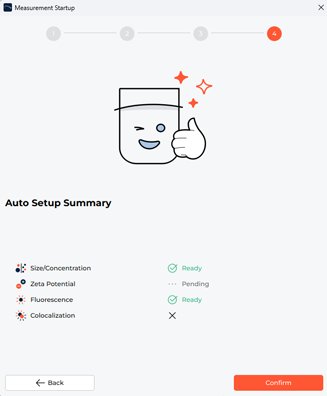
One Software. Every Parameter. Full Control. Developed for ZetaView® Evolution, ZetaSphere brings multiparameter nanoparticle analysis into one intuitive software environment. From particle size and concentration to zeta potential and fluorescence analysis, ZetaSphere guides you seamlessly through the entire measurement workflow, making even complex nanoparticle characterization easy and straightforward. Switch between excitation lasers with just one click and combine multiple measurement parameters for comprehensive characterization of your sample – all within a single software. Multiparameter Analysis Made Easy Get more information from every sample without adding complexity. With ZetaSphere, you can combine multiple measurement parameters in a single integrated workflow: - Particle size and size distribution - Particle concentration - Zeta potential - Scatter and fluorescence analysis - One-click switching between excitation lasers - Multiparameter sample characterization and reporting Live statistics provide immediate feedback on your sample and measurement conditions, helping you optimize your measurement setup before you start. From Start-Up to Results – Guided by ZetaSphere ZetaSphere is designed to make everyday measurements straightforward and reproducible – for experienced users as well as new operators. The guided start-up procedure walks users through instrument preparation and essential system checks, helping ensure that the ZetaView is ready for measurement. Predefined methods simplify routine workflows, while flexible measurement settings give advanced users the control they need for more specialized applications. After the measurement, results can be reviewed directly in ZetaSphere and exported in commonly used formats: PDF – ready-to-use measurement reports CSV – for further data processing and statistical analysis FCS – for advanced single-particle data analysis Designed for Regulated Environments ZetaSphere Compliance Feature For laboratories working in regulated environments, the ZetaSphere Compliance Feature provides additional functionality to support workflows in GxP-compliant workflows. Controlled user access, defined user roles and comprehensive audit trails help laboratories establish traceable and controlled measurement workflows. Database-based data management further supports data integrity and traceability throughout measurement and analysis. Key compliance features include: - Individual user accounts and role-based access - Configurable password and access policies - Audit trails for system and measurement activities - Database-based data storage - Traceable measurement methods and workflows One Platform for Your ZetaView® Workflow Whether you are performing a quick particle size and concentration measurement, investigating fluorescent subpopulations, working in a regulated environment or automating larger sample series, ZetaSphere brings instrument control, measurement, analysis and reporting together. More parameters. Less complexity. One intuitive workflow. Instrument and Software. Built to Work Together. ZetaView® and ZetaSphere combine measurement, analysis, and reporting in one seamless workflow for reliable nanoparticle characterization.
CATEGORY
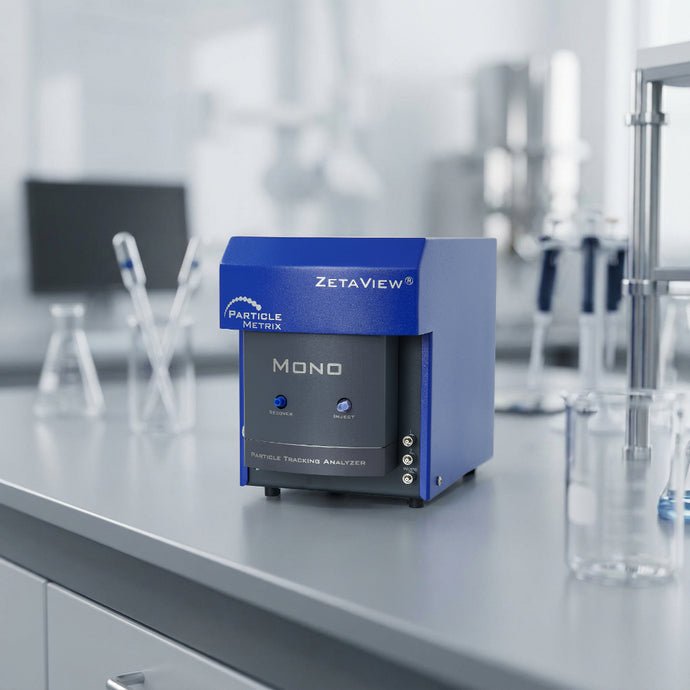
Next Generation Nanoparticle Tracking Analyzer ZetaView®x30 0x consumables 5x faster switching 10x faster cleaning 12x fluorescence channels ∞x statistics ZetaView®x30 - Nanoparticle Tracking Analyzer Biological nanoparticles such as extracellular vesicles (EVs), exosomes, viruses or virus-like particles are of growing interest in life sciences and nanomedicine. With our ZetaView® Nanoparticle Tracking Analyzers, particles in a physiological buffer can be measured individually – and you can directly watch what you measure in real time. The ZetaView® x30 represents our tried-and-trustworthy previous-generation platform — an excellent choice for laboratories working with a limited budget while still requiring reliable NTA performance. It delivers the established ZetaView® measurement quality and robustness that many users rely on. Key Features & Benefits NEW intuitive ZetaSphere software Multi-level sample analysis with just one click, predefined settings for different applications, live size and concentration statistics, complete sample reporting. Scanning NTA Automated measurements are taken at 11 positions through the sample cell, providing a thorough and robust interrogation of samples, without need for additional accessories. Fixed cell assembly design Greatly enhanced performance and less susceptibility to errors. Auto-alignment & auto-focus The optical setup is automatically optimized by the software, saving the user time preparing the instrument for use and removing subjective user input bias. Fast measurements Analysis of over 2,000 particles in as little as 60 seconds. Quick and simple cleaning Cleaning between samples requires only a quick flush. The new fixed cell design allows very quick access to the measuring cell with a bayonet lock. Compact all-in-one design Measure size, concentration, zeta potential and fluorescence with one instrument. Compatible with the laboratory environment small footprint and data files. Fluorescence analysis Fluorescence Nanoparticle Tracking Analysis (F-NTA) measurements allow interrogation of subpopulations in the sample. A sensitive CMOS camera, up to 11 selective filters, and low bleaching performance yield high fluorescence sensitivity. No high-cost consumables Just syringes and reference standards for scattering and fluorescence measurements (if applicable). No calibration Size measurements do not need to be calibrated as the method is absolute. Key Applications Our Nanoparticle Tracking Analyzer, ZetaView®x30, enables precise characterization of a wide range of bio-nanoparticles across various scientific and industrial fields. Bio-nanoparticles - Extracellular Vesicles (EVs) - Exosomes - Liposomes & Micelles - Protein Agglomerates - Viruses & Virus-Like-Particles (VLPs) - Drug DeliveryFluorescent-labelled NPs Low Concentration Samples - Nanobubbles - Nanometals - Trace Particles - Quantum Dots
CATEGORY
