Thermally Engineered Alloys HybriTherm is a highly thermally conducting, high temperature, syntactic metal composite alloy. HybriTherm combines the thermal conductivity of graphite with the mechanical properties and fabricability of metals. As a result of its unique structure, HybriTherm has 3-5X the thermal conductivity and 30-70% lower density and modulus compared to traditional nickel and iron-based superalloys. This combination of properties results in reduced weight, reduced peak temperatures, and tremendous resistance to thermally induced buckling loads and thermal shock encountered in high temperature environments. A >70% reduction in thermally driven stress is readily achieved using HybriTherm materials. Due to this unique combination of properties, HybriTherm high conductivity syntactic metal composites provide solutions to problems with manufacturing, reliability, and performance of highly thermally stressed structures, such as hypersonic vehicles, cooled engine structures, and thermal energy storage systems. Thermally engineered HybriTherm structures provides designers added degrees of freedom to manage thermal stresses, high heat loads, and localized heating while reducing weight and cost. HybriTherm composite alloys can be fabricated from a range of metals, including titanium, iron-, and nickel- based superalloys for temperatures of 650-1350C, and niobium, molybdenum, and other refractory metal alloys for temperatures of 1300-1700C+. HybriTherm metal composites exhibit (compared to metals) - Increased thermal conductivity (300-500% typical) - Reduced modulus (70-80% typical) - Reduced density (30-40% typical) - Improved damage tolerance and impact resistance In hot structure applications, these properties lead to: - Reduced metal structure temperature - Increased heat transfer – more effective cooling - Elimination of hot spots, buckling, and thermal distortion These features result in performance improvements, including: - >70% reduction in thermomechanical stresses - Reduced system density/mass (30-40%) - Ease of integration and assembly - Ease of assembly and fabrication (formable, threadable, braze/weldable, etc.) HybriTherm can be fabricated in traditional metal forms, including isogrid, L-stiffened panels, plate, rod, tube, and sheet form. It can be generally be formed similar to metals, and is easily machined, bolted, threaded, brazed, and can even be welded for assembly. Depending on the alloy, wrought, rolled, and extruded product can be readily produced, or net shape powder metallurgy or cast shapes can be produced.
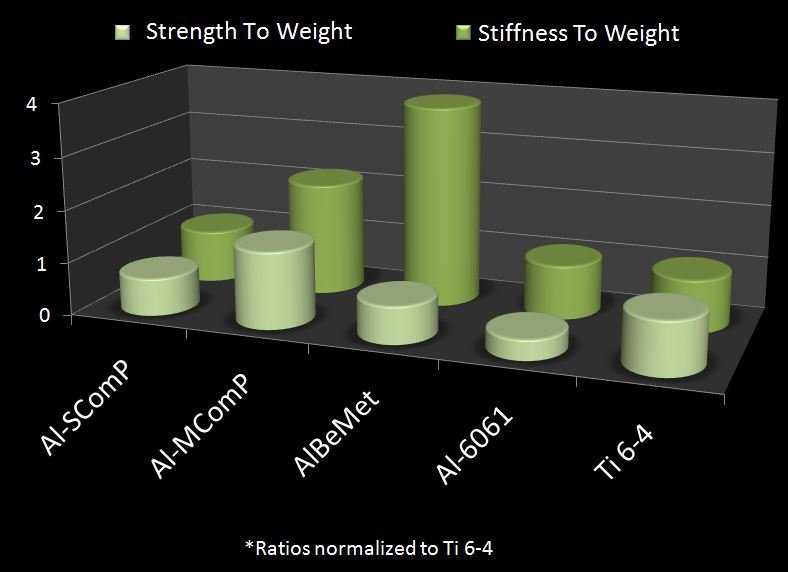
MComP is a metal matrix composite created using powder metallurgical techniques combining aluminum with two other lightweight and high specific stiffness metals—boron and lithium.
CATEGORY
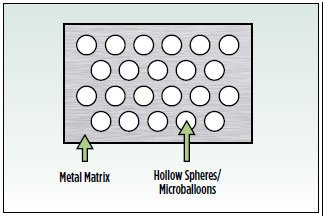
The practical response to your most demanding energy-absorption and thermal-load conditions Insalloy is a patented thermally insulating, high temperature performance, syntactic metal composite alloy. Insalloy combines the thermal properties of refractory ceramics with the mechanical properties and fabricability of metals, such as ductility and ease of attachment. Insalloy is weldable, brazeable, and boltable. Due to its unique composite structure, Insalloy has reduced thermal conductivity, thermal expansion, density, and modulus compared to pure metals— providing tremendous resistance to thermally induced buckling encountered in high temperature, structurally-demanding environments. Due to these attributes, Insalloy insulating metal composites negate the problems typically found with the creation of thermally stressed structures such as hypersonic vehicles, engines, and thermal energy storage systems. Furthermore, Insalloy composite metals can be fabricated from a range of metals, including magnesium and aluminum alloys for cryogenic applications, titanium, iron, and nickel-based alloys for temperatures of 650-1100C, and niobium, molybdenum, and other refractory metal alloys for temperatures of 1200-1700C+. In the design and fabrication of high temperature structures, designers have a choice between cost prohibitive exotic material hot structures, and complex insulated cold structures (which are both difficult to assemble and seal). Utilizing Insalloy as a structural insulator in lined or insulated systems overcomes these difficulties, along with the parasitic weight associated with traditional systems. In the case of molten salt thermal storage systems this means reduced assembly and sealing costs and extended life compared to refractory lined vessels, and also reduced insulation needs for hot structures. In applications ranging from hypersonic vehicles to cryotanks, parasitic weight is again eliminated while thermal stresses are reduced by up to 80% over other hot structure materials. Insalloy’s unique structure is a space-filling, array of hollow, micron-sized insulating microspheres embedded in a heatresistant, ductile, durable metal matrix. This lightweight structural syntactic is unique in its ability to function effectively despite the extreme thermophysical and highly corrosive properties, such as in solar salt applications. Insalloy can be fabricated in traditional metal forms, including iso-grid, L-stiffened panels, plate, rod, tube, and sheet form. As noted, it is also easily bolted, threaded, brazed, and can even be welded for assembly. Depending on the alloy, wrought, rolled, and extruded product can be readily produced, or net shape powder metallurgy or cast shapes can be created.
CATEGORY
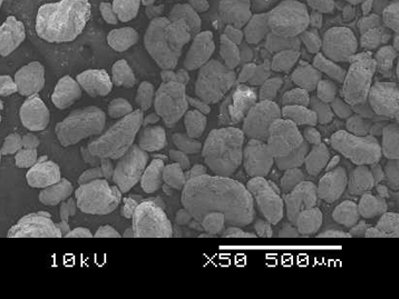
Niobium is the 41st element on the periodic table. Also known as Columbium, it is a high-performance metal used in specialty applications. Niobium's strong mechanical performance at high temperatures, up to 2,000C, has found applications for extreme temperature conditions – that include improving other alloys' temperature performance, superconducting materials, electronics, optics, and next generation aviation and space vehicles seeking to reach beyond hypersonic speeds. All niobium applications benefit from a secure and reliable source of niobium powders. Powdermet is a domestic supplier of securely sourced niobium and niobium alloy powders. Powdermet provides 25+ years of experience in powder processing and handling. Powdermet guarantees chemistry and composition of its niobium powder– low oxide and nitride impurities. A range of niobium powder particle sizes and distributions are available. Particle shape may be modified through Powdermet's proprietary and trade processing technologies. Niobium Powder Data Sheet Info Particle sizes include: - <200Mesh - <325Mesh - Inquire about other sizes and tailored distributions Shape types: - Milled – irregular - Near spherical Additionally all powders are available as tailorable alloys.
CATEGORY
Energetic composites are a class of materials that engineer the storage and release of energy. These materials can be engineered to release high amounts of stored energy, change the rate that energy is released, increase or decrease the sensitivity of a compound to shocks and impacts. Variations of these energetic composites include propellants, explosives, thermobaric, materials for hydrogen storage, battery anodes and cathodes, fuel cell components, and pyrotechnic compositions. These materials have a wide range of applications, including use in: Despite their wide range of potential markets, use of energetic materials is often limited by safety concerns associated with material sensitivity and long-term storage. Powdermet has addressed these safety concerns by developing methods to coat reactive materials with non-reactive materials and vice versa. Our processing methods allow us to tailor the performance of a material by administering the appropriate coating and energetic material formulation, and adjust/control the energy release rate, burn time, and burn temperature. The above schematic is a simplified representation of Powdermet’s novel energetic material. The core material is comprised of a reactive material (energetic) that otherwise would be unstable without applying an inert surface layer containing additives such as accelerants, binders, and/or colorants. In addition to providing stability, materials used in the outer layer allow for modification and control of the burn and energy release characteristics. The specific properties of an energetic material are dependent on the composition, particle size, surface area, and preparation techniques used to produce the final product. By adjusting these parameters, different properties can be achieved, allowing seemingly similar materials to be tailored to very specific applications. Novel energetic materials being developed by Powdermet have the potential of providing 3-4 times increase in energy-release rate compared to conventional formulations, while having a more tailored performance to the specific application, as well as decreased sensitivity and improved storage capabilities.
CATEGORY
