Carbon Nanotube Masterbatches are pre-dispersed concentrates of multi-walled carbon nanotubes in a thermoplastic carrier polymer, supplied as ready-to-extrude pellets. Each pellet contains a known weight percentage of well-dispersed CNTs in the same base polymer you intend to use in your final part — so you simply blend the masterbatch with virgin polymer to reach your target conductivity, then process on standard extrusion or injection molding equipment. The masterbatch approach eliminates the dispersion challenges, dust hazards, and lot-to-lot inconsistency that come with handling neat CNT powder in a production environment. Loose CNT powder is notoriously difficult to disperse uniformly in thermoplastic melts. Achieving full percolation requires high shear, often custom screw geometries, and careful temperature control — and even then, agglomerates routinely survive into the final part, creating localized resistivity hot spots and weak points. Masterbatches solve this with a controlled dispersion step done once at the manufacturer: - Consistent loading — every pellet contains the same CNT concentration, so blending is predictable to within ±10% of target - No agglomerates — high-shear compounding with optimized screws fully exfoliates the CNT network before pelletizing - No inhalation hazard — fiber-bound CNTs in pellet form eliminate the airborne dust risk that loose CNT powder presents in a production facility - Standard processing — the masterbatch processes on the same extruder or injection molder as the carrier polymer, with no special equipment - Faster development cycles — dial in the final loading by adjusting the let-down ratio rather than re-running compound trials Cheap Tubes supplies CNT masterbatches in five carrier polymers, selected to match the most common engineering and commodity thermoplastic applications: Polystyrene (PS): 15 to 20 wt% CNT — Antistatic packaging, EMI-shielding consumer enclosures Polycarbonate (PC): 10 to 15 wt% CNT — ESD-safe electronics housings, optical-grade conductive parts Polypropylene (PP): 15 to 20 wt% CNT — Automotive fuel-system components, conductive containers Polyamide 6 (PA 6): 10 to 15 wt% CNT — Antistatic gears, electrical connectors, structural parts ABS: 10 to 15 wt% CNT — EMI shielding for electronics, conductive automotive trim Custom carrier polymers (TPU, PEEK, POM, and bio-polymers) and custom loading levels are available on request for project work and pilot scale-up. To reach a target CNT loading in the final part, calculate the let-down ratio as: (final wt% target) ÷ (masterbatch wt%) = mass fraction of masterbatch in the blend. For example, to reach 1.5 wt% CNT in a final PP part using a 15 wt% CNT masterbatch, blend the masterbatch at 10% with 90% virgin PP. Most antistatic applications need 0.5 to 2 wt% final CNT loading; EMI shielding typically needs 3 to 7 wt%; structural reinforcement applications target 1 to 3 wt%. Applications where masterbatches make sense: - Antistatic and ESD-safe plastics — packaging, IC trays, electronics enclosures, semiconductor handling - EMI shielding plastics — consumer electronics housings, medical device enclosures, automotive sensor housings - Conductive automotive components — fuel system parts, fuel tank liners, conductive trim, anti-static body panels - Industrial conveyor and tooling parts — conductive bearings, bushings, and wear surfaces in dust-sensitive environments - Conductive films and sheets — extruded films for shielding bags and conductive flooring Every masterbatch order ships with a Technical Data Sheet listing the carrier polymer grade, CNT type and outer diameter, target CNT weight percentage, recommended processing conditions (melt temperature, screw configuration, residence time), and recommended let-down ratios for typical end-application loadings. A current Safety Data Sheet is included. Certificate of Analysis is available on request and includes the as-measured CNT loading, dispersion uniformity (verified by SEM), and Raman spectrum of the compounded pellets. Standard pricing covers 1 kg to 25 kg orders for development work. Production-quantity pricing (>100 kg) is quoted on request — we ship from Vermont and most stock orders go out within 5 business days. Custom carrier polymer formulations and custom CNT loadings are quoted with a 2 to 4 week development lead time.
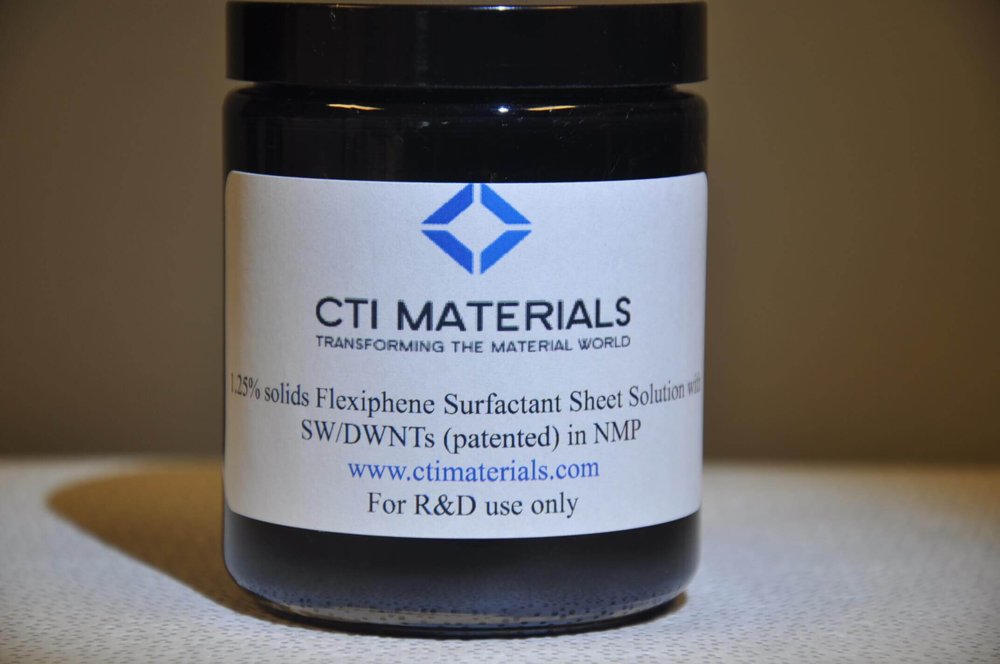
Try patented Flexiphene solvent based nanomaterial emulsions today and put the power of graphene to work in your formulations. Flexiphene is amphiphilic, tune-able by pH, sheet size, and degree of reduction. Flexiphene is transforming the material world! Contact us Today to arrange for your Flexiphene Emulsions!To Buy Flexiphene emulsions, please contact us with the solvent, materials, amount, and loading ratio you need. CTI Material’s patented Flexiphene solvent based nanomaterial emulsions are just what you need to disperse nanomaterials into solvents. Flexiphene works with SWNTs, MWNTs, and many other nanomaterials. Flexiphene are amphiphilic, tunable surfactant sheets, highly soluble in many solvents and can make colloidal dispersions of nanomaterials, stable for weeks to months. We typically work with NMP, DMF, THF, Acetone, & Ethanol solvents however many more are possible. Please contact us today and let us know what materials you require, the loading ratios, and solvents and we can quote it for you. Note- Hazmat shipping fees may apply. Prices depend on materials used and loading ratios. Flexiphene solvent based nanomaterial emulsions are transforming the material world!
CATEGORY
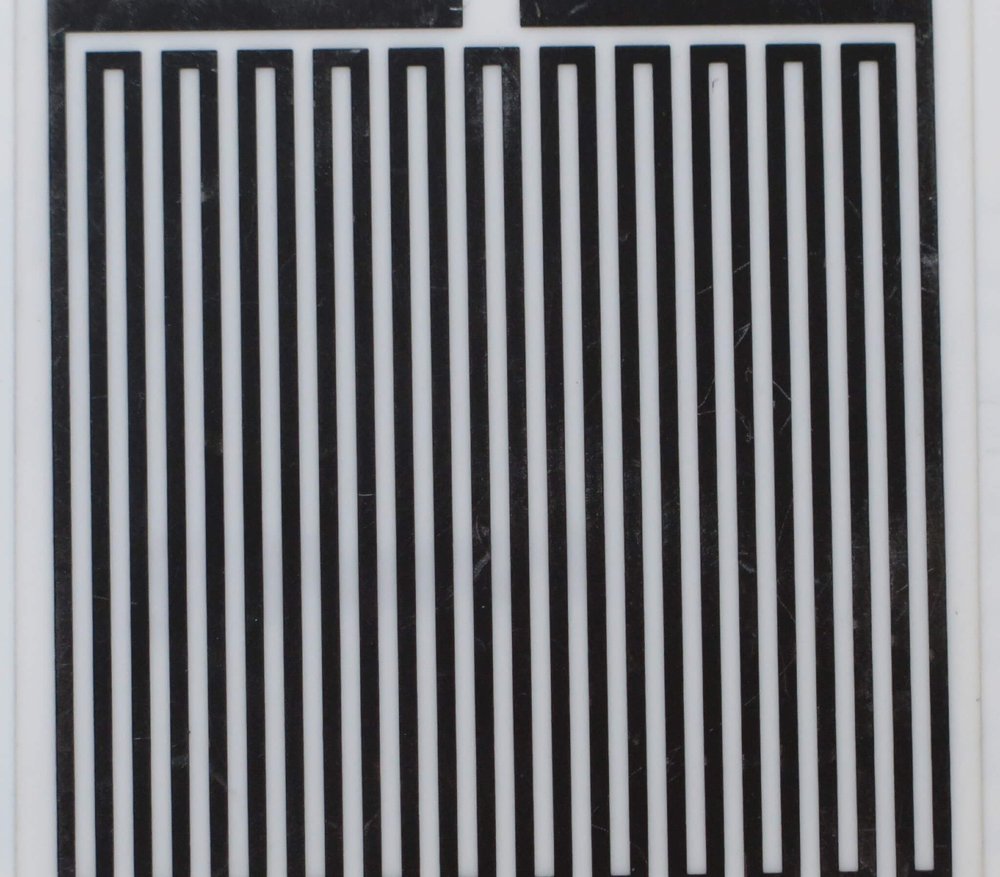
Silver nanowire (AgNW) ink is the leading solution for transparent conductive electrodes (TCEs) that require both high conductivity and optical transparency. At loadings that achieve sheet resistance below 10 Ohm/sq, AgNW films maintain optical transmittance above 85% — performance that rivals ITO at a fraction of the cost and with far superior flexibility. Unlike ITO, silver nanowire electrodes do not crack under bending, making them essential for rollable displays and conformable biosensors. Cheap Tubes synthesizes 30 nm outer diameter silver nanowires in-house at our Vermont facility, giving us direct quality control over aspect ratio, concentration, and lot-to-lot consistency — shipped at 25 mg/mL in isopropanol (IPA). Cheap Tubes supplies silver nanowire ink for transparent electrode applications in touch screens, OPV, and flexible electronics. Both ink types are formulated for compatibility with screen printing, gravure, flexographic, and inkjet deposition methods. Silver nanowire ink is the choice when optical transparency is required alongside low sheet resistance.
CATEGORY
Try patented Flexiphene Surfactant Solutions today and put the power of graphene to work in your formulations. Flexiphene is amphiphilic and compatible with water, solvents, and many other host matrices. To Buy Flexiphene, please contact us with the amount and loading ratio you need. Standard concentration is 2mgs/ml. Flexiphene is transforming the material world! CTI Material’s patented Flexiphene aqueous nanomaterial emulsions are just what you need to disperse nanomaterials into aqueous solutions. Flexiphene works with SWNTs, MWNTs, GNPs, and many other nanomaterials. Flexiphene are amphiphilic, tunable surfactant sheets, highly soluble in many solvents and can make colloidal dispersions of nanomaterials, stable for weeks to months. We typically work with Di Water and can modify the solution if required. Please contact us today and let us know what materials you require, the loading ratios, and solvents and we can quote it for you. Prices depend on materials used and loading ratios. Flexiphene aqueous nanomaterial emulsions are transforming the material world!
CATEGORY
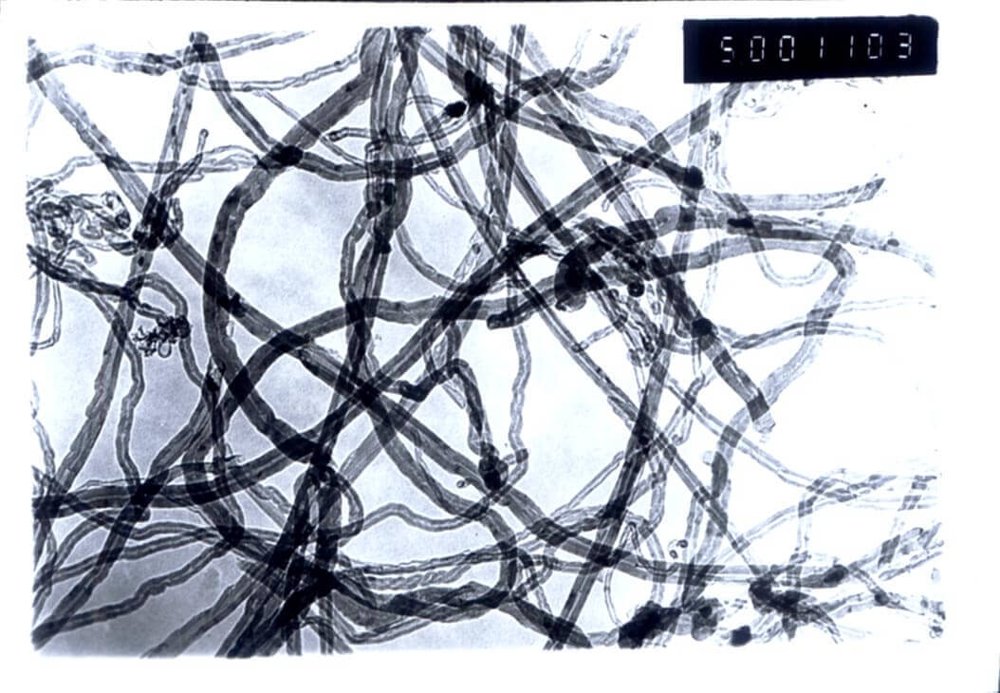
Amine | -NH₂ | Basic, highly water-dispersible; reacts with COOH, epoxides, aldehydes | Drug delivery, biosensors, crosslinked epoxy composites Amine (-NH2) groups are introduced via diamine coupling to -COOH and provide direct bonding to epoxy resins and conjugation chemistry to biomolecules via standard NHS/EDC coupling. -COOH and -NH2 functionalized MWCNTs are the standard substrates for biomolecule conjugation... use glutaraldehyde or NHS-PEG-NHS linkers between -NH2 surfaces and amine-bearing biomolecules. For dispersion in aqueous biological or analytical applications, -COOH and -NH₂ groups provide colloidal stability through electrostatic repulsion (high negative or positive zeta potential) without requiring surfactants that would need to be removed in downstream processing. This makes functionalized CNTs the preferred choice for drug delivery systems, biosensors, and diagnostic conjugation chemistry.
CATEGORY
