By ELIRI
Microwires with semiconductor and semimetal wires have a number of features compared to massive semiconductor crystals. This is due to the high speed of casting of these microwires and allows 2-3 times to expand the mutual solubility of the components of solid solutions, and also to obtain crystals that are not synthesized at all by conventional methods, which makes it possible to create fundamentally new microconverters on their basis. They have unique properties: linear magneto-resistance in weak fields, high coefficient of thermopower. etc. Due to the micron diameter of the core (up to 0.2 [Jm), commensurate with different characteristic lengths of semiconductor and semimetallic materials, such microwires are unique objects for the study of classical and quantum dimensional effects. Possible applications are galvanomagnetic elements and converters; converters of electrical and non-electrical quantities; thermoelectric converters (thermocouples, micro-refrigerators); infrared and hard radiation detectors; Germanium optical fibers for the transmission of information in the infrared range. Core material Bi, Sb Bi 1-x-Sb x InSb 1-x-A (A:InBi, Ge, NiSb, Bi)Bi 2 Te 3 Sb 2 Te 3 d, μm is the diameter of the core 0,2 - 100 10 - 100 20 - 70 10 - 100 D / d L, m 1 - 10 1 - 100 Specific resistance, ρ, Ωm(1 - 2) 10-7(1 - 500) 10-5(2 - 10) 10-6 Thermoelectromotive force, V / s 80 - 100--150 ÷ +180 Magnetic sensitivity, R / R (B = 3T)1 - 3 3 - 7-
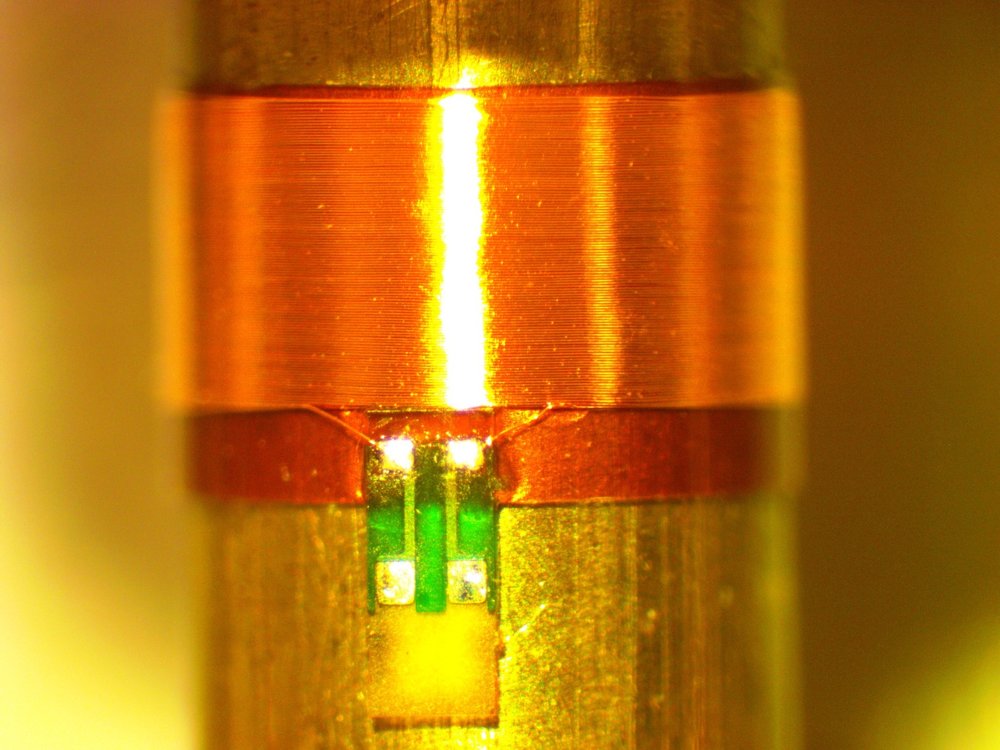
We develop micro-winding technologies for ultra-small coils with ≤10 μm wires with magnetic /non-magnetic cores / coreless with diameter of ≥ 75 μm; Various shapes, geometries (1D, 2D, 3D, flat, coreless, helical, etc.); Measuring the external environmental parameters in harsh conditions, such as high humidity, low/high temperatures, pressure or even radiation; Capabilities for batch and high – quantity production. We can adjust the technology upon the requirements of the customer. Technological possibilities: - The minimum wire diameter is 5 μm (various insulations: Polyimide, Glass, PTFE (teflon), Polyvinylbutyral, etc. - Possibly integration of cores for various magnetic improvements - Coreless microcoils with various shapes - We provide the possibility to plant the coils on transistor pinouts for further integration into electronic circuits - There's the possibility to solder to the coils on PCB's for further integration into electronic circuits (RoHS and REACH compliant) - Other possibilities are placing the microcoils on various shaped potcores. Further fine tuning is possible for high frequency applications. - Quantity range - from 1 piece to millions of pieces!
CATEGORY
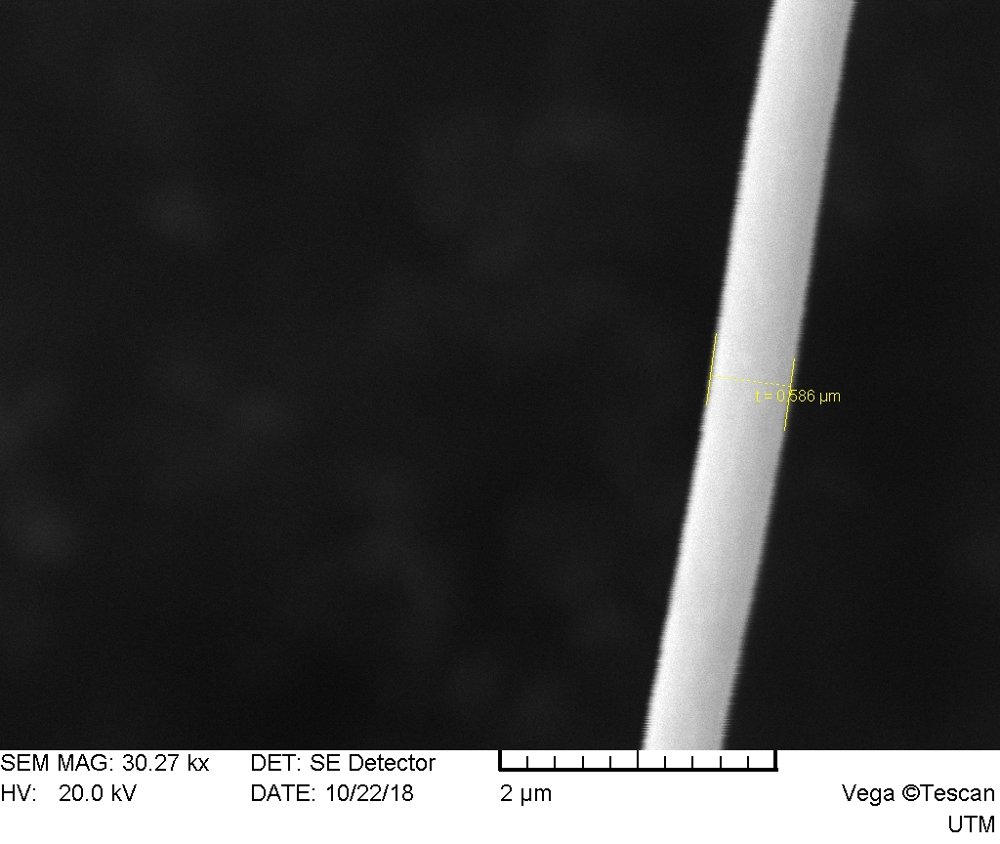
What is a nanowire? Nanowires are small-diameter wires for manufacturing windings of electric micromachines, measuring coils and control devices. Nanowires are obtained from various metals and alloys: conductive, resistive, magnetic, semiconductor, with their simultaneous coating by glass insulation, with a diameter of less than 1 μm, including precious materials (Au, Pt, Ag, etc.). The use of nanowires - non-electric measuring transducers (temperature, pressure, speed, force, mass, etc.); - inductive converters; - transformers, motor windings; - complexes of filamentous nanostructures; - electrodes. DIAMETER OF MICROWIRES LESS THAN 1 micro m
CATEGORY
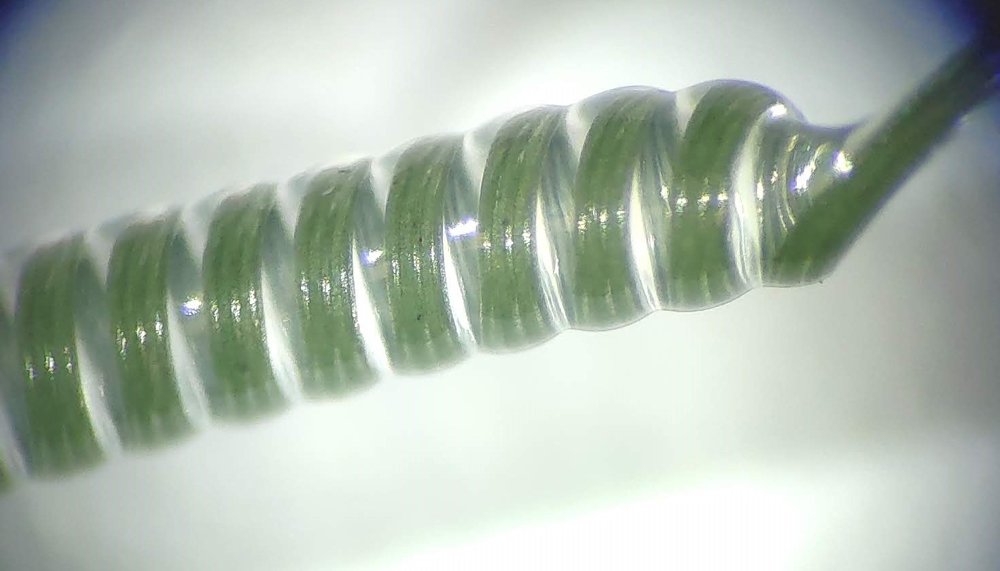
Sensors and micro coils • We develop micro-winding technologies for ultra-small coils with ≤10 μm wires with magnetic /non-magnetic cores / coreless with diameter of ≥ 75 μm; • Various shapes, geometries (1D, 2D, 3D, flat, coreless, helical, etc.); • Measuring the external environmental parameters in harsh conditions, such as high humidity, low/high temperatures, pressure or even radiation; • Capabilities for batch and high – quantity production. We can adjust the technology upon the requirements of the customer.
CATEGORY