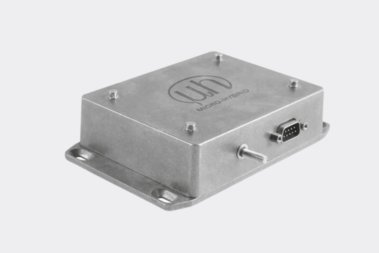
By Micro-Hybrid Electronic GmbH
NDIRsim App NDIRsim app | DIG1000 Browser-based app for easy simulation of NDIR setups in the pre-development phase - Browser-based simulation for NDIR gas measurement - Physical model based on Beer-Lambert law - Use of the HITRAN database as a scientific reference - Direct calculation of absorption, filter overlay, and characteristic curves - Platform-independent (Chrome, Edge, Firefox – no additional software required) from 49,00 € Available Plus Taxes Plus Shipping Description The NDIRsim app is a browser-based simulation tool for the development and optimization of NDIR sensors - installation and administrator rights are not required. Based on the Beer-Lambert law and the HITRAN database, it enables realistic modeling of gases as well as real-world conditions such as pressure and temperature. . For spectrum simulation, you can select the desired wavelength or wavenumber range and define the resolution via sampling points - depending on your needs, either for fast calculations or highly detailed spectral analyses. Filter parameters such as CWL (or alternatively CWN ), HBW, and transmission can be applied directly to the calculated line spectrum and evaluated immediately. . This allows you to visually verify whether the filter bandwidth is optimally chosen, whether there is sufficient baseline on both sides of the target absorption band, and whether potential interfering gases need to be considered. . In addition, NDIRsim simulates optical path lengths and concentration ranges to derive absorption curves and calibration points - displaying absorption (%) as a function of concentration to enable targeted optimization of the measurement range. . For a quick start, predefined Micro-Hybrid standard IR filters are available and can be used directly in the simulation. . To support realistic sensor design studies, NDIRsim allows you to define the maximum concentration of your target gas in vol.-% and convert common ppm values using a simple reference formula. This way, you can reliably identify suitable spectral ranges for measurement and reference channels. . A comprehensive tutorial for the app can be found here: NDIRsim tutorial
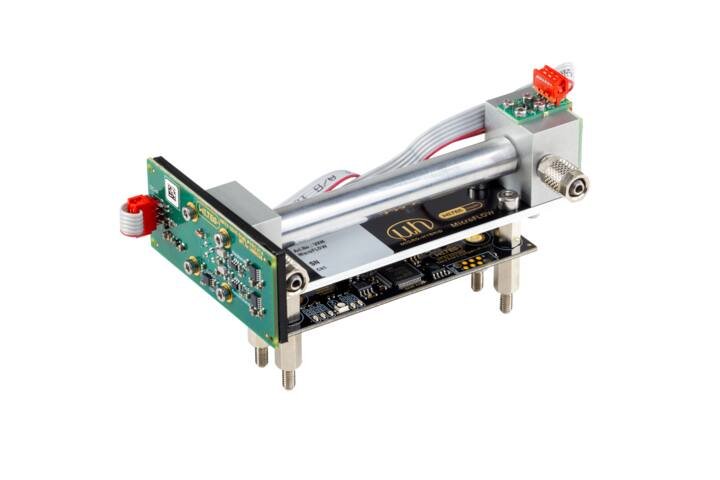
Our sensor modules, consisting of highly developed inertial and gas sensors, offer precise and reliable solutions for a wide range of measurement and analysis requirements in demanding applications.
CATEGORY
The gas sensors from Micro-Hybrid offer precise and reliable measurement solutions for NDIR gas analysis and impress with their durability and adaptability.
CATEGORY
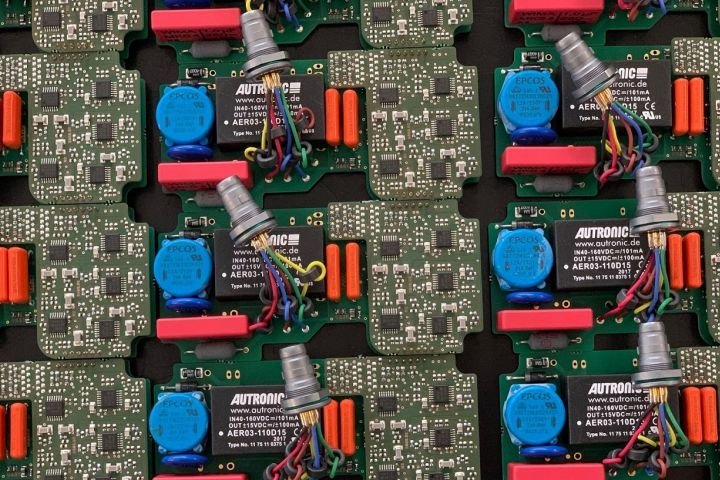
Convenient solution for the demand of small volumes offered by Micro-Sensor. Within an average 30 years’ service life of a piece of rolling stock safety requirements for rail traffic are changing. Operators must upgrade their fleets with latest sensor technology to ensure safety standards. For this so-called retrofit, often only a small number of sensors is required. Micro-Hybrid offers a convenient solution for this case and also for prototype construction or field tests. They deliver acceleration and rotation rate sensors in small series starting, e.g. 50 pieces. Micro-Sensor also develops reliable and durable sensor solutions for OEM projects with small quantities and act as your international expert in railway applications. With more than 20 years of experience and established technologies, Micro-Sensor is a specialist for inertial sensors in the regular service and develops sensors to be used in applications in harsh environments like heat, sand and a lot more. The production processes allow manufacturing of even small series. The sensors are produced modularly and adapt all necessary steps to the individual customer requirements. This decisive advantage is enabled by the deep value chain (PCB assembly, packaging, calibration) and the broad technological expertise in the corporate group of Micro-Hybrid and Micro-Epsilon.
CATEGORY