By iGii
The results showed that Gii-based sensors had lower impact than both gold and carbon-based alternatives in almost every category. These results are consistent across all three sensor types modelled: a lateral flow-style sensor, a test strip-style sensor, and a test strip-style sensor with housing. Fossil resource use was 31% to 90% lower than alternatives Metal and mineral resource depletion was between 74-314% lower Gii-based sensors showed 30% to 89% lower climate impact, depending on sensor format Water impact was up to 635% lower in some cases The report attributes these results to Gii's simplified production method. Gii is manufactured using only a substrate and electricity, with no mined metals, chemical additives, or high-temperature processing. This avoids several of the most resource-intensive and emissions-heavy steps found in traditional material production.
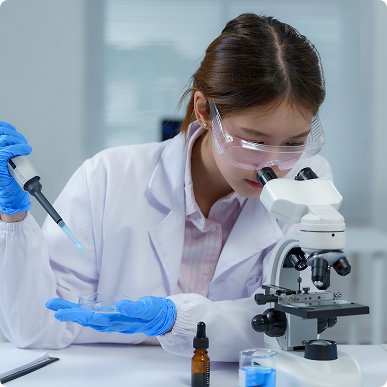
As iGii moves deeper into health and diagnostics, biocompatibility has become a major focus. Many advanced materials perform well in the lab but struggle in clinical settings. Alongside its high electrochemical performance and scalability, Gii now has a safety profile to make it a compelling choice for use in diagnostic devices that interact directly with the body. Tested to the highest standards Over 18 months, Gii underwent a full ISO 10993 biocompatibility programme. The work was carried out by an independent, certified CRO under Good Laboratory Practice. Nine separate studies assessed the material across a range of biological interactions from short-term exposure to long-term implantation. Every test was passed. No additional mitigations were required. Gii is biocompatible. - Toxicological risk assessment (ISO 10993-17) - Extractables and leachables analysis - In vitro cytotoxicity (elution method) - Skin irritation and sensitisation - Subcutaneous implantation - Systemic toxicity (14- and 28-day exposure) No toxicity. No sensitisation. In both in vivo and in vitro models, Gii showed no adverse biological effects. There were no signs of irritation, no allergic responses and no cytotoxicity. Sub-chronic exposure caused no histopathological changes and no observable harm. This provides confidence for applications involving direct contact with the skin, mucosa or internal tissues including wearables, point-of-care diagnostics and implantable formats. Chemically clean by design Biological compatibility depends on how a material interacts with cells as well as what it contains. Many carbon-based materials rely on solvents, catalysts or binders that can leach out and cause harm. Gii is different. Its electrically powered process requires no chemical inputs, no heavy metals and no secondary purification. There are no reagents involved at any stage. Minimal extractables. No leachables. To verify chemical safety, we carried out a full extractables and leachables (E&L) study under ISO 10993-12 and 10993-18. This included exposure to polar, non-polar and semi-polar solvents to simulate a range of biological environments. No compounds were detected above threshold levels. Trace elements were present at levels far below clinical concern. An independent toxicological risk assessment confirmed that Gii poses no toxicological risk under intended use. Clinically aligned. Commercially ready. Biocompatibility removes a major barrier to real-world application. It supports regulatory submissions and shortens product development timelines. It also enables the safe use of Gii in emerging diagnostic formats that require direct or repeated contact with the body. This includes wearable sensors, saliva-based diagnostics, veterinary tools and implantable biosensing systems.
CATEGORY
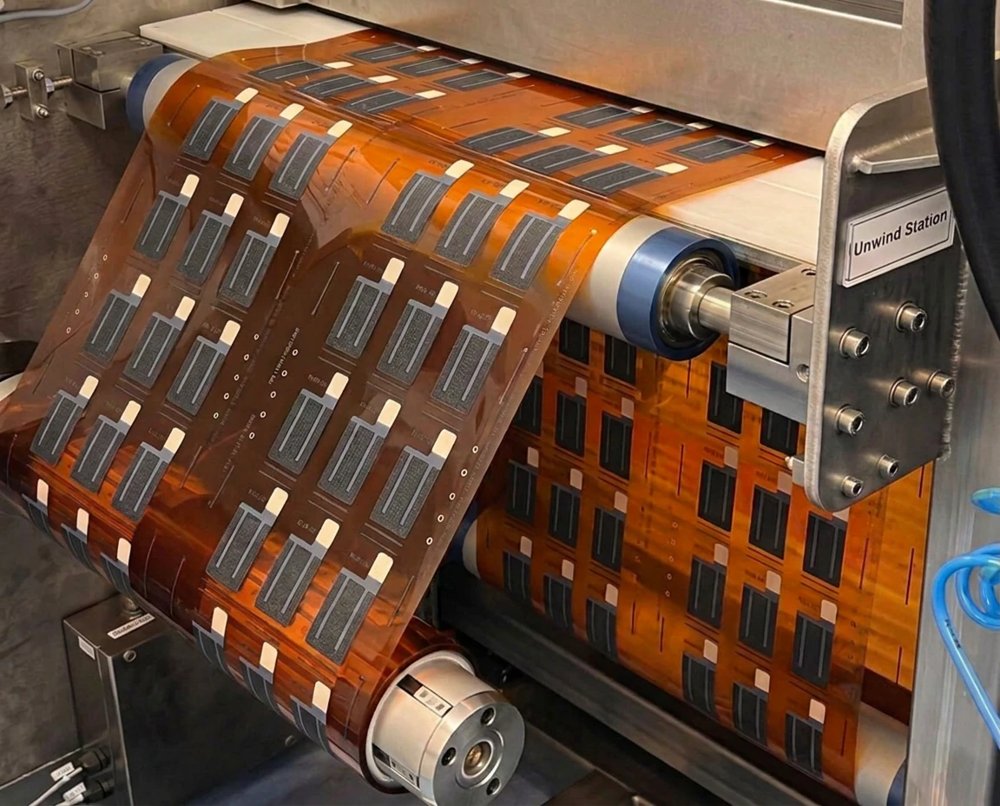
Match or exceed industry-standard performance through continuous reel-to-reel manufacturing without online curing. Industry-standard performance - Match or exceed leading printed battery technologies. No online curing - Continuous reel-to-reel production with maximum line efficiency. Manufactured for the real world - Lower energy. Efficient production. Higher throughput. No online curing. No compromise on performance. We remove the curing step from the production line - unlocking higher throughput, lower energy use and a simpler, more sustainable way to manufacture printed batteries. Gii flexible printed electrodes: - Continuous reel-to-reel production - No online curing required - Maximum line speed and utilisation - Lower energy requirements - No thermal bottlenecks - Simpler process, less waste Chemistries. Optimised performance for a range of battery chemistries. High surface area electrodes. Gii 3D porous pure carbon foam delivers high capacity and fast charge transfer in thin formats. Sustainable by design. Solvent-light printing on flexible substrates with less waste and energy. Built to integrate. Formats and substrates designed to drop into your existing cell build. Reliable in use. Consistent performance across bending, cycling and real-world duty. Industrial scale. Repeatable quality. Our roll-to-roll manufacturing process enables high-volume production with consistent performance across every batch. Scalable - Built for high-volume production. Consistent - Tight process control and QA. Reliable - Tested for performance and durability. Integration ready - Designed to work in your systems.
CATEGORY

High power density in a printed, flexible electrode. Grown on flexible substrates and patterned to arbitrary geometries, so the cell follows the industrial design. The same 3D porous carbon structure serves as a current collector for printed cells and as a high power density supercapacitor electrode. A binder-free, highly conductive porous structure removes the metal foil and the mass that comes with it. Gii electrodes support thin printed cells and high-power supercapacitors, so designers can shape the energy store around the enclosure.
CATEGORY

A printed electrode built for inlay converting Inlay-thin and flexible Grown directly onto flexible film, so the cell laminates into the inlay rather than sitting proud of it. Burst current on demand Supercapacitor formats supply the current peaks needed for transmission and sensing without oversizing the cell. Reel-to-reel compatible Produced on iGii's UK roll process, so electrode supply scales with inlay volumes.
CATEGORY
