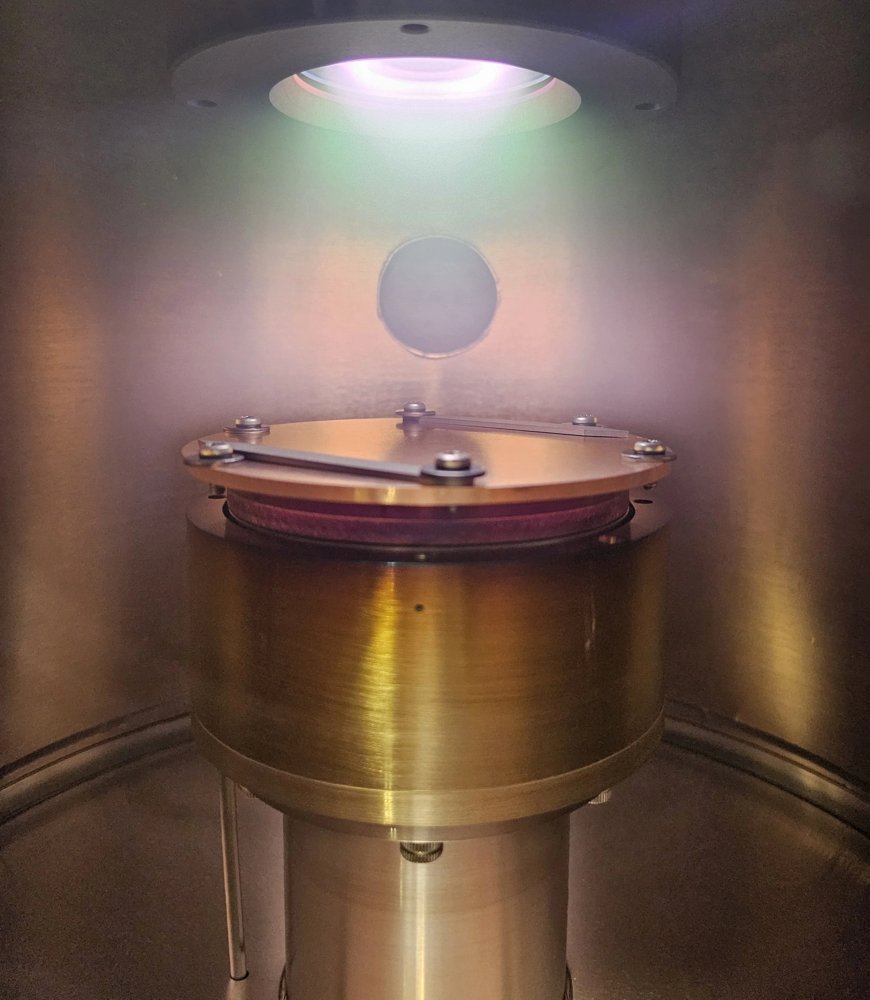
The AJA Educational Series system has been designed in collaboration with educators. It is accessible, technically and financially, with simplicity and low cost of operation while focusing on its role as a learning tool. Its manual modes of operation provide a hands-on experience in managing vacuum and vacuum-based processes. Key Features Magnetron Sputtering and RF Bias Etch: The system features an RF powered, 2" magnetron (ST20) facing a water-cooled stage. RF power allows the widest range of materials - both conducting and insulating - to be used as sputtering targets. This target size is the most common and provides many low-cost options. This gives students access to the widest range of materials to explore by a simple target exchange. Samples up to 2" in diameter can be mounted by a clamp ring, while smaller samples are conveniently secured by mounting clips. The same stage and power supply can also be utilized as a platform for exploring plasma-based etching. The concepts of plasma formation and dynamics such as self-bias can be demonstrated. The resulting sample ion bombardment which leads to beneficial surface effects can readily be demonstrated and investigated. Applications such as surface sputtering for material removal and surface activation can be observed and studied. Multiple windows and internal lighting provide clear views of components and plasma during operation. RF Power Supply: A 100 W RF power supply with auto-tuning network provides power for both the sputter gun and RF stage bias. The concepts of RF power delivery and impedance matching as well as the effects of input power can be shown. Manual adjustment of these parameters provides the opportunity to explore the impact of the power delivery configuration. Residual Gas Analyzer (RGA): Insight into the vacuum environment is key to controlling many processes. An optional RGA allows students to gain insight into the composition of the vacuum gas after pump-down. The evolution over time of important residual components such as water vapor, the detection of leaks via oxygen or probe gases such as helium, and the outgassing of detrimental species such as hydrocarbons from in-vacuum materials can be taught and quantified. The RGA allows visualization of these important aspects of vacuum science and technology. Vacuum System: A 9.75" ID chamber, 11" high, allows for the introduction of a wide variety of samples through a simple hinge-mounted top lid which provides access to the entire vacuum volume. Pumping can be done either in auto-mode or manually via a combined diaphragm and turbomolecular pump combination. Manual mode allows the step-by-step introduction of pumping technologies, so that students can understand the ranges and limitations of various pumping and valving configurations. A manual butterfly valve provides variable throttling at the pump orifice, which can be operated in conjunction with the process gas valve to control the process pressure. A prominently mounted digital pressure gauge provides real-time feedback and monitoring of pressure changes due to user actions. The configuration also permits vacuum science phenomena to be taught and demonstrated, in addition to thin film studies. Pump-down curves can be generated to teach the impact of component configuration on pumping speed. Students can get hands-on experience in maintaining a vacuum system. Facilities: The Educational Series system is designed for easy set-up and installation in any facility. The system has an air-cooled heat exchanger with closed-loop water cooling, avoiding the need for coolant line input. The system is powered through a standard 110 V power cord (15 A). The only gas facility required is a process gas bottle (typically argon) and regulator. Otherwise, the system is monolithic and mounted on wheels with casters (approximate footprint 30" W × 36" D × 60" H) to allow it to easily be located and run in any classroom or lab location. Safety interlocks for power, vacuum and cooling water status protect the system and users. The AJA Educational Series delivers a comprehensive platform for hands-on learning in vacuum science and thin film deposition. Designed with educators, it provides an accessible, cost-effective solution for introducing students to the fundamentals of magnetron sputtering, plasma processing, and vacuum technology. Built around a robust, user-friendly design, the system supports RF-powered deposition and etching on substrates up to 2" in diameter, making it ideal for training in a wide range of materials. With optional analytical tools like a Residual Gas Analyzer (RGA), clear chamber visibility, and manual operation modes, it offers a deep understanding of vacuum processes and film formation. The Educational Series is a powerful tool for preparing students and technicians for careers in semiconductors, optics, MEMS, nanotechnology, and more.

Orion and ATC Sputtering Deposition Systems Key Features of the Orion and ATC Sputtering Systems For Spintronics Magnetron Sputtering Sources: AJA International offers the best sputtering performance in the industry for magnetic materials used in spintronics devices. Each system offers configurations for mounting several magnetrons, in either sputter up or sputter down configurations. The ATC Series can support up to 13 guns in combinations of confocal, direct, and off-axis sputtering geometries for exploring large material spaces. The guns feature integral gas injection rings for local process gas delivery. Ultra-High Vacuum (UHV) Design: As film purity is critical in this application, the systems are engineered to achieve base pressures ranging from the low 10⁻⁷ Torr to the low 10⁻¹⁰ Torr regime. Systems can be constructed using all-metal seal vacuum chambers, and in-house manufactured bakeout jackets are available for thorough vacuum conditioning and system degassing. Power Supply Options: DC, pulsed DC, RF and HiPIMS supplies can all be configured into the system. AJA's standard Phase II-Au control system will accommodate up to (5) DC power supplies with integral 4-way switchboxes, (4) RF power supplies, and (1) 4-way RF switchbox. This allows maximum flexibility for sequential or co-deposition from a large selection of sputter guns so that new material systems can be rapidly developed. Substrate Holder: The substrate holder is highly configurable, supporting sample sizes ranging from small coupons to full wafers up to 6" (Orion) or 12" (ATC) diameter with excellent film thickness uniformity. Available functionalities include high-temperature substrate heating (up to 800–1,000 °C), cryogenic or water-based cooling (LN₂ or H₂O), azimuthal rotation for uniform film growth, motorized Z-axis motion, and RF/DC substrate biasing for advanced process control. Process Gas Delivery: The system supports up to four mass flow controllers (MFCs) for precise regulation of process gases. Typical gases used in epitaxial deposition include Ar, O₂, and N₂, allowing for a wide range of reactive and inert sputtering processes. A gas ring can be provided at the substrate for reactive deposition of oxides and nitrides. Deposition Recipe Generator: The software makes it simple to create and store up to 100+ recipes for depositing layer stacks. It is easy to write extensive recipes, and the Excel spreadsheet layout allows line by line layer stacking and review of recipes for accuracy and data extraction if needed. Recipe operation automates the entire deposition process, with auto-abort in case setpoints fail to be reached. Our AJA Excel Spread Sheet Software Emulator makes possible remote recipe creation offline from the system for later import and execution. Nanometer-Precision Film Thickness Control: An optional quartz crystal monitor and controller allows calibration of deposition rates. High-stability power supplies provide precise, repeatable deposition rates, while recipe-driven automation ensures accurate, repeatable process execution. Vertically Integrated System Design: AJA International manufactures many of the components in the systems. This ensures compatibility and quality, while controlling tool costs. This also speeds up service and provides long service life for the systems.
CATEGORY
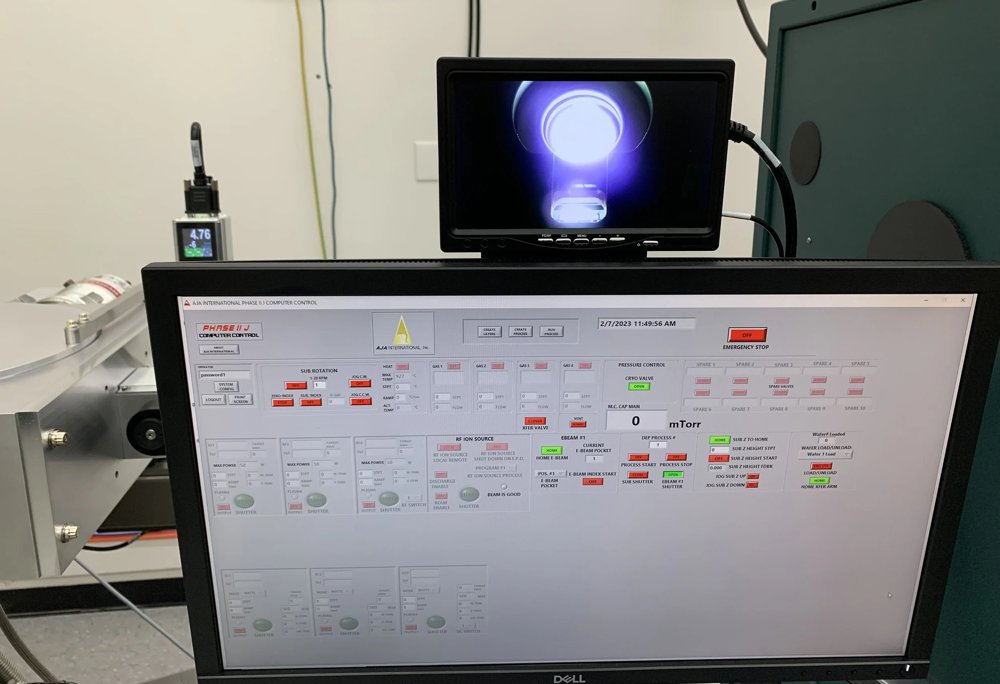
Phase II-Au Computer Control The AJA LabVIEW based Phase II-Au computer control system is used on all Evaporation Systems.This straightforward, user friendly control system utilizes a large 22” articulating screen with wireless keyboard and mouse. The back panel of the hardware module is populated with connectors to interface to all aspects of the sputtering system and to allow for easy future "plug and play" upgrades/expansions. The Phase II-Au control system allows the user to operate in either the “manual mode” or the “automated processing mode.” In the, “automated processing mode” the user designs "process layers” which are then compiled and saved as a “process” to be executed with a single command. The system allows up to 104 unique user entry points which are accessible only by password, limiting access to a user’s process layers and thereby preventing unexpected corruption of a user’s saved processes.Special “soak layers” can be easily incorporated into the process. Adjustable time base Data-logging to a Microsoft Excel spreadsheet is standard.Remote preparation of new processes in a Microsoft Excel spreadsheet emulator format is available as an option. The standard Phase II-Au control system will accommodate up to (3) DC power supplies, (3) RF power supplies, (1) 4-way DC switchbox, (1) 4-way RF switchbox,(1) DC Ion Source, (1) RF Ion Source, (1) Linear or Rotary Ebeam, (1) Deposition Controller,automatic selection of sweep pattern based on material, (4) process gases,(24) Valves/shutters, down stream closed loop automatic pressure control, substrate rotation,substrate tilting and indexing and substrate temperature control. Processes are aborted if plasma is not detected,substrate temperature, process gas or chamber pressure is out of range.
CATEGORY
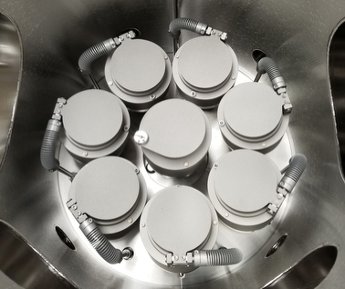
AJA International systems offer configurations for mounting several magnetrons, in either sputter up or sputter down orientation. The Orion series can mount up to 8 guns. Co-deposition with up to 9 power supplies gives access to an extensive compositional space in creating alloys. A central substrate-facing port can also house in-situ probes for real-time monitoring and analysis. Our guns feature integral gas injection rings for local process gas delivery. The substrate holder is highly configurable, supporting sample sizes ranging from small coupons to full wafers up to 6” (Orion) or 12” (ATC) diameter with excellent film thickness uniformity. Available functionalities include high-temperature substrate heating (up to 800–1,000° C), cryogenic or water-based cooling (LN₂ or H₂O), substrate rotation for uniform film growth, motorized Z-axis motion, and RF/DC substrate biasing for advanced process control. We also offer a combinatorial chemistry deposition retrofit for Orion systems, which mounts on the central sample-facing port of the gun flange. The upgrade adds high-throughput experimentation capability to existing tools. Our systems are engineered to achieve base pressures ranging from the low 10⁻⁷ Torr to the low 10⁻¹⁰ Torr regime. Systems can be constructed using all-metal seal vacuum chambers, and in-house manufactured bakeout jackets are available for thorough vacuum conditioning and system degassing.
CATEGORY
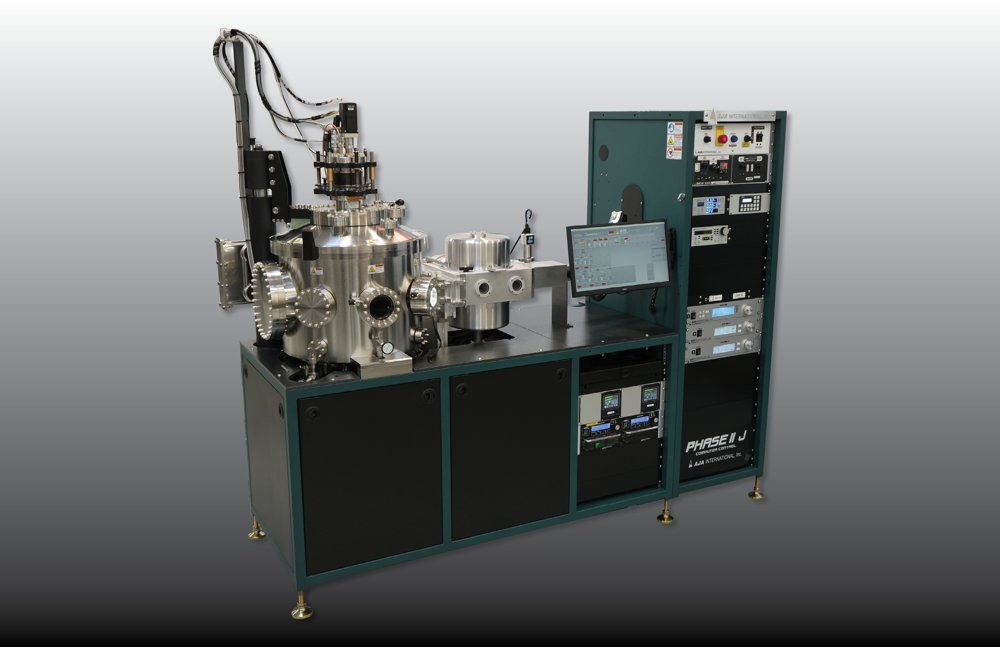
AJA International systems offer configurations for mounting several magnetrons, in either sputter up or sputter down orientation. The ATC Series can support up to 13 guns in combinations of confocal, direct, and off-axis sputtering geometries for exploring large material spaces. Co-deposition with up to 9 power supplies gives access to an extensive compositional space in creating alloys. A central substrate-facing port can also house in-situ probes for real-time monitoring and analysis. Our guns feature integral gas injection rings for local process gas delivery. The substrate holder is highly configurable, supporting sample sizes ranging from small coupons to full wafers up to 6” (Orion) or 12” (ATC) diameter with excellent film thickness uniformity. Available functionalities include high-temperature substrate heating (up to 800–1,000° C), cryogenic or water-based cooling (LN₂ or H₂O), substrate rotation for uniform film growth, motorized Z-axis motion, and RF/DC substrate biasing for advanced process control. Our systems are engineered to achieve base pressures ranging from the low 10⁻⁷ Torr to the low 10⁻¹⁰ Torr regime. Systems can be constructed using all-metal seal vacuum chambers, and in-house manufactured bakeout jackets are available for thorough vacuum conditioning and system degassing.
CATEGORY
