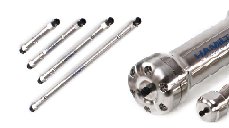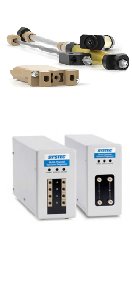
Degassers improve fluidic instrument precision and reliability by removing dissolved gases from fluids before they outgas and form problem causing bubbles. Three main types of bubble removing products are available. AF based degassers offer the widest range of chemical compatibility and are used to eliminate retention shifts and baseline fluctuations. Silicone based degassers offer the highest flow rate capabilities for water based systems such as diagnostic and life science instrumentation to improve dispense accuracy and reliability. Poridex based products provide rapid bubble remove for locations where bubble introduction cannot be avoided. DEBUBBLERS DEGASSING SYSTEMS Debubblers Remove Bubbles, Dissolved Gas, or Both! Dissolved gases and bubbles in system liquids cause dispense volume anomalies in many instruments, negatively affecting both dispense precision and analytical accuracy. Now you have a choice of components for actively removing bubbles with or without also removing dissolved system gases. Online Vacuum Degassing offers operating convenience, high efficiency and low operating costs compared to other common degassing technologies. Debubbler/Degasser Combines Vacuum Degassing with Active Bubble Removal - Improves instrument performance — reduces downtime due to bubble formation. - Fewer false positives due to reduction of partial reagent dispenses. - Easily integrates into any pump, degassing tray, or stand-alone degassing application. - Designed for use with water based solutions with no surfactants. Active degassers are recommended for other solutions. Active Debubbler Remove Bubbles in Fluid Stream Before or After the Pump - Improves instrument performance — reduces downtime due to bubble formation. - Fewer false positives due to reduction of partial reagent dispenses. - Easily integrates into any pump, degassing tray, or stand-alone degassing application. Transfer-Line Degasser Removes Dissolved Gases During Fluid Transfer - Eliminates baseline fluctuations for improved detector sensitivity. - Coaxial design reduces number of connections, improves reliability. - Single lumen design increases degassing reliability. APPLICATION NOTE Liquid handling IVD HPLC/UHPLC O2 and CO 2 removal In medical analyzers, bubbles interfere with critical volumetric reagent dispenses and cause sample failures, wasting time and money. Because bubbles adhere to nearly every part of a dispensing system, high velocity or induced turbulent flow is often used to displace and discharge bubbles from the flow stream and into a waste area. These alternative processes waste reagents and are time consuming, unpredictable, and may additionally require designing the system to recognize bubbles are present. Regardless of how the systems are designed, aqueous systems will always be subject to the laws of physics that cause out-gassing during changes in fluid temperature, pressure, or chemicals mixture. In fluid applications like these, debubblers are the optimal solution to capture and remove formed bubbles to prevent sample dispense inaccuracies, and degassing is ideal to prevent downstream bubble formation from recurring. BENEFITS ACTIVE DEBUBBLER DEBUBBLER/ DEGASSER TRANSFER-LINE DEGASSER - Perfect for applications that require dissolved gas like oxygen for reaction kinetics - Improves dispense precision by capturing and removing bubbles - Eliminates false positives and reduces reagent waste by improving instrument performance - Easily integrates into fluidic path - Creates stable instrument performance across system and environmental fluctuations - Prevents the formation of bubbles downstream of the degasser - Eliminates fluctuations for improved detector sensitivity and accuracy by preventing bubble formation - Improves fluidic system reliability because coaxial design reduces the number of connections - Flexible design can be implemented as transfer line in new instruments or existing instruments that don’t have space available - Minimizes fluidic system internal volumes to reduce reagent cost Syringe Pump System Reagent Vacuum Debubbler Typical Debubbler Implementation System Syringe Pump Reagent Vacuum Degasser Transfer-Line Degasser Implementation Overall Dimensions Please note: These drawings are not actual size. 4.8” (121.1 mm) 0.5” (12.7 mm) 3.6” (90.6 mm) 9000-1540 Active Debubbler, 2.5 mL 6.8” (172.7 mm) 0.5” (12.7 mm) 5.6” (141.4 mm) 9000-1541 Active Debubbler, 5 mL 22.3” (565.15 mm) 0.5” (12.7 mm) 21.1” (535.2 mm) 17.5” (444.5 mm) 9000-1544 Debubbler / Degasser, 2.5 mL 40.8” (1035.1 mm) 0.5” (12.7 mm) 39.6” (1005.1 mm) 34” (863.6 mm) 9000-1545 Debubbler/Degasser, 5 mL IMPLEMENTATIONS 44.4” (1128 mm) 0.8” (20.3 mm) 9000-1549 Transfer-Line Debubbler, 1.1 meter Gas bubbles are actively removed from a flowing liquid stream by vacuum via the PORIDEX membrane. Poridex Membrane Liquid Flow Liquid Flow Vacuum Gas Bubbles Debubblers (Cont.) SPECIFICATIONS (ALL PLATFORMS) ACTIVE DEBUBBLERS DEGASSER/DEBUBBLERS 200 KPA (30 PSI) @ 25 ºC Bubble Removal (volume of air removed/min @ 10 mL/min H2O) Up to 30 cc Up to 30 cc N/A Degassing Efficiency †@ 1 mL/min H2O N/A 2.5 mL size: 36% O2 removal, 5.0 mL size: 55% O2 removal < 4 ppm dissolved O2 at 5 mL/min Membrane Material PORIDEX ® PORIDEX PORIDEX Wetted Materials PORIDEX, Polyolefin, FEP, ETFE, Ultem ® PORIDEX, Polyolefin, FEP, ETFE, Ultem PORIDEX, Polyolefin, FEP, ETFE Solvent Compatibility Solutions > 50% aqueous. Not compatible with detergent concentrations > 0.05%. Solutions > 50% aqueous. Not compatible with detergent concentrations > 0.05%. Solutions > 50% aqueous. Not compatible with detergent concentrations > 0.05%. Standard Bubble Trap Volume 2.5 / 5.0 mL 2.5 / 5.0 mL N/A Transfer-Line Volume N/A 2.5 / 5.0 mL < 4 mL Max. Operating Pressure 200 kPa (30 psi) @ 25 ºC 200 kPa (30 psi) @ 25 ºC 200 kPa (30 psi) @ 25 ºC Max. Operating Temperature 40 ºC 40 ºC 40 ºC Recommended Vacuum Level Minimum 16 kPa absolute Minimum 16 kPa absolute Minimum 16 kPa absolute Liquid Connection 1/4-28 fitting system 1/4-28 fitting system 1/4-28 fitting system Vacuum Connection Tubing vacuum port(s) for 1/8" (3 mm) ID elastomeric tubing Tubing vacuum port(s) for 1/8” (3 mm) ID elastomeric tubing Tubing vacuum port(s) for 1/8” (3 mm) ID elastomeric tubing Pressure Drop 0.8 mm Hg / mL / min (assumes laminar flow and viscosity of 1 cP) 0.8 mm Hg / mL / min (assumes laminar flow and viscosity of 1 cP) 0.8 mm Hg / mL / min (assumes laminar flow and viscosity of 1 cP) † Debubbling / degassing efficiency can be optimized based on flow rate, fluid to be degassed, and gas to be removed. APPLICATION NOTE Why Degas Your Mobile Phase? Dissolved air in HPLC mobile phases can result in flow rate instability and baseline disturbance. Flow rate instability: Non-degassed mobile phase can outgas in the pump head, causing bubbles to be formed and trapped inside the head or check valves. These bubbles can cause flow disturbances and pressure fluctuations, resulting in flow rate instability. Baseline disturbance: As the mobile phase passes through the column, it experiences a large pressure drop. Non-degassed mobile phase can outgas due to this pressure differential, causing air bubbles to form. Air bubbles passing through or lodging in the flow cell cause detection disturbances, exhibited as baseline noise. Why Use a Degassing System? Helium sparging is a common means of degassing HPLC solvents. This method has its drawbacks, however. Helium tanks are expensive and bulky, and solvent backup and contamination are concerns. In addition, helium sparging can change the composition of a premixed mobile phase over time, due to the difference in the evaporation rates of mobile phase components. In contrast, the IDEX Health & Science Degassing System has none of these drawbacks, and it is extremely fast and efficient at removing dissolved gases — more efficient than helium sparging or PTFE-based degassing systems. Tubing Connections We recommend ETFE tubing (page 27) be used to limit regassing of mobile phase between the degasser and your pump. ETFE is recommended because of its superior impermeability to gases (compared to PTFE, FEP, and PFA tubing). Applicable flangeless fittings for 1/8” OD tubing are found on page 45. GPC and HFIP Applications Standard degassing chambers, with PEEK bulk head unions, are not recommended for GPC applications or for use with HFIP (hexafluoroisopropanol). Special GPC “hardened” versions are available. Please contact us for more information. Dissolved gases are actively removed from a flowing liquid stream by vacuum via the IDEX Health & Science AF ® membrane. TYPICAL DEGASSER IMPLEMENTATION NOTE Degassing tubing is flexible and therefore can be coiled to shorten the overall length or used to transfer the fluid within an instrument to the next desired location. Eluent HPLC Pump Injector/ Autosampler Degassing Chamber Controller Vacuum Pump To Vacuum Controller To Vacuum Pump Degassed Eluent Out Eluent In Dissolved Gas AF Part No. Description Standard Bubble Trap Size Transfer Line Length Internal Volume Max Bubble Capacity Qty. DEBUBBLER SERIES – AVAILABLE STANDARD CONFIGURATION 9000-1540 2.5 mL Active Debubbler 2.5 mL —2.5 mL 2.5 mL ea. 9000-1541 5 mL Active Debubbler 5 mL —5 mL 5 mL ea. 9000-1544 2.5 mL Debubbler/Degasser 2.5 mL 17.5” (444.5 mm) 2.5 mL in transfer line + 2.5 mL in bubble trap 2.5 mL ea. 9000-1545 5 mL Debubbler/Degasser 5 mL 34” (863.6 mm) 5 mL in transfer line + 5 mL in bubble trap 5 mL ea. 9000-1549 1.1 m Transfer-Line Degasser —1.1 m (43”) 4 mL N/A ea. Debubblers Our Stand-Alone MINI and Prep-Scale HPLC vacuum degassing systems are high-efficiency, in-line modules that remove dissolved gases from the mobile phase. Their unique design assures reliable continuous operation and the highest level of performance available without the need for helium sparging. Up to five solvent lines may be degassed simultaneously by one unit. ZHCR ® Control with Built-in Test Diagnostics - Microcontroller self-test vacuum sensor validation on power-up - Continuous vacuum system monitoring to ensure optimum operational conditions are maintained - Vacuum system fault detection and shutdown function indicators AF / ZHCR Degassing Technology Flow-through vacuum degassing chamber with a single amorphous perfluorinated copolymer (IDEX Health & Science AF ®) degassing membrane, enabling degassing efficiency 50 times that of PTFE. The ZHCR (Zero Hysteresis / Constant Run) vacuum pump employs a patented closed-loop, micro-stepping rpm control strategy permitting the pump to run with continuously variable speed, providing quick pull-down at high rpm, and then sustaining a consistent vacuum level at low rpm. Fluctuations in detector baseline due to changes in vacuum level are eliminated by not having to repeatedly stop and start a single-speed pump. This also greatly reduces wear and noise. The brushless motor enables quiet operation and is appropriate for environments where solvent vapors may be present. Full Stand Alone Degassing Systems SPECIFICATIONS STAND-ALONE DEGASSING MODULES Maximum Number of Degassing Channels 5 Degassing Efficiency † @ 1 mL / min MeOH > 70% O2 Removal Membrane Material IDEX Health & Science AF Other Wetted Materials PEEK, PPS(GF), PTFE(GF), FEP Solvent Compatibility Not compatible with fluorinated solvents. Special version available for GPC solvents. Flow Path ID 1 1.14 mm (0.045”) Internal Volume 480 μL (standard) Maximum Pressure (@ 25 °C) 0.5 MPa (70 psi) Pressure Drop 0.18 kPa/mL/min † Degassing efficiency can be optimized based on flow rate, fluid to be degassed, and gas to be removed. 1 Standard ID; other sizes available. Analytical and Prep scale models Ultra-high degassing efficiency Low volume, easy to prime Patented control eliminates baseline fluctuations Inert flow path 5+ year lifetime NOTE Power Requirement Input Power required with AC Adapter (included): 100 to 240 V AC (±10%), 1A, 50 to 60 Hz (±3 Hz). Four interchangeable wall sockets are supplied with the AC Adapter: North America/Japan, U.K., Continental Europe, Australia. CE Certification This product has been certified under the following CE testing standards: EN61326-1; EN55011; EN61300-3-2; EN61300-3-3, & EN61010-1. POWER STATUS VACUUM EXHAUST VALIDATION POWER 15-24V DC 0.85A MAX. POWER STATUS VACUUM EXHAUST VALIDATION POWER 15-24V DC 0.85A MAX. Overall Dimensions 6.24” (163 mm) 3.12” (79 mm) 11.67” (296 mm) 10.35” (263 mm) 2.87” (73 mm) 5.17” (131 mm) Part No. Number of Channels Channel Volume Max HPLC Gradient Flow Capability Pressure Drop E Degassing Flow Path ID Qty. STAND ALONE MINI VACUUM DEGASSING SYSTEMS — AVAILABLE CONFIGURATIONS A 0001-6500 2 480 μL 2.0 mL/min C 0.18 kPa/mL/min 0.045” (1.14 mm) ea. 0001-6501 4 480 μL 2.0 mL/min C 0.18 kPa/mL/min 0.045” (1.14 mm) ea. STAND ALONE PREP SCALE VACUUM DEGASSING SYSTEMS — AVAILABLE CONFIGURATIONS A, B 0001-6482 2 8.4 mL 20 mL/min D 0.04 kPa/mL/min 0.065” (1.65 mm) ea. 0001-6484 2 13.8 mL 40 mL/min D 0.06 kPa/mL/min 0.065” (1.65 mm) ea. A. Custom configurations are available. Consult us for your own OEM solution to your specific application. B. The standard prep scale chambers are not recommended for GPC applications or for use with HFIP (hexafluoroisopropanol). C. The flow rates given are for a gradient mixture of 50/50 MeOH/H2O, with a typical low pressure gradient mixing valve. Higher flow rates are possible with high pressure mixing. D. The flow rates given are for a gradient mixture of 60/40 MeOH/H2O, with a typical low pressure gradient mixing valve. Higher flow rates are possible with high pressure mixing. E. Estimated tubing pressure per unit change in flow assuming laminar flow with a viscosity of 1.0 cP Full Stand Alone Degassing Systems
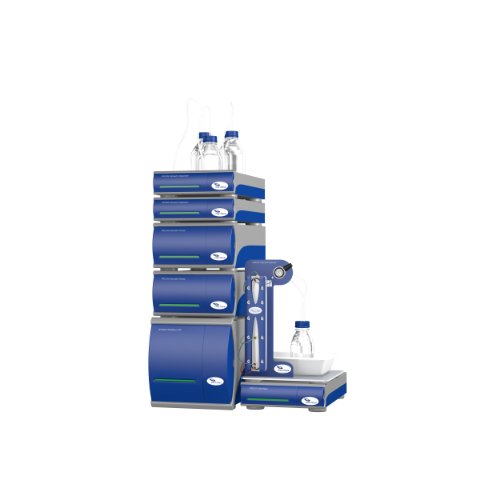
The most flexible, robust and reproducible Entry-Level Flow FFF system for Research Applications. Application Range The AF2000 AT is the basic modular system which marks the Entry Level of the Postnova AF2000 MultiFlow platform. The system is non-temperature controlled and runs at typical ambient laboratory conditions from 15° to 25°C. It is ideal for standard research applications in university research groups and educational institutions with a clear focus and defined application range. The AF2000 is the best choice and a good starting point for groups which want to enter into the area of Field-Flow Fractionation for the first time. It is available as aqueous metal-free, stainless steel and multisolvent version and can be run with a broad range of aqueous and organic solvents. Planar Asymmetric Flow FFF (AF4) and circular HollowFiber Flow FFF (HF5) channels can used at the same time. Various detection principles, such as UV-Absorbance (UV), Refractive Index (RI), Multi-Angle Light Scattering (MALS), Dynamic Light Scattering (DLS) and Inductively Coupled Plasma Mass Spectroscopy (ICP-MS) can be coupled easily online. System Hardware It is the Postnova's clear mission to only offer fully optimized and professional FFF hardware, software and support solutions. Therefore, the AF2000 AT series is a basic but completely optimized Flow FFF system which contains all necessary standard modules and components in the package that are required for a robust, reliable and fully operable Flow FFF system. There is no need for assembling and utilizing semi-suited third party HPLC components which are often just made for other purposes, show less flexibility and are not available in the strict specifications needed for FFF applications. The AF2000 AT series is a true ready-to-use non-compromise Flow FFF system where no additional components are required. The system incorporates the complete set of Postnova's proven FFF technologies which makes it the most easy-to-use, robust and reproducible system available. The AF2000 AT system is comprising an Eluent Organizer (PN7205), an Eluent Degasser (PN7520), an Eluent Pump (PN1130), a Focus Pump (PN1130), a Flow FFF Control Module with integrated electronic interface and cross-flow syringe pump (AF2000 Module), a Manual Injector Holder (PN5120), a user-selectable Asymmetric / HollowFiber Flow FFF channel (AF4/HF5) and a Control PC with the NovaFFF software suite for operation of the AF2000 AT system. Additional System Options The AF2000 AT Flow FFF is available in different versions and additionally can be upgraded and customized for special applications by adding extra system options. This can be done at the date of purchase or later as an upgrade. - EFS Eluent Filtration System - UVD Eluent Disinfection Module - SAM Manual/Auto Injector with Options - ELC Aqu. Metal-free/Organic/MultiSolvent - AF4/HF5 Channel Versions and Membranes - S3 Outlet Splitting Sensitivity Enhancer - RID Refractive Index Detection System - UVD Absorbance Detection System - FLD Fluorescence Detection System - MALS Multi-Angle Light Scattering Detector - Online DLS Dynamic Light Scattering Detector - ICP-MS Online Connection and Interface - FRA Automatic Fraction Collector with Options System Software The unique NovaFFF single software platform is used for full control and data acquisition of the entire AF2000 AT Flow FFF together with associated peripheric modules (such as Auto Injector, Fraction Collectors) and detectors (LS, RI, UV, FLD). The software also allows comprehensive data analysis and evaluation based on Relative Standard Calibration and Absolute Light Scattering methods. Furthermore, the software is also the platform to run all major FFF versions, including AF2000 MultiFlow FFF, CF2000 Centrifugal FFF and TF2000 Thermal FFF. This, together with additional features, makes NovaFFF the most advanced and leading software platform available for FFF applications today. Temperature Range: - Room Temperature Principle Measurement Range: - Particles: 1 nm to 1 µm - Polymers: 500 Da to 10 12 Da Channel Dimensions: - Volume: 0.5 -2.5 mL - Size: 335 x 60 x 40 mm - Thickness: 350 µm (other sizes available on request) Carrier Liquids: - Aqueous: any aqueous liquid, pH from 2 - 11 (depending on acid and conditions, please inquire), ionic strength from DI water to saline - Organic: THF, MeOH, etc Membranes: - reg. cellulose, PC, PES, CTA, TF, PAN - Molar Mass: 0,3; 1; 4; 5; 10; 20; 30; 50; 100; 150 kDa (depending on membrane type) Detectors: - UV - RI - Light Scattering - Viscometry - Fluorescence and more - Multiple Detectors in line Channel Flow Range: - 0 - 10 mL/ min Cross Flow Range: - 6.25 µL/min. - 7.5 mL /min Pressure Limit: - 0 - 35 bar Power Requirements: - 110 V or 240 V, 50/ 60 Hz; 2,5 A PC Requirements: - Windows, min. 64 MB RAM, 2 RS232 ports Software System: - NovaFFF AF2000 Control - NovaFFF Analysis Maintenance Parts: - Consumables - Pistons and piston seals - Inline filters - Membranes Injection Volume: - 1 - 1000 µL - Standard 20 µL - Optional 1000 µL Injected Sample Mass: - Typical injection mass 20 - 100 μg Injection Method: - Via manual injection valve - Via PN5300 autosampler
CATEGORY
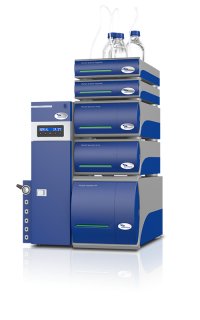
The most sophisticated Advanced-Level Flow FFF system for Research and QC Applications. Application Range The AF2000 MT is the modular Advanced-Level system of the Postnova AF2000 MultiFlow platform. The system includes sophisiticated temperature control and runs at conditions from 5° to 90°C. This makes the system even more stable due to the temperature stabilized diffusion process. Also separations of fragile biomolecules at lower temperatures as well as high molar mass macromolecules requiring higher temperatures are possible. The AF2000 MT therefore offers the highest reproducibility and the maximum application range within the AF2000 MultiFlow Platform. The system is ideal for special research applications in university, public and industrial research groups and also for high demanding QC applications in production environments. The AF2000 MT is the best choice for advanced FFF groups which want to work at the highest technical level and expect maximum performance from their FFF. The system is available as aqueous metal-free, stainless steel and multisolvent version and can be run with a broad range of aqueous and organic solvents. Planar Asymmetric Flow FFF (AF4) and circular HollowFiber Flow FFF (HF5) channels are standard and can be used at the same time. Various detection principles, such as UV-Absorbance (UV), Refractive Index (RI), Multi-Angle Light Scattering (MALS), Dynamic Light Scattering (DLS) and Inductively Coupled Plasma Mass Spectroscopy (ICP-MS) can be coupled easily online. System Hardware It is Postnova's clear mission to only offer fully optimized and professional FFF hardware, software and support solutions. Therefore the AF2000 MT series is a completely optimized Flow FFF system, which contains all necessary standard modules and components in the package, that are required for a robust, reliable and stable operable Flow FFF system. There is no need for assembling and utilizing semi-suited third party HPLC components, which are often just made for other purposes, show less flexibility and are not available in the strict specifications needed for FFF applications. The AF2000 MT series is a true ready-to-use non-compromise Flow FFF system, where no additional components are required. The system incorporates the complete set of Postnova's proven FFF technologies, such as FocusTech, ChannelCartridge and SyringeXFlow, which make it the most easy-to-use, robust and reproducible system available. The AF2000 MT system is comprising an Eluent Organizer (PN7205), an Eluent Degasser (PN7520), an Eluent Pump (PN1130), a Focus Pump (PN1130), a Flow FFF Control Module with integrated electronic interface and cross-flow syringe pump (AF2000 Module), a FFF Channel Thermostat with Manual Injector Holder (PN4020), a user-selectable Asymmetric / HollowFiber Flow FFF channel (AF4/HF5) and a Control PC with the NovaFFF software suite for operation of the AF2000 MT system. Additional System Options The AF2000 MT Flow FFF is available in different versions and additionally can be upgraded and customized for special applications by adding extra system options. This can be done at date of purchase or later as an upgrade. - EFS Eluent Filtration System - UVD Eluent Disinfection Module - SAM Manual/Auto Injector with Options - ELC Aqu. Metal-free/Organic/MultiSolvent - AF4/HF5 Channel Versions and Membranes - S3 Outlet Splitting Sensitivity Enhancer - RID Refractive Index Detection System - UVD Absorbance Detection System - FLD Fluorescence Detection System - MALS Multi-Angle Light Scattering Detector - Online DLS Dynamic Light Scattering Detector - ICP-MS Online Connection and Interface - HCT Multi Heated Capillary Thermostat - FRA Automatic Fraction Collector with Options System Software The unique NovaFFF single software platform is used for full control and data acquisition of the entire AF2000 MT Flow FFF together with associated peripheric modules (such as Auto Injector, Fraction Collectors) and detectors (LS, RI, UV, FLD). The software also allows comprehensive data analysis and evaluation based on Relative Standard Calibration and Absolute Light Scattering methods. Furthermore the software is also the platform to run all mayor FFF versions, including AF2000 MultiFlow FFF, CF2000 Centrifugal FFF and TF2000 Thermal FFF. This together with additional features, makes NovaFFF the most advanced and leading software platform available for FFF applications today. Temperature Range: - Cooling real 5°C - Heating max. 90°C depenting on channel and frit material (PMMA channel up to 70°C, with ceramic frit up to 40°C) Measurement Range: - Particles: 1 nm to 1 µm - Polymers: 500 Da to 10 12 Da Channel Dimensions: - Volume: between 0.5 - 2.5 mL - Size: 335 x 60 x 40 mm - Thickness: 350 µm (other sizes available on request) Carrier Liquids: - Aqueous: any aqueous liquid, pH from 2 - 11 (depending on acid and conditions, please inquire), ionic strength from DI water to saline - Organic: THF, MeOH, etc Membranes: - reg. Cellulose, PC, PES - Molar Mass: 0,3; 1; 2; 4; 5; 10; 30; 100 kDa Detectors: - UV - RI - Light Scattering - Viscometry - Fluorescence and more - multiple detectors in line Channel Flow Ranges: - 0 - 10 mL/ min Cross Flow Range: - 6.25 µL/min - 7.5 mL/ min Pressure Limit: - 0 - 35 bar Power Requirements: - 110 V or 240 V, 50/60 Hz; 2,5 A PC Requirements: - Windows, min.64 MB RAM, 2 RS232 ports Software System: - NovaFFF AF2000 Control - NovaFFF Analysis Maintenance Parts: - consumables - pistons and piston seals - inline filters - membranes Injection Volume: - 1 - 1000 µL - Standard 20 µL - Optional 1000 µL Injected Sample Mass: - Typical injection mass 20 - 100 µg Injection Method: - Via manual injection valve - Via PN5300 autosampler
CATEGORY
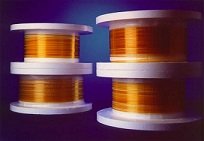
We provide Fused Silica Capillaries for CE applications with inner diameters from 50 – 150 μm and an outer diameter of 365 μm. These capillaries come in various lengths depending on the customer’s needs. Range of applications: • Capillary electrophoresis with tubing and windowed capillaries • Precision flow cells with custom tubing for CE
CATEGORY