By OAI
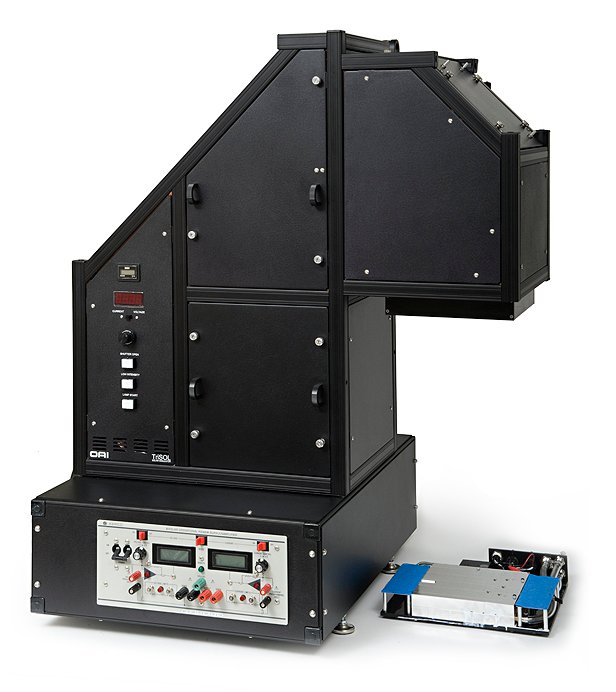
Essential for testing virtually any material or product that is exposed to sunlight for long or short periods of time, OAI’s low-cost Standard Solar Simulators deliver highly collimated, uniform light. Depending on configuration, output on these Solar Simulators is rated at 350W-5,000W. These Class AAA Solar Simulators feature OAI’s Advanced Uniform Beam Optics and are available with a choice of air mass filters to reproduce a wide range of solar spectra. For added flexibility, OAI’s proven lens and collimating mirror technology allow for a variety of exposure area sizes. A Class AAA Solar Simulator is an essential tool for manufacturing as well as R&D; it is indispensable in test labs, industry use, and in universities. OAI Standard Solar Simulators are used in photobiology, biomedical, solar cell testing, cosmetic testing, and paints & coatings analysis. Based on over 50 years of proven UV light technology, OAI Solar Simulator Systems deliver repeatable, reliable, constant output, and measurement uniformity.
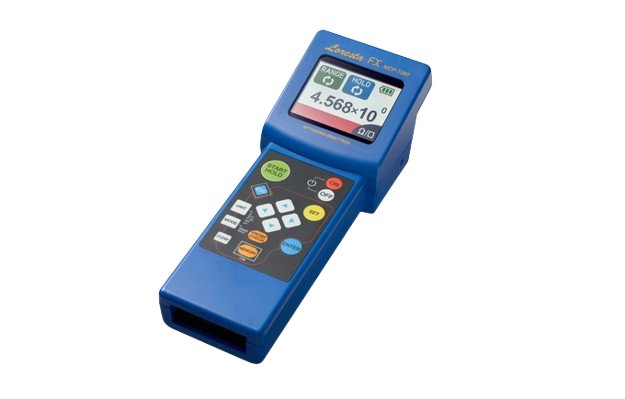
The Loresta FX Resistivity Meter a handheld unit measures the low resistivity of samples with consistent accuracy. This resistivity meter measures resistivity using a wide variety of probes. The Loresta FX uses a standard RCF that enables the user to input other RCF’s if known. It is typically used in Product Engineering and Quality Control. APPLICATIONS - Antistatic Materials - Flooring Materials - Paper - Packing Materials - Paint - Fiber - Concrete - Ceramics - Plastics - Films FEATURES - Auto-hold mode accessed by pushing start key - Rechargeable NiMH batteries - Optional Data Logger software - 4-pin method that accurately measures the resistivity of materials - One-touch reading: Ω, Ω/sq, Ω-cm - Constant extrusion pressure, inter-spring distance, and contact area - Measurement unaffected by contact resistance and lead wire resistance - Memory backup that can store 1,000-pieces of data - Wide measurement range (10-2 to 10 6 Ω) - Easily carried for on-line inspection or field service - Data correlates to Japanese Industrial Standard (JIS K 7194, JIS R 1637) - RS232 Output Port - Wide range of optional probes
CATEGORY
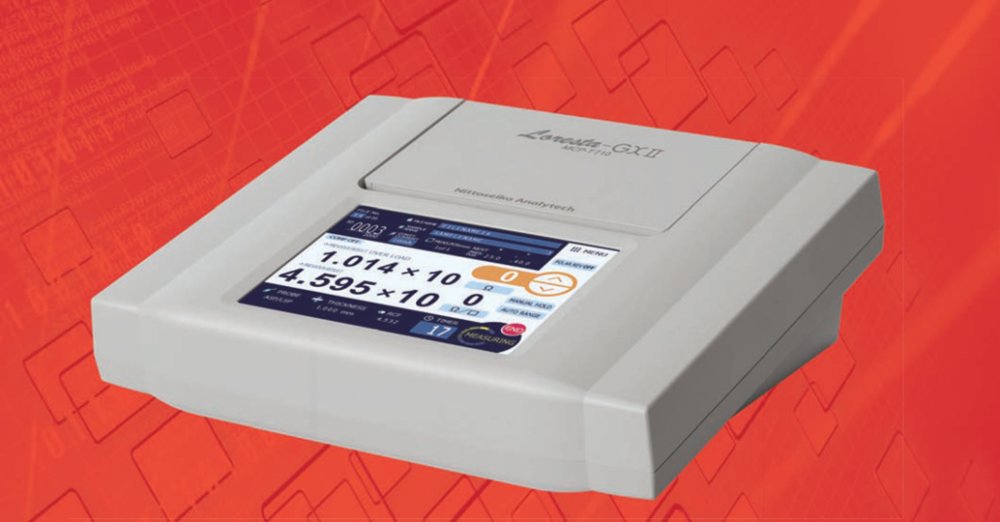
The Loresta GX II Meter is an intelligent, multi-purpose low resistivity meter equipped with software that calculates resistivity correction factors. A variety of 4-pin probes are available for use with the Loresta GX II. The instrument is typically used in Product Engineering, R&D, and Quality Control. APPLICATION - Antistatic Materials - Plating - Magnesium Alloy - Sprayed Metal Layers - Flooring Materials - Paper - Packing Materials - Paint - Fiber - Concrete - Ceramics - Plastics - Rubber - Silicon Wafers - Films FEATURES - MCP probe enables one-touch reading: Ω, Ω/sq, Ω-cm - One-touch operation: automatic measurement with auto-hold and timer modes - 4-pin method simply and accurately measures resistivity of materials - 7.5” TFT-LCD touch screen monitor makes for easy operation - Meter has memory backup that can store 1,000 pieces of data-downloadable to USB device - Expanded measurement range (10-4-10 7 Ω) - Silicon mode for silicon wafer measurement - Data Correlates to ASTM D257 and JIS K 6911 - Wide range of optional probes
CATEGORY
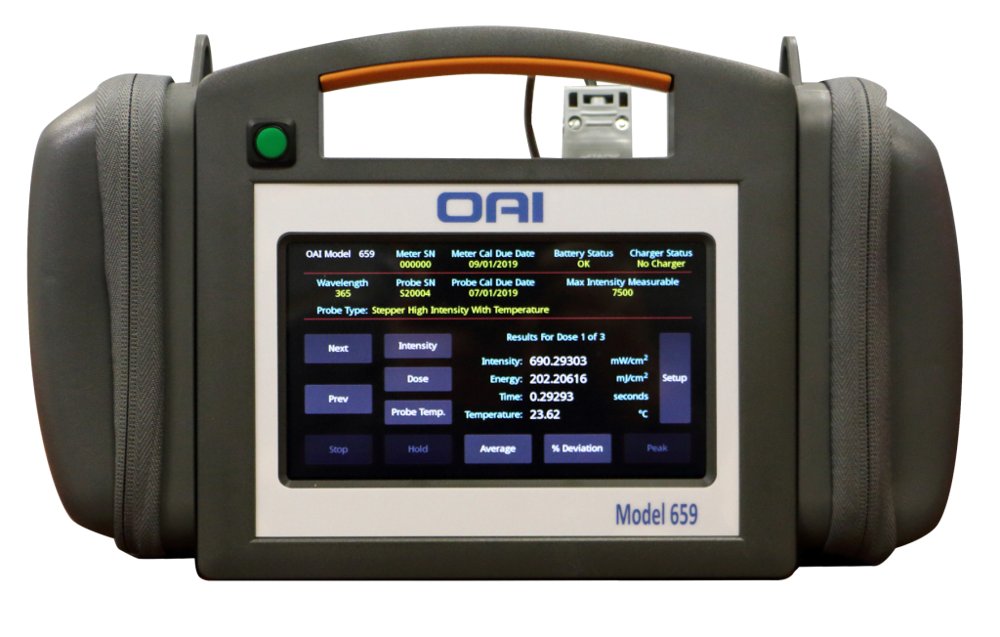
For over 50 years, OAI has been world leader in UV Light and Energy Measurement instrumentation used for reliable accurate calibrated control of the photolithography processes in the Semiconductor, MEMS, Wafer Packaging, and Wafer Bumping industries. The Model 659 is an advanced UV exposure analyzer specifically designed for use with all wafer steppers including high intensity wafer steppers. This meter averages up to 400 exposure readings, has Ethernet and USB interface for downloading recorded measurements, and has intensity range of up to 7,500mW/cm 2. Probes are available in wavelength of 365nm, 400nm, 420nm, and 436nm. OAI has a complete, certified Calibration Lab to maintain the performance, quality, and reliability of our meters. The Model 659 meter is traceable to NIST standards.
CATEGORY
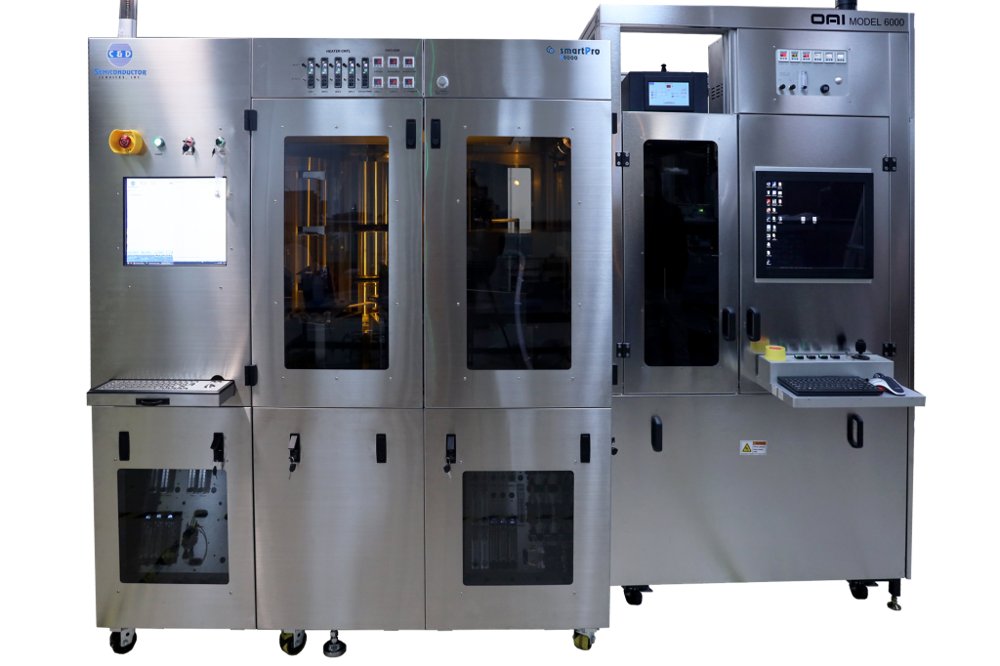
Coat | Bake | Align/Expose | Develop - Fully manufactured in the USA - Cluster configuration allows for dynamic wafer flow and parallel application processing - Single terminal for control over recipe and program selection; P9000 performs as the master user interface - Fewer operators needed in the lithography module - Reduced wafer handling: higher wafer yield, reduced contamination and defects, higher die yields - Lower cost of ownership for maximum return on investment versus other integrated system suppliers - Small footprint for reduced fab space usage - Multiple wafer sizes can be processed simultaneously - Optimized for customer requirements
CATEGORY
