By LayTec GmbH
Automatic and reproducible end point detection in stacks of metal films Modular concept with multiple measurement heads Displaying real-time reflectance during etching at multiple positions across the wafer Stand-alone control software running on embedded controller in base unit LayTec's NEPtune is a multiwavelength reflectometer especially designed to measure in-situ the end point during wet etching in BEOL processes like under bump metallization (UBM) and copper pillar integration. Features - Assessment of wafer process uniformity in real-time - Displaying of end point history from run to run for SPC and process optimization - Enables tighter process specifications - Improvement of Cost of Ownership through shorter etching cycles, savings on chemicals and process time Benefits Specifications are subject to further technical development and may differ from those given in the data sheet. In certain cases, performance may be limited by reactor type and/or growth conditions. Please consult our technical sales team to see how LayTec metrology can best serve your specific application. Developed, manufactured and qualified in Germany. Operating conditions - 10 °C - 35 °C ambient temperature - Relative humidity: 0 - 95 % non-condensing Power consumption - Power supply 24 V with adaptor cable to M12 connector - Typical current consumption 0.4 A - Max. current consumption 1 A (depending on number of measurement heads connected) Electrical connections - RJ 45 Ethernet: permanent connection to etching tool computer and temporary connection to service notebook - TRIAD 5-pin socket: connection to service notebook / computer during setup and maintenance (temporary, requires a special RS-422 / USB interface cable) - RJ 45 Ethernet connection for daisy chaining (from base unit to measurement head, between measurement heads) - 9-pin D-sub (F) connector - "etch start" trigger from system to base unit Communication / integration - NEPtune base unit sends SPC data and reflectance values to the etching tool via TCP / IP - NEPtune base unit receives analog process start trigger from etching tool Electronic control unit (base unit) - Dimensions: 194 mm x 115 mm x 56 mm - Weight approx. 530 g Optical head - Dimensions: (341 - 471) mm x 131 mm x 65 mm - Weight approx. 1000 g
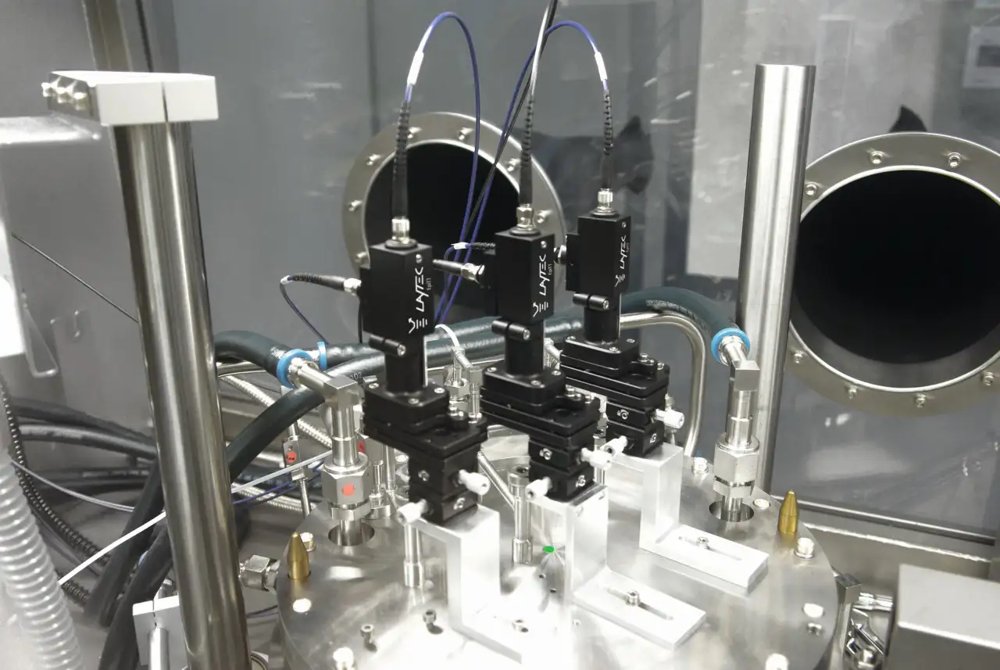
Combine measurements of temperature and reflectance at three wavelengths in one tool. EpiTT combines measurements of temperature and reflectance at three wavelengths in one tool. For True Temperature (TT), we apply the method of emissivity corrected pyrometry, which delivers the precise surface temperatures of opaque materials at 950 nm (Si, GaAs, InP). For materials that are transparent at 950 nm (GaN, Sapphire, SiC), EpiTT measures the temperature on the top side of the carrier. Measuring reflectance at three wavelengths monitors all essential properties of the growing layers, such as growth rate, film thickness, stoichiometry changes and morphology. EpiTT offers industry standard metrology for all kinds of epitaxial growth systems and is compatible with different main rotation frequencies in the range from 5-1500 rpm. Fields of application - Temperature range: T=450°C to 1300°C for large viewport systems/T=500°C to 1400°C for narrow viewport systems/other temperature ranges on request, e.g. 1500°C for UV LED applications, 1700°C for SiC - Wafer temperature with precision better than ±1K in a range of 600°C to 1400°C - Wafer and area selective measurements - True wafer temperature for opaque semiconductors such as InP, GaAs and Si - Pocket temperature for GaN, Sapphire and SiC Product features Emissivity corrected pyrometry: - Temperature range from 450°C to 1300°C for large viewport systems/500°C to 1400°C for narrow viewport systems / other temperature ranges on request, e.g. 1500°C for UV LED applications, 1700°C for SiC - Accuracy better than 1 K - Wafer and area selective measurements - True wafer temperature for opaque semiconductors such as InP, Graphite (SbS) - Pocket temperature for GaN, Sapphire and SiC Reflectance at three wavelengths: - 950 nm, 633 nm and 405 nm - Growth rate, layer thickness, roughness and other layer qualities - Full performance up to 1500 rpm main susceptor rotation - Further wavelength (e.g. 280nm, 365nm, 1550nm) for special applications are available on request
CATEGORY
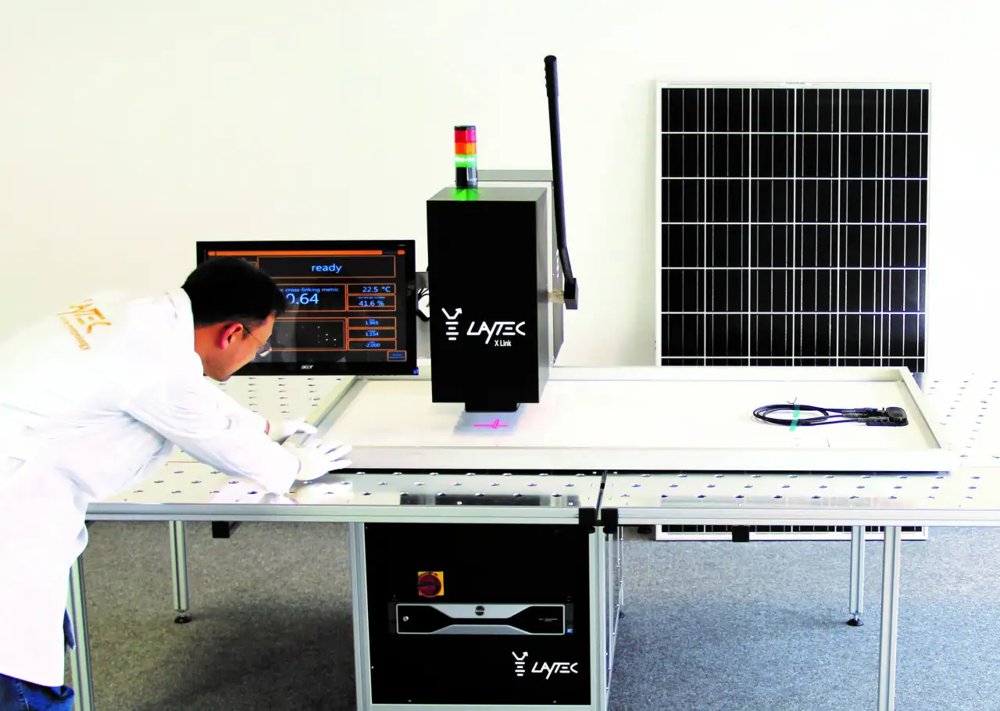
X Link® enables fast, automated, non-destructive and accurate evaluation of the level of EVA or polyolefin cross-linking in PV module encapsulation processes. In solar modules, the ethylene vinyl acetate (EVA) or polyolefin encapsulation protects the sensitive solar cells from the environment. In consequence the degree of intermolecular cross-linking of EVA or polyolefin is decisive for the long-term stability and performance of a module. Cross-linking is achieved by thermally curing the polymers during the lamination process. The X Link® system enables fast, automated, non-destructive and accurate evaluation of the level of EVA or polyolefin cross-linking immediately after lamination. It can be integrated into any solar module production site, offering a flexible platform for encapsulation quality control ranging from single point sampling to full module mapping. The stand-alone version is designed for lab applications, manual product sampling, areal mappings, R&D labs and pilot lines, ready to test full-size production-type modules with or without frames. High-resolution spatial mappings of the cross-linking degree and statistical evaluation can be performed. Furthermore, the manual off-line version allows multiple-point measurements on laminates and out-of-production modules, and modules from the field. This setup is a highly useful quality control tool for incoming goods inspection for EPCs, certifiers and consultants. Fields of application - Module encapsulation quality control in glass/backsheet solar module production Product features - Non-destructive test procedure - Testing time of only seconds per measurement points - Flexible module mapping capability - Data output in “% gel content”
CATEGORY
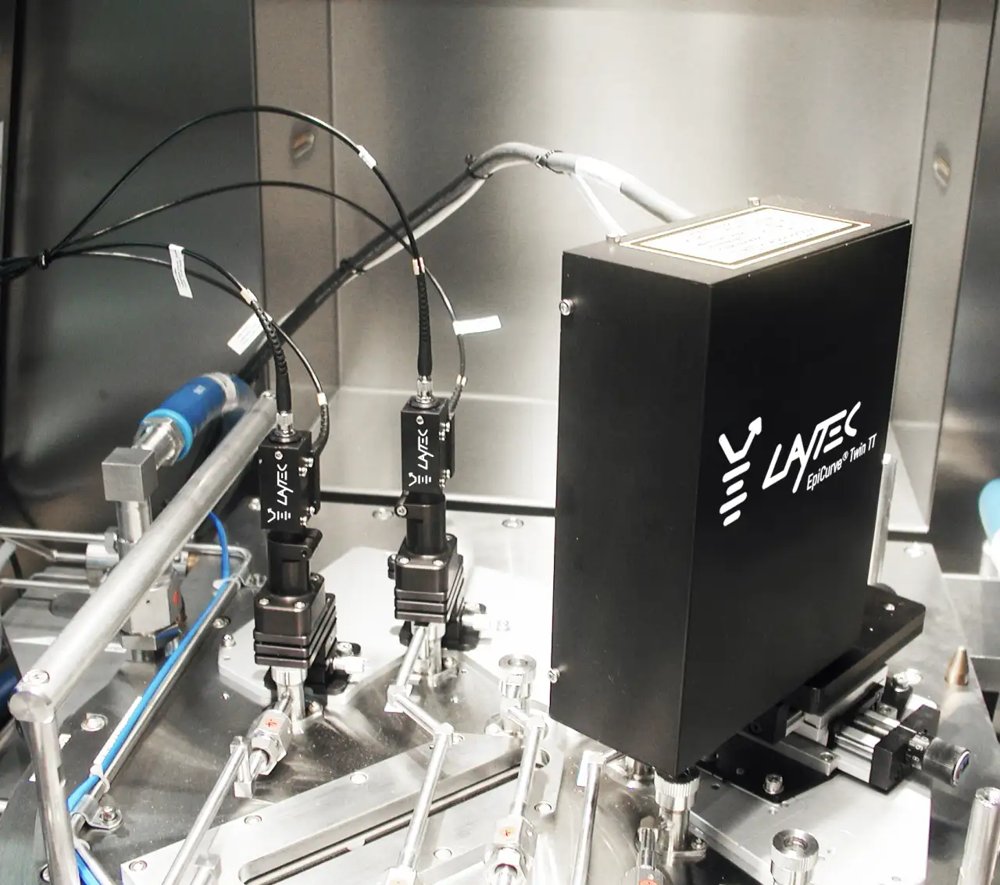
Both emissivity-corrected temperature monitoring and reflectance measurement at three wavelengths are included in all products in our EpiCurve® TT family of products. For reactors with multiple wafer ring configurations, the models with two or three EpiTT heads (EpiCurve®Twin TT and EpiCurve®Triple TT) allow for temperature and reflectance measurements at two or three independent positions respectively.
CATEGORY
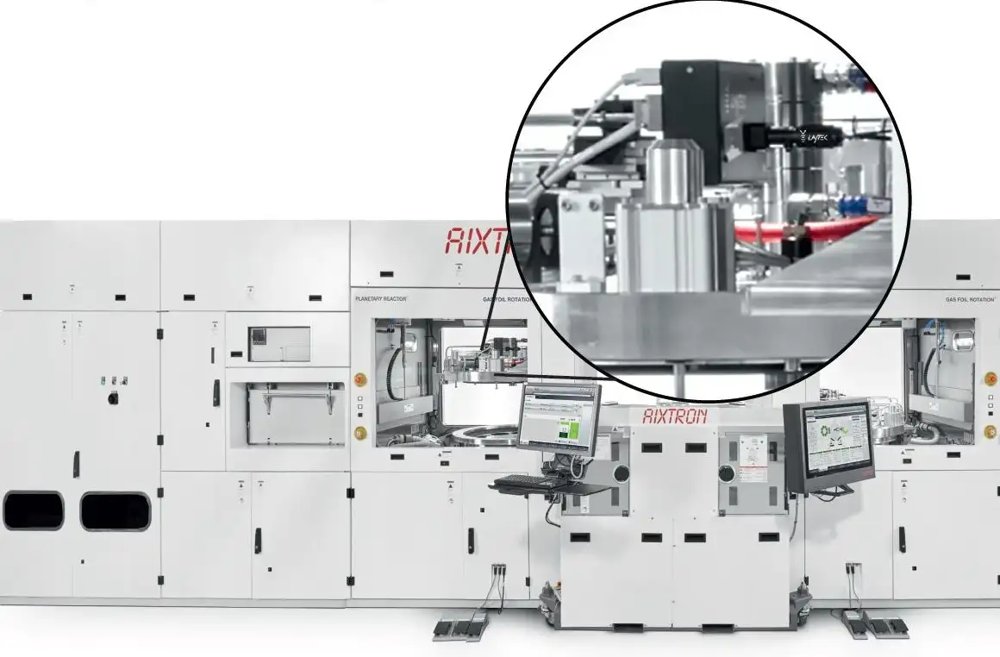
All products in the EpiTT family (EpiTT, EpiTwin TT, EpiTriple TT) are available for various MOCVD growth systems such as: - Systems with satellite rotation - Showerhead-like systems - Systems with main susceptor rotation speed up to 1500 rpm - R&D type and customized MOCVD growth systems
CATEGORY
