By Protochips
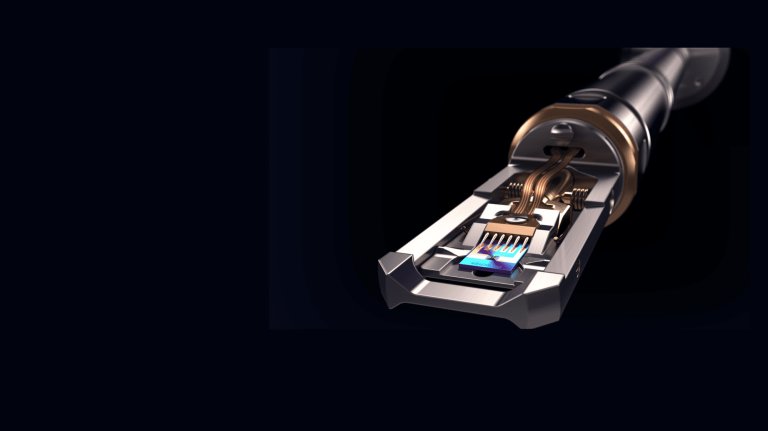
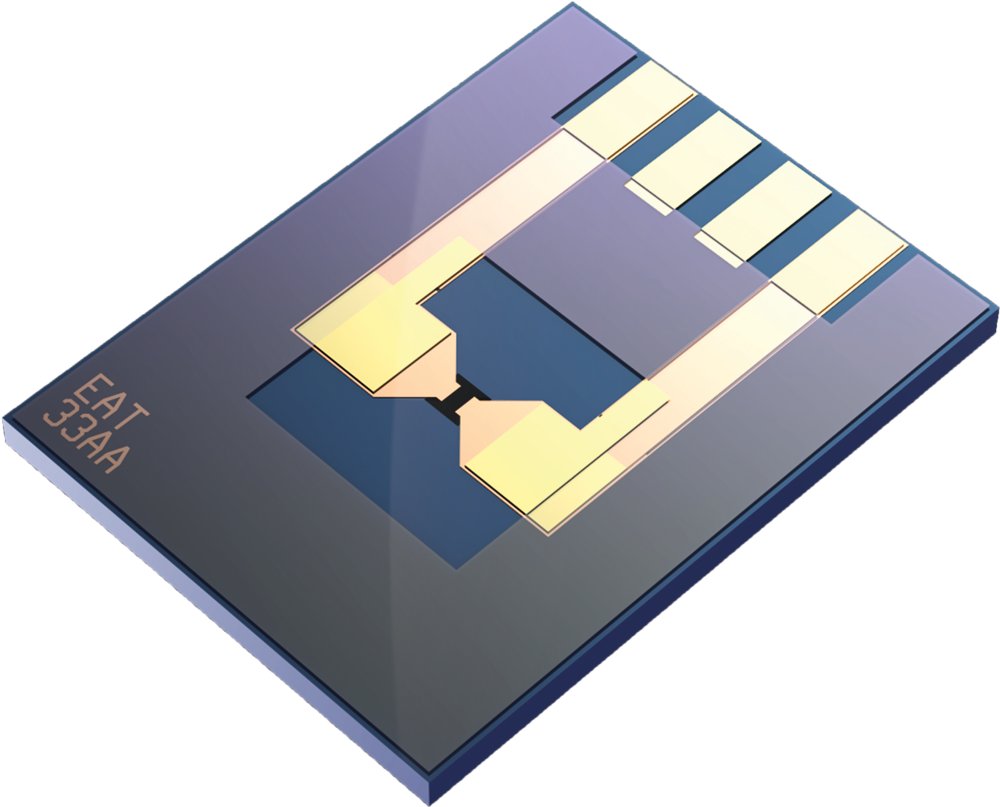
Announcing the New Fusion Select The First User-Configurable In Situ Heating and Electrical Characterization System July 23, 2019 Future Proof Your In-Situ Research Fusion Select redefines in situ heating and electrical characterization. “Select” the system configuration that meets your needs today, and easily upgrade to add new features and capabilities as your research needs expand. Fusion Select is a completely configurable product, including heating double-tilt, electrical and electrothermal capabilities. Improved Sample Tilting The new Fusion Select holder utilizes our patented double tilt design. All contact probes ride directly on the beta tilt table. This eliminates the introduction of stress and movement of contacts, which can sacrifice heating stability or electrical measurement accuracy. Find the zone axes of your sample quickly and easily even at high temperatures or under electrical bias without risking temperature or electrical current fluctuations. With a smooth jewel bearing, Fusion Select has a beta tilt range of ± 20° on both the Thermo Fisher and JEOL holders.* *Tilt range dependent on TEM pole piece. More Flexible Electrical Characterization Fusion Select offers accurate and precise thermal and electrical characterization of samples including nanowires, FIB lamellae, and 2D materials. With more electrical contacts and a newly designed electrothermal E-chip, Fusion Select allows you the flexibility to perform a variety of electrothermal experiments, including 4 point probing, while maintaining accurate heating. The new Fusion Select system can also use the FIB optimized electrical E-chip for quick and easy preparation of FIB samples. Left: FIB optimized E-chip in the holder tip. Middle: FIB lamella mounted on a FIB E-chip. Right: Protochips designed FIB stub for preparing samples on E-chips. All New Data View Visualizing and manipulating your data is critical to understanding experimental results. We completely overhauled the Data View in the Clarity software to make it fast and easy to zoom, pan and plot data. Many more features and settings were updated to make experiment workflows more streamlined. Synchronize all your experiment parameters with your Gatan DigitalMicrograph® images using Protochips’ Clarity Echo software. Screenshot of the Data View in Clarity software for Fusion Select
Atmosphere AX v10.8.7 Product Release Notes September 5th, 2025 Protochips is excited to introduce Atmosphere AX v10.8.7, which brings a variety of improvements and bug fixes to the in-situ software package. Any users running a prior version of Atmosphere AX or Clarity for Atmosphere 210 with an active license are eligible for this free update. Below are the major features affected by this release: What is new in Version 10.8.7 What is new: - Now supporting RGA synchronization of Pressure vs. Time and Analog scans controlled through the SRS RGASoft v4.3.1. 22 new data columns for Gas 1-10 AMU, Gas 1-10 Pressure, RGA Total Pressure and raw analog scan data. Complete integration with AXON software to correlate RGA byproduct measurements against images and data such as thermal, dose, beam conditions and all other data streams. What’s Improved: - Improved the turbo max operating temperature from 40°C to 45°C. - Updated TMP logging for field diagnostics. - Updated code signing for anti-virus software screening. - Improved toggle switches in Gas Analyzer panel so that the gas analyzer can be turned on and off without rippling into turbo behavior. - Improved turbo safety monitoring with new setting for acceptable foreline pressure: “TMPMaxPumpOnPressure”, defaulted to 7 Torr. - Improved turbo communication error and reset states. - Improved end experiment process with a dedicated step to spin down the turbo with modal dialogue. - Improved diagnostic report bundle. What’s Fixed: - Fixed Continous Pumping so that it persists through gas flow experiments until turned off by the user. - Fixed Data View selections for systems that are not equipped with the turbo or gas analyzer. - Fixed open-loop gas flow control to prevent adjustments during flow experiments. - User settings will persist through software updates. - License file reference will persist through software updates. - Fixed flow control offset setting behavior when changing mid-experiment for 760Torr and 250Torr. - Corrected turbo current and power unit conversions in AXON webservice. - Fixed Check Cleanliness routine so that it doesn’t open V3 and H33 during process and back’s the turbo with the scroll pump throughout duration. To download v10.8.7, sign into your account at success.protochips.com, click “My Downloads” then “View All” and download all files necessary for your configuration.
CATEGORY

AXON Synchronicity v10.8.7 Product Release Notes September 5th, 2025 Protochips is excited to introduce Triton AX v10.8.7, the first production release of the In-Situ software package. Below are the major features affected by this release. What is new in Version 10.8.7 What is new: - In-Situ liquid thermal control from -50C to 300C. Precisely control the E-chip temperature with easy automation to manage thermoelectric cooler and water chiller. - In-Situ liquid flow control. Remotely start/stop and set the flowrate and target volume of Hamilton syringe pumps. - Electrochemistry data synchronization. Supporting Biologic SP-xxx and Gamry Reference 6xx potentiostats run with their native operating software. - Complete integration with the AXON software including 2-way communication to synchronize data, control the In-Situ setpoints, and command behavior based on live image analysis. - Sophisticated safety monitoring with emergency stops, continuously monitoring readings from 2 holder RTDs, E-chip electrical parameters, chiller behavior and 3rd party device states. - Advanced plotting Data View with flexible axis and stacked plots. - Compact and Full UI view with status and state communication through interactive graphical user interface. - Scripting through RESTful interface to support many languages including Python, matlab, or any programming environment that can work against a web endpoint. - Bakeout routines to clean holder internals for improved vacuum performance. - Service mode for raw control of all stimulus, still governed by safety monitoring system. - Continous data logging to easily interpretable CSV supporting 43 data columns capturing electrical and thermal behavior of the E-chip, thermoelectric electrical parameters, in-holder RTDs, water chiller function, liquid flow rates and volume, E-chip notes and electrochemistry measurements. For minimum computer requirements please reference: Success Community Article on Triton AX To download v10.8.7, sign into your account at success.protochips.com, click “My Downloads” then “View All” and download all files necessary for your configuration.
CATEGORY
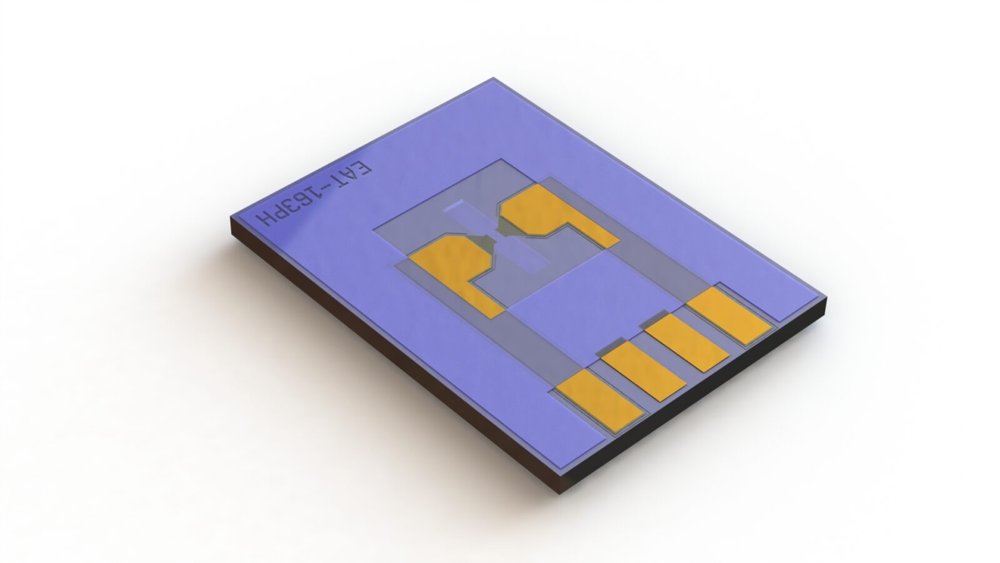
Sol for Atmosphere AX offers specialized E-chips for both in situ photo-illumination experiments and ex situ power density characterization. Sol E-chips have been optimized to ensure maximum power density at the sample location, providing flexibility to study many different types of light-sensitive reactions. Sol calibration E-chips are dedicated to the ex situ power density characterization workflow and consist of a window-only E-chip paired with a membrane-free, aluminum-coated aperture E-chip. When used with the holder in the ex situ power characterization station, these calibration components account for optical losses through the silicon nitride window and enable accurate measurement of the power density experienced by the sample.
CATEGORY
Sol for Atmosphere AX offers specialized E-chips for both in situ photo-illumination experiments and ex situ power density characterization. Sol E-chips have been optimized to ensure maximum power density at the sample location, providing flexibility to study many different types of light-sensitive reactions. Sol experiment E-chips are used for in situ TEM studies and feature dimensions optimized to minimize shadowing at the sample while maintaining the environmental capabilities of the Atmosphere platform.
CATEGORY
