By Nanogap
Our Core Technology NANOGAP has developed a completely new form of material, Metal Molecules, M-M, which will be integral in the development of new advanced technologies and products, revolutionizing chemical, pharma and energy industries. With M-M technology, NANOGAP has created a 3rd dimension to the periodic table creating new materials with size dependent properties. Metal Molecules are clusters of a few metal atoms, at less than a nanometer in size M-M are smaller than conventional metal nanoparticles. Main problems that M-M solve Catalyst Deactivation M-M do not suffer poisoning and can be stable up to 900ºC. Catalysts can deactivate over time due to various factors, such as fouling, sintering, poisoning, or surface contamination. Developing catalysts with improved stability and resistance to deactivation is crucial to ensure longer catalyst lifetimes and reduce the need for frequent replacement. Cost-effectiveness M-M do not suffer poisoning and can be stable up to 900ºC. Catalysts can deactivate over time due to various factors, such as fouling, sintering, poisoning, or surface contamination. Developing catalysts with improved stability and resistance to deactivation is crucial to ensure longer catalyst lifetimes and reduce the need for frequent replacement. M-M are made with non scarce non-Pt metals Many catalysts used today rely on scarce or environmentally harmful materials. Developing catalysts that are more sustainable, environmentally friendly, and derived from abundant resources is a pressing challenge. Green catalyst design aims to minimize the use of toxic substances, reduce energy consumption, and promote more eco-friendly processes. Catalytic properties and stability Metal Molecules can be used to prepare heterogeneous, homogeneous, thermo-, photo-, and electro- catalysts. They are suitable for a broad range of chemical reactions including oxidation, reduction, hydrogenation, and dehydrogenation. Properties can be tuned through choice of Metal, size of Metal Molecule, and choice of support. Benefits include lower activation energies, increased conversion and selectivity, lower temperature and pressure operating conditions, and with exceptionally high stability, at temperatures up to 900 o C, and in the pH range 1-14, and against sintering, and oxidation. Compared to conventional catalysts they are very resistant to typical poisons, such as sulfur, chloride and carbon monoxide. Cost effectiveness and environmental impact As Metal Molecules are so small, effectively all surface and no bulk, very small loadings, <1%, can be utilized. Further as Metal Molecule properties are primarily size dependent rather than element dependent, low cost and abundant Copper and Silver Metal Molecules can be used as alternatives to expensive and scarce Platinum group metals with similar results, offering a cost effective and environmentally sustainable alternative to conventional PGM based catalysts. Industrialization Metal-Molecules are manufactured by scalable aqueous methods and low-cost raw materials, no “exotic” processing equipment is required. Metal Molecules are deposited onto typical industrial catalyst supports to prepare Metal Molecule Catalysts that look and handle like conventional catalysts, but with improved performance. Comparison of Bulk metal, Metal NP and Metal molecules: Bulk metal >100nm; Metal NP 1-100 nm; Metal molecules <0.7nm Bonding Metallic. An array of positive ions in a sea of electrons. Covalent. Shared pairs of electrons. Electronic structure Delocalized electrons. Conductive properties. Quantum confinement of electrons. Band gap structure. Semiconductor/Molecular properties. Dispersion / Solution characteristics n/a Requires surface dispersion / stabilizing agents to form stable dispersions Dissolves like molecules, forming stable solutions with weak solvent interactions, like hydrogen bonding Properties Bulk properties. (element specific) Surface enhanced properties. (element specific) New and unique properties (size specific).
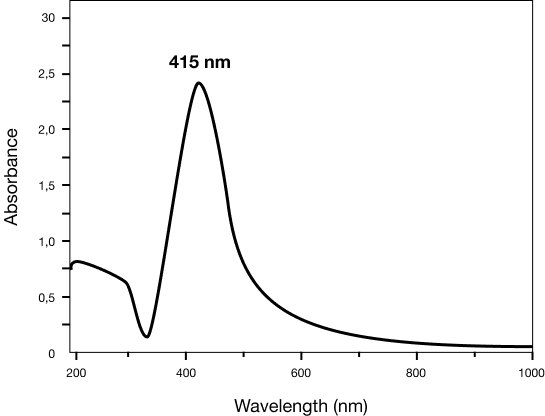
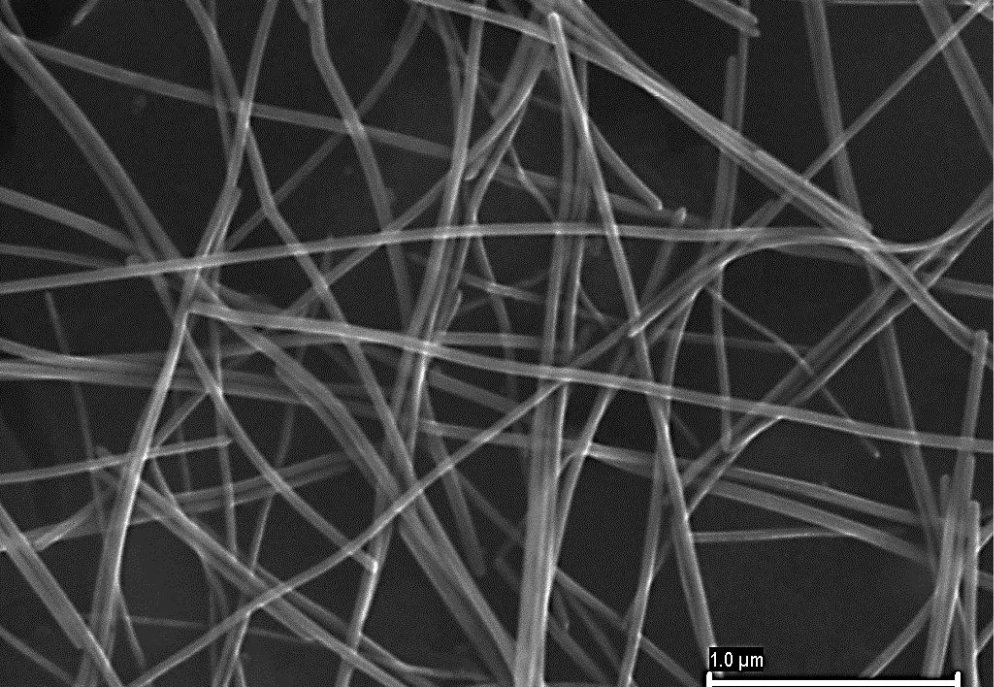
Silver Nanoparticles NGAP NP Ag-2108 is a mixture of quasi-spherical and rod-like Silver NanoParticles. This product is supplied as stable dispersions in water, glycols and alcohol/glycol blends. Dispersions can be supplied at a range of concentrations up to 65% (wt/wt) Ag. At this high concentration, the product is still liquid and easy to handle. This grade is a development of NGAP NP Ag-2103 offering the same or slightly improved properties. NANOGAP Silver Nanoparticles provide high conductivity, low temperature sintering and long term stability to formulated inks. - Consistent product, very stable dispersion, optimized for formulators needs - Available dispersed in water or ethylene glycol at up to 70 wt% silver - Used in inkjet inks available in the market - Thermal or photonic cure - Resistivity down to approximately 1.5x bulk Ag Suitable for formulating highly conductive inkjet inks used for application including interconnects and antennas. Typical Characteristics Ag Mean Particle Size (nm) 30 - 45 Capping Agent PVP AVALIABLE DISPERSIONS (WT/WT % AG) NGAP NP Ag-2103-W: In water at up to 65% NGAP NP Ag-2103-EG: In ethylene glycol at up to 65% NGAP NP Ag-2103-IPA/EG: In isopropyl alcohol / ethynele glycol blend at up to 30%
CATEGORY
Size ≈ 0.5nm No-core shell structure No need for binding with strong stabilizing ligands (A=adsorbate) - Clusters of a few atoms in size - Very stable - Metal elements but no metallic properties - Band gap structure with confined electrons - New and unique size dependent properties - Thermo-, electro-, photo-catalytic properties With NANOGAP’s M-M technology a third dimension to the periodic table has been created, going beyond enhanced surface properties and into the realm of new and unique size dependent properties. The conventional periodic table is only the tip of the material iceberg. Metal-Molecules catalyze reactions in a completely different way which allows the reaction to happened: - With new reaction pathways - Lower activation energies - Increased selectivity Which results in efficiency improvements of up to 1,000x
CATEGORY
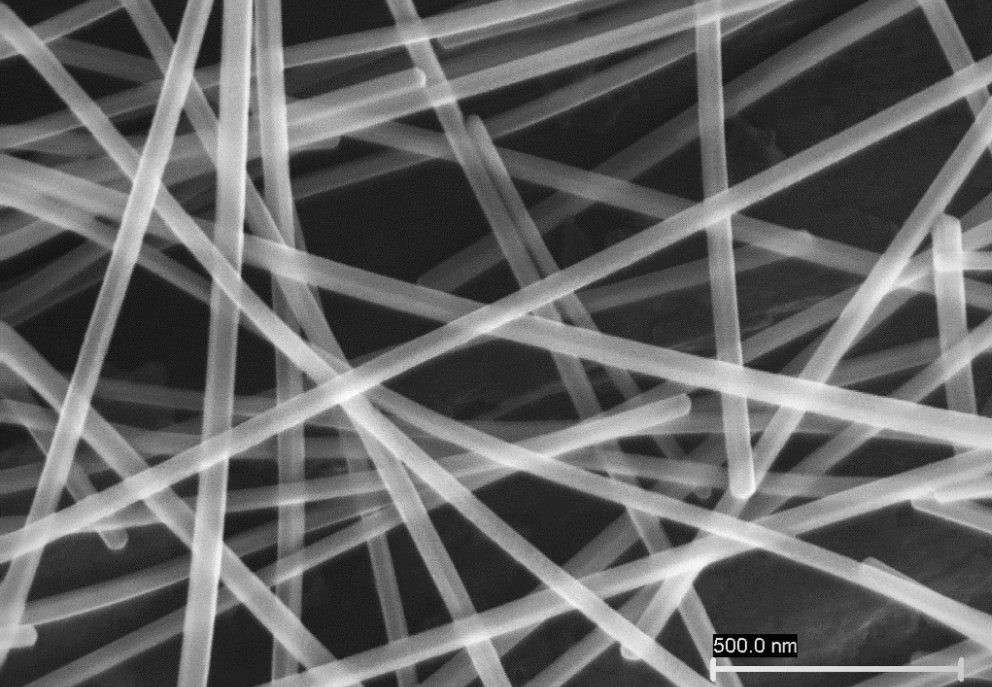
NGAP NF Ag-3140 silver NanoFibers have mean dimensions of 40 nm diameter and 15 microns length. The silver NanoFibers are supplied dispersed at 2.5% (wt/wt) in a range of polar solvents (most commonly water, isopropanol, or cyclohexanol). Developmental samples in nonpolar solvents, aldehydes or ketones are available upon request. Applications include transparent conductive films, and conductive / antistatic coatings and adhesives. NanoFiber % (as area % by optical microscope): 90% Mean NanoFiber Diameter (nm): 35 - 45 Mean NanoFiber Length (μm): 12- 16 Surface Functionality: PVP
CATEGORY
Nanogap's Metal Molecules Make new processes possible by means of: The reaction pathways Improve existing processes by means of: Lower activation energies Make energy cleaner by means of: Increased selectivity and conversion Decarbonize industry by means of: High stability Purify water efficiently by means of: ADVANCED PHOTOCATALYTIC REMEDIATION Our novel thermo, photo and electro catalysts will transform chemical, energy and process industries Industrial revolution - Clean hydrogen from solar photocatalysisis. - CO2 valorisation to fuel and chemicals including low temperature water gas shift. - New routes to ammonia production. - Direct oxidation of propylene to propylene oxide.
CATEGORY
