By Microporous Oxides Science & Technology, LLC
The purpose of this application note is to present qualitative results of an in-line thermal oxidation-based purification system (the CO2P, pronounced "COP") for cleaning CO2 used in SFE and SFC. - In-line thermal oxidation-based purification system for CO2 used in SFE and SFC - Operated at 300 °C - Cleans minimum purity "Bone Dry grade" CO2 to levels cleaner than the highest purity, most expensive CO2 available - Reduces ECD responsive contamination to non-detectable levels, even with 2 hour supercritical fluid extraction at relatively high flow rates (~1 L/min gaseous) - Placed in-line between the CO2 cylinder and the SFE pump - Significant cost savings can be realized using the CO2P with inexpensive, low purity CO2 in place of much more expensive, high purity CO2
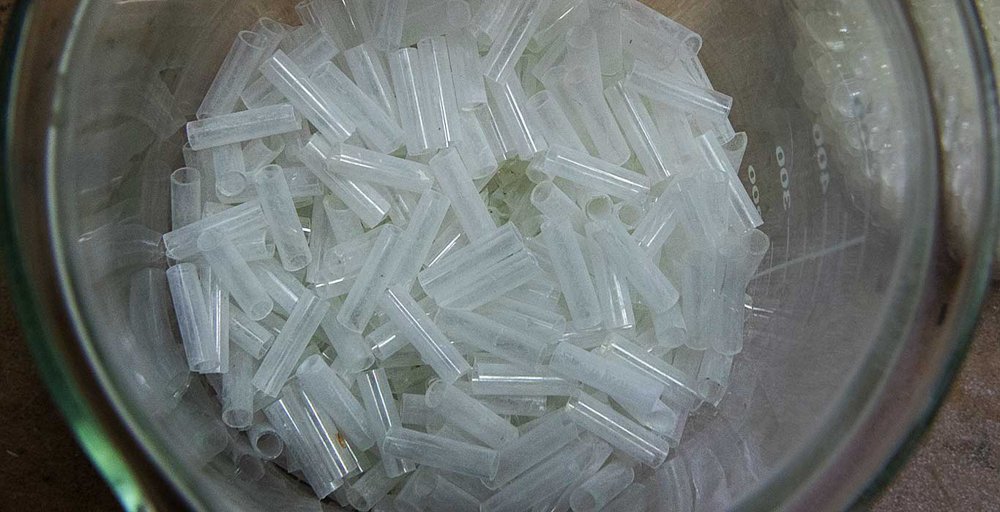
MOST offers a pure titania sol for electrically enhanced PCO and some PCO applications.
CATEGORY
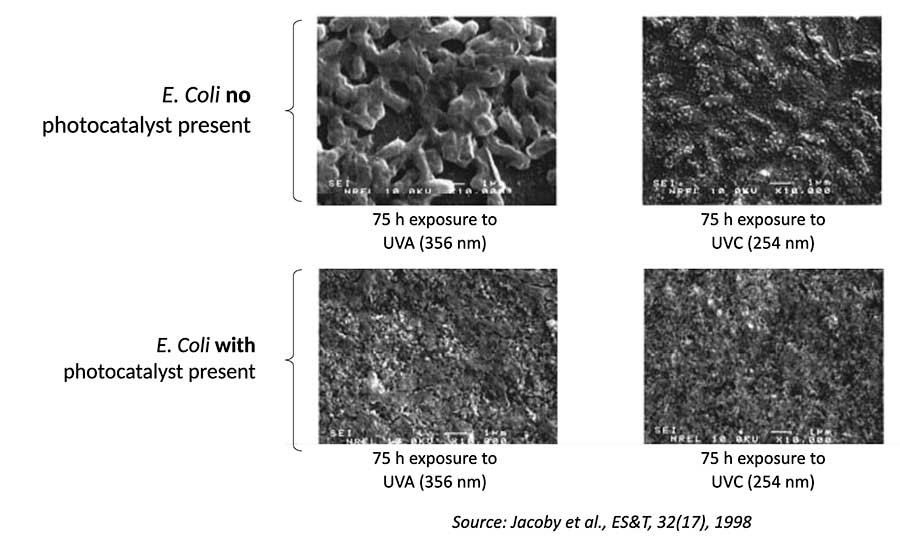
Antimicrobial Surfaces Photocatalytic disinfection has been shown to inactivate a variety of microorganisms including viruses, fungi, algae, protozoa, gram-negative and gram-positive bacteria, prions, and microbial toxins. The mode of action of photoactivated metal oxides includes (a) depletion of coenzyme A by dimerization and subsequent inhibition of respiration for Gram-positive and Gram-negative bacteria, (b) membrane and cell wall damage as evident in e.g., studies reporting leakage of cellular components (K+), (c) lipid peroxidation by reactive oxygen species (ROS), and (d) damage to DNA, likely a late-event after rupture of cell membrane and death. It is reported that PCO is capable of complete mineralization of bacteria on air filters (see figure below). MOST provides materials that can function as antimicrobial surfaces.
CATEGORY
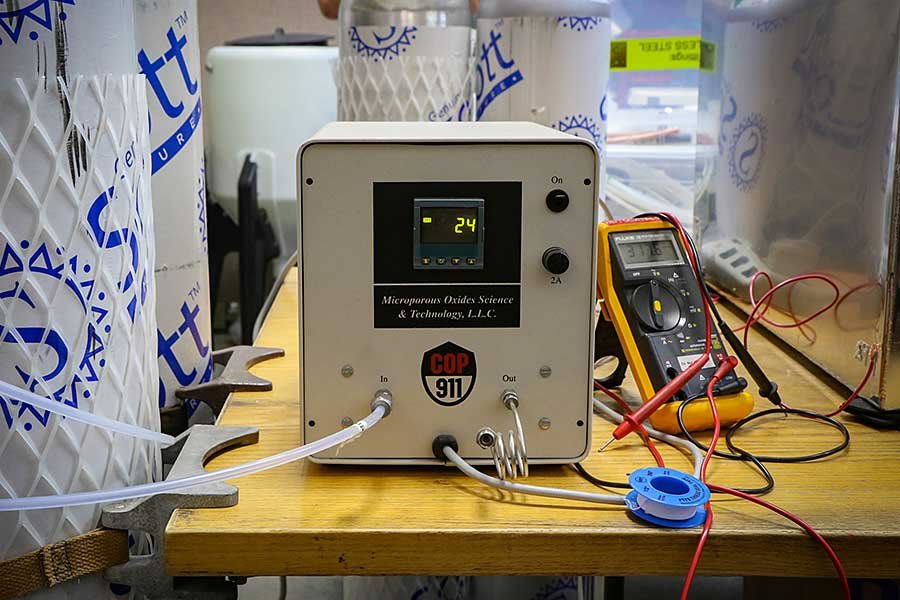
An early commercial product from MOST was the bench-scale CO2 purification unit shown here. The purification unit incorporates a catalyst that utilizes oxygen entrained in a stream of CO2 to oxidize trace amounts of hydrocarbons in the CO2, producing more CO2 and water vapor as reaction products. As such, the purification unit acts as a final polishing step in treating hydrocarbon-based contaminants. Results from demonstration studies obtained with this unit are presented in the Application Note. A particular market for CO2 purification is precision cleaning of materials such as semiconductors.
CATEGORY
