By American Boronite Corporation
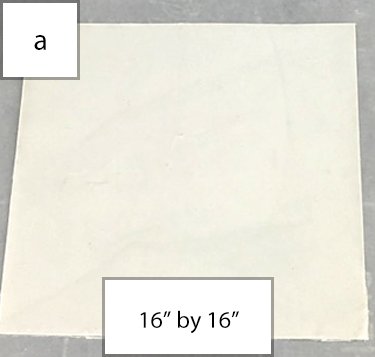
Boron nitride nanotubes (BNNTs) are isoelectronic and isostructural with carbon nanotubes (CNTs), which are cylinders with diameters on the order of nanometers and lengths usually on the order of micrometers, but which may extend to millimeters or more. The carbon atoms in CNTs are substituted by alternating boron and nitrogen atoms in BNNTs. BNNTs were first synthesized by Alex Zettl in 1995 following theoretical predictions by Marvin Cohen. They are one of the few advanced materials whose existence was predicted before discovery. However, the properties of BN nanotubes are very different from carbon nanotubes: whereas CNTs can be metallic or semiconducting depending on the rolling direction and radius, a BNNT is an electrical insulator with a bandgap between 5.5 and 5.9 eV. Unlike for CNTs, this bandgap can be tuned either by applying a bias voltage or by substituting carbon atoms in the BNNT structure, so that the lower bandgap limit can be extended to about 0.2 eV. The arrangement of alternating boron and nitrogen atoms gives BNNTs a corrugated surface and some degree of ionic bonding, so they attach more readily to other molecules and to themselves. Examples of Boronite BNNT Formats a. Pressed Panel b. Top view of as harvested material c. Side view of as harvested material Suggested Applications and Properties - Dielectric insulation at very low density. - Radiation shielding for humans (fabrics for space suits or hazmat suits) and for protecting electronics. - Used in composites to shield against other forms of radiation and for strengthening. - Flame resistant in the air at very high temperatures. - Thermally conductive and electrically insulative. Potential use in printed circuit boards for thermal management without risk of causing short circuit. - Electrical and field emission can be tuned by doping with gold atoms. - Bandgap can be engineered over a large range by adding carbon or by applying an electric field (field-effect transistors at room temperature). - Variety of uses in the biomedical field as nanocarriers and as nano-transducers. - Potential for use in multijunction solar cells. Properties and Applications: - Strength and Modulus: Composites: Polymer matrix Metal matrix Tethers and cables Armor. Flexibility allows 3D weaving. Extraordinary resistance to fatigue. BNNT yarns expected to be much stronger than CNT yarns due to higher friction forces between BNNTs. High fracture toughness coupled with high modulus and strength suggest extraordinary armor performance at much lighter weight than Dyneema armor. - High Temperature Oxidation Resistance: Ceramic composites or BN-BN. Applications at temperatures of up to 900°C in air are possible without causing damage to the structure. - Thermal Properties: Thermal conductors. Thermal conductivity is generally above 1000 W/m•K for individual tubes but much lower (~40 to 60 W/m•K) for yarns and tapes. - Radiation Shielding: Multifunctional (structural and shielding) and lightweight. Boron (especially 10B isotope) superior to all other elements for neutron absorption. Most promising option for space applications as structural shielding material when combined with a polyethylene matrix. - Electrical: Solar cells, single and multijunction. BNNT is a high bandgap (5.9eV) semiconductor. CNT is an electrical conductor. Luminescent fibers can be woven into textile. Triggered by transponder to illuminate in 4D barcode (x, y, color, time). CNT-based wiring: extremely high ampacity at comparable conductivity and lower density compared to copper. - Luminescent textiles from UV to IR, 4D bar codes, Anti-counterfeiting - Copper wiring replacement, Electric motors (CNT, Cu-CNT or Al-CNT) - Piezoelectric: Structural health monitoring Energy generation Active control of structures. Small strains can generate voltages or applying a voltage can give rise to strains.
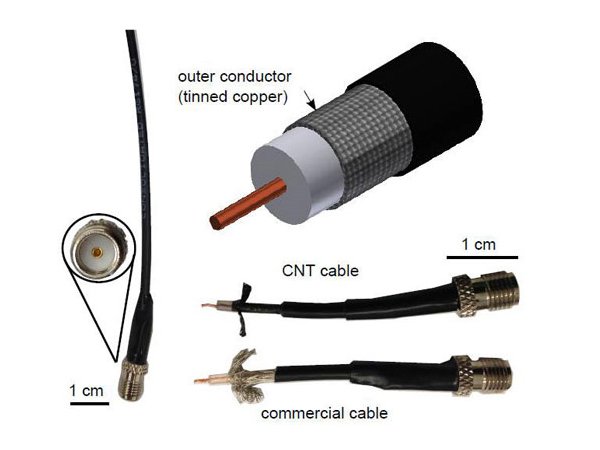
Composite wires produced by infiltration of continuous CNT spun fibers with copper or aluminum can reduce the weight of conductors. An all-nanotube cable structure is possible for even more dramatic weight reduction. CNT-based wire conductors and BNNT non-woven matt used as dielectric insulation in coaxial cables can both contribute to dramatically reducing the weight of electrical conductors. Lower energy usage has become a strong driving force for light weighting cables and for other replacements for copper or aluminum in applications such as aerospace and motor vehicles. Examples include improved operating range and time on station capabilities for aircraft, ability to carry larger payload, reduced CO2 emission for aircraft and reduced in-theater logistics for fuel management, as well as significant saving from greater fuel efficiency. Weight is also very important if the conductor must be accelerated as is the case in large traction motors where rotating heavy copper armatures contribute to losses as motors or generators start and stop. Another important area is high voltage power cables where not only size and weight but also mechanical properties are essential: a fatigue-resistant lightweight and compact cable capable of carrying very high currents would create a paradigm shift in the high voltage power line industry. Features and Benefits Marine environments and High Temperatures Applications: CNT fibers have been reported to be structurally resistant to most strong acids, both oxidizing and reducing and even those containing halogens, which makes them perfect candidates for applications where metals fail due to corrosion. This is an important issue for aging aircraft and for Navy aircraft. Carbon nanotubes are also stable at temperatures up to ~400 °C. Aluminum cannot be used at these temperatures and copper is susceptible to creep and too weak for most uses. Examples include alternators or generators in contact with hot jet engine components or components operated near the ocean. Applications: Components, including in particular coaxial cables, which will benefit from the low density, fatigue resistance and strength of the CNT composite wiring: powerlines, motor windings, aircraft wiring, wiring exposed to high temperatures, high current wiring under stress.
CATEGORY
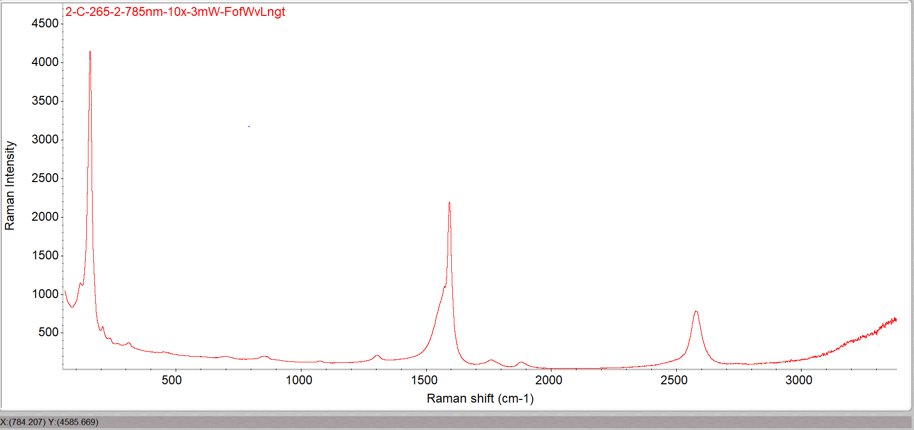
Applications where this wiring has an advantage over standard conductors such as copper or aluminum include very thin wiring resistant to mechanical failure, applications where the wiring has to be transparent to x-rays, or wiring where resistance to corrosion is important such as inside the body. For some applications a simpler wire composed of dual wall CNTs would be sufficient. Electronic devices: Semiconductor nanowires can be used for transistors. Transistors are used widely as fundamental building blocks in today's electronic circuits. The advantage of CNTs for these applications come from the very high mobility of charge carriers in short nanotubes and the extremely good conductivity in single nanotube devices. As a result, heat buildup is minimal and electromigration is eliminated, so switching speeds are high. Metallic Quantum wires: These were developed to promote a highly conductive material that can take high temperatures during extreme electron emission. Quantum wires contain a distribution of single wall CNT bundles in which all the tubes are the same length and within the bundle are well bonded together. Such bundles can have excellent properties. At low temperatures wires of this kind of nanotube are expected to provide better behavior than comparable dual wall CNTs. Applications include: Electron emitters where heat transport as well as electron transport are important. Low temperature applications where the metallic conductors will start to show an advantage over semiconductors. Figure 1: The unique Raman spectrum at 785nm
CATEGORY
The very low specific heat of CNTs allows them to heat up and cool down very quickly. The cycle frequency may be as high as 100 kHz. This opens up the possibility of creating IR emitters in the form of bar codes whose message can be encrypted in frequency, in position, in polarization and in temperature differences. Properties: high turn-on/off frequencies. Sponsors: (none). Suggested Customers/Applications: Embedded textiles, embedded high value-added products, friend or foe ID, remote control of drones, anticounterfeiting active or passive. IP: Patented.
CATEGORY
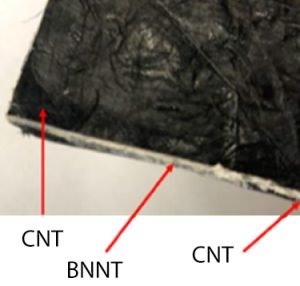
Boron nitride nanotube mats are made by collecting the material on a flat surface and pressing it into a flat non-woven textile. CNT non-woven sheets can be bonded to the BNNTs as can PE sheets. The BNNT mats may be able to hold 20% by weight of hydrogen. Properties: These materials contain boron, which is better than any other element at absorbing neutron radiation. It is possible to bond a CNT sheet on the top and bottom. This flexible structure can then be formed into a form fitting space suit that effectively blocks high energy electrons as well as neutrons. It can also be incorporated into body armor that will provide protection from a variety of threats. Sponsors: Department of Defense as well as several aerospace companies. Suggested Customers/Applications: space suit makers and users, Prime contractors, wire and cable makers, radiation protection clothing manufacturers, rad hard electronics, electronics packaging – thermal transport in printed circuit boards. X-ray transparent panels and composites, dielectric composites. IP: Trade secrets.
CATEGORY
