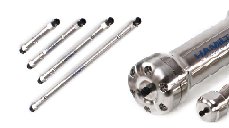
Valves Our valves are an integral part of advanced fluid-handling solutions for a wide range of analytical instrumentation and clinical diagnostic systems. Our valve options include manual valves for lower frequency use and rotary shear valves that meet the high duty cycle requirements of UHPLC and also come in high and low pressure versions to meet your system requirements. We also offer check valves when there is a need to limit the fluid flow to one direction. Our Back Pressure Regulators products are designed to enhance system performance through outgassing prevention. All of our valve products, components, tools, and accessories are designed keeping our customer’s system needs first. Rotary Shear Valves Our Rotary Shear Valves were developed in tandem with the evolution of liquid chromatography, where combinations of elevated system pressures, aggressive chemicals, and ever-diminishing fluid volumes continually challenged system manufacturers who required highly precise fluid control and delivery. Today, many other disciplines utilize Rotary Shear Valves for their versatility, reliability, repeatability, long system uptime, and easy preventive maintenance. Choosing a Rotary Shear Valve Evaluating some simple variables will assist you in choosing the best valve for your needs. Identify the Operating Pressure of Your Instrument or Application Valves are designed to repeatedly deliver specific fluids to different locations in a fluidic circuit. Achieving fluidic precision at 15,000 psi requires different valve-design features than those required to achieve fluidic precision at 100 psi. A wide variety of variables such as valve architectures, metals, polymers, coatings, actuation speeds, and manufacturing techniques have been tested to achieve the fluidic accuracy and precision required for the full array of pressure conditions in life science applications. In this catalog, we define four separate pressure groupings: - Up to 15,000 psi (1,035 bar) UHPLC/Fast Chromatography - Up to 6,000 psi (410 bar) HPLC - Up to 1,000 psi (69 bar) Medium Pressure Applications - Up to 125 psi (8.5 bar) Low Pressure/ Atmospheric Pressure Identify the Range of Flow Rates in Your System Because Rotary Shear Valves have been used most often in chromatography systems, certain flow rate ranges have evolved functionally. However, these ranges can apply to any system, not just chromatography: Micro/Nano Scale — flow rates less than 100 μL per minute Analytical Scale — flow rates from 100 μL to 10 mL per minute Prep (or Semi-Prep) Scale — flow rates greater than 10 mL per minute Decide What You Want the Valve to Do In this chapter Rotary Shear Valves perform three functions: Switching one or more flow paths to a different destination under pressure Injection into a flowing stream under pressure Selection/distribution of a variety of system liquids by means of a common port Identify Whether You Want Automated or Manual Control An automated valve offers more sophisticated functionality. Choose an automated valve if the application requires fast, consistent flow-stream switching. Some other advantages of automated valves include control options (PC- or instrument-triggered), higher torque operation, valve-position feedback, or very small flow paths. Choose a manual valve if your application involves low frequency of use, demands operator control, or involves injection of smaller sample volumes. Identify the Chemical Compatibility Requirements Related to Your Fluids Consulting the chemical compatibility chart in the Technical Resources section at the back of The IDEX Health & Science Laboratory Products catalog helps identify what valve materials to use — and avoid — in your application. Identify Fluidic Connection Requirements in Your System The rotary shear valves in this catalog accommodate one or more of the following tubing outer diameters: 1/8”, 1/16”, or 1/32”. Effects of Valves & Tubing on Resolution The effect of tubing on analytical and microscale analyses can be significant. Since dispersion caused by tubing is proportional to the fourth power of diameter, large bore tubing should be avoided when performing analytical scale or microscale analyses. Tubing ID size ≤ 0.25 mm (0.010”) is recommended. WHAT IS MAKE-BEFORE-BREAK ™, AND WHEN DOES IT MATTER? Make-Before-Break is a unique design feature of certain dual-mode manual injection valves. To maintain a constant, desired high-pressure flow, our Make-Before-Break (MBB ®) design creates continuous flow between the LOAD and INJECT positions that virtually eliminates pressure transient shock to the system. A passage in the stator face makes a new connection before old connections break. The MBB design — an improvement over bypass-style injectors — does not dilute the sample and is easy to maintain and troubleshoot. Switching Valves Switching valves dynamically alternate between two fluid paths without manually disconnecting plumbing. In Chromatography, these valves can be used for column switching, backflushing, sample enrichment, and other techniques. In Diagnostic or Sequencing applications, the switching valve may alternate flow paths to enable back flushing or other fluidic tasks within the instrument. Our switching valves operate between two positions, and may have 6 or 10 ports on the face of the stator (2/6 or 2/10). The flow paths connect ports around the circumference of the stator. The manual switching valves (to 1,000 psi) described on page 123 have different flow path geometry as noted. Injection Valves Our injection valves are a form of switching valve. Injection valves can be automated or manual, and they are generally utilized in the two-position, six-port (2/6) configuration and have a sample loop attached. The purpose of an Injection valve is to introduce a sample into a flowing stream of liquid. Some Switching valves become Injection valves by the addition of a Sample Loop (a defined length of tubing and fittings configured to match the angle of the valve ports). Sample is loaded and held in the loop until injection is triggered, either manually or automatically. Injection valves are classified as either Single or Dual Mode based on how the Sample Loop can be filled. A Single Mode Injection valve requires complete filling of the sample loop and is configured for Rear loading, generally in an auto-sample configuration. A Dual Mode Injection valve allows either partial or complete filling of the loop, and introduces sample by syringe through the needle port built into the valve shaft. Complete filling of the sample loop in both the Dual and Single Mode Injection valves provides greater repeatability injection to injection. Selection Valves Selection valves enable discrete connections among multiple system liquids (mobile phase, reagents, buffers) by means of a common port (inlet or outlet) connected to a number of different reciprocal ports. In Diagnostic or Sequencing applications, the selection valve alternates between different reagents or sample streams. Numerous configurations exist among selection valves (e.g., 6-position 7-port, or 10-position 11-port), but these valves typically operate between more than two positions. The ports are usually spaced radially, or outward in some manner around the center port of the stator. Stand Alone Valve Products An automated valve offers more sophisticated functionality. Choose an automated valve if the application requires fast, consistent flow-stream switching. Some other advantages of automated valves include control options (PC- or instrument-triggered), higher torque operation, valve-position feedback, or very small flow paths. MX Series II Add our MX Series II ™ actuated valves to your existing instrument or use in stand-alone lab configurations. MX valves can be controlled remotely or operated manually using the push-button front panel with LED position indicator. MX valves connect to your instrument or PC through contact closure, BCD, serial port, or USB. Commands can be sent to the MX valves using your chromatography software or the included proprietary software for timed-events programmability. Available flow rates include options for Analytical, Micro/Nano, or Semi-Prep in a range of pressure capabilities. Valve liquid ends are available in materials chosen to be chemically inert and biocompatible. Routine maintenance using authorized RheBuild ®kits (page 124) or — for the higher-pressure MXP and MXP valves — the Rapid Replacement Pods ™ (page 120) assures optimal performance. ACTUATED VALVES UP TO 15,000 PSI (1,035 BAR) SWITCHING MXT715-000 2-Position, 6-Port 10-32 Ports for 1/16” OD Tubing UltraLife PD715-000 ea. MXT715-102 2-Position, 10-Port 10-32 Ports for 1/16” OD Tubing UltraLife PD715-102 ea. INJECTION For Injection, add the appropriately sized Sample Loop to the Switching valves above SELECTION MXT715-105 6-Position, 7-Port 10-32 Ports for 1/16” OD Tubing UltraLife PD715-105 ea. All of these MXT valves include a set of 1/16” fittings. ACTUATED VALVES UP TO 6,000 PSI (410 BAR) SWITCHING MXP7900-000 2-Position, 6-Port 10-32 Ports for 1/16” OD Tubing DuraLife ®* PD7900 ea. MXP7960-000 2-Position, 10-Port 10-32 Ports for 1/16” OD Tubing DuraLife PD7960 ea. MXP7980-000 2-Position, 6-Port, Nano, 5,000 psi (345 bar) M4 Ports for 1/32” OD Tubing DuraLife II PD7980 ea. MXP7986-000 2-Position, 10-Port, Nano, 5,000 psi (345 bar) M4 Ports for 1/32” OD Tubing DuraLife II PD7986 ea. MXP9900-000 2-Position, 6-Port, Biocompatible, 5,000 psi (345 bar) 10-32 Ports for 1/16” OD Tubing PEEK PD9900 ea. MXP9960-000 2-Position, 10-Port, Biocompatible, 5,000 psi (345 bar) 10-32 Ports for 1/16” OD Tubing PEEK PD9960 ea. INJECTION For Injection, add the appropriately sized Sample Loop to the Switching valves above MXP7920-000 2-Position, 6-Port, Vertical Port 10-32 Ports for 1/16” OD Tubing DuraLife PD7920 ea. SELECTION MXP7970-000 6-Position, 7-Port 10-32 Ports for 1/16” OD Tubing DuraLife II PD7970 ea. * DuraLife is a proprietary material combination of SST and an advanced polymer. DuraLife II is a proprietary material combination consisting of Titanium and an advanced polymer. All of these MXP valves include a set of 1/16” fittings. ACTUATED VALVES UP TO 125 PSI (8.5 BAR) SWITCHING MXX777-601 2-Position, 6-Port Accepts Either 1/16” or 1/8” Tubing RPC-7* 1/16” and 1/8” ea. MXX777-603 2-Position, Double Three Way Accepts Either 1/16” or 1/8” Tubing RPC-7 1/16” and 1/8” ea. MXX777-612 2-Position, 6-Port, Large Bore Accepts Either 1/16” or 1/8” Tubing RPC-7 1/16” and 1/8” ea. SELECTION MXX777-605 6-Position, 7-Port Accepts Either 1/16” or 1/8” Tubing RPC-7 1/16” and 1/8” ea. MXX777-616 6-Position, 7-Port, Large Bore Accepts Either 1/16” or 1/8” Tubing RPC-7 1/16” and 1/8” ea. MXX778-605 10-Position, 11-Port Accepts Either 1/16” or 1/8” Tubing RPC-7 1/16” and 1/8” ea. * RPC-7 Proprietary Polymer Combination. All of these MXX valves include a set of 1/16” and 1/8” ferrules. MXT to 15,000 psi (1,035 bar) MXP to 6,000 psi (410 bar) MXX to 125 psi (8.5 bar) Rapid Replacement Pods ™ For IDEX Health & Science MX Series II Valves Zero downtime maintenance Improves lab throughput To help keep your instrument online and performing at maximum precision, select the exact Rapid Replacement Pod for your higher pressure MX Series II valves. Replacement pods are easily exchanged as part of scheduled preventive maintenance, or in an emergency, a pod can be substituted quickly while the original is examined and maintained at your convenience. The pod kit contains complete instructions for removal and replacement. TO 15,000 PSI (1,035 BAR) SWITCHING PD715-000 Rapid Replacement Pod MXT715-000 ea. PD715-102 Rapid Replacement Pod MXT715-102 ea. SELECTION PD715-105 Rapid Replacement Pod MXT715-105 ea. UP TO 6,000 PSI (410 BAR) SWITCHING PD7900 Rapid Replacement Pod MXP7900-000 ea. PD7960 Rapid Replacement Pod MXP7960-000 ea. PD7980 Rapid Replacement Pod MXP7980-000 ea. PD7986 Rapid Replacement Pod MXP7986-000 ea. PD9900 Rapid Replacement Pod MXP9900-000 ea. PD9960 Rapid Replacement Pod MXP9960-000 ea. INJECTION PD7920 Rapid Replacement Pod MXP7920-000 ea. SELECTION PD7970 Rapid Replacement Pod MXP7970-000 ea. Manual Valves 7725i Manual Injection Valve Up to 9,000 psi (600 bar) 7060 Manual Switching Valve Up to 7,000 psi (483 bar) 3725i-038 Manual Switching Valve Up to 7,000 psi (483 bar) Choose a manual valve if your application involves low frequency of use, demands operator control, or involves injection of smaller sample volumes. Manual Switching Valve Options 4-Way Diagonal Flow Switching Valves (V-100D, V-101D) Right Angle Flow Switching Valves (V-100L, V-101L) 3-Way Flow Switching Valves (V-100T, V-101T) V-101L Manual Switching Valve Up to 1,000 psi (69 bar) Standard Version 2.72” (6.90 cm) Bulkhead Version 2.92” (7.42 cm) 1.21” (3.07 cm) V-540 Manual Injection Valve Up to 1,000 psi (69 bar) Type & Capabilities Scale Partial Filling Volumes (Range) Sample Loop Sizes (Range) Wetted Materials Max. psi (bar) 1Max. T (ºC) MBB 2 Model 3Dual Mode Can load the loop by two methods: 1) Partial filling – syringe determines volume without wasting sample 2) Complete filling – loop determines volume by over filling loop Analytical 1 μL–2.5 mL 1 μL–5.0 mL 2 μL–5.0 mL 2 μL–10 mL 316 SST, Vespel ®PEEK, ETFE, ceramic 7,000 (483) 5,000 (340) 80º 50º Yes Yes 7725, 7725i 9725, 9725i Micro 0.1 μL–500 μL 5 μL–1.0 mL 316 SST, PEEK, Vespel, ceramic 7,000 (483) 80º No 8125 Preparative 100 μL–10 mL 2.0 mL–20 mL 316 SST, PEEK PEEK 5,000 (340) 4,000 (276) 50º 50º Yes Yes 3725(i)-038, 3725i Single Mode Can load the loop by one method: Complete filling — loop determines volume by over filling loop Analytical Not Applicable 5 μL–5.0 mL 5 μL–10 mL 316 SST, Vespel PEEK, ETFE, Ceramic 7,000 (483) 5,000 (340) 150º 50º No No 7010 9010 SST = Stainless Steel 1 This is the maximum pressure to which the valve can be adjusted. Some models are shipped from the factory set for lower pressures. 2 MBB (Make-Before-Break ™) is a design that provides uninterrupted flow when switching between LOAD and INJECT. MBB also greatly reduces transient pressure shocks. 3 Models with an “i” suffix have a built-in position sensing switch.
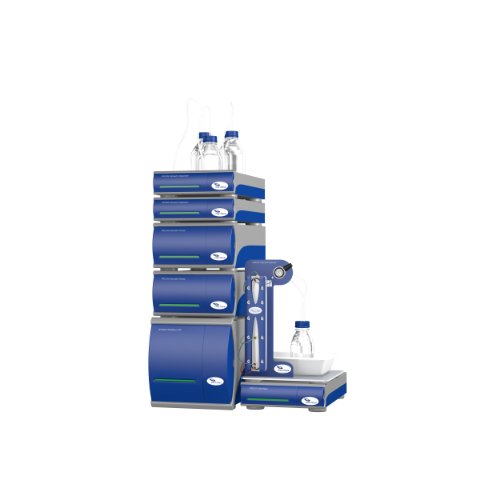
The most flexible, robust and reproducible Entry-Level Flow FFF system for Research Applications. Application Range The AF2000 AT is the basic modular system which marks the Entry Level of the Postnova AF2000 MultiFlow platform. The system is non-temperature controlled and runs at typical ambient laboratory conditions from 15° to 25°C. It is ideal for standard research applications in university research groups and educational institutions with a clear focus and defined application range. The AF2000 is the best choice and a good starting point for groups which want to enter into the area of Field-Flow Fractionation for the first time. It is available as aqueous metal-free, stainless steel and multisolvent version and can be run with a broad range of aqueous and organic solvents. Planar Asymmetric Flow FFF (AF4) and circular HollowFiber Flow FFF (HF5) channels can used at the same time. Various detection principles, such as UV-Absorbance (UV), Refractive Index (RI), Multi-Angle Light Scattering (MALS), Dynamic Light Scattering (DLS) and Inductively Coupled Plasma Mass Spectroscopy (ICP-MS) can be coupled easily online. System Hardware It is the Postnova's clear mission to only offer fully optimized and professional FFF hardware, software and support solutions. Therefore, the AF2000 AT series is a basic but completely optimized Flow FFF system which contains all necessary standard modules and components in the package that are required for a robust, reliable and fully operable Flow FFF system. There is no need for assembling and utilizing semi-suited third party HPLC components which are often just made for other purposes, show less flexibility and are not available in the strict specifications needed for FFF applications. The AF2000 AT series is a true ready-to-use non-compromise Flow FFF system where no additional components are required. The system incorporates the complete set of Postnova's proven FFF technologies which makes it the most easy-to-use, robust and reproducible system available. The AF2000 AT system is comprising an Eluent Organizer (PN7205), an Eluent Degasser (PN7520), an Eluent Pump (PN1130), a Focus Pump (PN1130), a Flow FFF Control Module with integrated electronic interface and cross-flow syringe pump (AF2000 Module), a Manual Injector Holder (PN5120), a user-selectable Asymmetric / HollowFiber Flow FFF channel (AF4/HF5) and a Control PC with the NovaFFF software suite for operation of the AF2000 AT system. Additional System Options The AF2000 AT Flow FFF is available in different versions and additionally can be upgraded and customized for special applications by adding extra system options. This can be done at the date of purchase or later as an upgrade. - EFS Eluent Filtration System - UVD Eluent Disinfection Module - SAM Manual/Auto Injector with Options - ELC Aqu. Metal-free/Organic/MultiSolvent - AF4/HF5 Channel Versions and Membranes - S3 Outlet Splitting Sensitivity Enhancer - RID Refractive Index Detection System - UVD Absorbance Detection System - FLD Fluorescence Detection System - MALS Multi-Angle Light Scattering Detector - Online DLS Dynamic Light Scattering Detector - ICP-MS Online Connection and Interface - FRA Automatic Fraction Collector with Options System Software The unique NovaFFF single software platform is used for full control and data acquisition of the entire AF2000 AT Flow FFF together with associated peripheric modules (such as Auto Injector, Fraction Collectors) and detectors (LS, RI, UV, FLD). The software also allows comprehensive data analysis and evaluation based on Relative Standard Calibration and Absolute Light Scattering methods. Furthermore, the software is also the platform to run all major FFF versions, including AF2000 MultiFlow FFF, CF2000 Centrifugal FFF and TF2000 Thermal FFF. This, together with additional features, makes NovaFFF the most advanced and leading software platform available for FFF applications today. Temperature Range: - Room Temperature Principle Measurement Range: - Particles: 1 nm to 1 µm - Polymers: 500 Da to 10 12 Da Channel Dimensions: - Volume: 0.5 -2.5 mL - Size: 335 x 60 x 40 mm - Thickness: 350 µm (other sizes available on request) Carrier Liquids: - Aqueous: any aqueous liquid, pH from 2 - 11 (depending on acid and conditions, please inquire), ionic strength from DI water to saline - Organic: THF, MeOH, etc Membranes: - reg. cellulose, PC, PES, CTA, TF, PAN - Molar Mass: 0,3; 1; 4; 5; 10; 20; 30; 50; 100; 150 kDa (depending on membrane type) Detectors: - UV - RI - Light Scattering - Viscometry - Fluorescence and more - Multiple Detectors in line Channel Flow Range: - 0 - 10 mL/ min Cross Flow Range: - 6.25 µL/min. - 7.5 mL /min Pressure Limit: - 0 - 35 bar Power Requirements: - 110 V or 240 V, 50/ 60 Hz; 2,5 A PC Requirements: - Windows, min. 64 MB RAM, 2 RS232 ports Software System: - NovaFFF AF2000 Control - NovaFFF Analysis Maintenance Parts: - Consumables - Pistons and piston seals - Inline filters - Membranes Injection Volume: - 1 - 1000 µL - Standard 20 µL - Optional 1000 µL Injected Sample Mass: - Typical injection mass 20 - 100 μg Injection Method: - Via manual injection valve - Via PN5300 autosampler
CATEGORY
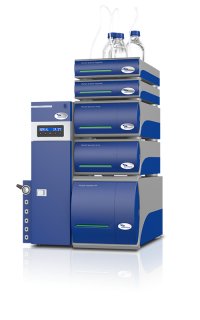
The most sophisticated Advanced-Level Flow FFF system for Research and QC Applications. Application Range The AF2000 MT is the modular Advanced-Level system of the Postnova AF2000 MultiFlow platform. The system includes sophisiticated temperature control and runs at conditions from 5° to 90°C. This makes the system even more stable due to the temperature stabilized diffusion process. Also separations of fragile biomolecules at lower temperatures as well as high molar mass macromolecules requiring higher temperatures are possible. The AF2000 MT therefore offers the highest reproducibility and the maximum application range within the AF2000 MultiFlow Platform. The system is ideal for special research applications in university, public and industrial research groups and also for high demanding QC applications in production environments. The AF2000 MT is the best choice for advanced FFF groups which want to work at the highest technical level and expect maximum performance from their FFF. The system is available as aqueous metal-free, stainless steel and multisolvent version and can be run with a broad range of aqueous and organic solvents. Planar Asymmetric Flow FFF (AF4) and circular HollowFiber Flow FFF (HF5) channels are standard and can be used at the same time. Various detection principles, such as UV-Absorbance (UV), Refractive Index (RI), Multi-Angle Light Scattering (MALS), Dynamic Light Scattering (DLS) and Inductively Coupled Plasma Mass Spectroscopy (ICP-MS) can be coupled easily online. System Hardware It is Postnova's clear mission to only offer fully optimized and professional FFF hardware, software and support solutions. Therefore the AF2000 MT series is a completely optimized Flow FFF system, which contains all necessary standard modules and components in the package, that are required for a robust, reliable and stable operable Flow FFF system. There is no need for assembling and utilizing semi-suited third party HPLC components, which are often just made for other purposes, show less flexibility and are not available in the strict specifications needed for FFF applications. The AF2000 MT series is a true ready-to-use non-compromise Flow FFF system, where no additional components are required. The system incorporates the complete set of Postnova's proven FFF technologies, such as FocusTech, ChannelCartridge and SyringeXFlow, which make it the most easy-to-use, robust and reproducible system available. The AF2000 MT system is comprising an Eluent Organizer (PN7205), an Eluent Degasser (PN7520), an Eluent Pump (PN1130), a Focus Pump (PN1130), a Flow FFF Control Module with integrated electronic interface and cross-flow syringe pump (AF2000 Module), a FFF Channel Thermostat with Manual Injector Holder (PN4020), a user-selectable Asymmetric / HollowFiber Flow FFF channel (AF4/HF5) and a Control PC with the NovaFFF software suite for operation of the AF2000 MT system. Additional System Options The AF2000 MT Flow FFF is available in different versions and additionally can be upgraded and customized for special applications by adding extra system options. This can be done at date of purchase or later as an upgrade. - EFS Eluent Filtration System - UVD Eluent Disinfection Module - SAM Manual/Auto Injector with Options - ELC Aqu. Metal-free/Organic/MultiSolvent - AF4/HF5 Channel Versions and Membranes - S3 Outlet Splitting Sensitivity Enhancer - RID Refractive Index Detection System - UVD Absorbance Detection System - FLD Fluorescence Detection System - MALS Multi-Angle Light Scattering Detector - Online DLS Dynamic Light Scattering Detector - ICP-MS Online Connection and Interface - HCT Multi Heated Capillary Thermostat - FRA Automatic Fraction Collector with Options System Software The unique NovaFFF single software platform is used for full control and data acquisition of the entire AF2000 MT Flow FFF together with associated peripheric modules (such as Auto Injector, Fraction Collectors) and detectors (LS, RI, UV, FLD). The software also allows comprehensive data analysis and evaluation based on Relative Standard Calibration and Absolute Light Scattering methods. Furthermore the software is also the platform to run all mayor FFF versions, including AF2000 MultiFlow FFF, CF2000 Centrifugal FFF and TF2000 Thermal FFF. This together with additional features, makes NovaFFF the most advanced and leading software platform available for FFF applications today. Temperature Range: - Cooling real 5°C - Heating max. 90°C depenting on channel and frit material (PMMA channel up to 70°C, with ceramic frit up to 40°C) Measurement Range: - Particles: 1 nm to 1 µm - Polymers: 500 Da to 10 12 Da Channel Dimensions: - Volume: between 0.5 - 2.5 mL - Size: 335 x 60 x 40 mm - Thickness: 350 µm (other sizes available on request) Carrier Liquids: - Aqueous: any aqueous liquid, pH from 2 - 11 (depending on acid and conditions, please inquire), ionic strength from DI water to saline - Organic: THF, MeOH, etc Membranes: - reg. Cellulose, PC, PES - Molar Mass: 0,3; 1; 2; 4; 5; 10; 30; 100 kDa Detectors: - UV - RI - Light Scattering - Viscometry - Fluorescence and more - multiple detectors in line Channel Flow Ranges: - 0 - 10 mL/ min Cross Flow Range: - 6.25 µL/min - 7.5 mL/ min Pressure Limit: - 0 - 35 bar Power Requirements: - 110 V or 240 V, 50/60 Hz; 2,5 A PC Requirements: - Windows, min.64 MB RAM, 2 RS232 ports Software System: - NovaFFF AF2000 Control - NovaFFF Analysis Maintenance Parts: - consumables - pistons and piston seals - inline filters - membranes Injection Volume: - 1 - 1000 µL - Standard 20 µL - Optional 1000 µL Injected Sample Mass: - Typical injection mass 20 - 100 µg Injection Method: - Via manual injection valve - Via PN5300 autosampler
CATEGORY
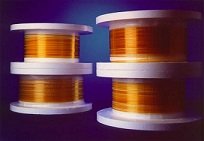
We provide Fused Silica Capillaries for CE applications with inner diameters from 50 – 150 μm and an outer diameter of 365 μm. These capillaries come in various lengths depending on the customer’s needs. Range of applications: • Capillary electrophoresis with tubing and windowed capillaries • Precision flow cells with custom tubing for CE
CATEGORY