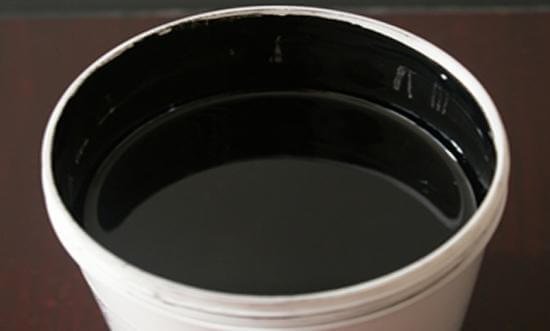
Industrial grade carbon nanotubes are produced at larger scale using catalytic chemical vapor deposition (CCVD) with less intensive post-processing than research-grade MWCNTs. The result is a material with higher residual catalyst content (iron, cobalt, or nickel) and more amorphous carbon than standard research grades — but at significantly lower cost per kilogram. For commercial applications where CNT purity is less critical than cost-efficiency at scale, industrial CNT grades deliver the electrical, mechanical, and thermal performance needed at pricing that makes large-volume production economically viable. Cheap Tubes offers industrial CNTs as dry powders, pre-dispersed masterbatches in common thermoplastics, and epoxy composite additives, allowing customers to choose the product form that best matches their manufacturing process. Industrial CNTs vs. Research Grade MWCNTs Carbon Purity: 85–95% (Industrial) vs 90–99%+ (Research Grade) Residual Catalyst: 5–15% vs <5% Outer Diameter: 10–40 nm vs 8–50 nm (various grades) Electrical Conductivity: 10²–10⁴ S/m vs 10³–10⁷ S/m Price: $85–600/kg vs $10–50/g Min. Order Quantity: 100g–1kg vs 1g Typical Applications: Composites, coatings, ESD vs Research, specialty composites Applications of Industrial Carbon Nanotubes ESD and Antistatic Components: At 1–3 wt% loading in thermoplastics, industrial CNTs reduce surface resistivity from insulating (>10¹³ Ω/sq) to antistatic (10⁶–10⁹ Ω/sq) or ESD-safe (<10⁶ Ω/sq). This is the largest commercial application for CNTs globally, with millions of kilograms consumed annually in semiconductor packaging trays, electronics carriers, fuel system components, and cleanroom equipment. The advantage over carbon black: CNTs achieve ESD targets at 2–5× lower loading, preserving mechanical properties and surface finish. Structural Composites: At 1–5 wt% in engineering thermoplastics or thermoset resins, industrial CNTs improve tensile strength by 20–40%, stiffness by 30–60%, and impact resistance by 15–30%. These improvements translate directly to lighter parts or reduced wall thickness in structural automotive, aerospace, and industrial applications. Industrial-grade CNTs provide most of the mechanical benefit of research grades at a fraction of the cost. Corrosion-Resistant Coatings: CNT-reinforced epoxy coatings applied to steel, aluminum, and concrete structures show significantly improved barrier properties against water, oxygen, and chloride ion penetration. Studies show 2–5× improvement in corrosion protection lifetime compared to unfilled epoxy coatings at 0.5–2 wt% CNT loading. Industrial CNT grades are well-suited for this application given the large coating areas involved and the cost-sensitivity of infrastructure projects. Air and Water Filtration: Industrial CNT powders and films are used in filtration membranes for removing particulates, bacteria, heavy metal ions, and organic contaminants from water and air streams. CNT-based filters offer high flux rates and can be regenerated by backflushing or thermal treatment. The antimicrobial properties of CNTs (mechanical disruption of bacterial cell walls) add a passive disinfection capability absent from polymer fiber filters. Ordering and Scale-Up: Industrial CNT products are priced at $85–600/kg depending on product form (dry powder, masterbatch, composite additive) and order volume. All products ship from Vermont with SDS documentation. For large-volume orders or custom formulations — specific polymer carriers, CNT loading, or composite formulations — contact our technical team to discuss your requirements. We support customers from initial evaluation through production ramp and can supply from lab-scale (100g) to production-scale (multi-kg) quantities. FAQ: Industrial-grade CNTs are produced at higher throughput with looser specifications on outer diameter distribution, length, and trace metal residue, in exchange for substantially lower cost per kilogram and shorter lead times at scale. Research-grade products carry tighter specs (narrower OD distribution, lower ash, full Raman/SEM/TGA characterization per batch) and are priced for gram-to-kilogram quantities. For commercial composite, conductive additive, and EMI shielding applications, industrial-grade is appropriate. For published research and material qualification studies, research-grade is recommended. For 1 to 10 kg quantities, ship times are typically 1 to 2 weeks from in-stock inventory at industrial-grade pricing. For 10 to 100 kg, lead times move to 3 to 6 weeks depending on the specific product. For metric-ton scale, contact us for a quote with current production windows; we work with multiple manufacturing partners and can typically commit to 8 to 12 week scheduling with custom blend specifications. Volume discounts of 30 to 60 percent off catalog start at 5 kg. We routinely produce custom CNT blends with specific OD ranges, length distributions, surface chemistry, or carrier polymer combinations for industrial customers. Custom development for masterbatches and conductive composites typically requires a 1 kg minimum and 3 to 5 weeks lead time for the development run, with a Technical Data Sheet and SEM characterization included. Production-scale orders follow once the formulation is qualified. Industrial-grade MWCNTs are typically 90 to 95 percent carbon by TGA, with 1 to 5 percent residual catalyst metals (Fe, Co, Ni, or Mo depending on the manufacturing route). For applications requiring very low metal content (electrochemistry, biomedical, semiconductor), we offer acid-purified grades at 97 to 99 percent purity at a higher price point. Each industrial batch ships with a representative TDS; SDS is included. For industrial customers, we provide dispersion protocol guidance, formulation starting points for typical applications (cathode slurries, EMI shielding compounds, antistatic films, conductive composites), and recommendations for pilot-line processing equipment. For projects beyond standard guidance, we can arrange consulting calls with our technical team or refer you to formulation partners with hands-on production experience.
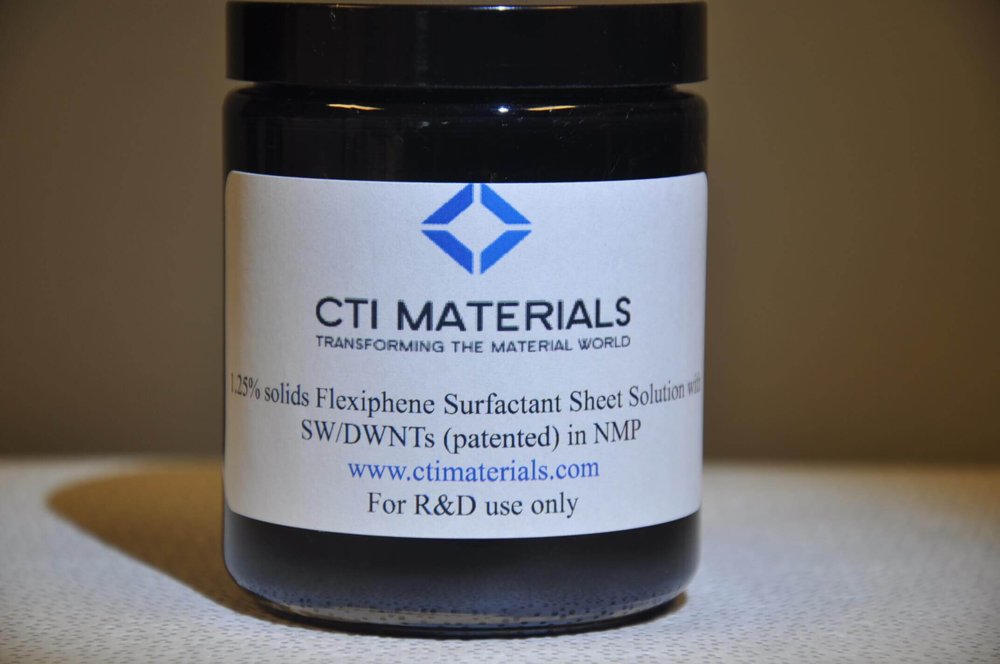
Try patented Flexiphene solvent based nanomaterial emulsions today and put the power of graphene to work in your formulations. Flexiphene is amphiphilic, tune-able by pH, sheet size, and degree of reduction. Flexiphene is transforming the material world! Contact us Today to arrange for your Flexiphene Emulsions!To Buy Flexiphene emulsions, please contact us with the solvent, materials, amount, and loading ratio you need. CTI Material’s patented Flexiphene solvent based nanomaterial emulsions are just what you need to disperse nanomaterials into solvents. Flexiphene works with SWNTs, MWNTs, and many other nanomaterials. Flexiphene are amphiphilic, tunable surfactant sheets, highly soluble in many solvents and can make colloidal dispersions of nanomaterials, stable for weeks to months. We typically work with NMP, DMF, THF, Acetone, & Ethanol solvents however many more are possible. Please contact us today and let us know what materials you require, the loading ratios, and solvents and we can quote it for you. Note- Hazmat shipping fees may apply. Prices depend on materials used and loading ratios. Flexiphene solvent based nanomaterial emulsions are transforming the material world!
CATEGORY

Silver nanowire (AgNW) ink is the leading solution for transparent conductive electrodes (TCEs) that require both high conductivity and optical transparency. At loadings that achieve sheet resistance below 10 Ohm/sq, AgNW films maintain optical transmittance above 85% — performance that rivals ITO at a fraction of the cost and with far superior flexibility. Unlike ITO, silver nanowire electrodes do not crack under bending, making them essential for rollable displays and conformable biosensors. Cheap Tubes synthesizes 30 nm outer diameter silver nanowires in-house at our Vermont facility, giving us direct quality control over aspect ratio, concentration, and lot-to-lot consistency — shipped at 25 mg/mL in isopropanol (IPA). Cheap Tubes supplies silver nanowire ink for transparent electrode applications in touch screens, OPV, and flexible electronics. Both ink types are formulated for compatibility with screen printing, gravure, flexographic, and inkjet deposition methods. Silver nanowire ink is the choice when optical transparency is required alongside low sheet resistance.
CATEGORY
Try patented Flexiphene Surfactant Solutions today and put the power of graphene to work in your formulations. Flexiphene is amphiphilic and compatible with water, solvents, and many other host matrices. To Buy Flexiphene, please contact us with the amount and loading ratio you need. Standard concentration is 2mgs/ml. Flexiphene is transforming the material world! CTI Material’s patented Flexiphene aqueous nanomaterial emulsions are just what you need to disperse nanomaterials into aqueous solutions. Flexiphene works with SWNTs, MWNTs, GNPs, and many other nanomaterials. Flexiphene are amphiphilic, tunable surfactant sheets, highly soluble in many solvents and can make colloidal dispersions of nanomaterials, stable for weeks to months. We typically work with Di Water and can modify the solution if required. Please contact us today and let us know what materials you require, the loading ratios, and solvents and we can quote it for you. Prices depend on materials used and loading ratios. Flexiphene aqueous nanomaterial emulsions are transforming the material world!
CATEGORY
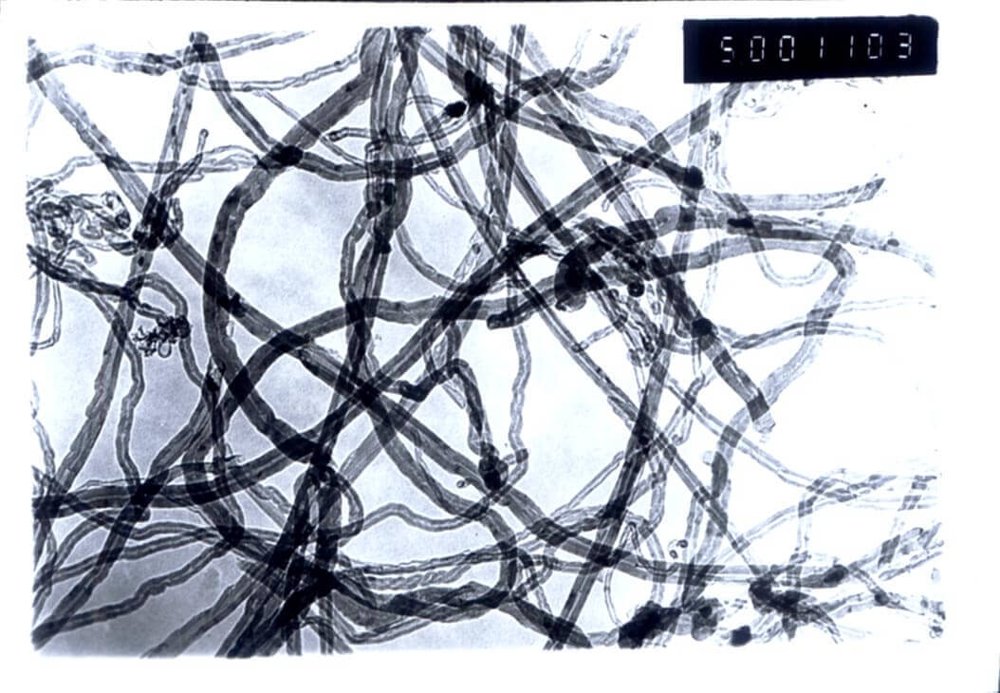
Amine | -NH₂ | Basic, highly water-dispersible; reacts with COOH, epoxides, aldehydes | Drug delivery, biosensors, crosslinked epoxy composites Amine (-NH2) groups are introduced via diamine coupling to -COOH and provide direct bonding to epoxy resins and conjugation chemistry to biomolecules via standard NHS/EDC coupling. -COOH and -NH2 functionalized MWCNTs are the standard substrates for biomolecule conjugation... use glutaraldehyde or NHS-PEG-NHS linkers between -NH2 surfaces and amine-bearing biomolecules. For dispersion in aqueous biological or analytical applications, -COOH and -NH₂ groups provide colloidal stability through electrostatic repulsion (high negative or positive zeta potential) without requiring surfactants that would need to be removed in downstream processing. This makes functionalized CNTs the preferred choice for drug delivery systems, biosensors, and diagnostic conjugation chemistry.
CATEGORY
