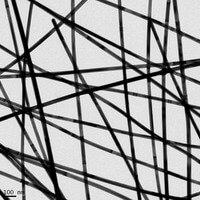
Silver nanowires (AgNWs) are one-dimensional nanostructures composed of metallic silver with diameters typically between 20-100 nm and lengths ranging from 10 to 100 micrometers. Their extreme aspect ratios — often exceeding 1000:1 — allow nanowire networks to form electrically percolating pathways at very low areal densities, enabling transparent conductive films that combine high electrical conductivity with high optical transmittance. Cheap Tubes synthesizes silver nanowires in-house at our Vermont facility using a polyol reduction method that yields 30 nm outer diameter nanowires in isopropanol (IPA) at 25 mg/mL concentration. Synthesizing in-house allows us to control aspect ratio, diameter distribution, and surface chemistry directly — parameters that critically affect transparent electrode performance. Physical and Electrical Properties Outer Diameter: 30 nm (typical) Length: 10-100 um Aspect Ratio: 300-3000 Concentration: 25 mg/mL in IPA Film Sheet Resistance: <10 Ohm/sq at >85% transmittance Optical Transmittance: 85-95% (visible spectrum) Flexibility: Maintains conductivity under repeated bending — ITO cracks at <1% strain Applications of Silver Nanowires Transparent Conductive Electrodes (TCEs): The primary application for silver nanowires is as transparent conductive electrodes in touch panels, organic photovoltaics (OPV), OLEDs, and electrochromic devices. AgNW films achieve sheet resistances of 5-50 Ohm/sq at optical transmittance of 85-95% — matching or exceeding ITO. On flexible substrates where ITO would crack under bending, AgNW films are drop-in replacements. Junction resistance can be further reduced by UV sintering, thermal annealing at 150-200C, or acid treatment — improving conductivity by 2-5x. Flexible and Stretchable Electronics: AgNW networks embedded in PDMS, PU, or PET films maintain conductivity under strains exceeding 100% — far beyond the less than 1% strain tolerance of ITO. This enables stretchable electrodes for epidermal electronics, electronic skin (e-skin), health monitoring patches, and soft robotics. Conductance of optimized AgNW/elastomer composites remains within 10% of initial value after thousands of stretch-release cycles. Transparent Heaters and Defrosting Films: The combination of optical transparency and electrical conductivity makes AgNW films ideal for transparent heaters in automotive windshields, airplane windows, smart windows, and outdoor displays. At 5-12 V input, AgNW heaters rapidly reach 50-100C with response times under 60 seconds, defrosting surfaces or controlling liquid crystal orientation in smart glass. EMI Shielding on Displays: Dense AgNW networks provide EMI shielding effectiveness of 20-40 dB while remaining highly transparent (>80%). This is uniquely suited for transparent EMI shielding on display screens, optical windows in military vehicles, and electromagnetic isolation of photovoltaic panels from internal electronics noise. Electrochemical Biosensors: AgNW-modified electrodes demonstrate enhanced sensitivity for glucose, hydrogen peroxide, dopamine, and heavy metal ion detection. The nanowire geometry provides 10-100x more electroactive surface area per unit geometric area compared to flat silver electrodes, enabling nanomolar-range detection limits. Deposition and Processing Silver nanowire films are deposited from liquid suspension by spray coating (most common for large areas), spin coating (uniform films on wafer-scale substrates), bar coating (Mayer rod), slot-die coating (roll-to-roll compatible), and vacuum filtration (research). After deposition, films are annealed at 150-200C or treated with UV-ozone, acid, or pressure to reduce junction resistance. Embedding AgNW networks in polymer overcoats (PEDOT:PSS, PVA, polyurethane) improves adhesion and environmental stability. Availability and Ordering Cheap Tubes’ silver nanowires ship at 25 mg/mL in IPA. Custom concentrations (5-50 mg/mL), alternative solvents (water, ethanol, ethylene glycol), and surface coatings are available on request. Pricing ranges from $200-500/g depending on quantity. Contact us for volume pricing and custom specifications.
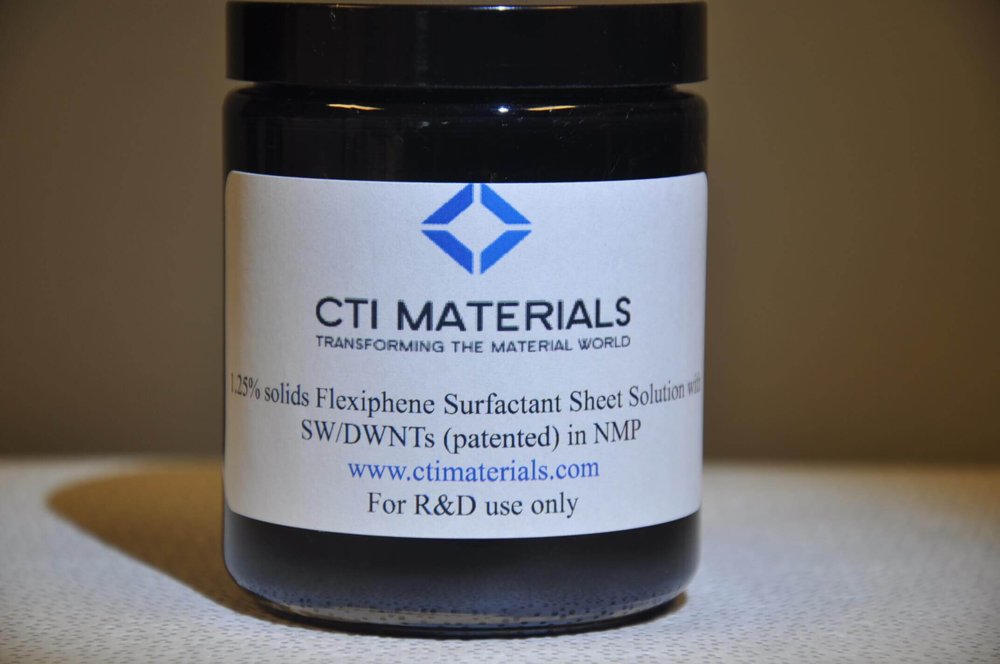
Try patented Flexiphene solvent based nanomaterial emulsions today and put the power of graphene to work in your formulations. Flexiphene is amphiphilic, tune-able by pH, sheet size, and degree of reduction. Flexiphene is transforming the material world! Contact us Today to arrange for your Flexiphene Emulsions!To Buy Flexiphene emulsions, please contact us with the solvent, materials, amount, and loading ratio you need. CTI Material’s patented Flexiphene solvent based nanomaterial emulsions are just what you need to disperse nanomaterials into solvents. Flexiphene works with SWNTs, MWNTs, and many other nanomaterials. Flexiphene are amphiphilic, tunable surfactant sheets, highly soluble in many solvents and can make colloidal dispersions of nanomaterials, stable for weeks to months. We typically work with NMP, DMF, THF, Acetone, & Ethanol solvents however many more are possible. Please contact us today and let us know what materials you require, the loading ratios, and solvents and we can quote it for you. Note- Hazmat shipping fees may apply. Prices depend on materials used and loading ratios. Flexiphene solvent based nanomaterial emulsions are transforming the material world!
CATEGORY
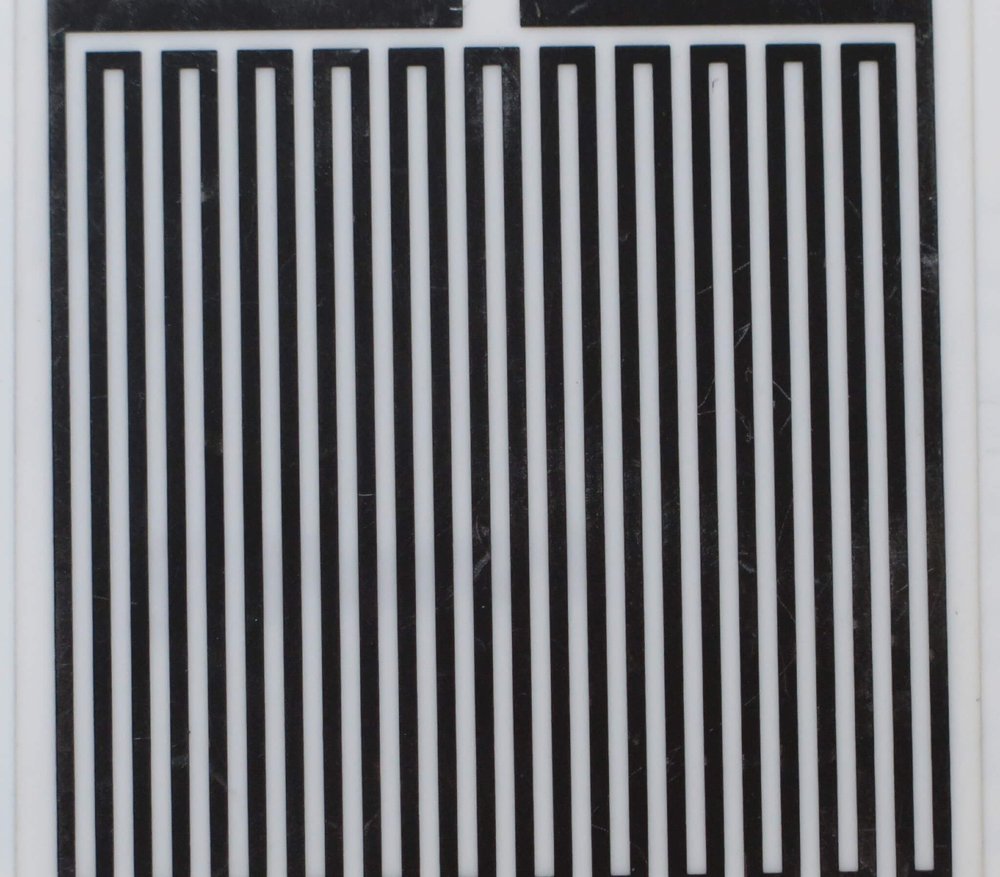
Silver nanowire (AgNW) ink is the leading solution for transparent conductive electrodes (TCEs) that require both high conductivity and optical transparency. At loadings that achieve sheet resistance below 10 Ohm/sq, AgNW films maintain optical transmittance above 85% — performance that rivals ITO at a fraction of the cost and with far superior flexibility. Unlike ITO, silver nanowire electrodes do not crack under bending, making them essential for rollable displays and conformable biosensors. Cheap Tubes synthesizes 30 nm outer diameter silver nanowires in-house at our Vermont facility, giving us direct quality control over aspect ratio, concentration, and lot-to-lot consistency — shipped at 25 mg/mL in isopropanol (IPA). Cheap Tubes supplies silver nanowire ink for transparent electrode applications in touch screens, OPV, and flexible electronics. Both ink types are formulated for compatibility with screen printing, gravure, flexographic, and inkjet deposition methods. Silver nanowire ink is the choice when optical transparency is required alongside low sheet resistance.
CATEGORY
Try patented Flexiphene Surfactant Solutions today and put the power of graphene to work in your formulations. Flexiphene is amphiphilic and compatible with water, solvents, and many other host matrices. To Buy Flexiphene, please contact us with the amount and loading ratio you need. Standard concentration is 2mgs/ml. Flexiphene is transforming the material world! CTI Material’s patented Flexiphene aqueous nanomaterial emulsions are just what you need to disperse nanomaterials into aqueous solutions. Flexiphene works with SWNTs, MWNTs, GNPs, and many other nanomaterials. Flexiphene are amphiphilic, tunable surfactant sheets, highly soluble in many solvents and can make colloidal dispersions of nanomaterials, stable for weeks to months. We typically work with Di Water and can modify the solution if required. Please contact us today and let us know what materials you require, the loading ratios, and solvents and we can quote it for you. Prices depend on materials used and loading ratios. Flexiphene aqueous nanomaterial emulsions are transforming the material world!
CATEGORY
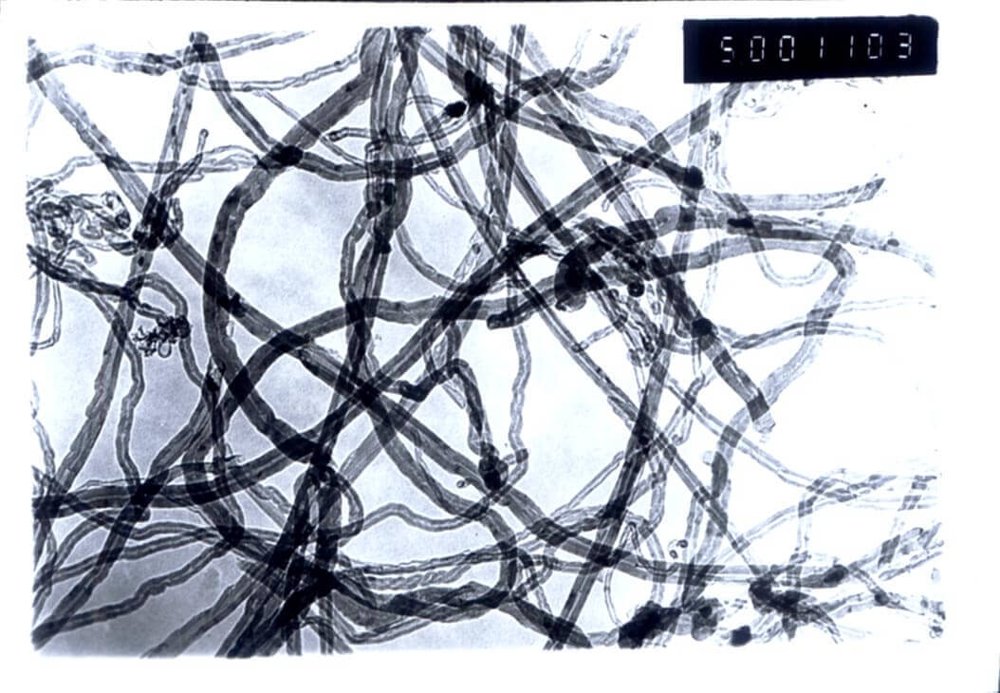
Amine | -NH₂ | Basic, highly water-dispersible; reacts with COOH, epoxides, aldehydes | Drug delivery, biosensors, crosslinked epoxy composites Amine (-NH2) groups are introduced via diamine coupling to -COOH and provide direct bonding to epoxy resins and conjugation chemistry to biomolecules via standard NHS/EDC coupling. -COOH and -NH2 functionalized MWCNTs are the standard substrates for biomolecule conjugation... use glutaraldehyde or NHS-PEG-NHS linkers between -NH2 surfaces and amine-bearing biomolecules. For dispersion in aqueous biological or analytical applications, -COOH and -NH₂ groups provide colloidal stability through electrostatic repulsion (high negative or positive zeta potential) without requiring surfactants that would need to be removed in downstream processing. This makes functionalized CNTs the preferred choice for drug delivery systems, biosensors, and diagnostic conjugation chemistry.
CATEGORY
