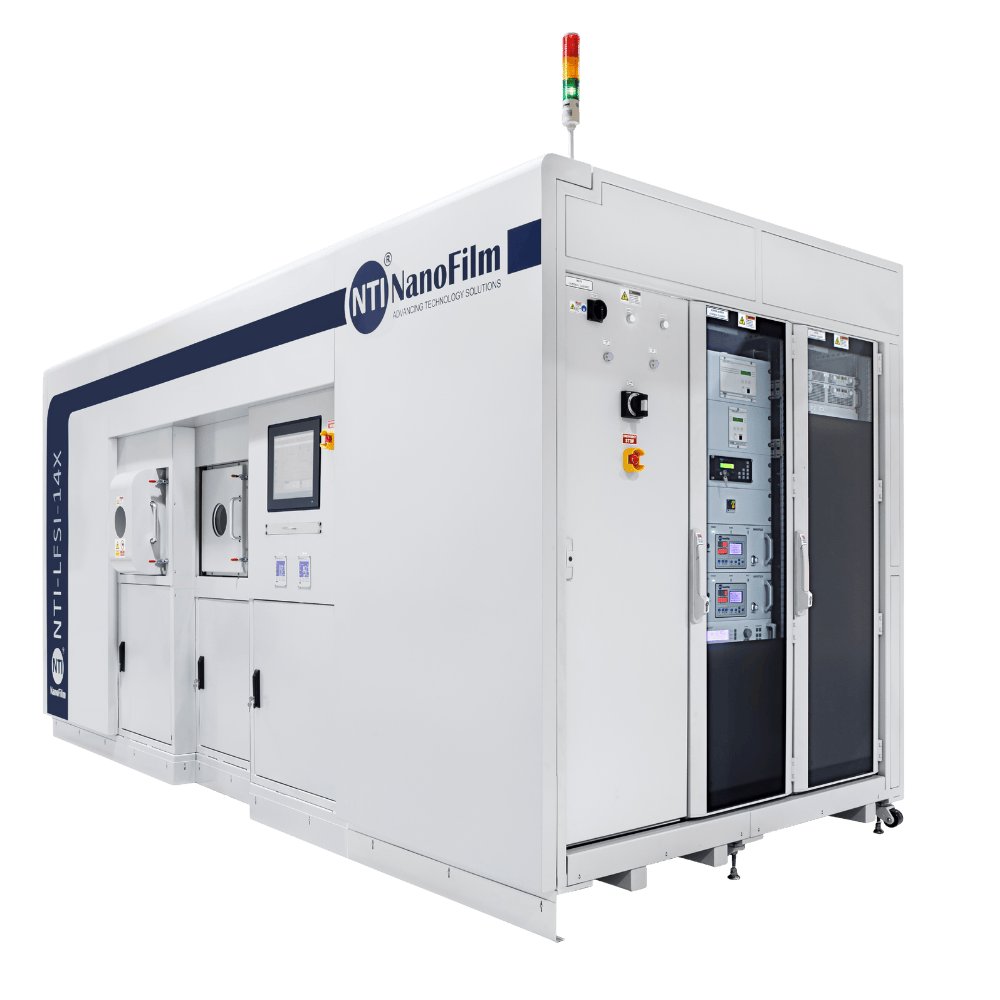
By Nanofilm Technologies International Limited
Features - FCVA: Excellence coating performance - Carbon or Metal Source: Extend coating types - Ion Beam or Sputtering: Flexible configuration - Separate Vacuum Chambers: Minimise vacuum pump waiting time - Rotating Substrate Holder: Allows angle tilt - User Friendly Control Panel: Easy to operate and control Specification Configuration Description Vacuum Chambers Separated Load-Lock and Process Chambers FCVA Carbon Source FS2 Fully-Automated TAC-ON® FCVA Metal Source Available based on applications Magnetron Sputter Source Available based on applications Ion Beam Source Ion Bombardment on High-Energy Argon Ions Substrate Holder Self-Rotating, Bias-able, Coating Range up to Ø300mm (6'', 10'' and 12'') High Vacuum Pump > 2000 litre/sec (Process Chamber) 600 litre/sec (Load-Lock Chamber) Mechanical (Roughing) 40 m³/hr Two-Stage Rotary Vane Pump Control Cabinet Air-Cooling 19" Cabinet Pressure Control Ion Gauge and Thermocouple Pressure Gauge, Dual MFC Flow Control System Controls PLC Control, Safety Interlocks, PC and Touchscreen Interface View Port Ø 100 mm with Shutter on Chamber Door System Dimension ≈ 1.7 (L) x 1.2 (W) x 2.0 (H) m
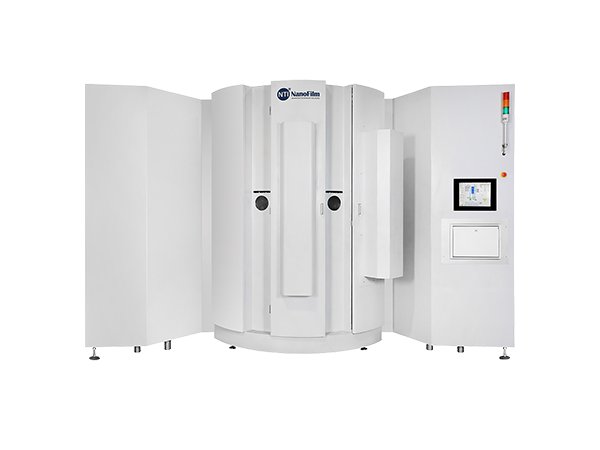
The FCVA hybrid batch system is highly recommended to coat automotive engine components with our iTAC® materials. iTAC® coating have been applied and proven in various critical automotive engine including components piston ring and piston pins etc to achieve superior properties such as low friction coefficient and high wear resistance. The coating reduces engine fuel consumption, enhance its performance and extend its life span with less maintenance needs. Features - FCVA: Excellent coating performance - Carbon or Metal Source: Extend coating types - Ion Beam or Sputtering: Flexible configuration - High Vacuum Pump: Minimise vacuum pump waiting time - Rotating Substrate Holder: Allows angle tilt - User Friendly Control Panel: Easy to operate and control Specification Description: Process Chamber with Multi-Source Dimension 1.5 (Ø ) x 1.37(H) m Material: SUS 304 FCVA Source: Multiple FCVA metal and Carbon Sources Other Sources: Optional Magnetron Sputter Source and Ion Beam Cleaning Source Vacuum Control: 2pcs x TC Gauge, 1pc x Ion Gauge High Vacuum Pump: 2pcs x 3000 L/s + 1pc x 2400 L/S Turbo Molecular Pump Pressure Control: Capacitance Manometer, High Vacuum Gauge, Low Vaccum Gauge, Multiple MFCs Mechanical Pump (Roughing): Rotary Pump + Roots Pump Ultimate Vacuum: < 1.0 x 10⁻⁴ Pa Substrate Holder Dimension: PCD 1.156 (Ø ) x 1.31 (H) m Material: SUS 304 Function Holder Rotation Speed: 0 - 3 rpm, Bias-able System Dimension: ≈ 4.7 (L) x 4.3 (W) x 3 (H) m Applications - Tool and Die - Measurement and Analytics - Optics - Textile - Semiconductor - Automotive - Printing and Imaging - Sanitary Fitting - Life Science Applicable components - PCB Drill - Metal Stamping Punch and Die - CNC Machining Drill Bit - Plastic Injection Mold - Powder Metallurgy Mold - Pressure Detector Diaphragm - Glass Lens Mold - Weaving Spin, Rotary, Needle - Cavity Bar - Car Key Parts - Air Compressor Components - Piston Pin - Printer Blade - Printer Grid - Printer Roller - Printer Rubber Strip - Ceramic Disc - HPLC Stator What are the main advantages of Nanofilm coating equipment? We have been engineering, designing, and manufacturing vacuum coating / physical vapor deposition (PVD) / thin-film coating equipment for over 25 years and are a leader in the field. We are an integrated player providing both coating equipment and coating services. Our experiences in coating services provide first-hand knowledge that translate to state-of-the-art equipment that fit your production needs. We are your one-stop partner that provide equipment, deposition source materials, vaporization source, spare parts and after sales services. What are the vaporization methods of your coating equipment? Our equipment portfolio includes ion-beam, magnetron sputtering, filtered cathodic vacuum arc (FCVA) PVD vaporization method. The filtered cathodic vacuum arc (FCVA) is our proprietary technology, a plasma-based vaporization method that provide better control and more uniformed coating on a wide range of substrates. What substates can your coating equipment coat? Our equipment can coat a wide range of substrates including metal (stainless steel, copper, aluminium), alloy, polymer (plastic), ceramics. What is the substrate maximum size? We provide coating equipment with chamber size as big as 1.5m x 1.5m. The maximum size of substrate depends on the shape. What type of coating can your equipment coat? Our equipment can coat diamond-like coating, optical filter coating, anti-reflective coating, conductive coating, and hydrophobic coating, multi-layer composite coating. What is your lead time? Lead time varies depending on your specification.
CATEGORY
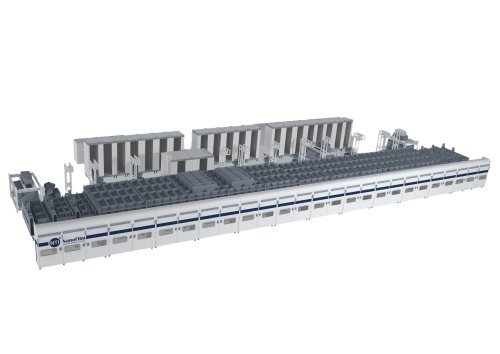
Features High Deposition Rate Close source-substrate spacing Solar Coating Versatility Optimised for CdTe and perovskite Closed Space Design Reduced loss and contamination Large-Area Capability Scalable for solar modules Flexible Configuration Modular, customizable chamber setup Temperature Control Stable heat for crystallisation What is Closed Space Sublimation (CSS)? Closed Space Sublimation (CSS) is an advanced thin-film deposition method used for producing CdTe, perovskite, and other solar absorber layers. By heating a solid source material in a low-pressure vacuum, CSS allows vaporised atoms to deposit onto a nearby substrate, forming dense, uniform coatings with high efficiency and material utilisation, ideal for all types of thin-film solar modules. How does the Closed Space Sublimation (CSS) coating process work? In CSS, the source and substrate are placed in close proximity, typically a few millimeters apart, within a controlled low-pressure chamber. The source material, such as CdTe or perovskite, is heated to a sublimation point where it transitions from solid to vapor. The vapor then travels a short distance through inert or reactive gas before condensing on a cooler substrate to form a crystalline thin film. By controlling temperature gradients, gas composition, and deposition distance, the process achieves excellent film uniformity within ±2 percent and high deposition rates up to one micrometer per minute. 1) Heating: CdTe or perovskite source material is sublimated (solid to vapour). 2) Transport: Vapor travels a short distance through an inert or reactive gas. 3) Deposition: Material condenses on the cooler substrate, forming a crystalline thin film. By adjusting temperature gradients and gas composition, CSS achieves excellent film uniformity (±2 %) and high deposition rates (~1 µm/min). Why is Closed Space Sublimation (CSS) used for solar cell manufacturing? CSS coating technology is preferred in solar cell manufacturing for its high throughput, excellent film density, and superior adhesion. It delivers particle-free coatings for clean absorber layers and ensures stable module performance and long-term reliability. The system’s high material efficiency and low contamination make it a cost-effective solution for industrial-scale solar production, where yield and uniformity are critical to achieving maximum conversion efficiency. What materials can Closed Space Sublimation (CSS) deposit? NTI Nanofilm’s CSS system supports a wide range of semiconductors and oxide materials, including CdTe (Cadmium Telluride) absorber films, perovskite compounds for tandem solar cells, CdS, ZnTe, ZnO window and buffer layers, and transparent conductive oxides (TCOs) for photovoltaic interfaces. These films are essential for solar PV modules, optoelectronic components, and energy devices that demand uniform, high-purity coatings. What advantages does Closed Space Sublimation (CSS) have over sputtering or CVD? Compared with PVD sputtering or CVD coating, CSS offers simpler chamber design, fewer plasma-related defects, higher material utilization above 90 percent, and rapid deposition rates with consistent stoichiometry and density control. Its scalable inline system enables high-throughput solar manufacturing while maintaining superior film quality, making CSS a preferred technology for cost-efficient thin-film solar production. What are NTI Nanofilm’s Closed Space Sublimation (CSS) system features? Inline CSS System developed by NTI Nanofilm integrates modular chambers for sublimation, deposition, and annealing, with SUS304 vacuum construction for durability and stability. It offers precise temperature control, heating the source up to 700°C and maintaining substrate temperatures around 600°C for optimal film crystallization. With a large coating range of 1200 mm and custom gas control for Ar, O₂, and N₂, the system supports continuous inline coating of full-sized solar panels at a rate of up to one panel per minute, ensuring uniform coating thickness and reproducible results across industrial production scales.
CATEGORY
Features - High Deposition Rate: Close source-substrate spacing - Solar Coating Versatility: Optimised for CdTe and perovskite - Closed Space Design: Reduced loss and contamination - Large-Area Capability: Scalable for solar modules - Flexible Configuration: Modular, customizable chamber setup - Temperature Control: Stable heat for crystallisation What is Closed Space Sublimation (CSS)? Closed Space Sublimation (CSS) is an advanced thin-film deposition method used for producing CdTe, perovskite, and other solar absorber layers. By heating a solid source material in a low-pressure vacuum, CSS allows vaporised atoms to deposit onto a nearby substrate, forming dense, uniform coatings with high efficiency and material utilisation, ideal for all types of thin-film solar modules. How does the Closed Space Sublimation (CSS) coating process work? In CSS, the source and substrate are placed in close proximity, typically a few millimeters apart, within a controlled low-pressure chamber. The source material, such as CdTe or perovskite, is heated to a sublimation point where it transitions from solid to vapor. The vapor then travels a short distance through inert or reactive gas before condensing on a cooler substrate to form a crystalline thin film. By controlling temperature gradients, gas composition, and deposition distance, the process achieves excellent film uniformity within ±2 percent and high deposition rates up to one micrometer per minute. 1) Heating: CdTe or perovskite source material is sublimated (solid to vapour). 2) Transport: Vapor travels a short distance through an inert or reactive gas. 3) Deposition: Material condenses on the cooler substrate, forming a crystalline thin film. By adjusting temperature gradients and gas composition, CSS achieves excellent film uniformity (±2 %) and high deposition rates (~1 µm/min). Why is Closed Space Sublimation (CSS) used for solar cell manufacturing? CSS coating technology is preferred in solar cell manufacturing for its high throughput, excellent film density, and superior adhesion. It delivers particle-free coatings for clean absorber layers and ensures stable module performance and long-term reliability. The system’s high material efficiency and low contamination make it a cost-effective solution for industrial-scale solar production, where yield and uniformity are critical to achieving maximum conversion efficiency. What materials can Closed Space Sublimation (CSS) deposit? NTI Nanofilm’s CSS system supports a wide range of semiconductors and oxide materials, including CdTe (Cadmium Telluride) absorber films, perovskite compounds for tandem solar cells, CdS, ZnTe, ZnO window and buffer layers, and transparent conductive oxides (TCOs) for photovoltaic interfaces. These films are essential for solar PV modules, optoelectronic components, and energy devices that demand uniform, high-purity coatings. What advantages does Closed Space Sublimation (CSS) have over sputtering or CVD? Compared with PVD sputtering or CVD coating, CSS offers simpler chamber design, fewer plasma-related defects, higher material utilization above 90 percent, and rapid deposition rates with consistent stoichiometry and density control. Its scalable inline system enables high-throughput solar manufacturing while maintaining superior film quality, making CSS a preferred technology for cost-efficient thin-film solar production. What are NTI Nanofilm’s Closed Space Sublimation (CSS) system features? Inline CSS System developed by NTI Nanofilm integrates modular chambers for sublimation, deposition, and annealing, with SUS304 vacuum construction for durability and stability. It offers precise temperature control, heating the source up to 700°C and maintaining substrate temperatures around 600°C for optimal film crystallization. With a large coating range of 1200 mm and custom gas control for Ar, O₂, and N₂, the system supports continuous inline coating of full-sized solar panels at a rate of up to one panel per minute, ensuring uniform coating thickness and reproducible results across industrial production scales.
CATEGORY
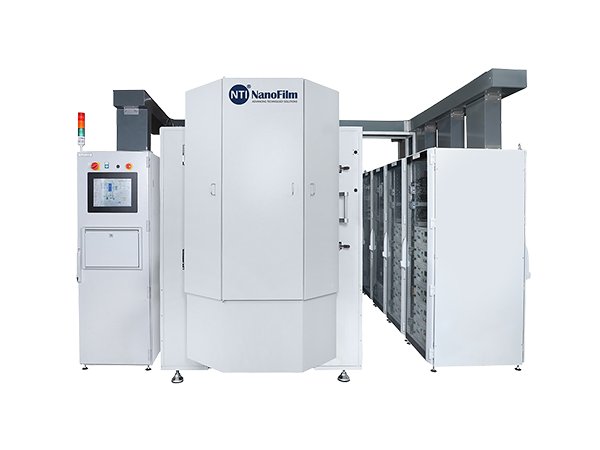
The multi-arc machine is an advanced coating system specifically designed for deposition of hard coatings including AlTiN, AlCrN, and AlTiSiN onto cutting tool surfaces. This technology is tailored to meet the rigorous demands of cutting tools used in machining applications. These hard coatings enhance the performance and significantly extend their tool life, increase productivity, and improve the overall quality of machined products. The hard coating also can be used for mould coating to improve their heat resistant and lowering surface energy. Specification Description Process Chamber with Multi-Source Dimension Octagonal structure with an inscribed circle diameter 1m(Ø) x 1.05m(H) Material SUS 304 FCVA Source N.A Other Sources Multi-Arc Source and Ion Beam Cleaning Source Vacuum Control 2pcs x TC Gauge, 1pc x Ion Gauge High Vacuum Pump 2pcs x 3,000 L/s Turbo Molecular Pump Pressure Control Capacitance Manometer, Multiple MFCs Mechanical Pump (Roughing) Rotary Pump + Roots Pump Ultimate Vacuum < 1.0 x 10⁻⁴ Pa Substrate Holder Dimension PCD0.5m (Ø ) x 0.8m (H) Material SUS 304 Function Holder Rotation Speed 0 - 3 rpm, Bias-able System Dimension ≈ 4.8 (L) x 3.6 (W) x 2.6 (H) m Applications - Tool and Die - Plastic Injection Mold and Components - Metal Stamping Punch and Die - CNC Machining Drill Bit - Powder Metallurgy Mold
CATEGORY
