By Institute of Molecular Science- ICMol
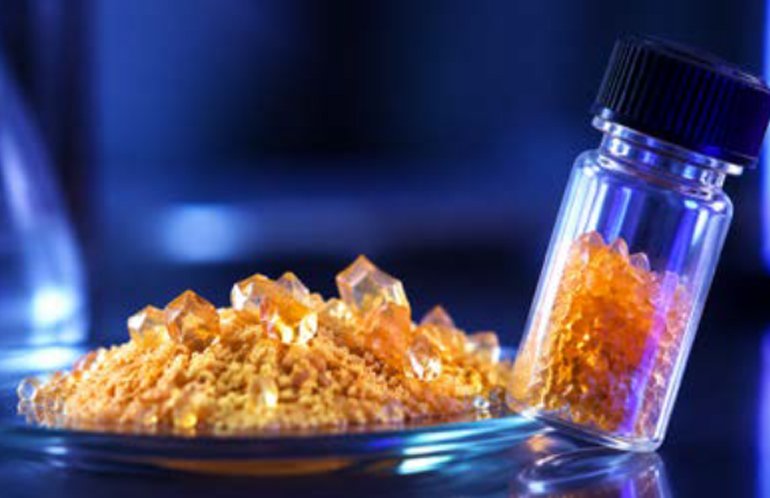
Patented A patented family of heterometallic titanium metal-organic frameworks designed as ultraporous, chemically stable, photocatalytic materials. The technology addresses key limitations of many MOFs, including low stability in aqueous and demanding acid-base environments. Potential uses include photoredox synthesis of organic compunds and CO2 photoreduction. IP Status: Patented Technology readiness: TRL 3-4 Category: Sustainability Availability: For licensing / co-development Overview This technology is based on a patented family of heterometallic titanium(IV) metal-organic frameworks that combine high porosity, chemical stability and photoactivity in a single crystalline platform. The materials are built from Ti-based inorganic clusters, divalent metal ions and carboxylate organic linkers, enabling direct integration of different metals within the framework. This heterometallic design allows the optical, electronic and catalytic properties of the MOFs to be tuned through composition, while maintaining stability in water and demanding acid-base environments. The technology has been validated at laboratory scale through synthesis, structural characterisation, porosity, stability and catalytic proof-of-concept studies, and is suitable for further development in photoredox catalysis and photocatalytic CO2 conversion. Key advantages - Titanium-based heterometallic MOF architecture combining ultrahigh surface area and photoredox activity. - Designed for improved stability in water and demanding acid-base conditions. - Intrinsic metal doping strategy enabling homogeneous metal distribution. - Tunable light absorption and electronic properties through metal ratio adjustment. - Laboratory evidence of synthesis, porosity, chemical stability and catalytic activity. - Protected material family with potential for application-specific development. Applications - Photoredox catalysis under visible and UV light. - Photocatalytic CO2 reduction and solar fuel generation. - Porous catalytic materials for environmental processes. - Reactions under inert atmosphere - Photoactive or porous coatings for contaminant control. - Advanced materials for research and industrial catalysis platforms. Collaboration opportunities - Licensing of protected MOF materials or application-specific embodiments. - Co-development with industrial partners for defined organic photoredox synthetic schemes or photocatalysis. - Industrial validation of selected materials under relevant operating conditions. - Joint development of CO2 conversion or environmental catalysis applications. - Research collaboration to mature the technology from laboratory validation toward application-specific prototypes Intellectual Property Status Patented technology / patent application family. Patent reference: WO2019224413A1 — Titanium heterometallic metal-organic solids, method for obtaining them and their uses. Keywords / sectors Titanium MOFs Metal-organic frameworks Photoredox catalysis Photocatalysis Solar fuels Porous materials Environmental catalysis advanced functional materials
Patented A titanium–iron metal-organic framework, MUV-101(Fe), designed to catalytically degrade toxic organophosphorus compounds. The material can act as a detoxifying additive for plastics, paints and textiles, enabling protective surfaces or materials with active degradation functionality. Laboratory validation has been carried out with simulants of nerve agents under ambient conditions. IP Status: Patented Technology readiness: TRL 3-4 Category: Sustainability/Health Availability: For licensing / co-development Overview MUV-101(Fe) is a heterometallic MOF combining Ti(IV) and Fe(III) centres within a porous solid structure. The Ti centres activate organophosphorus substrates, while Fe centres generate hydroxyl groups from water or ambient humidity, supporting catalytic hydrolysis of toxic phosphate-based compounds in water without additional additives. The patent describes use against organophosphorus compounds, including pesticide-related molecules and simulants of chemical warfare agents. It also claims application as an additive in plastics, paints and textiles with detoxifying properties. Current development is at laboratory prototype stage, with reported synthesis and catalytic testing using simulants rather than operational validation in final products. Key advantages - Catalytic degradation of toxic organophosphorus compounds. - Uses ambient water or humidity as part of the activation mechanism. - Applicable as an additive in solid material matrices such as plastics, coatings and textiles. - Bimetallic Ti-Fe active sites provide cooperative catalytic functionality. - Potential integration into protective materials, filters or detoxifying surfaces. - Laboratory-stage validation supports further formulation and industrial testing. Applications - Detoxifying textiles and protective fabrics. - Functional paints and coatings for contaminated environments. - Plastic materials with active degradation properties. - Filters, masks and protective equipment. - Decontamination materials for defense, safety and emergency response. - Treatment or removal of organophosphorus contaminants in controlled environments. Collaboration opportunities - Licensing of the patented MOF material and its use as a detoxifying additive. - Co-development with manufacturers of technical textiles, coatings, plastics or filtration systems. - Industrial validation in formulated materials and prototype products. - Pilot testing with defense, safety, environmental or protective equipment partners. - Research collaboration for formulation, durability and application-specific testing. Intellectual Property Status ● Patent-protected technology. ● Patent number: WO2021148702A1 ● Title: Titanium-iron MOF solid, process for obtaining it and use thereof for the degradation of compounds. Keywords / sectors MOFs Organophosphate detoxification Protective materials Functional textiles Smart coatings Catalytic materials Chemical safety Filtration Defence materials Environmental decontamination
CATEGORY
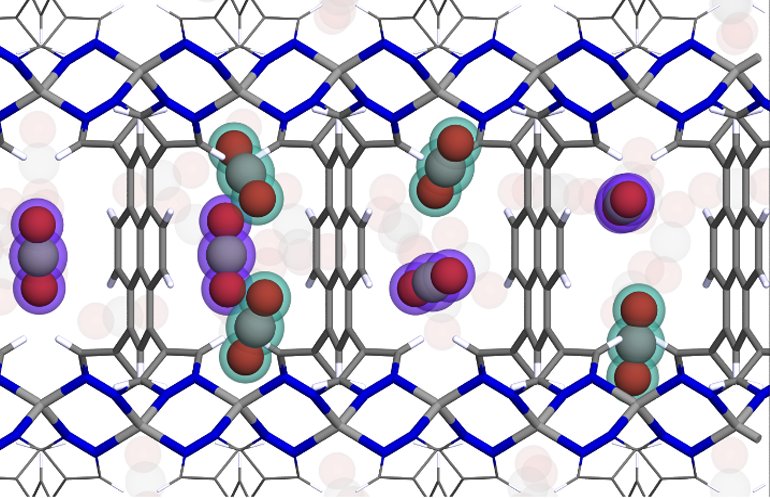
Patented MUV-92 is a hydrophobic metal–organic framework designed for selective CO₂ capture under high-humidity conditions. It addresses a key limitation of many adsorbents: loss of performance when water vapour competes with CO₂. The material is intended for humid industrial gas streams and integration into PSA/VPSA-type capture processes. IP Status: Patented Technology readiness: TRL 3-4 Category: CO 2 capture Availability: For licensing / co-development Overview The technology is a tetrapyrazolate-based MOF adsorbent built from divalent metal nodes and hydrophobic porous structures. Its design reduces water interference while maintaining effective CO₂ adsorption sites, enabling selective capture without requiring prior gas drying. The internal evaluation identifies laboratory validation, including synthesis, structural characterisation and comparative CO₂ capture tests against reference materials under different humidity conditions. The asset is currently positioned at TRL 4–5, with further maturation required for shaping, scale-up, dynamic testing and industrial validation. Official ICMol/UV communication identifies MUV-92 as the core material of the WETCAP project and highlights its relevance for humid CO₂ capture, regeneration and future validation. Key advantages - Maintains CO₂ capture potential under high relative humidity. - Reduces or avoids upstream gas drying requirements. - Compatible with pressure/vacuum swing adsorption concepts. - MOF chemistry enables tunable porosity and selective gas interaction. - Laboratory evidence supports stability and repeated capture–release evaluation. - Relevant for gas streams where water vapour limits conventional adsorbents. Applications - Post-combustion CO₂ capture from humid flue gases. - Biogas upgrading and methane enrichment. - Fermentation and wastewater-treatment gas streams. - PSA/VPSA-based CO₂ separation units. - Decentralised or modular carbon capture systems. - Industrial validation of advanced adsorbents for humid gas treatment. Collaboration opportunities - Licensing after further maturation and patent publication. - Co-development with adsorption, gas separation or carbon capture companies. - Industrial validation using real humid gas streams. - Pilot testing in PSA/VPSA process conditions. - Research collaboration for shaping, scale-up and techno-economic assessment. Intellectual Property Status Patent application filed. Application number: P202530898 Title: Metal-organic adsorbent, preparation procedure and method for CO₂ capture. Public patent record not yet available. Keywords / sectors CO₂ capture Carbon capture MOF adsorbents Humid gas streams PSA VPSA Biogas upgrading Flue gas treatment Gas separation Decarbonisation technologies
CATEGORY
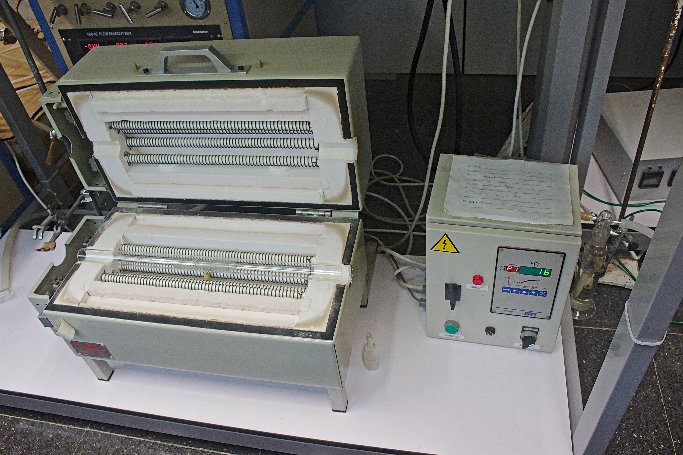
Single zone furnace, with a maximum temperate of 1200 °C. Different segments are available for programming ramps. RTMM
CATEGORY
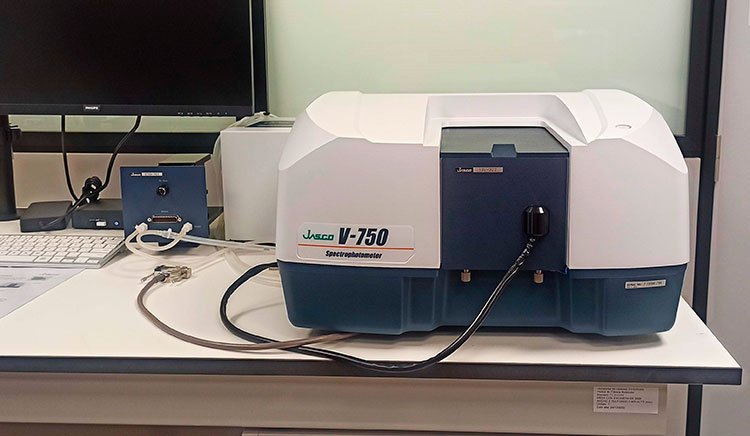
The UV-Visible spectrophotometer V-750 stands out for its precision dual-beam optical design and high-sensitivity PMT detector, providing accurate measurements across a wide range of concentrations. Diode feedback and special slit adjustments allow for a broader dynamic range and increased...
CATEGORY
