A team of MEI, John Hopkins University Applied Physics Laboratory (JHU/APL) and Wesleyan University (WU) scientists and engineers are developing a Venus In-Situ Mineralogy Reaction Array (VIMRA) Sensor Platform under a NASA contract. VIMRA is a harsh environment sensor array suitable for measuring reactions of Venus gases with surface minerals using a platform which could be part of the science instrument payload for planetary landers such as the Long Lived In-Situ Solar System Explorer (LLISSE.) The platform will be developed to accommodate a variety of minerals for Venus atmospheric chemistry. In addition, VIMRA can be used on Venus simulation chambers, such as NASA Glenn Extreme Environment Rig (GEER) for extended durations to support fundamental science.
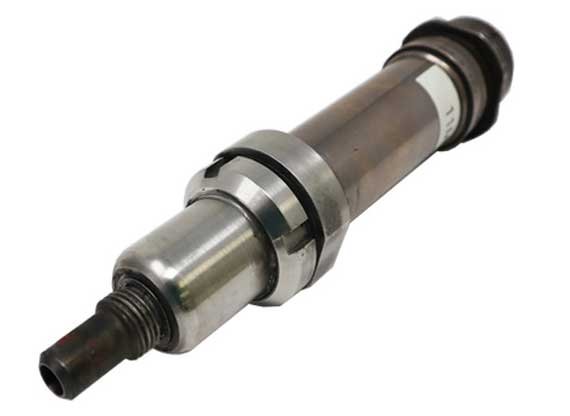
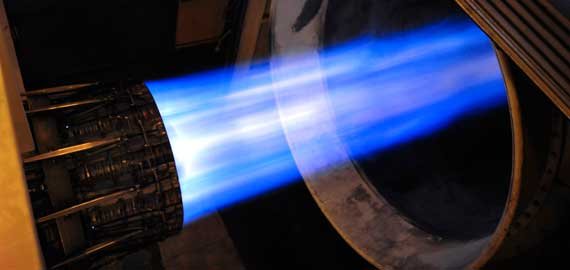
MEI has developed chemical sensor probes capable of withstanding extreme temperature and pressure conditions for direct measurement of combustion and emissions from advanced turbine and hypersonic engines for the next generation of aircraft. The probes can be used for combustion efficient ignition verification and exhaust emissions measurements both as on-board embedded instrumentation and T&E facility instrumentation for engine test stands and wind tunnels.
CATEGORY

MEI's miniaturized air quality sensors for ppb level CO, ozone, NOx and VOCs provide a real-time monitoring capability for vehicle and UAV-based air monitoring. For applications ranging from smart city air quality monitoring to UAV-based wildfire monitoring, these modular sensor payloads provide insight into weather driven air quality patterns.
CATEGORY
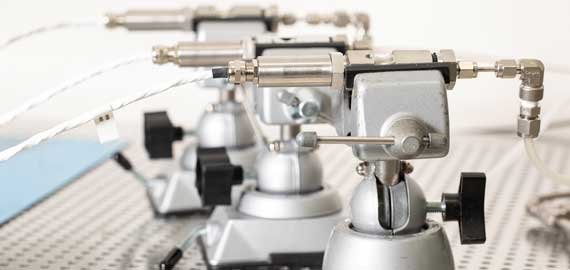
We produce sensors which enhance situational awareness and provide condition monitoring designed for deployment on a range of autonomous, UAV and drone platforms. These sensors can direct drone operations, seek and find threats and provide advanced surveillance.
CATEGORY