By CFD Research
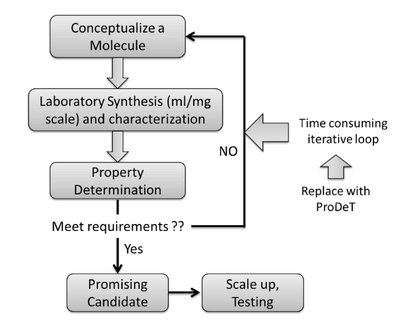
CFD Research has developed a Machine Learning based software toolkit for predicting critical properties of solid and liquid propellant ingredients. The software is used to accelerate the development cycle of high performance solid and liquid energetic ingredients as property prediction can be estimated before attempting laboratory synthesis (thus avoiding synthesis trials which will likely produce unwanted results). The techniques and results have been validated against experiments and are now used by Department of Defense. ProDeT is available to DoD government and contractors under a DoD Open Source software license. Liquid Propellant - Heat of vaporization - Ignition delay time - Toxicity - Density - Viscosity - Melting Point Solid Energetics - Heat of sublimation - Density - Sensitivity - Toxicity - Density - Melting Point Capabilities - Efficient algorithm to identify molecular descriptors/features that describe properties, such as density, viscosity, ignition delay, sensitivity, melting point - Sophisticated feature generation capability from quantum computed outputs, such as Gaussian Quantum Chemical Program - Capability to use external user features - Library of pre-built structure-property relations developed by rigorous research and development by CFD Research - Capable of handling both molecular and ionic species (such as ionic liquid and salt) - Easy to use graphical interface - A WebApp for uploading molecular inputs for computing properties using the machine learnt correlations Benefits - Accelerate development cycle of solid and liquid energetic ingredients - Quickly identify high potential candidate ingredients before laboratory synthesis - Use CFD Research developed highly accurate Structure-Property correlations for property prediction
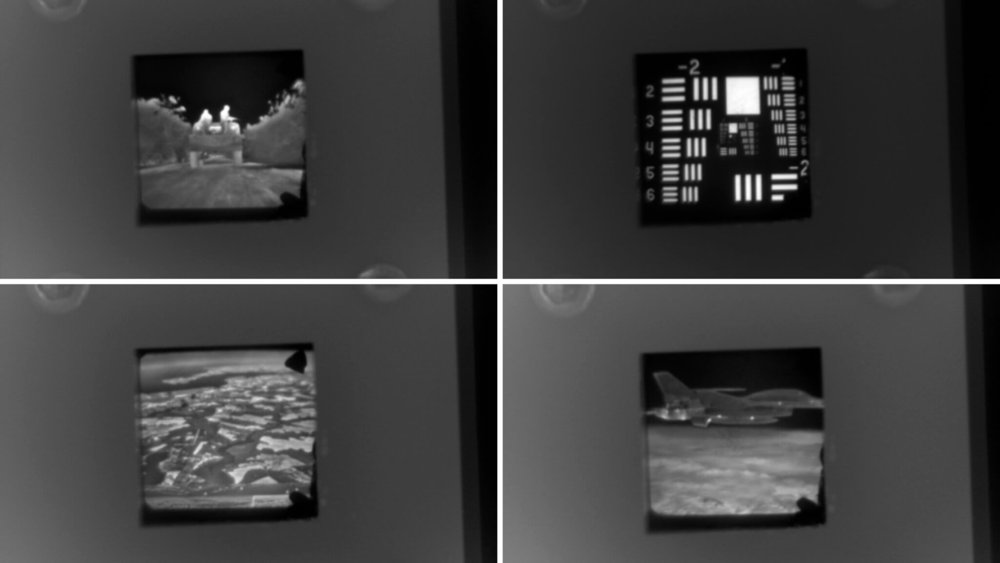
Advancing hardware-in-the-loop infrared testing with high-speed, high-resolution scene projection technologies designed for next-generation sensing systems. Modern infrared systems operate in fast-changing environments that push the limits of traditional hardware-in-the-loop testing. Existing infrared scene projectors often lack the speed, resolution, and format size needed to accurately simulate dynamic environments for sensor evaluation in commercial aerospace, autonomous vehicle navigation, and low-earth orbit observation. CFD Research is addressing these challenges through advanced infrared scene projection technologies that deliver high frame rates, high resolution imagery, and more realistic simulation environments. Designed to overcome the limitations of legacy systems, these capabilities provide the speed, scalability, and fidelity needed to evaluate next-generation sensors with greater confidence. High-Speed Performance Maintain image fidelity during the most demanding test scenarios. By eliminating thermal gradients and pixel cross-talk, CFD Research’s photonic color-conversion technology preserves high contrast even during high-speed dynamic scenes. The system has demonstrated scene frame rates that are over 10 times faster than traditional infrared scene projectors, enabling more realistic simulations of rapidly changing environments. High Resolution Imaging Image resolution is determined by the projection source rather than the photonic screen. When paired with a high-definition projection light engine, the system can support 4K-resolution hardware-in-the-loop simulations, enabling greater scene fidelity and target realism. Rear-Illuminated Architecture CFD Research has developed one of the first “Rear-Illuminated Color Conversion Screens for Infrared Scene Projection.” This rear-illuminated configuration provides seamless integration with commercial collimators. The result is a more flexible and efficient test setup for a wide range of sensor evaluation applications. Scalable and Adaptable Design The screen leverages traditional semiconductor deposition techniques to create continuous projection areas that can be significantly larger than array-based technologies. We can support custom screen sizes and shapes for oversized hardware-in-the-loop testing environments while maintaining consistent performance across the projection surface. Rapid Manufacturing and Deployment By utilizing established deposition processes and readily available materials, the technology simplifies manufacturing and reduces supply chain constraints. Designed for integration into existing hardware-in-the-loop test benches, systems can be deployed quickly, with manufacturing lead times as fast as a few weeks.
CATEGORY
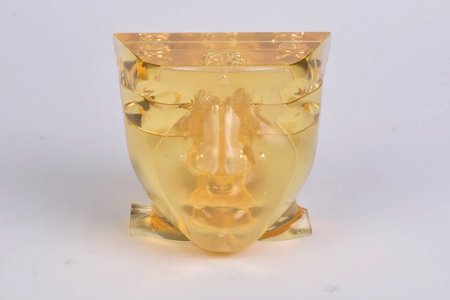
Interactive 3D Computational BioDynamics Software CFD Research has developed a software tool with GUI that can be used for various simulations and computations with biodynamics applications, such as injury or body size prediction. This tool can be developed in stand-alone APIs or web applications designed specifically for customer needs and requirements. Training can be provided upon request. Applications Human biodynamics and injury prediction related to areas such as load carriage, head supported mass, ergonomics, repetitive tasks or loading, rehabilitation, prosthetics. Cobi-Dyn’s body sizing algorithms are being commercialized in the fashion industry to predict clothing sizing (see PerfectFit). Capabilities - Interactive multibody and musculoskeletal simulations. - Anthropometric scaling (ANSUR II based). - Personalized strength scaling. - Injury and performance prediction: - Loading of joints, cartilage, ligaments, discs, etc. - Muscle fatigue model. - Physiological model muscle pain. - Metabolism models. - Rainflow analysis - Detailed male and female models with neck, lower back, shoulder, and lower limb ligaments and musculature. - Motion capture data processing (scaling and inverse kinematics). - Retargeting of motions to different body sizes. - Automatic rigging of skeletons to 3D surface meshes. - Positioning and posturing personalized models in vehicle. - Inverse dynamics and control. - Capability to add and manipulate external loading (gear, positioning, mass and inertia). Benefits - Customizable solutions. - Personalized predictions with minimal inputs. - Versatile applications and capabilities, uniquely applied in single software package. Cobi-Dyn is DoD open source. Software can be shared with Academia and other collaborators under license agreement.
CATEGORY
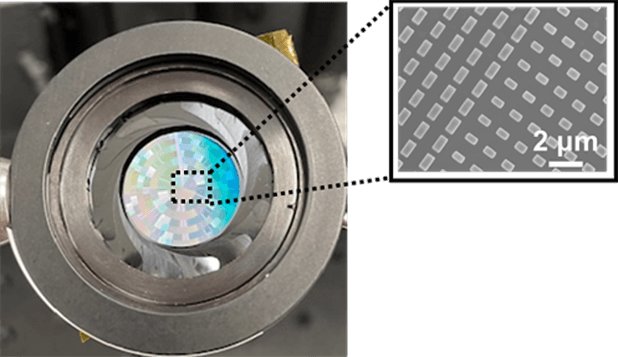
Metasurfaces: Optical Functionality Engineered at the Nanoscale Nanostructured optical metasurfaces consolidate multiple sensing functions into a single compact module, reducing complexity, cost, and SWaP. Implemented as thin, filter-like elements, they can be added as modular upgrades to existing systems, introducing new capabilities without architectural overhaul. Their scalable, wafer-level manufacturing enables high-volume production with low supply chain risk. E.g. metasurface optic. Inset shows scanning electron microscope image with subwavelength meta-atoms that locally shape the optical response.
CATEGORY

SynVivo’s microfluidic tissue/organ-on-chip platform provides biologically realistic in vitro microenvironments to enable better prediction of human-relevant responses for drug development and personalized medicine applications. Complex in vivo microvascular environments including scale, morphology, hemodynamics, and cellular architecture are re-created in vitro. Validated models include Tumor, Blood blood-brain barrier, Inflammation, and various Toxicology models including the Air-Liquid Interface model for Lung. See www.synvivobio.com for more information on products and services.
CATEGORY
