By SITEX 45
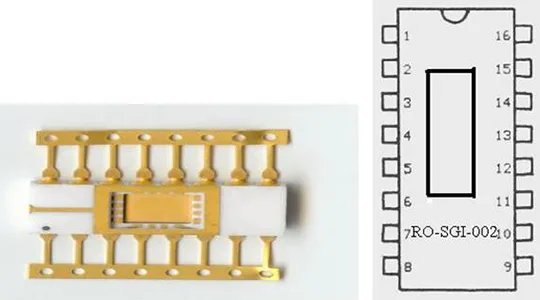
The integrated heating element consists of a polysilicon layer underneath the active area. A temperature sensitive resistor will enable precisely temperature control. The sensor is integrated as MEMS in CMOS technology compatible by adding special micromachining processes Characteristics - The MEMS sensors foe CO2(carbon dioxide) and CH4 (methan) have the operating principle based on the change in conductivity due to chemisorbtion a/o calorimetric effects of gas molecules to be detected at the sensitive layer surface. - The integrated heating element consists of a polysilicon layer underneath the active area. A temperature sensitive resistor will enable precisely temperature control. The sensor is integrated as MEMS in CMOS technology compatible by adding special micromachining processes. - Different polymeric films sensitivity gases to be analyzed,exhibit changes of conductance in presence of small gases concentration at ppm level. - The sensitivity and stability of MEMS sensors are corresponding for applications during the measurement at room temperature of polluted air.or air noxes detection. - In some cases a temperature of up to 300° could be applied for cleaning the sensitive polymer in order to reuse the sensor - The product design by using CONVENTOR with the microprocessing technologies summarized specifically for each type as below: Calorimetric sensor for combustible gas detection CH4 has working between 300-500°C consists of: - Integrated heater (patterned layer) on the ceramic Si3N4 membrane suspended on four bridges; - Dielectric (SiO2 or ceramic) deposited hot plate/electric isolation between heater and sensing electrode. - Al²O³ sol gel deposited - Temperature platinum sensor, interdigitated electrode - Chemoresistive sensor for CO2: - Integrated heater (patterned layer), SiO2 dielectric - Sensing electrode interdigitated capacitor Ti/Pt or Ti/W/Au - Gas sensitive layer SnO2, when heated react with gas molecule changes the resistance of interdigitated capacitor - The resulting heat is detected as an imbalance of the bridge in which the sensor is connected Advantages - Increased reproductibility - High MEMS sensors miniaturization degree - Microsystem integration in package (sensors, electrodes) - Low power consumtion, portable devices approaches - High working versatility as integrated or individual packaged sensors - Very low weight ~3g Applications - Environment protection and monitoring - Medical and health care applications - Industrial facilities and utilities networks and production plants - Chemical and biochemical technological processing - Safety and defence industry and applications - Residential and household appliances
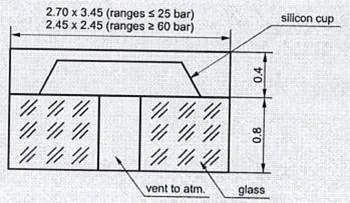
Thank to advanced technology and quality control sensor dies SmPs 801 are coincident in mass productions and high performance Pressure sensing element wafer - Based on piezoresistive effect. - SmPs 801 silicon piezorestistive sensor dies can measure the pressure concerned on its surface. - The back side of SmPs 801 dies is a pressure chamber, it can be sealed with glass, so to form sealed gauge pressure or absolute pressure type. - If the sealed glass with vent, the dies are formed to gauge or differential pressure type. - Made from supper quality silicon wafer of 4” diameter. - SmPs 801 sensor dies are in mass production by means of Micro-Electro-Mechanical System (MEMS) Technology. - Thank to advanced technology and quality control sensor dies SmPs 801 are coincident in mass productions and high performance. - The dies are key sensing elements for our pressure sensors and transducers fabrication. - SmPs 801 sensor dies can be used to measure the pressures ranging from 0,2 to 1000 bar, with the gauge (relative), or absolute pressure type(see following specifications for details). - Posses high accuracy up of 0,25% fso (fso= full scale output). - The output signal is Wheatstone bridge output in milivoltage. - For excitation the bridge, constant current 1mA or constant voltage 5V will be available on request. - The dies are probed and shipped on taps or in waffle packs. Ordering code systems SmPs 60 - D - x - G8SmPs 60 Pressure range Exemple 0,20=0-20kPa x-O-x Customer specified pressure range SmPs D Pressure types G (gauge) relative pressure A absolute pressure SmPs x Die dimensions x-=P 60 bar= 2,45x2,45x0,4 mm y =P< 25 bar= 2,70x3,45x0,4 mm SmPs G8 Die finishing G8 = 0,8 mm thickness of glass base N = Die without glass Solder Pad Layout and Electrical Connection
CATEGORY
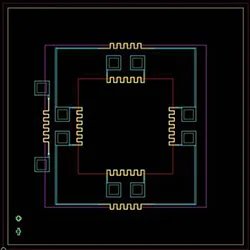
The silicon microsensor is a differential fine pressure sensor to detect the pressure by the change of the resistivity of a silicon resistor when an external mechanical stree is applied The silicon microsensor 701 series (SmPs 701s) is a differential fine pressure sensor to detect the pressure by the change of the resistivity of a silicon resistor when an external mechanical stres is applied (in this case: pressure). Our design concept have been optimized according to the application and technologies allow high accuracy measurements of differential pressure. The silicon diaphragm is processed to the order of microns utilizing the state of the art micro-machining technology. The design was made in COVENTOR, the technological steps have a number of 4 masks used to configure the layers (silicon nitride, silicon dioxide, metals, etc.) The membrane has 1x1 mm2 and the overall chip is 3x3 mm2. The pressure sensor is integrated in CMOS tehnology adding special micromachining processes. The application of pressure is done on both sides of the diaphragm for their use as gauge sensor or for differential pressure. The dies are probed and shipped on taps or in waffle packs Features: - Low cost and compact size - Small linearity error - High sensitivity, reliability and stability - For current and voltage supply - RoHs compliant - Piezoresistive bridge - Measured media at the front cap resp.filling pipe of header - Air nonagressive process gases (moisture 0-85% r.h.) without dew, silicon oil - Not suitable for substances which react to glass,silicon, nickel, stainless steel, gold aluminium and silicon gel. - Measured media at the back (vent hole) - Air process gases(moisture 0-100 r.h%) - Water, oil, petroleum, - Not suitable for substances which react to glass, silicon and gold. - Pressure connection via tube fitting or various threads M5, M6 upon request - Easy PCB mounting - Low current consumation - Low noise - PTC temperature sensor upon request Applications: - Domestic appliances - Medical technology - Altitude measurement - Enviromental protection - Industrial controls - Automotive - Custom & semi-custom specification
CATEGORY
