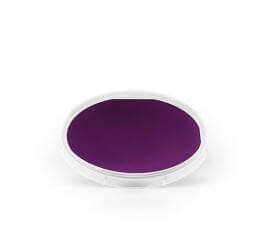
CVD Graphene Films are known to have the highest quality, however, the properties of polycrystalline materials are often dominated by the size of their grains and by the atomic structure of their grain boundaries. These effects are especially pronounced in two-dimensional materials, where even a line defect can divide and disrupt a crystal. These issues take on practical significance in graphene, a hexagonal two-dimensional crystal of carbon atoms; Single-atom-thick graphene sheets can now be produced by chemical vapor deposition (CVD) on up to meter scales, making their polycrystallinity almost unavoidable. Theoretically, graphene grain boundaries are predicted to have distinct electronic, magnetic, chemical, and mechanical properties which strongly depend on their atomic arrangement. Because of the five-order-of-magnitude size difference between grains and the atoms at grain boundaries, few experiments have fully explored the graphene grain structure. Images reveal an unexpectedly small and intricate patchwork of grains connected by tilt boundaries. Correlating grain imaging with scanned probe and transport measurements, shows that these grain boundaries dramatically weaken the mechanical strength of graphene membranes, but do not as dramatically alter their electrical properties. This opens a new window for studies on the structure, properties, and control of grains and grain boundaries in graphene and other two-dimensional materials. Graphene is a one atom thick sheet or film of carbon atoms. It is strong yet low weight and it conducts heat and electricity. In fact, graphene is the most thermally conductive material known to man. Graphene is two-dimensional and interacts favorably with light and with other materials. Graphene is a highly crystalline film of hybridized carbon atoms. Carbon atoms are densely packed in a regular hexagonal sp2 bonded structure. It can best be envisioned as a one-atom thick layer of graphite. CVD graphene films are the building block for numerous graphene based electronic and photonic devices. Graphene is grown by catalyzed chemical vapor deposition (CVD) method, depositing graphene films onto the substrate. Typically with a surface coverage of >95% monolayer graphene. Copper is a great growth catalyst due to its low carbon solubility and allows for a self-restricting growth of single layer graphene when compared to other transition metals. Successful graphene growth relies on tuning many variables, including; Copper foil pre-treatment and annealing, growth time, temperatures and pressure, as well as the gas flow rates of hydrocarbon (methane C H4 ), hydrogen and buffer (Argon) gases. The atomic structure of graphene is composed of carbon atoms arranged in six-member rings. Physical properties of graphene depend on the number of atomic layers in the films and the presence of structural defects and impurities. All our CVD Graphene Films are subjected to a rigorous quality control in order to ensure a high quality and reproducibility of the graphene. CVD graphene films quality control methods are; Raman Spectroscopy: I(G)/I(2D)<0.5; I(D)/I(G)<0.05 Optical Microscopy inspection of each individual sample to ensure good transfer quality and purity If your application requires more specific controls (AFM, SEM…) please do not hesitate to contact us. Some of the many CVD Graphene Films applications include Flexible displays, ITO replacement, Graphene research, OLEDs. Researchers continue to find new and innovative graphene film applications.
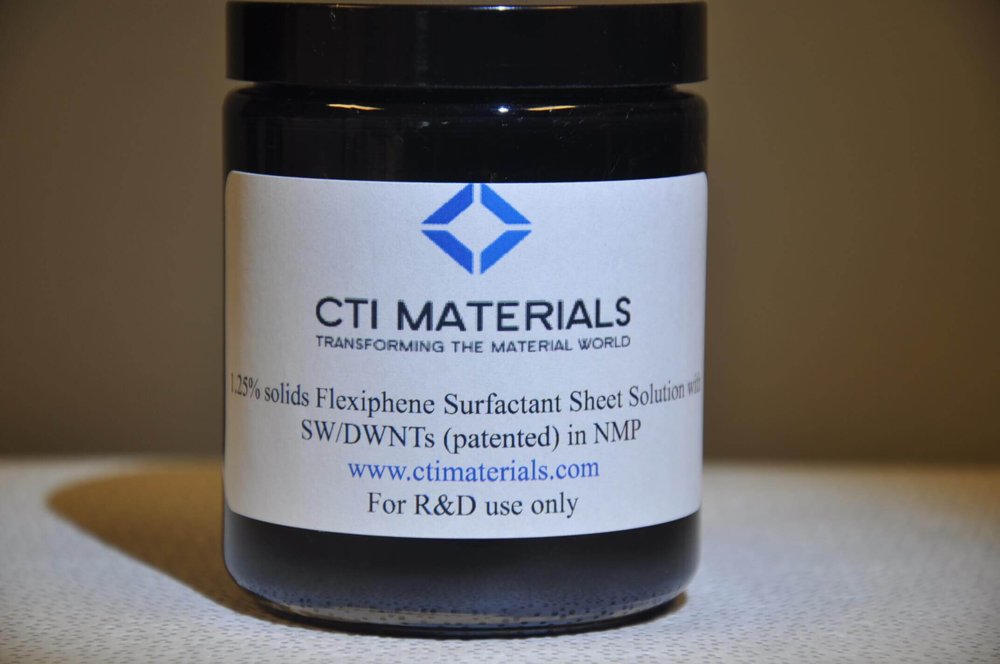
Try patented Flexiphene solvent based nanomaterial emulsions today and put the power of graphene to work in your formulations. Flexiphene is amphiphilic, tune-able by pH, sheet size, and degree of reduction. Flexiphene is transforming the material world! Contact us Today to arrange for your Flexiphene Emulsions!To Buy Flexiphene emulsions, please contact us with the solvent, materials, amount, and loading ratio you need. CTI Material’s patented Flexiphene solvent based nanomaterial emulsions are just what you need to disperse nanomaterials into solvents. Flexiphene works with SWNTs, MWNTs, and many other nanomaterials. Flexiphene are amphiphilic, tunable surfactant sheets, highly soluble in many solvents and can make colloidal dispersions of nanomaterials, stable for weeks to months. We typically work with NMP, DMF, THF, Acetone, & Ethanol solvents however many more are possible. Please contact us today and let us know what materials you require, the loading ratios, and solvents and we can quote it for you. Note- Hazmat shipping fees may apply. Prices depend on materials used and loading ratios. Flexiphene solvent based nanomaterial emulsions are transforming the material world!
CATEGORY
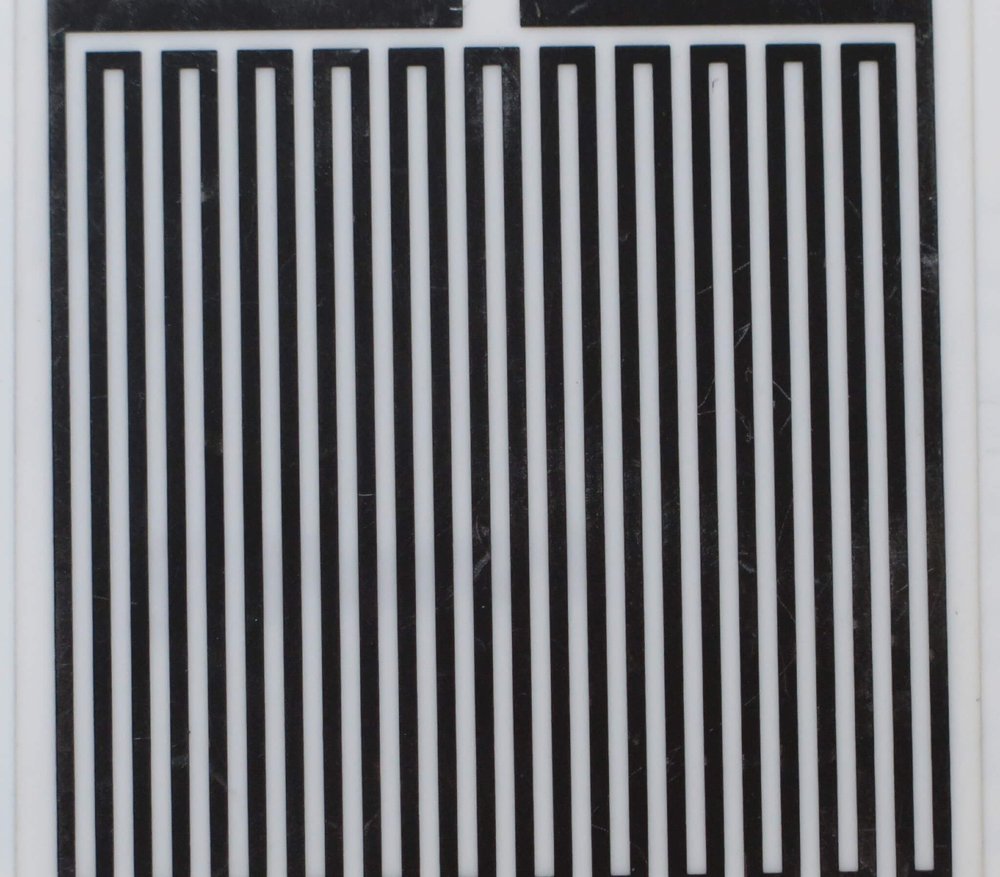
Silver nanowire (AgNW) ink is the leading solution for transparent conductive electrodes (TCEs) that require both high conductivity and optical transparency. At loadings that achieve sheet resistance below 10 Ohm/sq, AgNW films maintain optical transmittance above 85% — performance that rivals ITO at a fraction of the cost and with far superior flexibility. Unlike ITO, silver nanowire electrodes do not crack under bending, making them essential for rollable displays and conformable biosensors. Cheap Tubes synthesizes 30 nm outer diameter silver nanowires in-house at our Vermont facility, giving us direct quality control over aspect ratio, concentration, and lot-to-lot consistency — shipped at 25 mg/mL in isopropanol (IPA). Cheap Tubes supplies silver nanowire ink for transparent electrode applications in touch screens, OPV, and flexible electronics. Both ink types are formulated for compatibility with screen printing, gravure, flexographic, and inkjet deposition methods. Silver nanowire ink is the choice when optical transparency is required alongside low sheet resistance.
CATEGORY
Try patented Flexiphene Surfactant Solutions today and put the power of graphene to work in your formulations. Flexiphene is amphiphilic and compatible with water, solvents, and many other host matrices. To Buy Flexiphene, please contact us with the amount and loading ratio you need. Standard concentration is 2mgs/ml. Flexiphene is transforming the material world! CTI Material’s patented Flexiphene aqueous nanomaterial emulsions are just what you need to disperse nanomaterials into aqueous solutions. Flexiphene works with SWNTs, MWNTs, GNPs, and many other nanomaterials. Flexiphene are amphiphilic, tunable surfactant sheets, highly soluble in many solvents and can make colloidal dispersions of nanomaterials, stable for weeks to months. We typically work with Di Water and can modify the solution if required. Please contact us today and let us know what materials you require, the loading ratios, and solvents and we can quote it for you. Prices depend on materials used and loading ratios. Flexiphene aqueous nanomaterial emulsions are transforming the material world!
CATEGORY
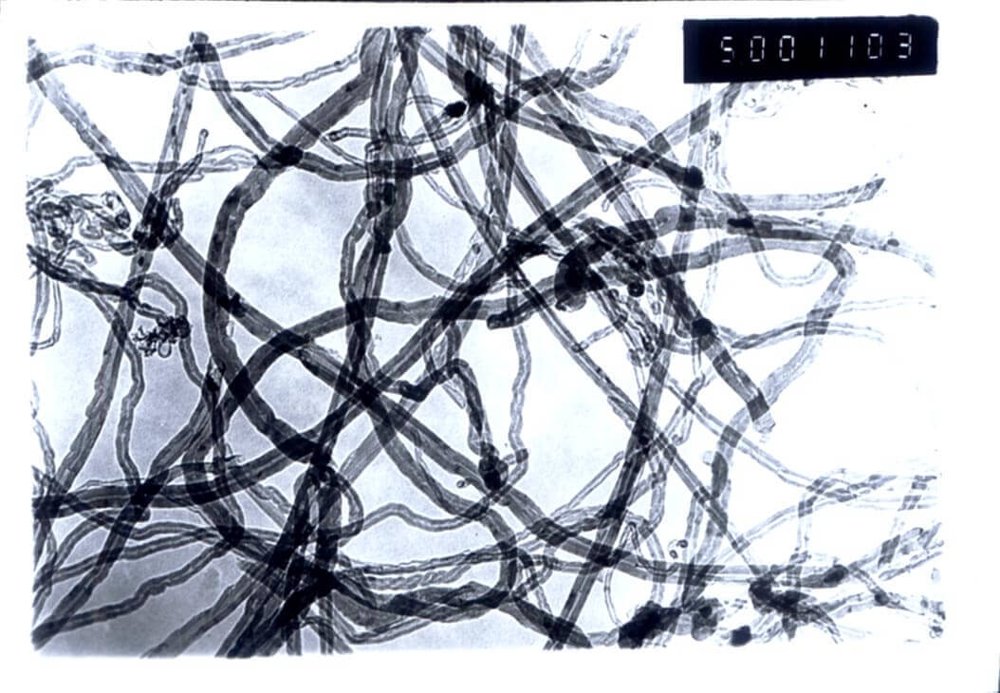
Amine | -NH₂ | Basic, highly water-dispersible; reacts with COOH, epoxides, aldehydes | Drug delivery, biosensors, crosslinked epoxy composites Amine (-NH2) groups are introduced via diamine coupling to -COOH and provide direct bonding to epoxy resins and conjugation chemistry to biomolecules via standard NHS/EDC coupling. -COOH and -NH2 functionalized MWCNTs are the standard substrates for biomolecule conjugation... use glutaraldehyde or NHS-PEG-NHS linkers between -NH2 surfaces and amine-bearing biomolecules. For dispersion in aqueous biological or analytical applications, -COOH and -NH₂ groups provide colloidal stability through electrostatic repulsion (high negative or positive zeta potential) without requiring surfactants that would need to be removed in downstream processing. This makes functionalized CNTs the preferred choice for drug delivery systems, biosensors, and diagnostic conjugation chemistry.
CATEGORY
