By nanoSaar AG
Pre dispersed zinc phosphate dispersion for corrosion protection formulation development Zinc Phosphate is a liquid, pre dispersed zinc phosphate product with a reported dispersed particle range of 200 to 400 nm. The grade is offered for industrial formulation screening where a fine corrosion inhibiting pigment is required, in corrosion protective primers on steel and in surface conditioning before zinc phosphate conversion coating. Starting levels are formulation reference points and do not constitute a performance specification. Determine the optimum dosage by an application related concentration ladder while keeping total pigment volume concentration and total solids comparable. Improved corrosion protection, reduced dosage, thin film suitability and surface conditioning performance must be demonstrated in the target system. Samples and technical consultation are available on request. Key Features and Applications Pre Dispersed Supply Form: Liquid dispersion for direct incorporation under controlled agitation, which may reduce grinding demand in the formulation Fine Dispersed Particle Range: Reported range of 200 to 400 nm as the current product specific size information Active Inhibitive Pigment: Zinc phosphate for interfaces exposed to water and electrolyte, acting by precipitation and anodic passivation Defined Starting Levels: Documented screening window of 3 to 10 wt% active zinc phosphate in primers and 0.5 g/L in surface conditioning baths, with a stated conversion basis for as supplied dosage Corrosion Protective Primers on Steel: Evaluation in epoxy, acrylic, alkyd emulsion and water reducible alkyd systems, including thin film and direct to metal screening, where salt spray or cyclic corrosion performance, EIS, adhesion, blistering, water uptake, flash rust, pinholes, viscosity and storage stability are to be verified Surface Conditioning Before Conversion Coating: Evaluation on steel, zinc coated steel and aluminium, where dispersed particles provide nucleation sites for phosphate crystal formation and bath stability, crystal refinement, coverage, coating weight, adhesion and corrosion performance after the full process require qualification
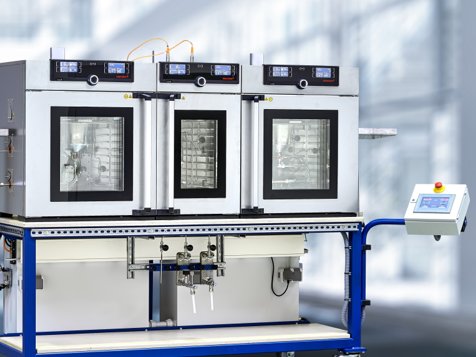
Max. output: 30 liters per hour Max. pressure: 40 bar The size of a suitcase, the LK1, LKOS, and LKOS Twin enable precise liquid pumping for outputs of up to 30 liters per hour. These versatile units are the standard tool for R&D-phase precipitation, emulsification, and encapsulation work. They feature micro gear pumps with high-precision flow rates, MJR® reactors with nozzle sizes ranging from 50 to 1,500 µm, inlets for inert or reactive gases, and a fully software-controlled environment.
CATEGORY
Max. output: 80 liters per hour Max. pressure: 210 bar Max. temperature: 250°C The LGHT was designed for R&D high-pressure applications. Generating hydrodynamic pressure of up to 210 bar, it triggers higher acceleration rates and increased turbulence — ideal for thermally supported chemical processes, melting processes, matrix encapsulation, and high-precision emulsification.
CATEGORY
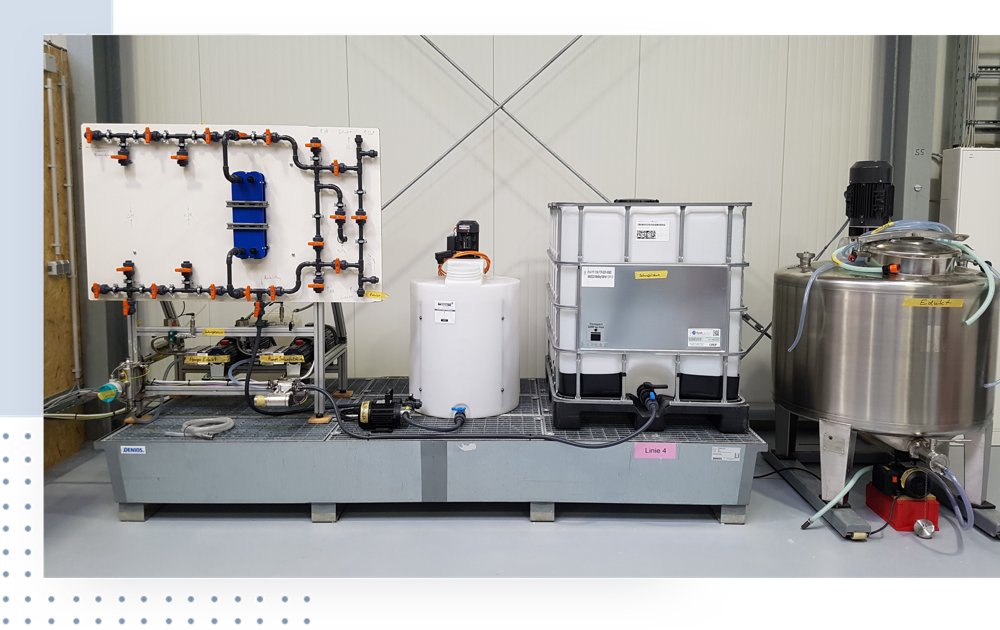
The P1UP bridges the gap between laboratory development and full industrial production. Designed as a highly flexible upscaling device, it is individually configured to match your specific process requirements — making it the natural next step after lab validation and before full-scale production deployment. Siemens-based control software ensures full compatibility with your existing production environment. The modular design allows precise adjustment across a wide range of industrial, cosmetic, and nutritional applications. Max. output: 600-800 l/h Max. pressure: 70 bar Max. temperature: 70°C
CATEGORY
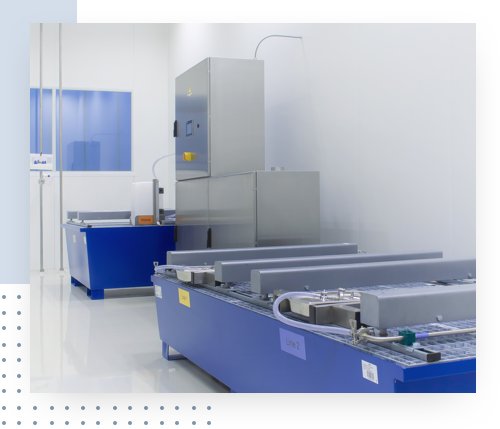
For industrial (I), cosmetic (C) or nutritional (N) applications Our modular P1 I/C/N production facility contains an MJR® with a maximum throughput of 600 liters per hour. Siemens-based control software ensures full compatibility with your existing production environment. Designed to international legal standards, it is configurable for a wide range of industrial, cosmetic, and nutritional applications.
CATEGORY
