By Innofocus Photonics Technology Pty Ltd
High power stability and precise power control are essential to guarantee the high-quality manufacturing of fibre Bragg grating (FBG). PowerFlex is a fully automated laser power control technology that enables precise control of laser power at a step of 1µW. During the manufacturing process, the exposure time can be controlled to 0.001ms, this enables the exposure time to be consistent. Based on this condition, controlling laser power stability is essential to ensure consistent refractive index differences. Innofocus uses a highly stable femtosecond laser with a real-time pulse power monitoring system. The monitoring system guarantees the stability of laser pulses during long-time continuous operation (>100 hours), and the fluctuation of a single pulse can be controlled within <1%. It enables continuous stable FBG manufacturing and ensures the consistency of the refractive index of each point. It lays a solid foundation for realizing high-performance FBG manufacturing. A schematic of the comparison is shown in Figure 1. Suppose the laser power is not stable. In that case, the distribution of refractive index within the fiber during manufacturing will be uneven, as shown in the case of Figure A, causing an overall lower quality of FBG. Innofocus's high-stability laser can output stable power values for a long time to ensure a uniform refractive index distribution. PowerFlex Module: Precise control of laser power In addition to high power stability, precise power control to adjust the points' size, and refractive index difference Δn are extremely important in optimizing FBG parameters and manufacturing different types of FBGs. To meet this requirement, Innofocus has developed the PowerFlex, a precise power control module. PowerFlex is a fully automated laser power control technology that enables precise control of laser power at a step of 1µW. Flexibility in various laser power control Our intelligent femtosecond laser power control technology can also meet the needs of introducing different refractive index distributions. As shown in Figure 2, the points in an FBG manufactured by a high laser power are larger in size with a higher refractive index change (Figure A), whereas points manufactured at a low power are smaller in size (Figure B). By changing the system's parameters, various flexible needs can be met. The fully automated power system effectively avoids the variation in quality caused by laser power fluctuation. It allows for long-time, large-scale, repeated FBG manufacturing, resulting in high-quality mass production of FBG.
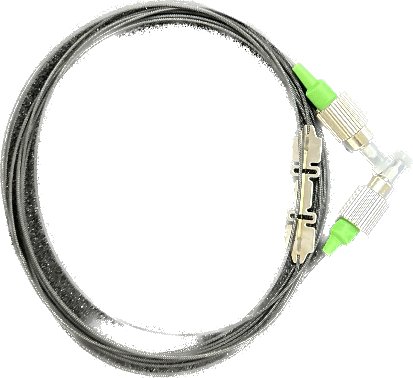
UFBGStrainSensors obtain narrow 3dB Bandwidth and can be used to monitor structural deformations of various structures. Applications - Aircrafts - Electricity Generators - Wind Turbines - Oil & Gas Tank Surfaces Key Parameters Strain Sensing Range: ±2500 µε Strain Coefficient: 0.714 µε/ pm 3 dB Bandwidth: 0.25 nm Central Wavelength: 1525 nm ~1565 nm Reflectivity: 90 %
CATEGORY
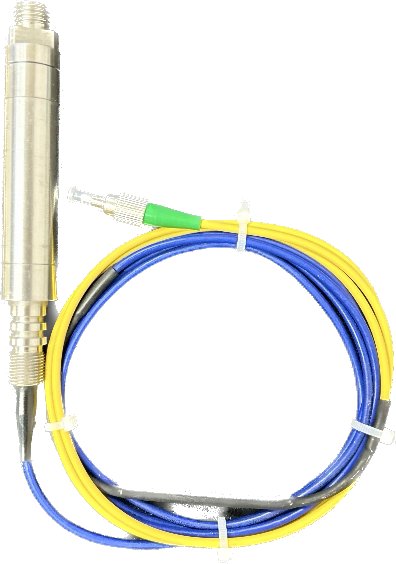
UFBGPressureSensors is featured for pressure sensing and monitoring in a variety of industrial automation environments. Applications - Oil Well and Oil Tank - Gas Pipeline - Mining - Bridges, Dams, Tunnels Key Parameters Pressure Sensing Range: 0.01 Mpa ~ 60 Mpa Accuracy: 0.5% F·S Resolution: 0.1% F·S Central Wavelength: 1525 nm ~1565 nm Reflectivity: ≥ 90 %
CATEGORY
UFBG Soil Pressure Sensors are featured for monitoring soil pressure, combing use with a signal demodulator. Applications - Soil Pressure Management - embankments, slopes, roadbeds - Dams Key Parameters Soil Pressure Sensing Range: 50 kPa ~ 34500 kPa Accuracy: 0.5% F·S Central Wavelength: 1525 nm ~1565 nm Working Temperature Range: -50 °C ~ +120 °C
CATEGORY
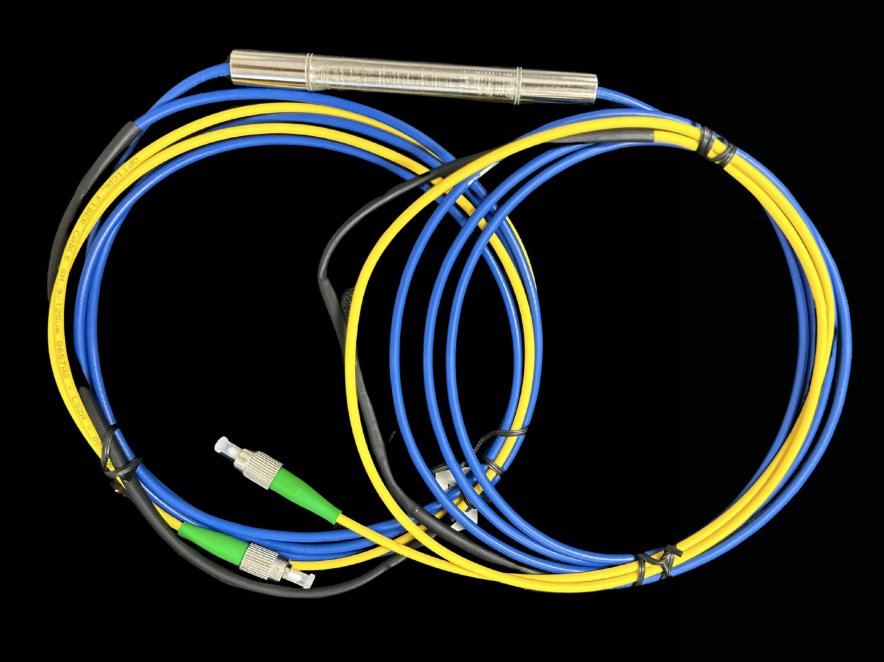
UFBGTemperatureSensor is featured for surface and internal temperature sensing and monitoring of a various structures. Applications - Oil & Gas - Mining - Power Plant - Bridges, Dams, Tunnels Key Parameters Temperature Sensing Range: -50 °C ~ +350 °C Accuracy: ± 0.5 °C Resolution: ± 0.1 °C Central Wavelength: 1525 nm ~1565 nm
CATEGORY
